Sunburst Anthias
Serranocirrhitus latus
An exquisite, deep-water marine fish showcasing vibrant pink and yellow coloration, requiring a dimly lit tank with numerous caves to thrive.
Température de l’eau
22 - 26 °C
Valeur du pH
8.1 - 8.4
Type d'eau
Marin
Niveau dans le bac
Fond et milieu
Taille adulte
13 cm
Volume minimal du bac
>= 200 L
Groupe minimal
>= 1
KH
8 - 12 dKH

Description de l'espèce
Geographical Origin and Habitat: Serranocirrhitus latus, also known as the Sunburst Anthias or Hawkfish Anthias, is native to the Western Pacific Ocean. Its range includes Indonesia, the Philippines, Palau, and the Great Barrier Reef. It is a deep-water species, typically found on steep outer reef slopes, drop-offs, and inside caves at depths of 50 to 230 feet (15-70 meters).
Taxonomy and Morphology: This species is the sole member of the genus Serranocirrhitus, within the family Serranidae and subfamily Anthiadinae. It features a deeper, more laterally compressed body than most other anthias, giving it a hawkfish-like profile. Its large eyes are an evolutionary adaptation to low-light cave habitats.
Social Behavior: Unlike many schooling anthias, the Sunburst Anthias is solitary and highly cryptic. It is often observed swimming upside down along the roofs of caves or ledges. They are peaceful, non-aggressive fish that will spend most of their time hovering near rocky shelter, retreating quickly if disturbed.
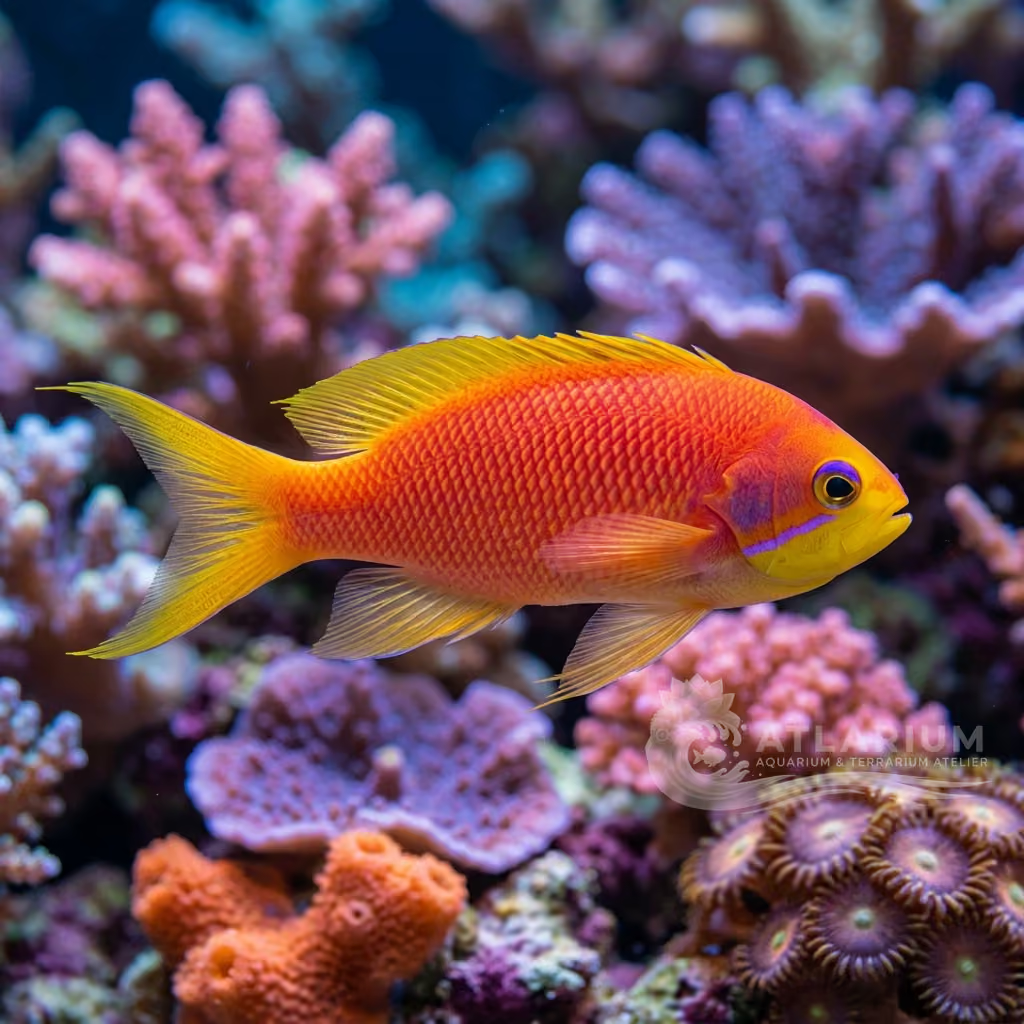
Coloration and Sexual Dimorphism: They display a brilliant pinkish-purple body with bright yellow to orange spots and stripes, particularly around the eyes and along the back, resembling a sunburst. The fins are delicate and colorful. There is no distinct external sexual dimorphism, making visual sexing impossible.

Soins, reproduction et cohabitation
Aquarium Setup: A minimum tank size of 40-50 gallons (150-200 liters) is required. The aquascape must feature multiple caves, overhangs, and dim crevices to replicate their deep-water habitat. Bright reef lighting should be offset by creating heavily shaded areas where the fish can feel safe and acclimate.
Diet and Feeding: Strictly carnivorous planktivores. They have a high metabolism and must be fed small amounts 3 to 4 times a day. Offer high-quality frozen foods such as mysis shrimp, vitamin-enriched brine shrimp, copepods, and oyster eggs. Getting them to accept dry foods is difficult and requires time.
Water Quality: Requires clean, stable water conditions. They prefer slightly cooler temperatures between 72-77 °F (22-25 °C) due to their deep-water origin. Maintain pH at 8.1-8.4, specific gravity at 1.020-1.025, and keep dissolved organics low. A reliable protein skimmer and regular water changes are essential.
Compatibility and Cohabitation: Totally reef-safe and peaceful. They must be housed with quiet, non-aggressive tankmates such as gobies, firefish, cardinalfish, and micro-fauna grazers. Avoid fast, boisterous species like active tangs or aggressive dottybacks, which will keep this timid fish hiding and starving.
Aquarium Breeding: Breeding in home aquariums has not been documented. They are pelagic spawners that release their eggs into the ocean currents. Replicating the physical and nutritional requirements for larval survival is beyond the capabilities of standard aquarium systems.
Risks and Diseases: Starvation is the leading cause of mortality in captivity due to food rejection or competition. They are susceptible to marine ich (Cryptocaryon) and flukes, especially when stressed by improper lighting or aggressive tankmates. A peaceful quarantine environment is highly recommended.

Origine et répartition géographiques
Serranocirrhitus latus, also known as the Sunburst Anthias or Hawkfish Anthias, is native to the Western Pacific Ocean. Its range includes Indonesia, the Philippines, Palau, and the Great Barrier Reef. It is a deep-water species, typically found on steep outer reef slopes, drop-offs, and inside caves at depths of 50 to 230 feet (15-70 meters).
Origine
Océans tropicaux et récifsAsie du Sud et du Sud-EstAustralie, Nouvelle-Guinée et Océanie

Profil de poisson
- Tempérament
- Semi-aggressive
- They are a shy and secretive species that needs time to acclimate to a new environment. Once settled, they will spend more time in view but will quickly dart back to their caves if startled. They are completely reef safe and will not bother corals or invertebrates.
- Régime alimentaire
- Carnivore
- They are strict zooplanktivores that feed continuously in the wild. In the home aquarium, they require small, frequent meals of meaty foods such as mysis shrimp, brine shrimp, and high-quality micropellets. Fortifying their food with vitamins helps maintain their vibrant pink and orange colors.
- Espérance de vie
- 5-8 years
- Taille adulte
- 13 cm
- Ratio des sexes
- Flexible
- In a suitably large aquarium, they can be kept in a small harem of one male to several females. If kept singly, they will thrive without issue. Two males will fight fiercely and should never be housed together in standard-sized tanks.
- Fréquence d'alimentation
- 2-3 times daily
- They must be fed multiple times a day, ideally three to four times, due to their high metabolism. An automatic feeder can be beneficial if you are away during the day. Ensure that the food particles are small enough to fit in their mouths.
- Charge biologique
- Medium
- The Sunburst Anthias produces a minimal to light bioload. Their small size and specific diet mean they do not pollute the water quickly. However, frequent feedings require a high-quality protein skimmer to remove uneaten food from the water column.
- Courant
- Strong
- They prefer moderate water movement that carries food particles past their hiding spots. Strong flow is appreciated as long as there are plenty of rocky overhangs to rest behind. They will face into the current to catch planktonic prey.
- Risque de saut
- Yes
- Like many small reef fish, they pose a moderate jump risk when startled. Sudden lighting changes or aggression from tank mates can cause them to bolt upwards. A tight-fitting lid or mesh screen is necessary to prevent them from carpet surfing.
- Reproduction
- Oviparous
- They are protogynous hermaphrodites, meaning all individuals are born female and the dominant one transitions to a male. Breeding in the home aquarium is very rare due to the difficulty of raising pelagic fry. Spawning involves a brief ascent into the water column where eggs and sperm are released.
- Compatibilité et compagnons
- Reef safe
- They are extremely peaceful and somewhat cryptic reef fish. They should be housed with other peaceful species like gobies, blennies, and small wrasses. Aggressive or fast-swimming tank mates will easily outcompete them for food and force them into hiding.
- Niveau dans le bac
- Middle/Bottom
- They are mid-to-lower level swimmers that stay close to the rockwork. They spend most of their time hovering near caves, crevices, or under overhangs. They rarely venture into open water unless actively feeding.

Modèles et paramètres scientifiques
FishBase
Fenêtre sur les données scientifiques officielles de l’espèce
FishBase v25.04Données synchronisées le : 15/06/2026
- Niveau trophique
- 3,4 ± 0,45 se
- Résilience
- Élevée (moins de 15 mois)
- Singularité phylogénétique (PD50)
- 1
- Relation bayésienne longueur-poids
- a = 0.02512, b = 2.98
- VulnérabilitéVulnérabilité faible (10 / 100)

Espèces associées
Recommandations regroupées par proches parents, compagnons et soins similaires.