Galapagos damselfish
Stegastes beebei
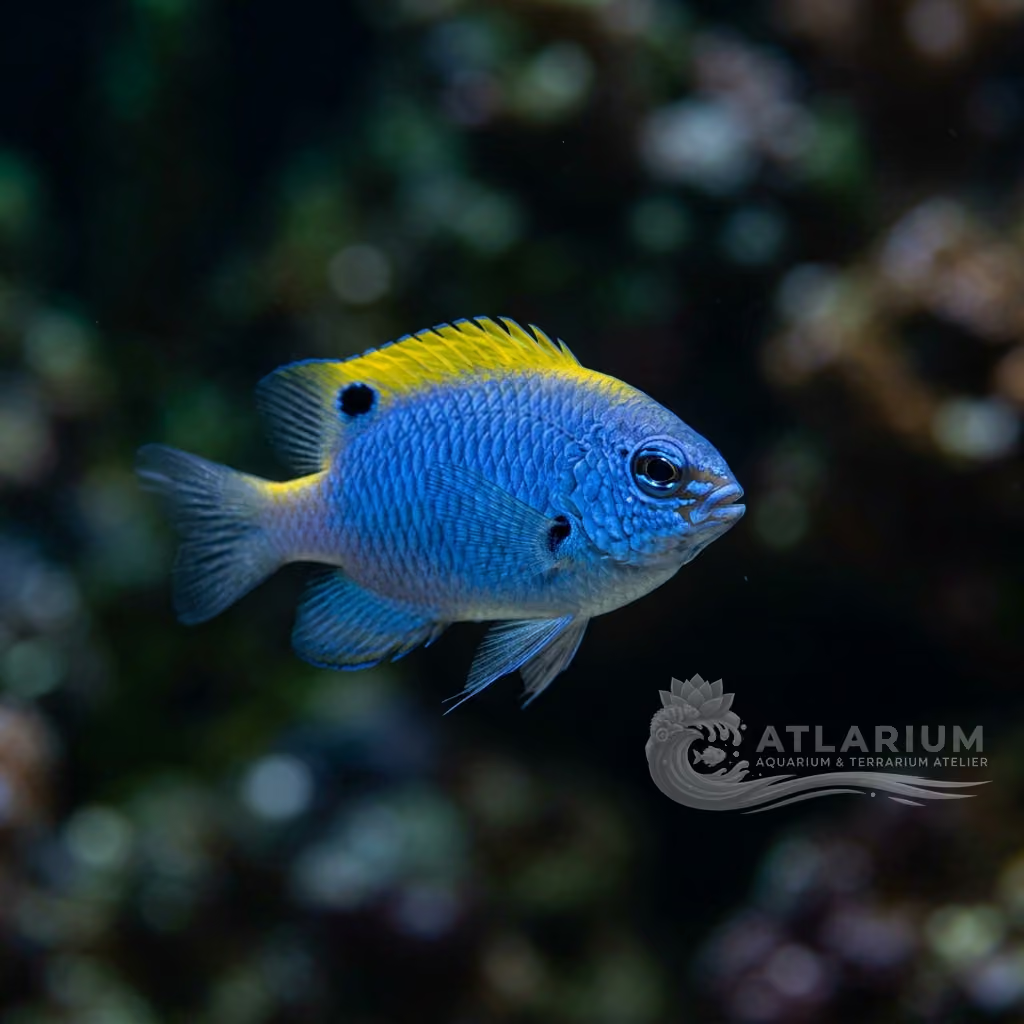
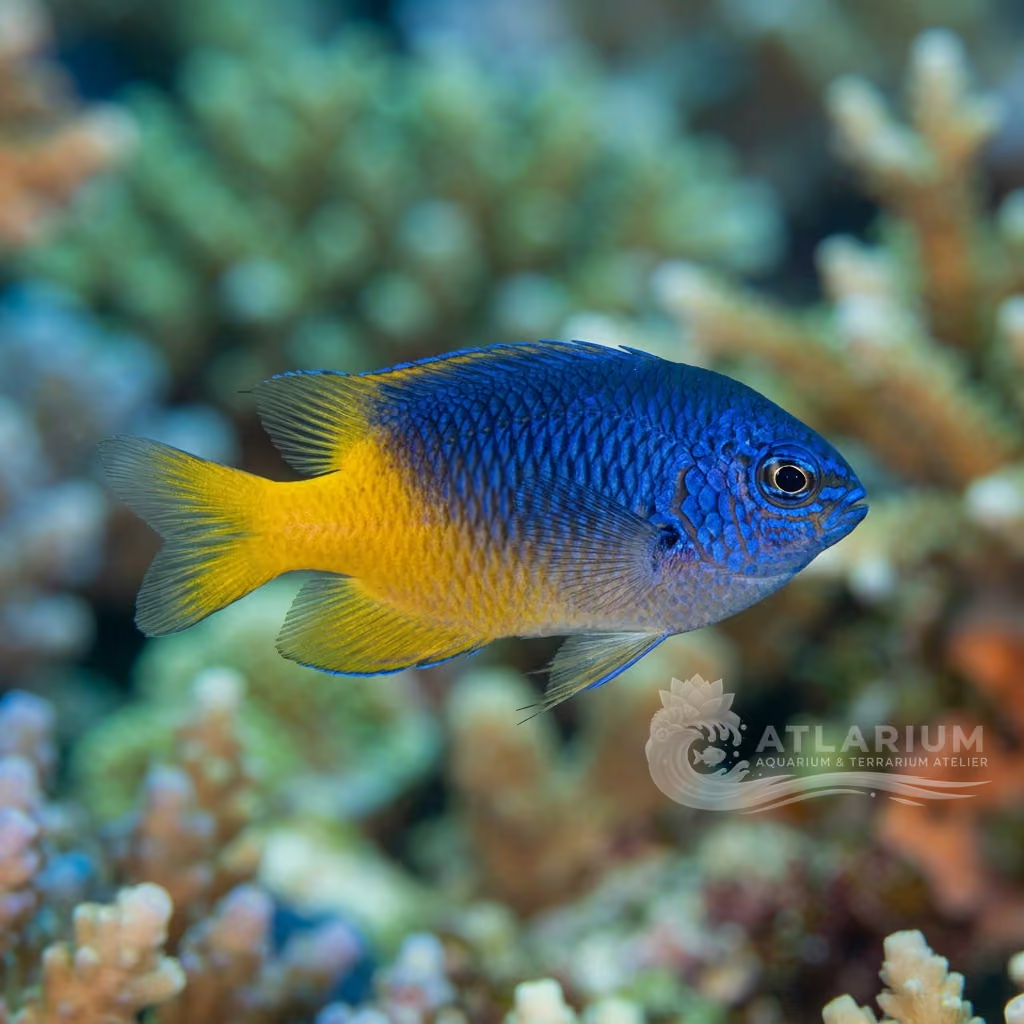
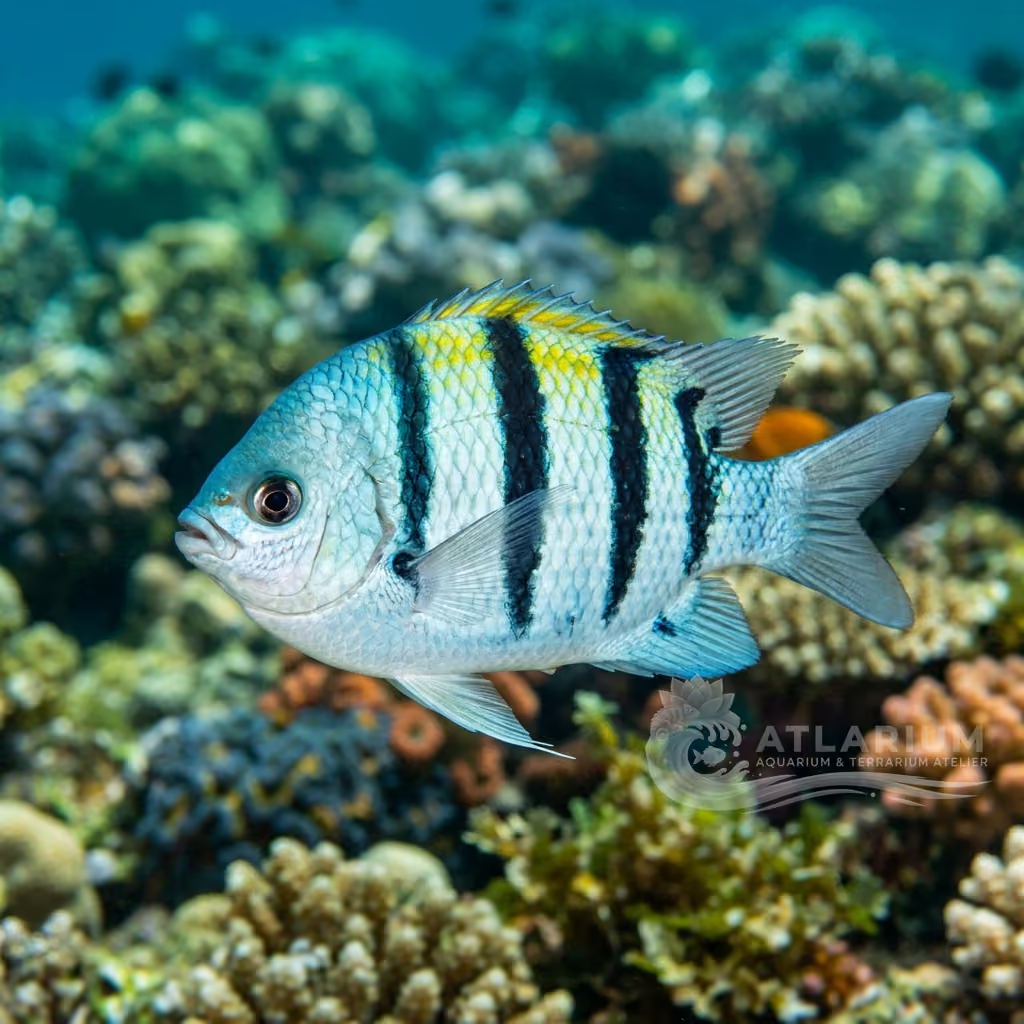
A fiercely territorial damselfish endemic to the Galapagos. Adults are dark grey while juveniles display brilliant neon-blue. It relentlessly farms and guards its turf algae garden from all intruders.
Température de l’eau
20 - 27 °C
Valeur du pH
8.1 - 8.4
Type d'eau
Marin
Niveau dans le bac
Fond et milieu
Taille adulte
15 cm
Volume minimal du bac
>= 300 L
Groupe minimal
>= 1
KH
8 - 12 dKH

Description de l'espèce
Geographical Origin and Habitat: Stegastes beebei is a subtropical marine fish endemic to the Eastern Pacific Ocean, specifically distributed around the Galapagos Islands, Cocos Island, and occasionally along the coastlines of Ecuador and Costa Rica. It inhabits exposed rocky coastlines, shallow volcanic reefs, and wave-swept zones at depths of 1 to 20 meters, where strong currents provide a continuous supply of food.
Taxonomy and Morphology: Belonging to the family Pomacentridae, subfamily Pomacentrinae, this species has a robust, oval, and laterally compressed body. It features a blunt head profile and a small mouth lined with a single row of incisiform teeth specialized for scraping algae off rocky substrates. Adults reach an impressive size for a damselfish, up to 13-15 cm in length.
Social Behavior: Typical of the genus Stegastes, this species is highly solitary and aggressively territorial. Each individual establishes and defends a specific territory containing a 'turf algae garden,' which it cultivates and guards against any intruders, including much larger fish and even human divers. They do not tolerate other members of their species or similar-looking fish.
Coloration and Sexual Dimorphism: Adult coloration is uniform charcoal grey, dark brown, or black, sometimes with a subtle bluish sheen on the margins of the scales. In contrast, juveniles are spectacularly colored, featuring a bright neon-blue body with a black spot ringed in electric blue on the dorsal fin and a blue stripe on the head. No external sexual dimorphism is present between mature males and females.

Soins, reproduction et cohabitation
Aquarium Setup: A minimum aquarium volume of 250 liters is required for a single specimen due to its intense aggression and territorial requirements. The aquascape should feature a large amount of live rock arranged to create natural caves, crevices, and visual barriers, allowing the fish to claim a defined territory and feel secure.
Diet and Feeding: Omnivorous with a strong herbivorous tendency. In the wild, they consume filamentous algae and small invertebrates associated with their algae turfs. In captivity, feed them high-quality spirulina flakes, herbivore pellets, nori seaweed, and fresh blanched vegetables like zucchini, supplemented with frozen foods such as mysis, krill, and brine shrimp.
Water Quality: Because it comes from subtropical waters, it thrives at slightly cooler temperatures than typical tropical reef fish, with an ideal range of 20 to 25 °C. Keep pH stable between 8.1 and 8.4, and specific gravity between 1.021 and 1.025. Strong water movement and efficient filtration are necessary to keep the water well-oxygenated.
Compatibility and Cohabitation: Highly aggressive and difficult to keep in a standard community tank. It will harass peaceful, slow-moving, or smaller tankmates. It should only be housed with large, robust, and fast-moving fish such as large surgeonfish, triggerfish, or large wrasses. Do not house with other damselfishes or similar oval-bodied species.
Aquarium Breeding: Breeding in home aquariums is rare due to their aggressive nature, which makes pair bonding difficult. They are oviparous broadcast-spawners. During spawning, the male prepares a nesting site on a flat rock surface and courts the female. After fertilization, the male alone guards and fans the adhesive eggs until they hatch.
Risks and Diseases: An exceptionally hardy fish with strong resistance to most common marine parasites like ich. The main risks are physical injuries resulting from territorial fights if the aquarium is too small or lacks sufficient structural dividers. It is a very resilient species, making it suitable for hobbyists who can manage its temperament.

Origine et répartition géographiques
Stegastes beebei is a subtropical marine fish endemic to the Eastern Pacific Ocean, specifically distributed around the Galapagos Islands, Cocos Island, and occasionally along the coastlines of Ecuador and Costa Rica. It inhabits exposed rocky coastlines, shallow volcanic reefs, and wave-swept zones at depths of 1 to 20 meters, where strong currents provide a continuous supply of food.
Origine
Océans tropicaux et récifsAmérique du Sud hors AmazonieAmérique centrale et Caraïbes

Profil de poisson
- Tempérament
- Aggressive
- Behaviorally, the Galapagos Ringtail Damselfish is characterized as being highly territorial. They exhibit fascinating social dynamics that can be a true joy to observe in a well-planned display. While generally agreeable, unexpected aggression can sometimes occur if their fundamental environmental needs are not met. Providing adequate hiding spots and sufficient swimming space will go a long way in ensuring their temperament remains calm and manageable.
- Régime alimentaire
- Omnivore
- This species is known to be a herbivorous in its natural habitat, requiring a varied diet in captivity. To ensure optimal health and coloration, provide high-quality prepared foods alongside live or frozen options like brine shrimp or bloodworms. It is essential to match the food particle size to the fish's mouth structure to facilitate easy consumption. Regular rotation of dietary items will prevent nutritional deficiencies and keep the fish highly active.
- Espérance de vie
- 27 years
- Taille adulte
- 15 cm
- Ratio des sexes
- Solitary
- Maintaining an appropriate sex ratio is vital, and a balanced distribution of males and females often works best for the Galapagos Ringtail Damselfish. In many cases, keeping a ratio heavily skewed towards females can help disperse male aggression during the breeding season. It is important to monitor the group dynamics closely to quickly identify and isolate any bullied individuals. A well-structured environment with plenty of visual barriers will support a harmonious mixed-sex group.
- Fréquence d'alimentation
- Twice daily
- Establishing a consistent feeding routine is important, with 1-2 small meals per day being ideal for the Galapagos Ringtail Damselfish. Aquarists should carefully monitor the fish during feeding time to ensure every individual gets its share. Any uneaten food should be promptly removed with a net or siphon to preserve the pristine aquatic environment. During periods of breeding or elevated temperatures, the feeding frequency may be slightly increased.
- Charge biologique
- Medium to High
- The Galapagos Ringtail Damselfish (Stegastes beebei) produces a moderate bioload in the home aquarium. Proper filtration is an absolute necessity to handle the waste output generated by this species. Enthusiasts should be prepared to maintain a strict water change regimen to keep parameters stable. Monitoring the biological capacity of the tank will ultimately prevent unwanted algae spikes and water quality deterioration.
- Courant
- Strong
- Providing a moderate to strong current is highly recommended for the overall well-being of the Galapagos Ringtail Damselfish. Adequate water circulation not only mimics their natural ecosystem but also ensures high dissolved oxygen levels throughout the aquarium. Hobbyists should avoid creating localized dead spots where debris might accumulate. Adjusting the filtration output angle can help achieve the perfect balance between steady circulation and calm resting areas.
- Risque de saut
- No
- Reproduction
- Oviparous
- As a known benthic egg layer, the Galapagos Ringtail Damselfish exhibits fascinating breeding behaviors when conditions are optimal. Providing a separate, specialized breeding setup is often the best approach to ensure a high yield of fry. Parents may require removal post-spawning depending on the specific parental care traits of the species. Raising the young demands pristine water parameters and a steady supply of infusoria or newly hatched artemia.
- Compatibilité et compagnons
- Reef safe
- The Galapagos Ringtail Damselfish is known to be aggressive towards other damsels and timid fish when integrated into a carefully planned setup. They tend to exhibit the best colors and natural behaviors when kept with species of a similar temperament. Aquarists must be cautious to provide enough visual barriers if housing them with semi-aggressive tankmates. Overall, a well-thought-out stocking plan will yield a beautiful, drama-free aquatic display.
- Niveau dans le bac
- Middle/Bottom
- This species is predominantly a all levels dweller within the aquarium setup. Providing the appropriate spatial layout with open swimming areas or dense vegetation where they feel secure is highly beneficial. By understanding their preferred depth, aquarists can carefully select complementary species that occupy other regions of the tank. This spatial separation helps to reduce competition for food and minimizes unnecessary territorial disputes.

Modèles et paramètres scientifiques
FishBase
Fenêtre sur les données scientifiques officielles de l’espèce
FishBase v25.04Données synchronisées le : 15/06/2026
- Niveau trophique
- 3 ± 0,44 se
- Résilience
- Élevée (moins de 15 mois)
- Singularité phylogénétique (PD50)
- 0.5
- Relation bayésienne longueur-poids
- a = 0.02089, b = 2.98
- VulnérabilitéVulnérabilité faible (23 / 100)

Espèces associées
Recommandations regroupées par proches parents, compagnons et soins similaires.