Talbot's Damselfish
Chrysiptera talboti
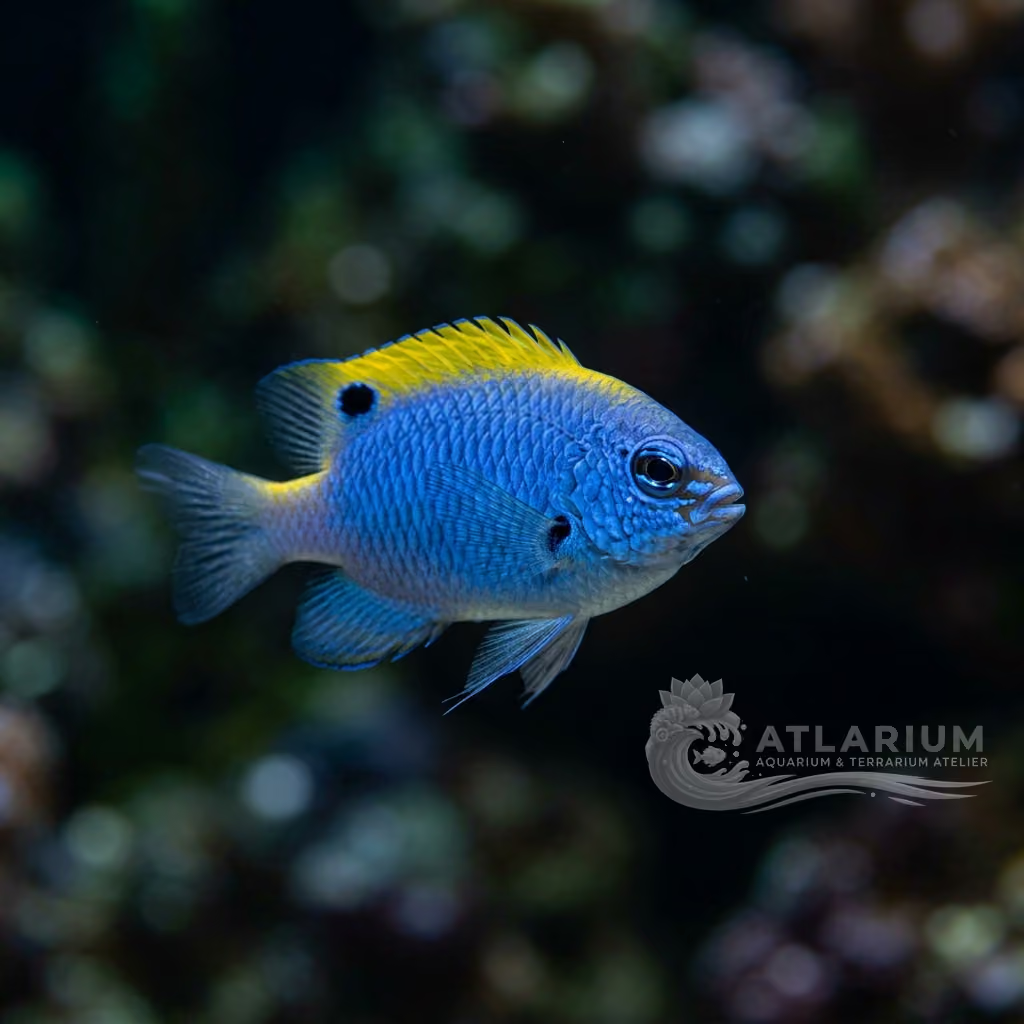
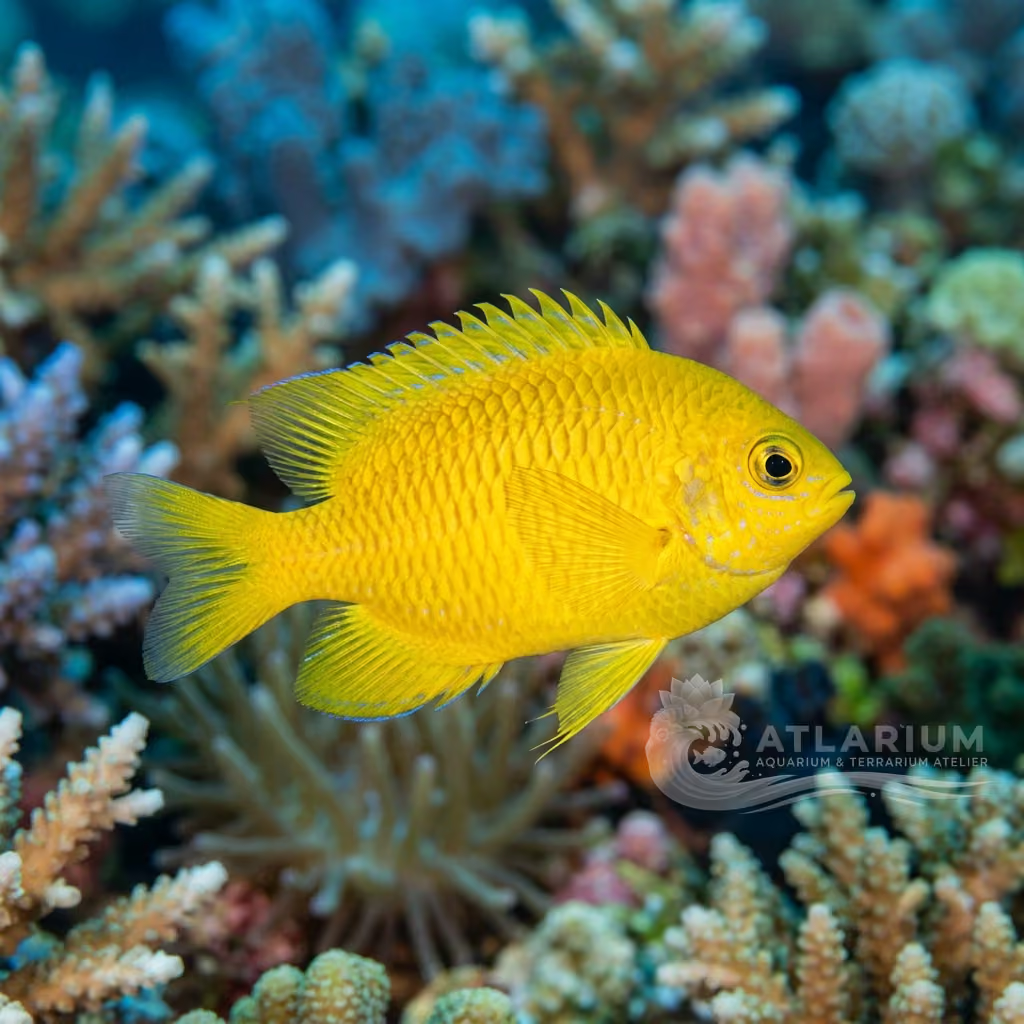
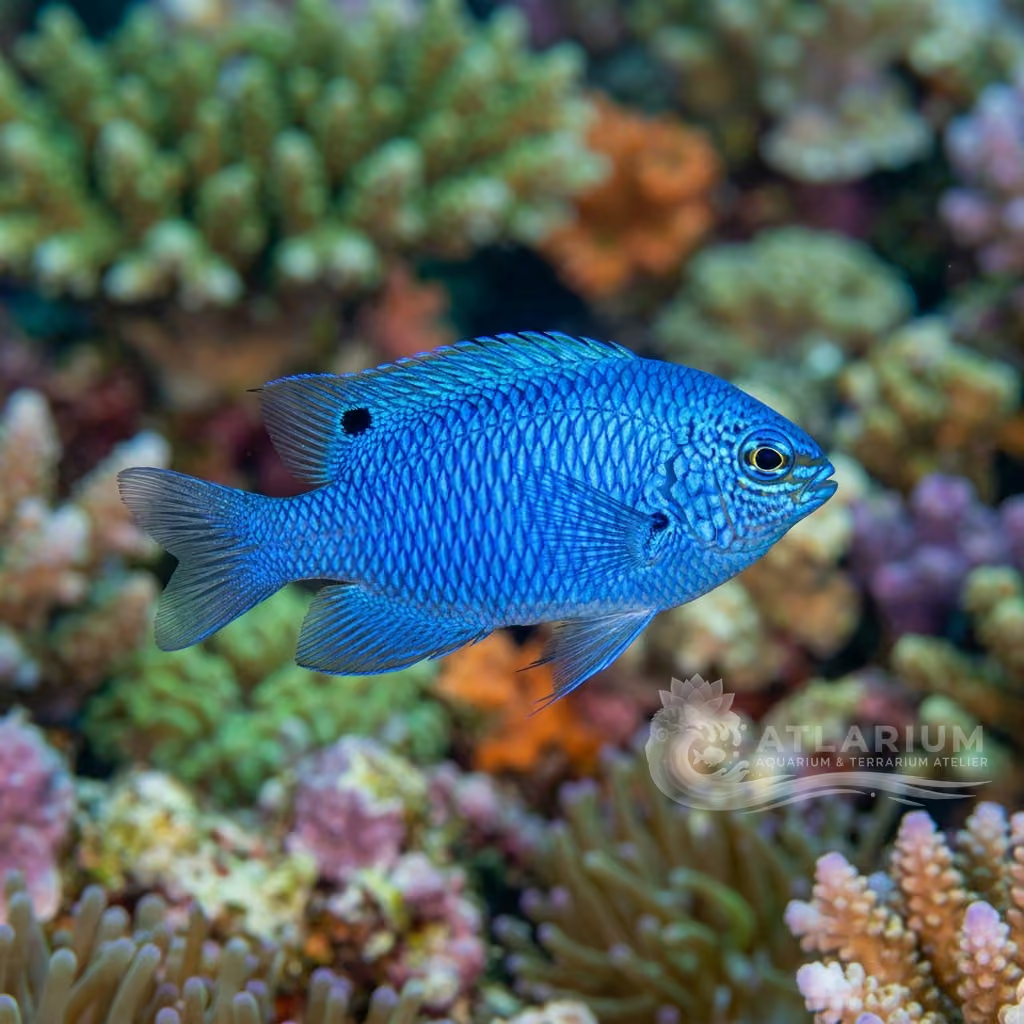
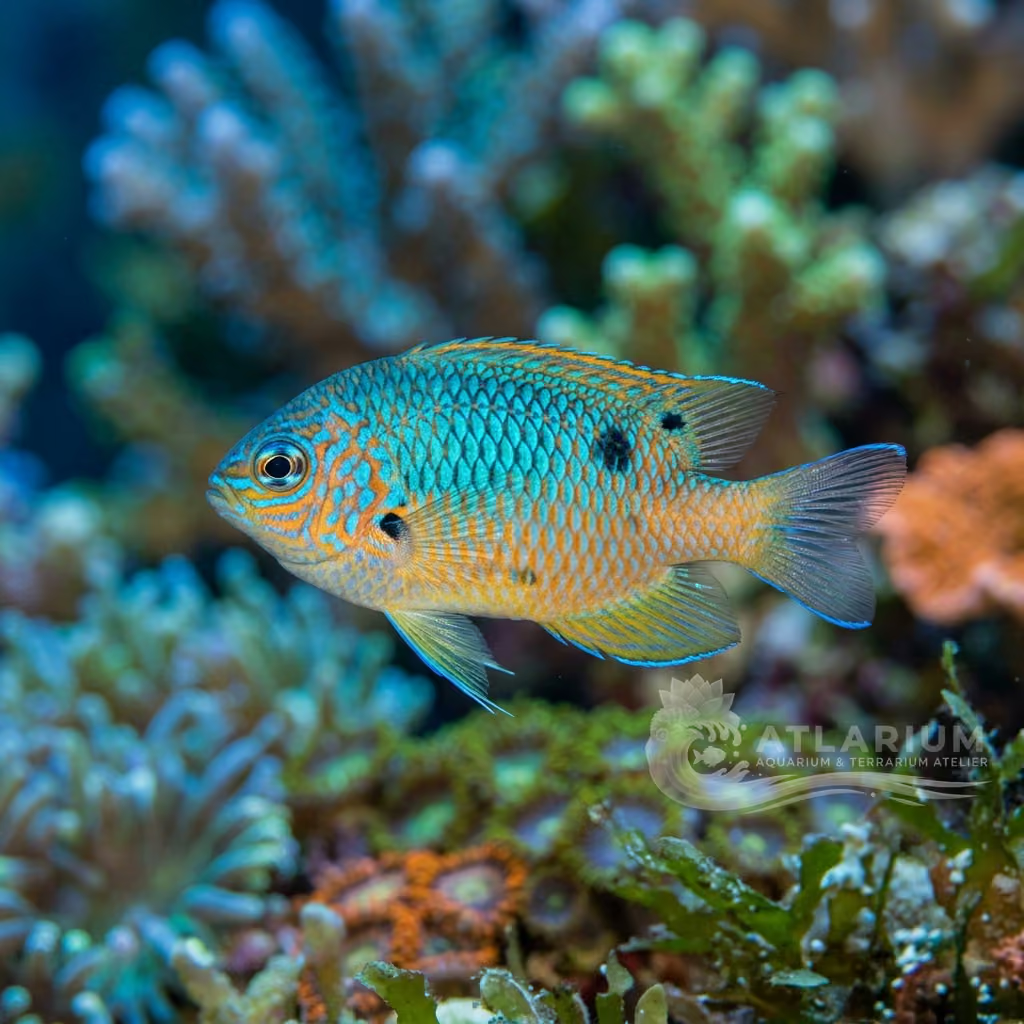
Talbot's Damselfish is a small, high-contrast species with a yellow head and lavender-blue body. It is relatively peaceful, very hardy, and excellent for reef tanks.
Température de l’eau
24 - 27 °C
Valeur du pH
8.1 - 8.4
Type d'eau
Marin
Niveau dans le bac
Fond et milieu
Taille adulte
6 cm
Volume minimal du bac
>= 100 L
Groupe minimal
>= 1
KH
8 - 12 dKH

Description de l'espèce
Geographical Origin and Habitat: Talbot's damselfish, Chrysiptera talboti, is native to the warm tropical waters of the Western Pacific Ocean. Its range includes Indonesia, the Philippines, Palau, Papua New Guinea, the Solomon Islands, Vanuatu, and the Great Barrier Reef of Australia. It inhabits sheltered lagoons, coastal reefs, and seaward slopes rich in coral growth at depths ranging from 2 to 35 meters, staying close to rocky rubble and branching corals.
Taxonomy and Morphology: Belonging to the class Actinopterygii, order Perciformes, family Pomacentridae, and genus Chrysiptera. It features an oval, laterally compressed body typical of the damselfish family, with a small mouth and large eyes. It is a very small species, reaching a maximum length of only 6 to 7 cm, which makes it an excellent choice for smaller home reef aquariums.
Social Behavior: This is a semi-territorial but relatively peaceful species compared to many of its more aggressive family members. In nature, it lives solitarily or in loose groups near the seabed, never straying far from a protective shelter. In captivity, it will claim a small territory centered around a specific cave or crevice, defending it from similar-sized intruders without causing harm.
Coloration and Sexual Dimorphism: It exhibits a striking and high-contrast color pattern. The head, anterior portion of the back, and pelvic fins are a bright, golden yellow, while the remainder of the body is a soft greyish-purple to lavender-blue. A prominent black spot, often ringed with blue, is located on the posterior end of the dorsal fin. There is no visible external sexual dimorphism.

Soins, reproduction et cohabitation
Aquarium Setup: Requires a marine tank of at least 80-100 liters for a single specimen. The aquascape must incorporate plenty of live rock arranged to create multiple caves, tunnels, and hiding spots where the damselfish can establish its territory and retreat if threatened or when sleeping at night.
Diet and Feeding: An opportunistic omnivore. In captivity, it readily accepts a wide variety of foods: frozen items such as mysis shrimp, brine shrimp, copepods, and finely minced seafood. It also eats high-quality dry pellets and flake foods. Providing a varied diet that includes spirulina or other vegetable components helps maintain its bright coloration.
Water Quality: Maintain stable marine water parameters: temperature between 24°C and 28°C, pH between 8.1 and 8.4, and specific gravity of 1.020 to 1.025. Although very hardy and tolerant of minor water quality fluctuations, regular water changes and efficient filtration are recommended to keep nutrients low and water clean.
Compatibility and Cohabitation: Excellent for reef aquariums (reef-safe) as it will not harm corals or ornamental invertebrates. It can cohabit with a wide variety of peaceful to semi-aggressive fish such as clownfish, tangs, wrasses, and gobies. Avoid keeping it with large predators or highly aggressive damselfish. To keep multiple specimens, introduce them simultaneously.
Aquarium Breeding: Spawning in home aquariums is possible. The male cleans a flat rock surface and courts the female to deposit adhesive eggs. The male then guards and aerates the nest until hatching, which occurs in 3 to 5 days. Raising the pelagic larvae is difficult, requiring rotifers and a dedicated rearing system.
Risks and Diseases: This is one of the hardiest marine species available, making it highly suitable for beginners. It is resilient against most common diseases but can contract Marine Ich if subjected to extreme stress or poor tank hygiene. The main risk in the aquarium is territorial aggression if the tank is too small for multiple individuals.

Origine et répartition géographiques
Talbot's damselfish, Chrysiptera talboti, is native to the warm tropical waters of the Western Pacific Ocean. Its range includes Indonesia, the Philippines, Palau, Papua New Guinea, the Solomon Islands, Vanuatu, and the Great Barrier Reef of Australia. It inhabits sheltered lagoons, coastal reefs, and seaward slopes rich in coral growth at depths ranging from 2 to 35 meters, staying close to rocky rubble and branching corals.
Origine
Sélection et cultivarsAmérique du NordAfrique et MadagascarAsie du Sud et du Sud-EstAustralie, Nouvelle-Guinée et OcéanieOcéans tropicaux et récifs

Profil de poisson
- Tempérament
- Semi-aggressive
- The temperament of this species is semi-aggressive, focusing mostly on defending the territory around its favorite cavity. Although territorial, its aggression is remarkably contained compared to other more aggressive and virulent damselfishes of the same genus. In suitable tanks with plenty of rocky hiding spots, it proves to be a lively, curious, and well-integrated community inhabitant.
- Régime alimentaire
- Omnivore
- This species is omnivorous and opportunistic, consuming zooplankton, suspended phytoplankton, and benthic microalgae in the wild. In the aquarium, it readily accepts commercial pellet and flake foods, enriched with spirulina-based plant elements to enhance its bright yellow head. It is important to supplement the diet with small frozen foods such as brine shrimp, copepods, and chopped mysis to provide the proper protein intake.
- Espérance de vie
- 3-7 years
- Taille adulte
- 6 cm
- Ratio des sexes
- Solitary
- Single
- Fréquence d'alimentation
- 2-3 times daily
- It is recommended to feed the fish two to three times daily in small, dosed portions that can be consumed within a few minutes. Frequent but small meals support the high metabolic rate of this small reef fish and help limit territoriality. Distributing the feeding also reduces competition for resources among tankmates.
- Charge biologique
- Low to Medium
- Talbot's damselfish is a tiny, vividly colored fish that imposes a very light biological load on an aquarium's filtration system. Their small appetite and correspondingly small waste output make them ideal candidates for nano reefs or heavily stocked larger tanks. A standard reef maintenance schedule including efficient skimming will easily neutralize any waste they produce. They are highly efficient at consuming small food particles, leaving very little uneaten food to decay in the system.
- Courant
- Moderate
- It prefers moderate water currents, which mirror the protected coastal lagoons and tropical reef slopes where it lives in the wild. A constant but not excessively violent water flow ensures proper stimulation for the fish and good overall oxygenation of the tank. It is advisable to design the rock layout to include reduced-current zones where the damselfish can rest peacefully.
- Risque de saut
- No
- Reproduction
- Oviparous
- It is an oviparous species that deposits adhesive benthic eggs on solid walls of caves or crevices previously cleaned by the male. Throughout the embryonic development period, the male fiercely defends the nest and provides aeration to the eggs by constantly fanning them. Hatching occurs quickly, but rearing the fry in the aquarium presents great difficulties due to the pelagic larval stage and the small initial size of the larvae.
- Compatibilité et compagnons
- Reef safe
- This small damselfish is considered relatively peaceful and safe for reef aquariums, as it does not harass corals, anemones, or small crustaceans. It can be kept with peaceful and active fish such as clownfish, medium-sized tangs, gobies, and wrasses, while cohabitation with large predators should be avoided. To contain intraspecific aggression, it is preferable to house a single specimen or a well-mated pair.
- Niveau dans le bac
- Middle/Bottom
- This species fundamentally occupies the lower to middle levels of the water column, strictly tying themselves to the reef structure. They establish small territories within the rockwork and spend their entire day darting out to snatch zooplankton before instantly retreating. They are rarely observed swimming in the completely open upper regions of the tank. Providing a scape with numerous small caves, holes, and branching corals perfectly aligns with their natural spatial behavior.

Modèles et paramètres scientifiques
FishBase
Fenêtre sur les données scientifiques officielles de l’espèce
FishBase v25.04Données synchronisées le : 15/06/2026
- Niveau trophique
- 2,8 ± 0,33 se
- Résilience
- Élevée (moins de 15 mois)
- Singularité phylogénétique (PD50)
- 0.5
- Relation bayésienne longueur-poids
- a = 0.01445, b = 3
- VulnérabilitéVulnérabilité faible (10 / 100)

Espèces associées
Recommandations regroupées par proches parents, compagnons et soins similaires.