One-spot Damselfish
Chrysiptera unimaculata
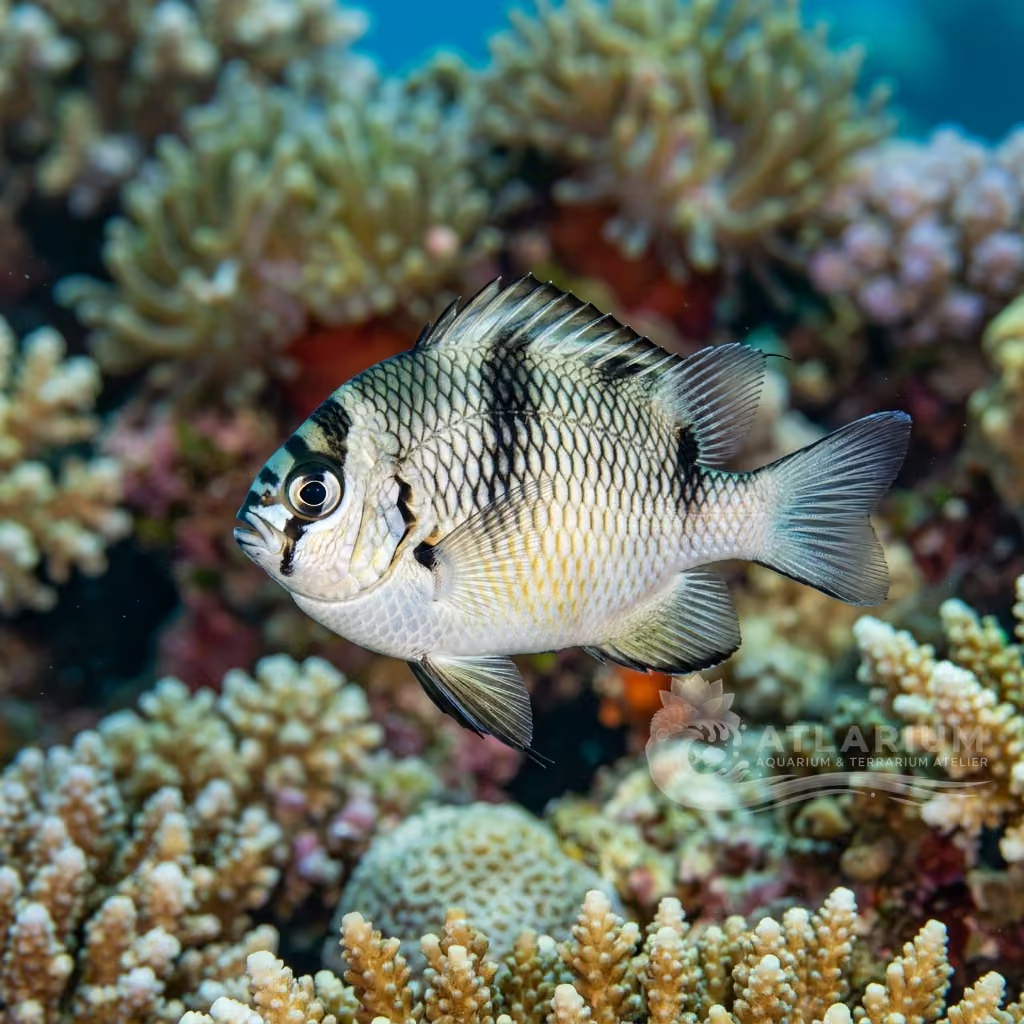
The One-Spot Demoiselle is an exceptionally hardy, highly territorial damselfish with an olive-grey body and a distinct black dorsal spot, suited for robust setups.
Température de l’eau
22 - 28 °C
Valeur du pH
8 - 8.5
Type d'eau
Marin
Niveau dans le bac
Tous les niveaux
Taille adulte
10 cm
Volume minimal du bac
>= 120 L
Groupe minimal
>= 1
KH
8 - 12 dKH

Description de l'espèce
Geographical Origin and Habitat: Chrysiptera unimaculata is widely distributed throughout the tropical Indo-Pacific, extending from the Red Sea and East African coast to Fiji, ranging north to southern Japan, and south to northern Australia. It primarily inhabits shallow coastal waters, sheltered inshore reefs, tide pools, and rocky shores exposed to wave action. It is found in shallow depths, usually between 0 and 3 meters, in areas with high water motion and organic debris.
Taxonomy and Morphology: This species belongs to the family Pomacentridae and subfamily Pomacentrinae. It features a laterally compressed, oval, and robust body profile characteristic of the damselfishes within the genus Chrysiptera. It has a small mouth equipped with tiny teeth suited for scraping algae and capturing small invertebrates. It is a small fish, reaching a maximum adult length of approximately 8 cm.
Social Behavior: It is highly territorial and aggressive, particularly toward members of its own species or similarly shaped fishes. It establishes a strict territory around a rock crevice or cave and defends it aggressively against any intruders, regardless of their size. It is a solitary species that will only tolerate other fish if housed in very large aquariums.
Coloration and Sexual Dimorphism: Adult coloration is generally plain, ranging from olive-grey to dark brown or blackish. The defining feature from which its scientific name is derived is a single prominent black spot located at the posterior base of the dorsal fin, which is often ringed with electric blue in juveniles. Juveniles may also display thin blue lines on the head that fade with age. There is no visible sexual dimorphism.

Soins, reproduction et cohabitation
Aquarium Setup: A minimum aquarium volume of 120 to 150 liters is recommended for a single specimen. The tank should be decorated with plenty of live rock to create multiple hiding spots, crevices, and caves, allowing the damselfish to establish its territory. While open swimming space is needed, visual barriers are essential to reduce aggression.
Diet and Feeding: It is an opportunistic omnivore with a hearty appetite. It readily accepts all types of marine aquarium foods, including dry flakes, pellets, spirulina, and frozen foods like brine shrimp, mysis, chopped krill, and lobster eggs. A varied diet keeps the fish healthy and vibrant. Feed 1 to 2 times daily.
Water Quality: It is exceptionally hardy and tolerant of fluctuating water conditions, making it suitable for newly cycled aquariums. Standard marine parameters should be maintained: temperature of 22°C to 27°C, pH of 8.1 to 8.4, and salinity between 1.020 and 1.025. Regular partial water changes are sufficient.
Compatibility and Cohabitation: Due to its territorial behavior, it should be the last fish introduced to a community tank to prevent it from bullying newcomers. It coexists well with larger, robust fish such as tangs, dwarf angelfish, or active wrasses. Avoid housing it with small, shy species like gobies or firefish, which will be chased constantly.
Aquarium Breeding: Breeding is possible in the home aquarium. It is an oviparous species, with partners forming temporary pairs for spawning. The female deposits adhesive eggs inside a cave or on a flat rock surface cleared by the male. The male fertilizes the eggs and guards them aggressively until they hatch (typically in 3-5 days).
Risks and Diseases: Chrysiptera unimaculata is highly disease-resistant. It rarely contracts common marine parasites like ich under normal conditions. The primary risk is physical injury resulting from territorial fights with other aggressive tankmates, which can lead to secondary bacterial infections if not treated.

Origine et répartition géographiques
Chrysiptera unimaculata is widely distributed throughout the tropical Indo-Pacific, extending from the Red Sea and East African coast to Fiji, ranging north to southern Japan, and south to northern Australia. It primarily inhabits shallow coastal waters, sheltered inshore reefs, tide pools, and rocky shores exposed to wave action. It is found in shallow depths, usually between 0 and 3 meters, in areas with high water motion and organic debris.
Origine
Océans tropicaux et récifsAfrique et MadagascarAsie de l'EstAustralie, Nouvelle-Guinée et Océanie

Profil de poisson
- Tempérament
- Aggressive
- The temperament of this fish is markedly aggressive and strongly territorial toward anyone who approaches its rocky living space. It displays remarkable boldness and combativeness, constantly patrolling the tank and decisively defending its favorite area. In large aquariums rich in visual barriers, its aggression can be successfully managed by housing suitable tankmates.
- Régime alimentaire
- Omnivore
- This species is omnivorous and requires a varied and balanced diet to remain healthy. In the wild, it feeds mainly on filamentous algae and small benthic crustaceans. In the aquarium, it accepts high-quality commercial pellets and flakes with a vegetable base enriched with spirulina, as well as frozen foods such as mysis, brine shrimp, and chopped krill. Offering both protein and plant-based foods regularly prevents intestinal issues and supports its remarkable hardiness.
- Espérance de vie
- 5-15 years
- Taille adulte
- 10 cm
- Ratio des sexes
- Flexible
- Solitary or mated pairs
- Fréquence d'alimentation
- Twice daily
- It is recommended to feed this fish once or twice daily with amounts that can be consumed within a few minutes. Moderate but regular portions help satisfy its dynamic metabolism and prevent excess organic waste in the tank. Feeding at constant intervals helps reduce territorial excitement associated with nutrition.
- Charge biologique
- Low to Medium
- The one-spot demoiselle creates a moderate bioload in the marine aquarium, directly tied to its highly active nature and territorial behavior. Because they burn significant energy defending their claimed space and foraging for food, they require frequent feedings that translate to elevated waste production. An established aquarium with strong mechanical and biological filtration will easily process their output. However, in smaller nano setups, their bioload might require more frequent water changes to maintain ideal water parameters.
- Courant
- Strong
- In the wild, it inhabits areas exposed to strong currents and surge, preferring a strong and vigorous water flow in the aquarium as well. Efficient water movement supports high oxygenation, which is fundamental for its overall well-being. However, it is recommended to set up the live rock to provide deep cracks and caves where the fish can take refuge and rest sheltered from the current.
- Risque de saut
- No
- Reproduction
- Oviparous
- This oviparous species exhibits typical damselfish reproductive behavior, depositing adhesive benthic eggs on solid surfaces. The male takes care of preparing and cleaning the nesting site, aerating the eggs and vigorously defending the clutch from any predators until hatching. Rearing the fry in the aquarium is extremely complex due to the pelagic larval stage and the microscopic size of the larvae, which require fresh cultures of rotifers.
- Compatibilité et compagnons
- Highly aggressive
- This species is extremely aggressive and territorial, especially as it ages, making it incompatible with docile, slow fish or other members of its own family. It is completely safe for reef corals and can be kept in tanks with equally robust and active species, such as dottybacks, large angelfish, tangs, and triggerfish. It is recommended to introduce it as the last guest in the aquarium to prevent excessive territorial dominance.
- Niveau dans le bac
- All levels
- This demoiselle strongly favors the middle to lower levels of the aquarium, continuously patrolling the rockwork to defend its territory. They are fiercely attached to specific caves or crevices and rarely venture into the open upper water column unless actively feeding. Their entire social and defensive life is centered around the reef structure, making them a predominantly benthic-adjacent swimmer. Aquarists should ensure the tank provides ample rocky structures to support their lower-level territorial habits.

Modèles et paramètres scientifiques
FishBase
Fenêtre sur les données scientifiques officielles de l’espèce
FishBase v25.04Données synchronisées le : 15/06/2026
- Niveau trophique
- 2,1 ± 0,2 se
- Résilience
- Élevée (moins de 15 mois)
- Singularité phylogénétique (PD50)
- 0.5
- Relation bayésienne longueur-poids
- a = 0.01445, b = 3
- VulnérabilitéVulnérabilité faible (10 / 100)

Espèces associées
Recommandations regroupées par proches parents, compagnons et soins similaires.