Black-axil Chromis
Chromis atripectoralis
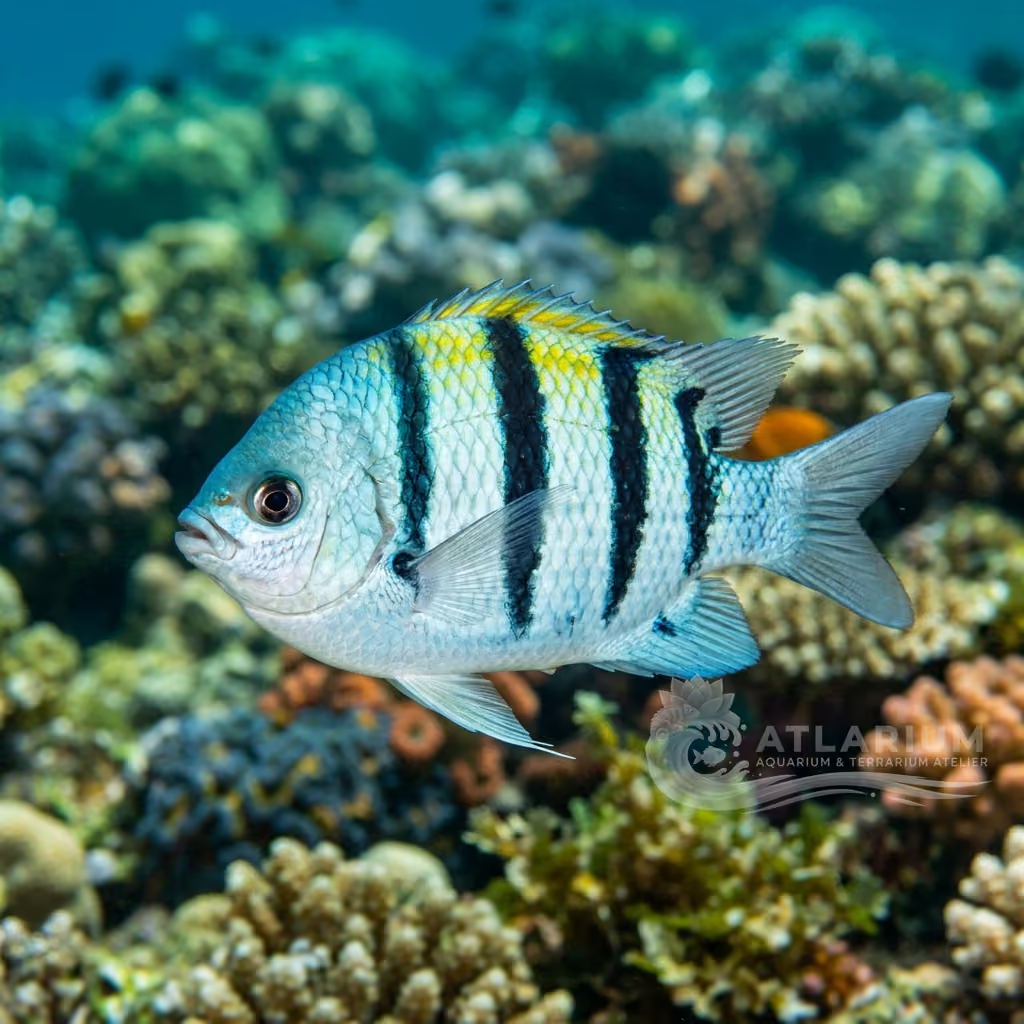
The Black-axil Chromis is a lively, schooling fish with brilliant blue-green colors and a distinctive black pectoral spot. Perfect for large community reef tanks.
Température de l’eau
22 - 26 °C
Valeur du pH
8.1 - 8.4
Type d'eau
Marin
Niveau dans le bac
Milieu
Taille adulte
12 cm
Volume minimal du bac
>= 150 L
Groupe minimal
>= 5
KH
8 - 12 dKH

Description de l'espèce
Geographical Origin and Habitat: The black-axil chromis, Chromis atripectoralis, is widely distributed in the tropical waters of the Indo-Pacific Ocean. It is found from the Red Sea and East African coast to the Line and Tuamotu islands, ranging north to southern Japan and south to Lord Howe Island and the Great Barrier Reef of Australia. It inhabits shallow lagoons, coastal reefs, and outer reef slopes down to depths of 30 meters, living in large schools closely associated with branching stony corals, particularly Acropora.
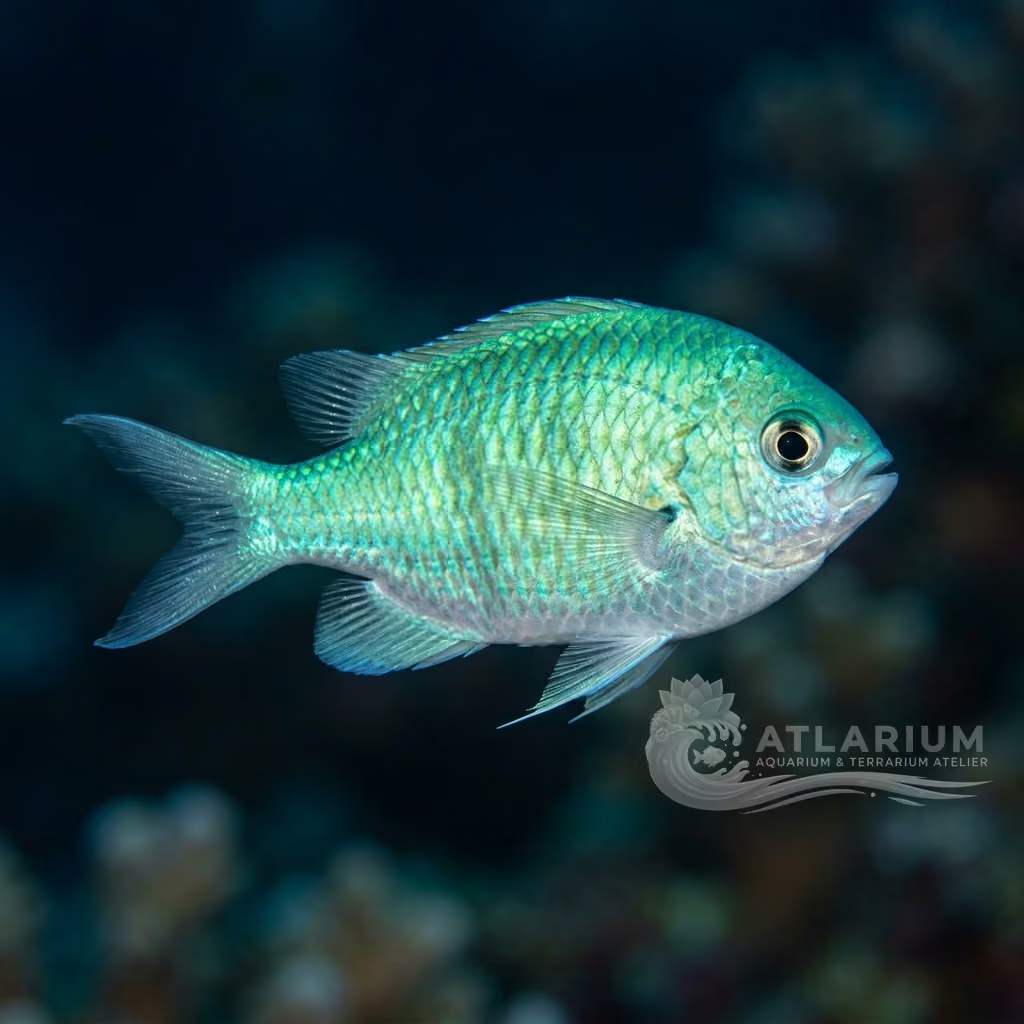
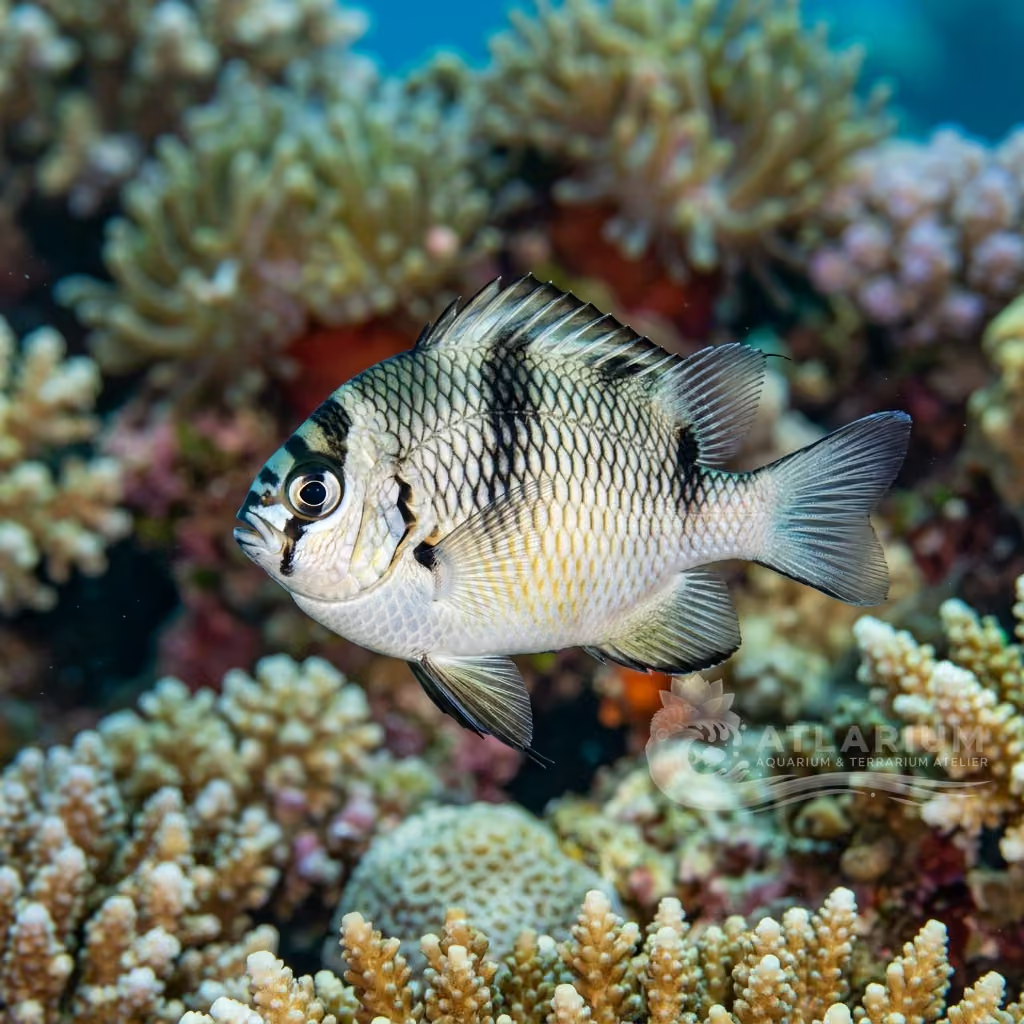
Taxonomy and Morphology: Belonging to the class Actinopterygii, order Perciformes, family Pomacentridae, and genus Chromis, this fish features a slender, laterally compressed body. It has a small, protractile mouth suited for picking zooplankton out of the water. While very similar in appearance to the blue-green chromis (Chromis viridis), it grows larger (up to 12 cm) and is distinguished by a prominent black spot at the inner base (axil) of its pectoral fins.
Social Behavior: An extremely gregarious and active species that must be kept in groups. In the wild, schools of hundreds hover above branching corals to feed on plankton, diving into the coral branches for protection when threatened. In the aquarium, they maintain this schooling behavior, swimming actively in the upper and middle water column, creating a dynamic visual display.
Coloration and Sexual Dimorphism: The body displays a brilliant, metallic blue-green coloration, with a lighter, silvery belly. The key diagnostic feature is the dark black spot located at the pectoral fin axil. There is no visible external sexual dimorphism, though dominant males may display temporary coloration changes during spawning activities, appearing slightly more intense.

Soins, reproduction et cohabitation
Aquarium Setup: Requires an aquarium of at least 200 liters to house a school of 6 to 8 individuals, allowing them room to display natural schooling dynamics. The tank should feature ample open swimming areas combined with branching corals (real or synthetic) or rocky structures that provide narrow channels for shelter and sleeping at night.
Diet and Feeding: An active omnivore and planktivore. It eagerly accepts almost any food offered: high-quality dry flakes and pellets, and frozen foods such as mysis shrimp, brine shrimp, copepods, and fish eggs. Due to their high activity levels, they benefit from being fed small portions multiple times a day (ideally 2 to 3 times).
Water Quality: Maintain stable marine reef water parameters: temperature between 24°C and 28°C, pH between 8.1 and 8.4, and specific gravity of 1.021 to 1.025. Strong water movement and excellent oxygenation are essential to support their continuous swimming. Regular water changes help keep nitrates at minimum levels.
Compatibility and Cohabitation: Excellent for community marine and reef aquariums, as it is completely reef-safe. It is peaceful toward other species. Within its own group, a linear hierarchy is established; if kept in numbers that are too small (fewer than 5-6), dominant fish may bully weaker ones, sometimes to death. Always maintain in a larger school.
Aquarium Breeding: Spawning in captivity is possible but challenging to raise. Males clean a nesting site on a hard substrate or rock face, then court females to lay adhesive eggs. The male guards and fans the nest until they hatch (typically 3 to 4 days). The pelagic larvae require microscopic live foods like rotifers to survive.
Risks and Diseases: Quite hardy, but can contract external parasites like Marine Ich if stressed during transport or exposed to poor water conditions. The primary risk in the aquarium is intraspecific aggression if the tank is too small or if the group is too small, which can lead to the weaker members of the school being systematically picked off.

Origine et répartition géographiques
The black-axil chromis, Chromis atripectoralis, is widely distributed in the tropical waters of the Indo-Pacific Ocean. It is found from the Red Sea and East African coast to the Line and Tuamotu islands, ranging north to southern Japan and south to Lord Howe Island and the Great Barrier Reef of Australia. It inhabits shallow lagoons, coastal reefs, and outer reef slopes down to depths of 30 meters, living in large schools closely associated with branching stony corals, particularly Acropora.
Origine
Océans tropicaux et récifsAfrique et MadagascarAsie de l'EstAustralie, Nouvelle-Guinée et Océanie

Profil de poisson
- Tempérament
- Peaceful
- They are peaceful, energetic schooling fish that add constant motion to the tank. They establish a gentle pecking order without inflicting serious harm on one another. Their presence acts as a soothing signal to other cautious reef inhabitants.
- Régime alimentaire
- Omnivore
- They are omnivorous planktivores that feed continuously in the water column. Provide a varied diet of high-quality marine flakes, small pellets, and frozen mysis shrimp. Supplementing with cyclops and finely chopped seafood maintains their vibrant coloration.
- Espérance de vie
- 8-15 years
- Taille adulte
- 12 cm
- Ratio des sexes
- School
- Keeping them in a large odd-numbered school (seven or more) diffuses internal hierarchy squabbles. There are no obvious external sexual dimorphisms between males and females. A large group ensures a peaceful dynamic and a spectacular visual display.
- Fréquence d'alimentation
- Twice daily
- Due to their active metabolism, they should be fed small amounts three times a day. Frequent, tiny meals mimic their natural continuous feeding behavior on the reef. Ensure all food is consumed rapidly to prevent nutrient spikes.
- Charge biologique
- Medium
- This small marine damselfish produces a relatively low bioload. They are typically kept in schools, so their cumulative bioload necessitates efficient protein skimming. Regular maintenance and water changes keep the reef environment stable.
- Courant
- Strong
- They thrive in areas of strong, turbulent water movement simulating the upper reef slopes. High flow keeps their food suspended in the water column longer for easy grazing. It also encourages their natural schooling behavior against the current.
- Risque de saut
- No
- Reproduction
- Oviparous
- They are nest builders that lay their eggs on hard substrates or coral rubble. The male vigorously guards and fans the nest until the eggs hatch. Raising the microscopic fry in captivity is extremely difficult due to their dietary requirements.
- Compatibilité et compagnons
- Peaceful
- They are reef-safe and exceptionally peaceful towards other fish and invertebrates. They make fantastic dither fish, encouraging shyer species to come out into the open. Avoid housing them with large, aggressive predatory fish that may eat them.
- Niveau dans le bac
- Middle
- They occupy the mid-to-upper levels of the aquarium almost exclusively. They prefer swimming in the open water column above the rockwork. Ample unobstructed swimming space is essential for a healthy school.

Modèles et paramètres scientifiques
FishBase
Fenêtre sur les données scientifiques officielles de l’espèce
FishBase v25.04Données synchronisées le : 15/06/2026
- Niveau trophique
- 3,1 ± 0,1 se
- Résilience
- Élevée (moins de 15 mois)
- Singularité phylogénétique (PD50)
- 0.5
- Relation bayésienne longueur-poids
- a = 0.02138, b = 3.07
- VulnérabilitéVulnérabilité faible (10 / 100)

Espèces associées
Recommandations regroupées par proches parents, compagnons et soins similaires.