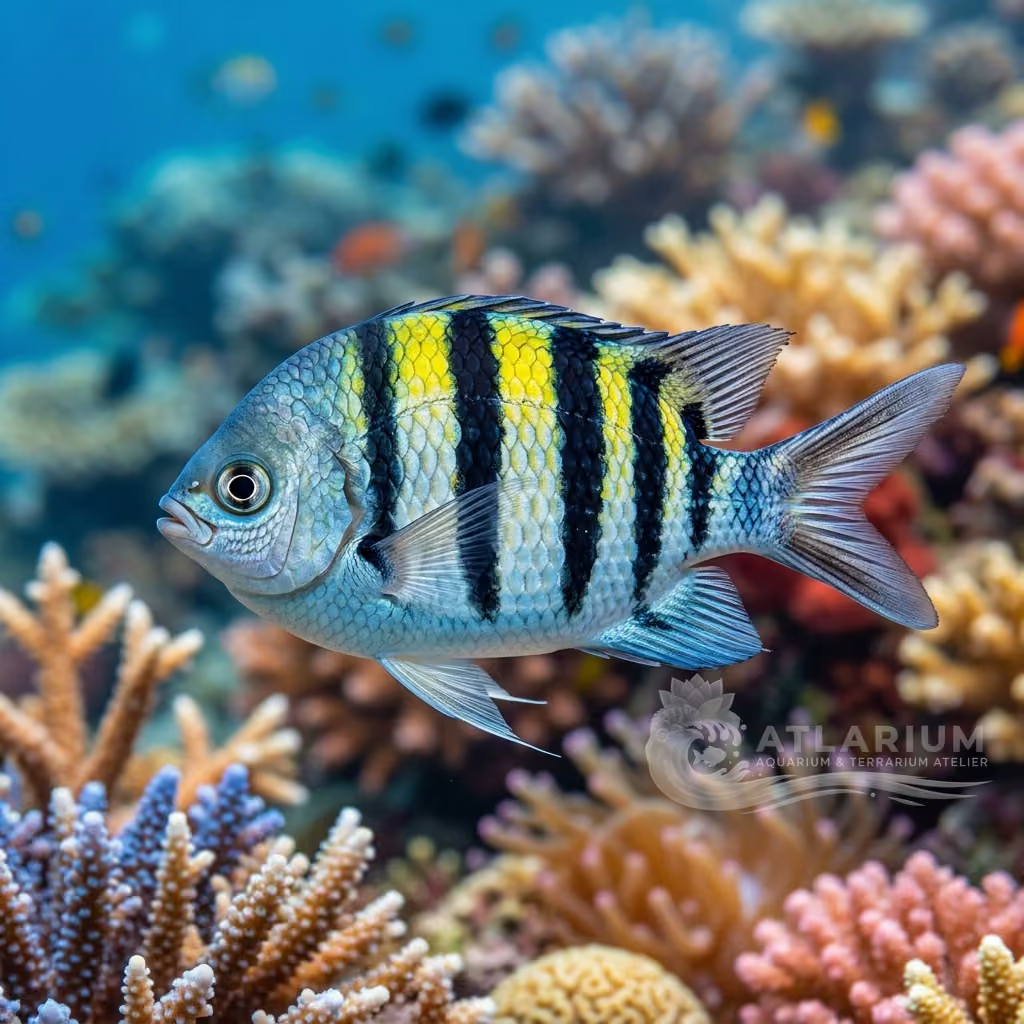
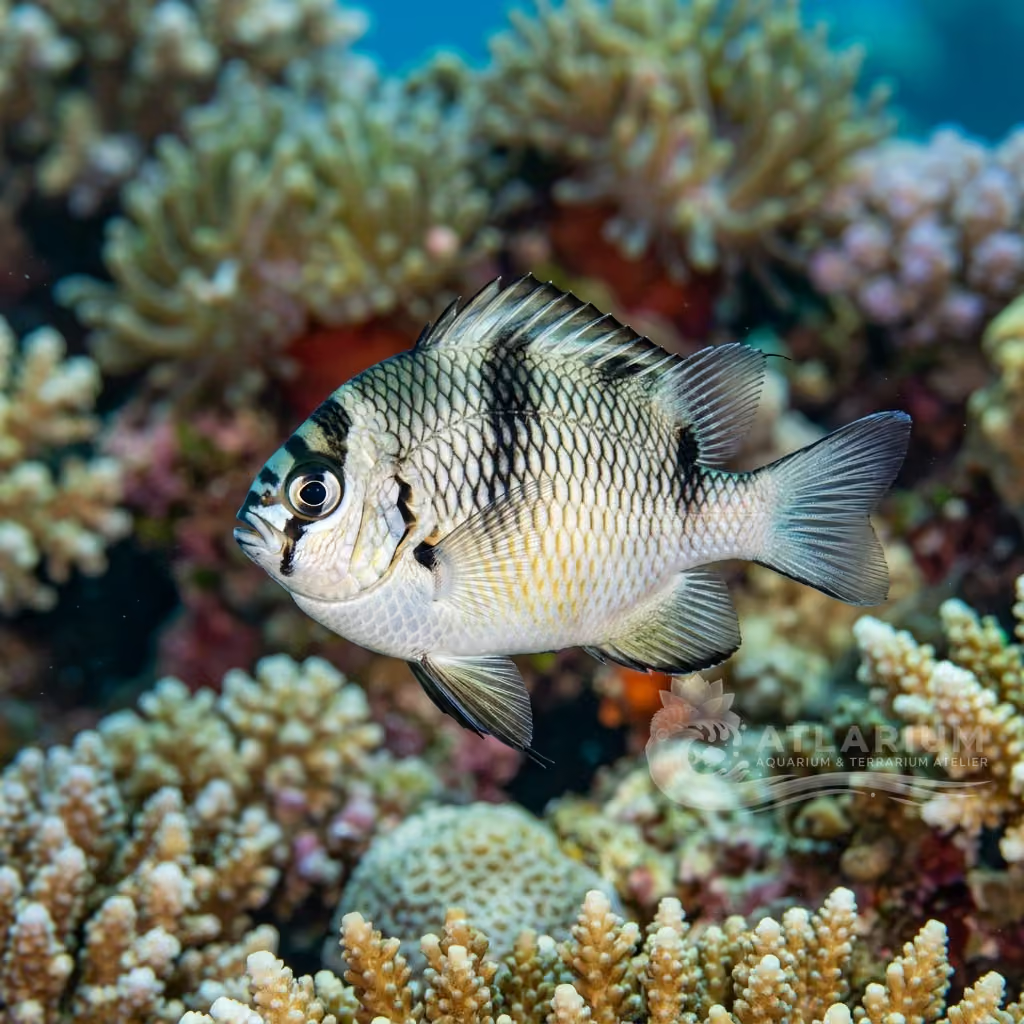
Bullseye Damselfish
Abudefduf taurus
A tropical Atlantic damselfish from surge zones. Being very large and robust, it demands a 400L aquarium with oversized filtration and powerful water movement.
Température de l’eau
22 - 27 °C
Valeur du pH
8.1 - 8.4
Type d'eau
Marin
Niveau dans le bac
Milieu
Taille adulte
25 cm
Volume minimal du bac
>= 400 L
Groupe minimal
>= 5

Description de l'espèce
Geographical Origin and Habitat: Tropical Atlantic Ocean: common along the coasts of Florida and the Gulf of Mexico to Venezuela, and along the West African coast. It inhabits shallow rocky reefs and intertidal zones exposed to strong wave action and surges, where it finds shelter in rocky crevices.
Taxonomy and Morphology: Belongs to the family Pomacentridae, subfamily Pomacentrinae. It is the largest damselfish species in its genus, characterized by a robust, stocky, and powerful body shape. It can reach a maximum length of about 25 centimeters in adulthood, with a very high body profile.
Social Behavior: Solitary species as adults, extremely territorial and aggressive towards any intruder that approaches its territory. It inhabits surge zones and strenuously defends its rocky shelters from fish of equal or larger size, showing a highly intolerant temperament.
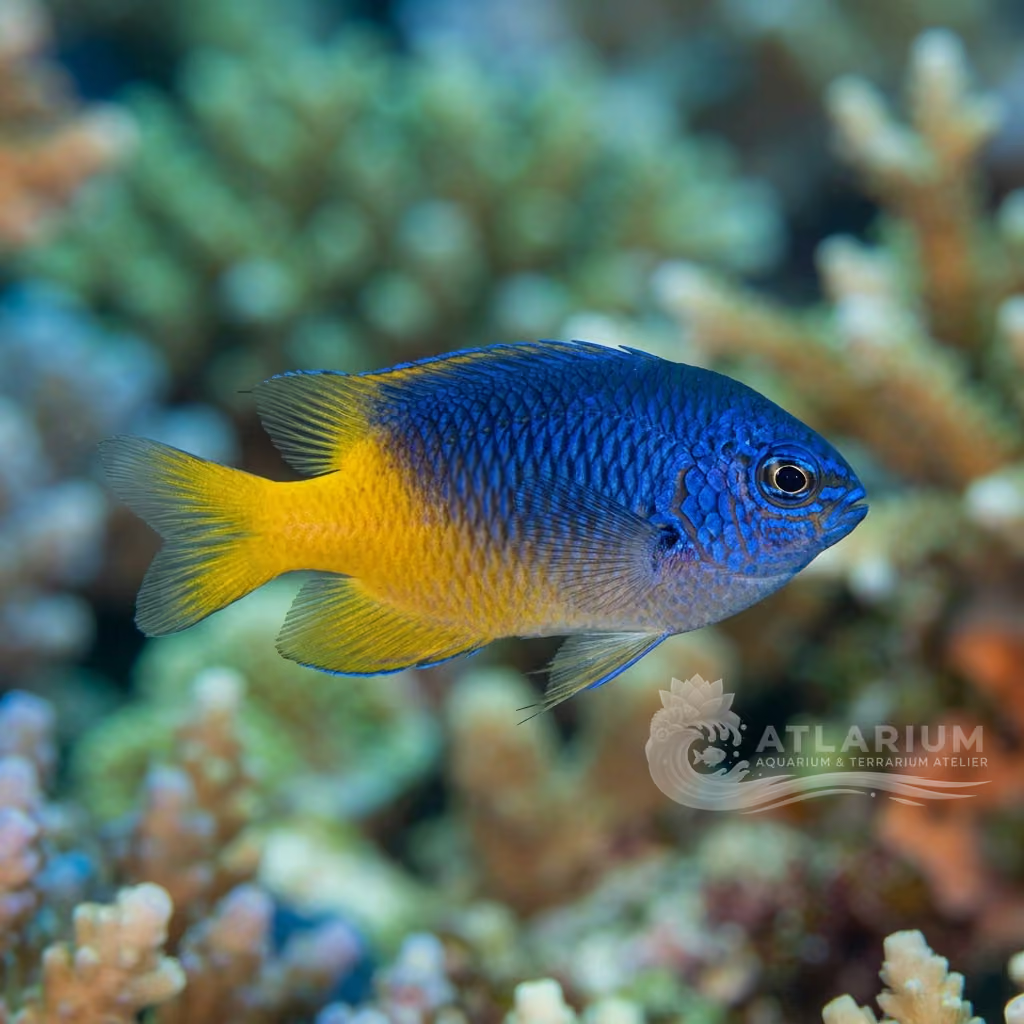
Coloration and Sexual Dimorphism: Pale grey-brownish or olive background coloration. It features five or six wide, vertical dark, faded bands on its sides that tend to pale with age. The margins of the dorsal and anal fins are dark, almost black. There is no visible sexual dimorphism.

Soins, reproduction et cohabitation
Aquarium Setup: Requires a very large marine aquarium, minimum 400 liters, with oversized biological filtration and strong water movement to simulate surge zones. Rocks must be positioned to create stable, heavy structures that the fish cannot move.
Diet and Feeding: Omnivorous. Feeds mainly on benthic algae, small crustaceans, and zooplankton. In the aquarium, it accepts all types of dry foods (pellets, flakes), frozen foods like brine shrimp and mysis, and vegetable preparations based on spirulina or nori sheets, consuming food eagerly.
Water Quality: Stable water parameters: temperature 22-27 °C, pH 8.1-8.4, stable density at 1.020-1.025 with efficient filtration, strong skimming, and a very high level of dissolved oxygen to recreate the conditions of turbulent waters where it lives in the wild.
Compatibility and Cohabitation: Extremely aggressive. Not compatible with other damselfish or small, docile fish. Should only be placed in spacious marine aquariums with large, robust fish like large surgeonfish, triggerfish, or groupers. Consider with caution in coral reef tanks.
Aquarium Breeding: Oviparous reproduction. The male prepares a spawning site on a hard rocky substrate, courts the female, and fertilizes the eggs. He guards the eggs ferociously, attacking anyone who approaches the nest until hatching.
Risks and Diseases: Exceptionally hardy fish, highly resistant to common marine fish diseases. The main risk lies in its destructive aggressiveness, which can lead to serious injury or death of tankmates if kept in spaces that are too confined.

Origine et répartition géographiques
Tropical Atlantic Ocean: common along the coasts of Florida and the Gulf of Mexico to Venezuela, and along the West African coast. It inhabits shallow rocky reefs and intertidal zones exposed to strong wave action and surges, where it finds shelter in rocky crevices.
Origine
Océans tropicaux et récifsAmérique du Sud hors AmazonieAmérique centrale et CaraïbesAmérique du NordAfrique et Madagascar

Profil de poisson
- Tempérament
- Territorial
- This species is extremely pugnacious and dominant. They fearlessly attack intruders and can disrupt the peace of an entire aquarium. They must be added last to minimize the territory they claim as their own.
- Régime alimentaire
- Omnivore
- They are indiscriminate omnivores that greedily consume all standard aquarium fare. Feed them a robust mix of frozen mysis, chopped seafood, and high-quality pellets. Incorporating marine algae ensures their digestive system functions properly.
- Espérance de vie
- 10-12 years
- Taille adulte
- 25 cm
- Ratio des sexes
- Solitary
- It is highly recommended to keep only a single specimen in the aquarium. Conspecific aggression is intense and usually results in the death of the weaker fish. Only public-sized aquariums can successfully house a group of mature adults.
- Fréquence d'alimentation
- Twice daily
- Offer food two to three times daily to keep them satisfied. Frequent feedings help reduce their aggressive tendencies toward other fish. Ensure that uneaten food is promptly removed by the filtration system.
- Charge biologique
- High
- The Night Sergeant generates a moderate bioload that necessitates a robust filtration system. They are messy eaters and produce significant waste. A high-capacity protein skimmer and strict maintenance routine are essential for long-term success.
- Courant
- Strong
- They thrive in areas of strong, turbulent flow. High water movement simulates their natural reef-crest habitat and promotes healthy exercise. Employing multiple wavemakers ensures adequate circulation throughout their environment.
- Risque de saut
- No
- Reproduction
- Oviparous
- They spawn by laying adhesive eggs on rocks which the male vigorously defends. During breeding, their aggression levels peak dramatically. Attempting to rear the larvae in a home aquarium is generally unsuccessful due to specialized needs.
- Compatibilité et compagnons
- Extremely aggressive
- They are highly aggressive and should only be kept with tough, large companions. Tangs, triggers, and large puffers make suitable tank mates. Never house them with peaceful or delicate species, as they will be bullied relentlessly.
- Niveau dans le bac
- Middle
- They dominate the middle to upper water column of the tank. They are highly active, constantly swimming and patrolling their perceived territory. They require plenty of open swimming space alongside their chosen rock caves.

Modèles et paramètres scientifiques
FishBase
Fenêtre sur les données scientifiques officielles de l’espèce
FishBase v25.04Données synchronisées le : 15/06/2026
- Niveau trophique
- 2,1 ± 0,1 se
- Résilience
- Moyenne (1,4 - 4,4 ans)
- Singularité phylogénétique (PD50)
- 0.5
- Relation bayésienne longueur-poids
- a = 0.02239, b = 3.06
- VulnérabilitéVulnérabilité faible (15 / 100)

Espèces associées
Recommandations regroupées par proches parents, compagnons et soins similaires.