Pacific Double-saddle Butterflyfish
Chaetodon ulietensis
A robust and active marine butterflyfish, characterized by two dark saddle-like bands on its back and a strong tendency to feed on benthic invertebrates, making it incompatible with reef aquariums.
Température de l’eau
22 - 27 °C
Valeur du pH
8.1 - 8.4
Type d'eau
Marin
Niveau dans le bac
Fond et milieu
Taille adulte
15 cm
Volume minimal du bac
>= 300 L
Groupe minimal
>= 1

Description de l'espèce
Geographical Origin and Habitat: Widely distributed in the tropical Indo-Pacific Ocean, from the coast of East Africa and the Cocos Islands to Hawaii and the Tuamotu Islands, extending north to southern Japan and south to the Great Barrier Reef. It inhabits coral-rich lagoons, tidal channels, and outer reef slopes at depths between 2 and 30 meters.
Taxonomy and Morphology: Belongs to the family Chaetodontidae, genus Chaetodon. Features a strongly laterally compressed body, discoidal or oval in shape. The snout is moderately elongated and pointed, adapted to pick food from rock crevices and among coral polyps. Reaches a maximum length of about 15 centimeters.
Social Behavior: Generally peaceful and active species that lives solitarily or in stable pairs during the breeding season. In food-rich areas, large groups can sometimes be observed, occasionally mixed with other similar species. Displays territorial behavior towards other similar butterflyfishes.
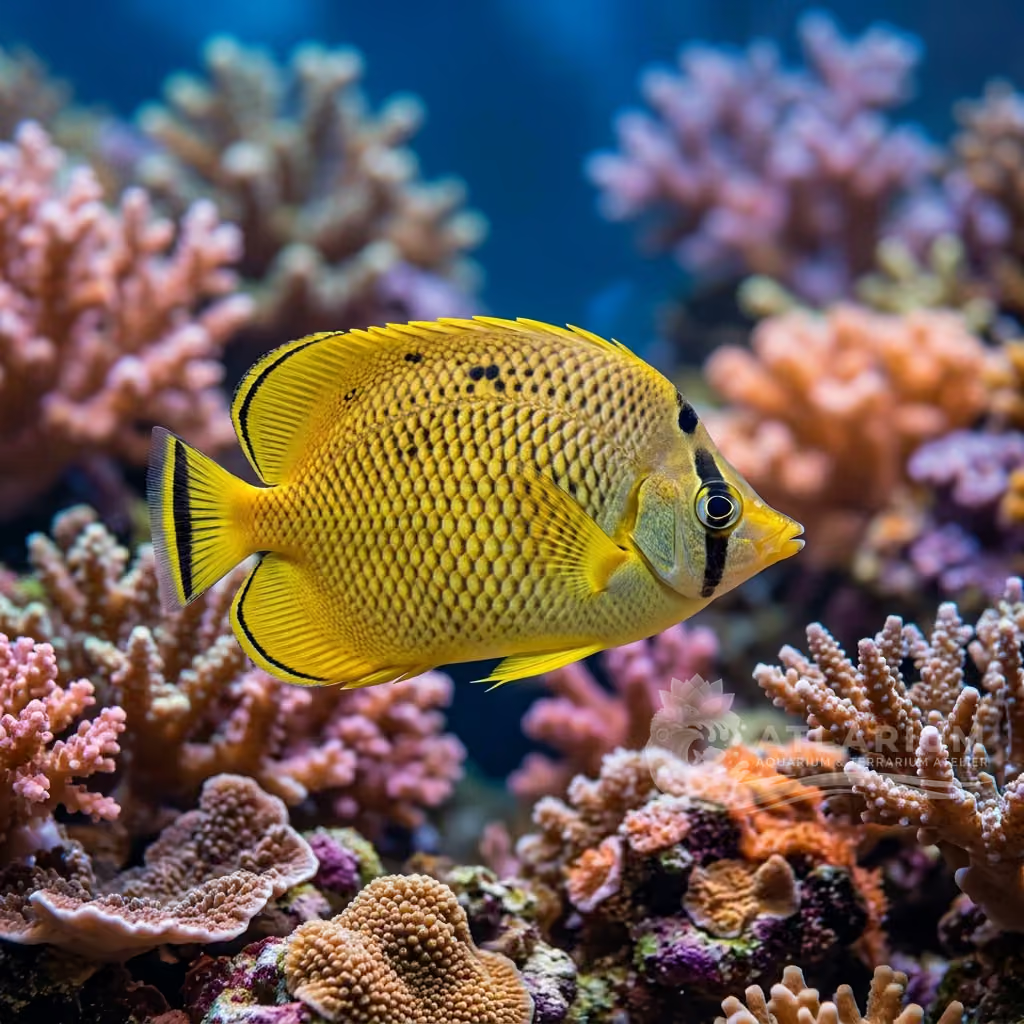
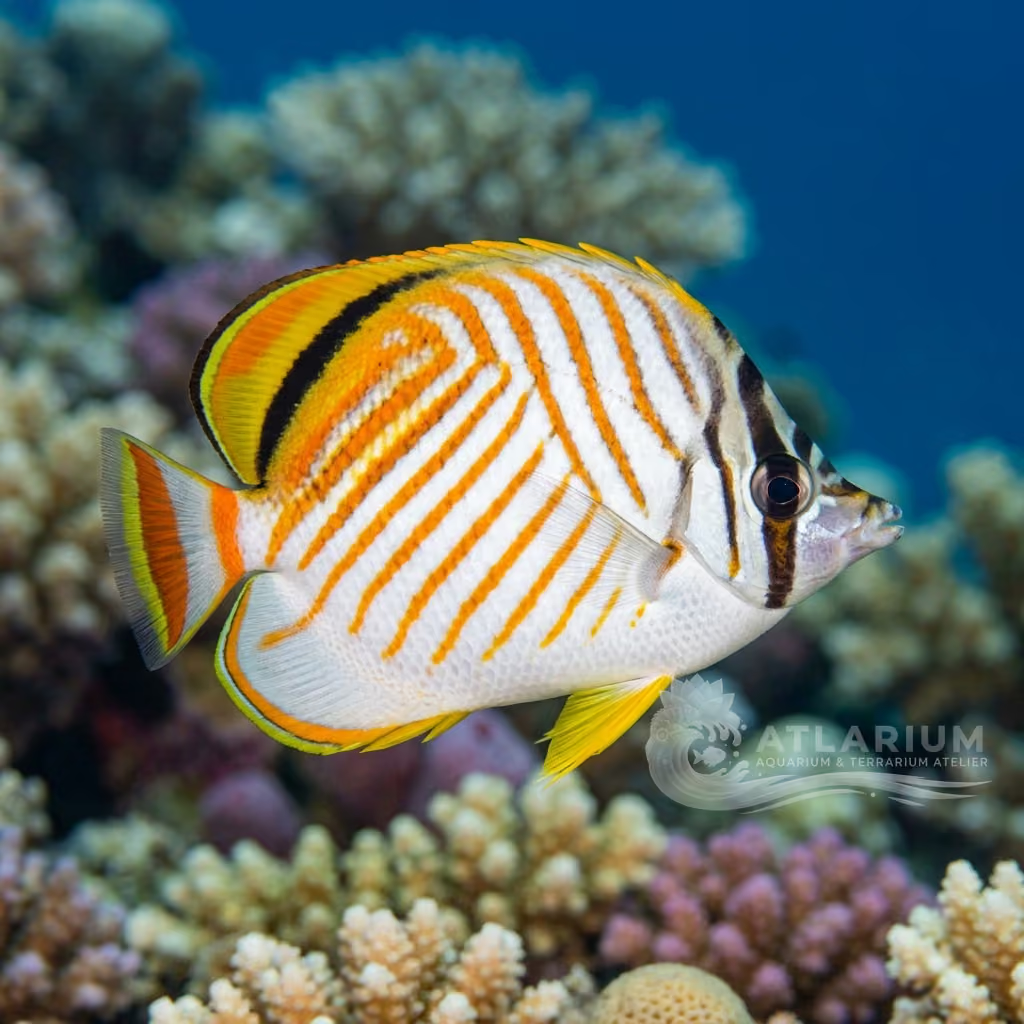
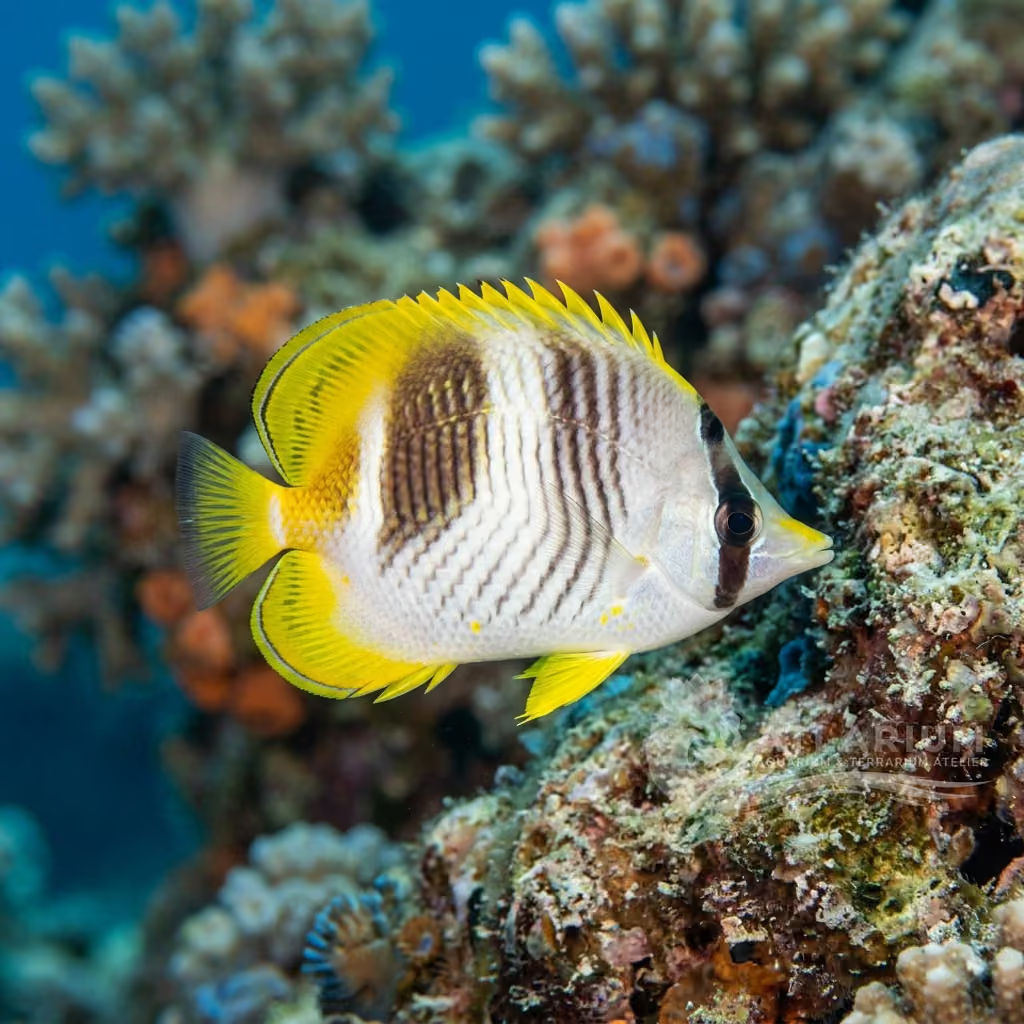
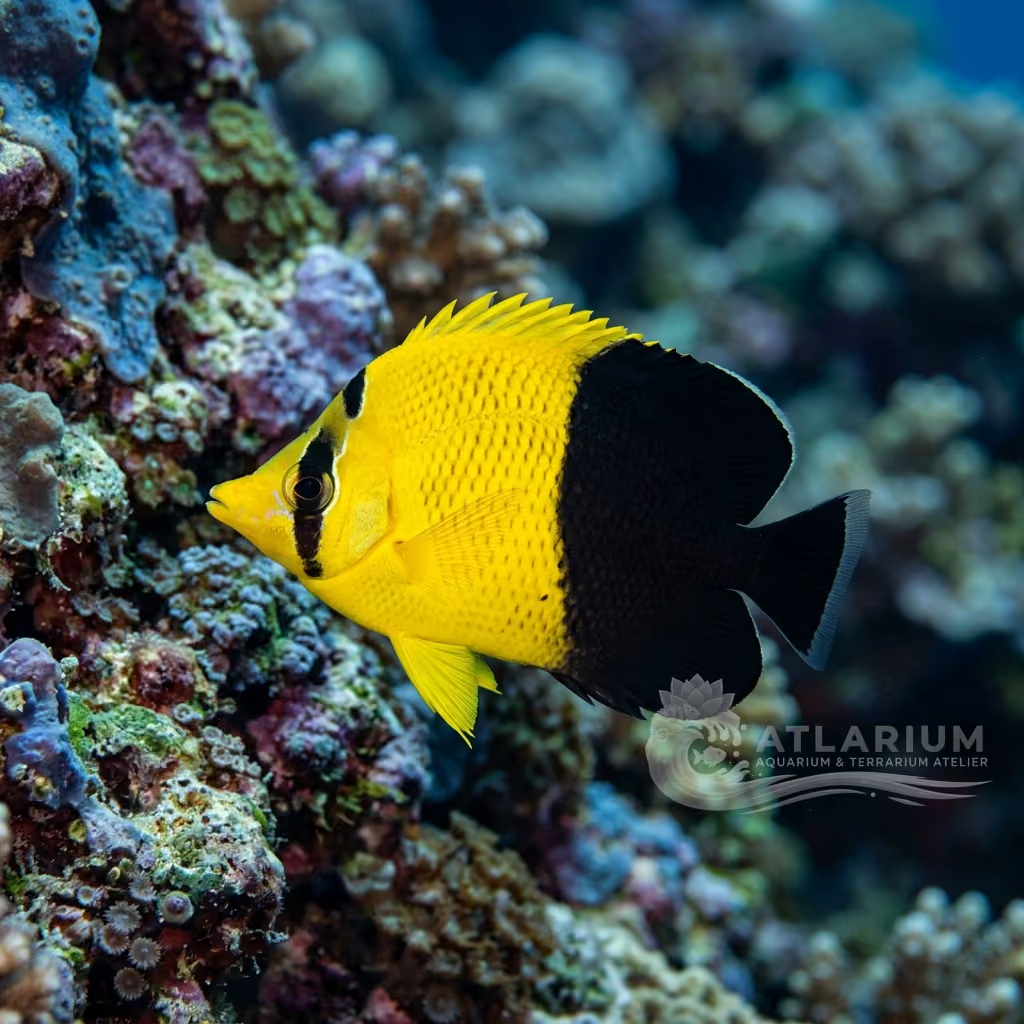
Coloration and Sexual Dimorphism: The body has a silvery-white or yellowish base coloration, with thin vertical grey stripes on the flanks. It is characterized by two large dark vertical saddle-like bands on the back, a black spot at the base of the caudal fin, and a black band running vertically through the eye. No clear sexual dimorphism is present.

Soins, reproduction et cohabitation
Aquarium Setup: Requires a spacious tank of at least 300 liters with ample open space for swimming and a setup rich in live rock arranged to form caves, caverns, and overhangs to provide shelter and shaded areas. Secure rock placement is crucial to prevent collapses.
Diet and Feeding: Omnivorous species. In the wild, it feeds on coral polyps, small benthic invertebrates, algae, and sea anemones. In the aquarium, it must be fed a varied diet including frozen foods such as mysis, brine shrimp, chopped krill, and algae-based preparations, along with high-quality dry flakes and pellets.
Water Quality: Requires excellent and consistent water quality: temperature between 22 and 27 °C, pH between 8.1 and 8.4, and specific gravity at 1.020-1.025. Strong protein skimming and regular water changes are important to maintain low levels of nitrates and phosphates.
Compatibility and Cohabitation: Compatible with fish of similar size and peaceful temperament. It is absolutely not reef-safe, as it nips and feeds on stony corals (SPS/LPS), anemones, and small sessile invertebrates. It can be housed in fish-only with live rock (FOWLR) systems alongside tangs, angelfish, and wrasses.
Aquarium Breeding: No successful breeding cases have been recorded in home aquariums. Spawning occurs in open waters (pelagic spawning) in pairs, and the eggs and larvae float in the plankton before settling on the reef.
Risks and Diseases: Sensitive to typical marine fish diseases such as Ich (Cryptocaryon irritans) and Oodinium. Requires preventive quarantine and careful acclimation to prevent shipping stress and stimulate feeding.

Origine et répartition géographiques
Widely distributed in the tropical Indo-Pacific Ocean, from the coast of East Africa and the Cocos Islands to Hawaii and the Tuamotu Islands, extending north to southern Japan and south to the Great Barrier Reef. It inhabits coral-rich lagoons, tidal channels, and outer reef slopes at depths between 2 and 30 meters.
Origine
Océans tropicaux et récifsAfrique et MadagascarAsie de l'Est

Profil de poisson
- Tempérament
- Territorial
- Chaetodon ulietensis is generally a peaceful and moderately active species that will not bother unrelated tankmates. However, they can show territorial behavior toward other butterflyfish, particularly those of similar appearance or their own species. They may also display mild dominance over other benthic feeders if resources are limited. Providing plenty of hiding spots and introducing them to the tank at the same time can mitigate these behaviors.
- Régime alimentaire
- Omnivore
- In nature, this butterflyfish is an omnivore that feeds on corals, anemones, algae, and small benthic invertebrates. In the home aquarium, they should be offered a varied diet of high-quality frozen foods like mysis shrimp, brine shrimp, and chopped seafood. They also benefit from the inclusion of marine algae and spirulina-enriched foods to satisfy their herbivorous needs. It is important to note that they are not reef-safe, as they will readily pick at stony corals and ornamental invertebrates.
- Espérance de vie
- 5-10 years
- Taille adulte
- 15 cm
- Ratio des sexes
- 1:1 ratio
- In the wild, Chaetodon ulietensis is known to form strong, monogamous male-female pairs. In an aquarium setting, they are best kept singly or as an established, bonded pair introduced to the tank simultaneously. Stocking multiple individuals of the same sex can lead to severe territorial aggression, especially in smaller systems. If keeping a group, a very large aquarium with numerous visual barriers is required to prevent conflict.
- Fréquence d'alimentation
- Twice daily
- To maintain their health and high energy levels, these fish should be fed two to three times daily. Offering smaller, controlled portions helps mimic their natural foraging habits on the reef and prevents excess food from decaying in the tank. Feeding them at regular intervals throughout the day also reduces competitive behavior during meal times. Using automatic feeders or target feeding can ensure they receive adequate nutrition without overloading the filtration system.
- Charge biologique
- Medium to High
- The Pacific Double-saddle Butterflyfish has a medium-high bioload due to its size and active metabolism. In captivity, these fish require frequent, nutrient-rich feedings, which can quickly degrade water quality if filtration is inadequate. A robust mechanical and biological filtration system, along with a high-performance protein skimmer, is essential to manage metabolic waste. Regular water changes of 10 to 15 percent bi-weekly are highly recommended to maintain low nitrate levels.
- Courant
- Strong
- The Pacific Double-saddle Butterflyfish prefers moderate to strong water flow, reflecting its natural coral reef habitat. Adequate water movement is essential to keep the aquarium well-oxygenated, which supports their active lifestyle. The currents should include both high-flow areas for swimming and lower-flow zones where the fish can rest. Proper circulation also prevents debris from settling, helping to maintain the high water quality this species requires.
- Risque de saut
- Yes
- Although the Pacific Double-saddle Butterflyfish is not considered a habitual jumper, it can easily leap out of the water if startled or chased by tankmates. Sudden light changes or aggressive interactions can cause them to bolt upward. To prevent tragic accidents, a secure, tight-fitting lid or mesh cover is strongly recommended. Any gaps around equipment or cords should be properly sealed to ensure the fish cannot escape.
- Reproduction
- Oviparous
- Breeding Chaetodon ulietensis in the home aquarium is exceptionally difficult and rarely achieved by hobbyists. They are pelagic spawners that release buoyant eggs and sperm into the water column at dusk, which are then carried by currents. In captivity, reproducing these complex pelagic conditions and providing the correct microscopic live food for the larvae is extremely challenging. The larvae also undergo a unique, armored "tholichthys" stage that requires specialized rearing protocols.
- Compatibilité et compagnons
- Peaceful
- This butterflyfish is compatible with a wide range of peaceful to semi-aggressive marine fish of similar size. Ideal tankmates include larger wrasses, tangs, angelfish, and damselfish, provided the aquarium is spacious. They should not be housed with aggressive predators or very small, passive species that they might outcompete for food. Additionally, they are incompatible with reef aquariums housing stony corals, clams, or feather dusters, as these will be viewed as food sources.
- Niveau dans le bac
- Middle/Bottom
- This species is benthopelagic and typically occupies the bottom and middle zones of the aquarium. They are active swimmers that require ample open space in the front of the tank to navigate comfortably. They also spend a significant amount of time picking at live rock and decor in search of food. Providing a balance of open swimming room and rockwork structures will cater to their natural vertical movement.

Modèles et paramètres scientifiques
FishBase
Fenêtre sur les données scientifiques officielles de l’espèce
FishBase v25.04Données synchronisées le : 15/06/2026
- Niveau trophique
- 2,7 ± 0,24 se
- Résilience
- Élevée (moins de 15 mois)
- Singularité phylogénétique (PD50)
- 0.5
- Relation bayésienne longueur-poids
- a = 0.02239, b = 2.98
- VulnérabilitéVulnérabilité faible (10 / 100)

Espèces associées
Recommandations regroupées par proches parents, compagnons et soins similaires.