Pacific Redfin Butterflyfish
Chaetodon lunulatus
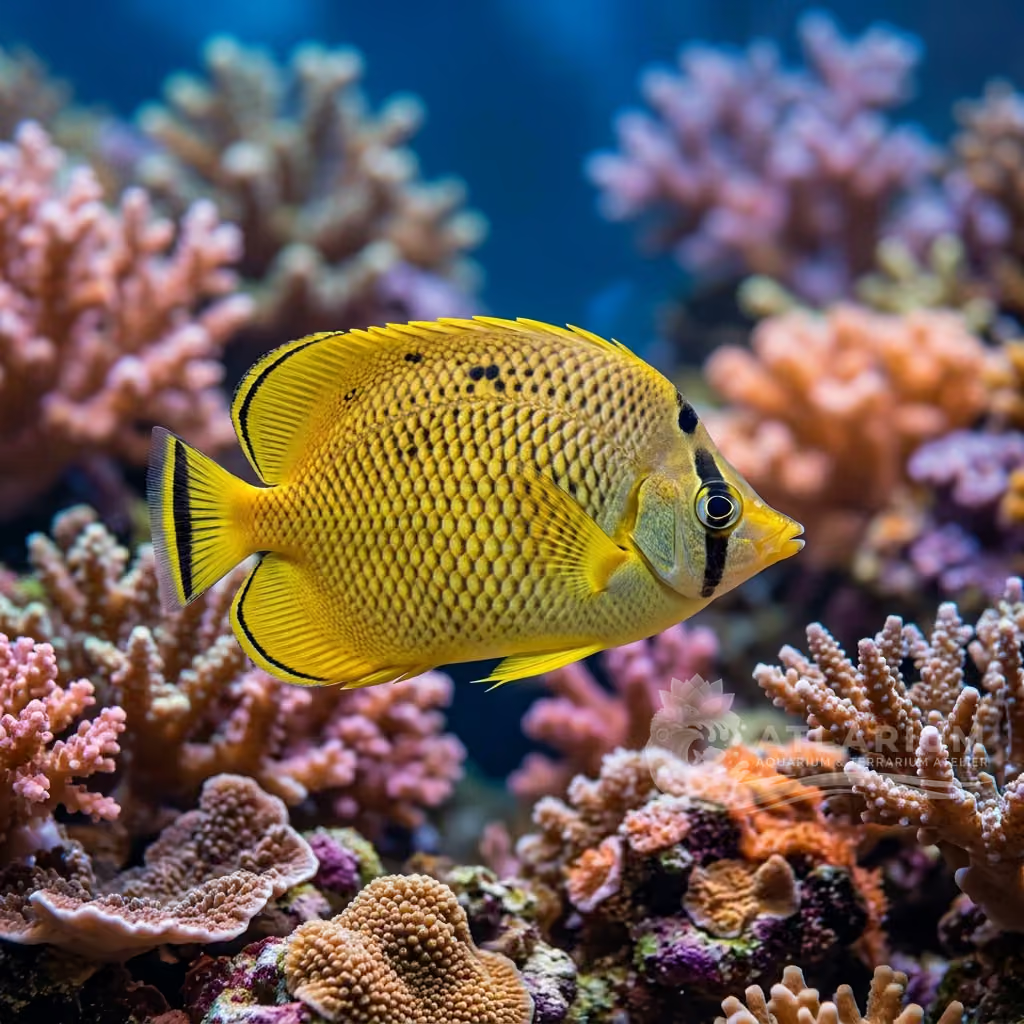
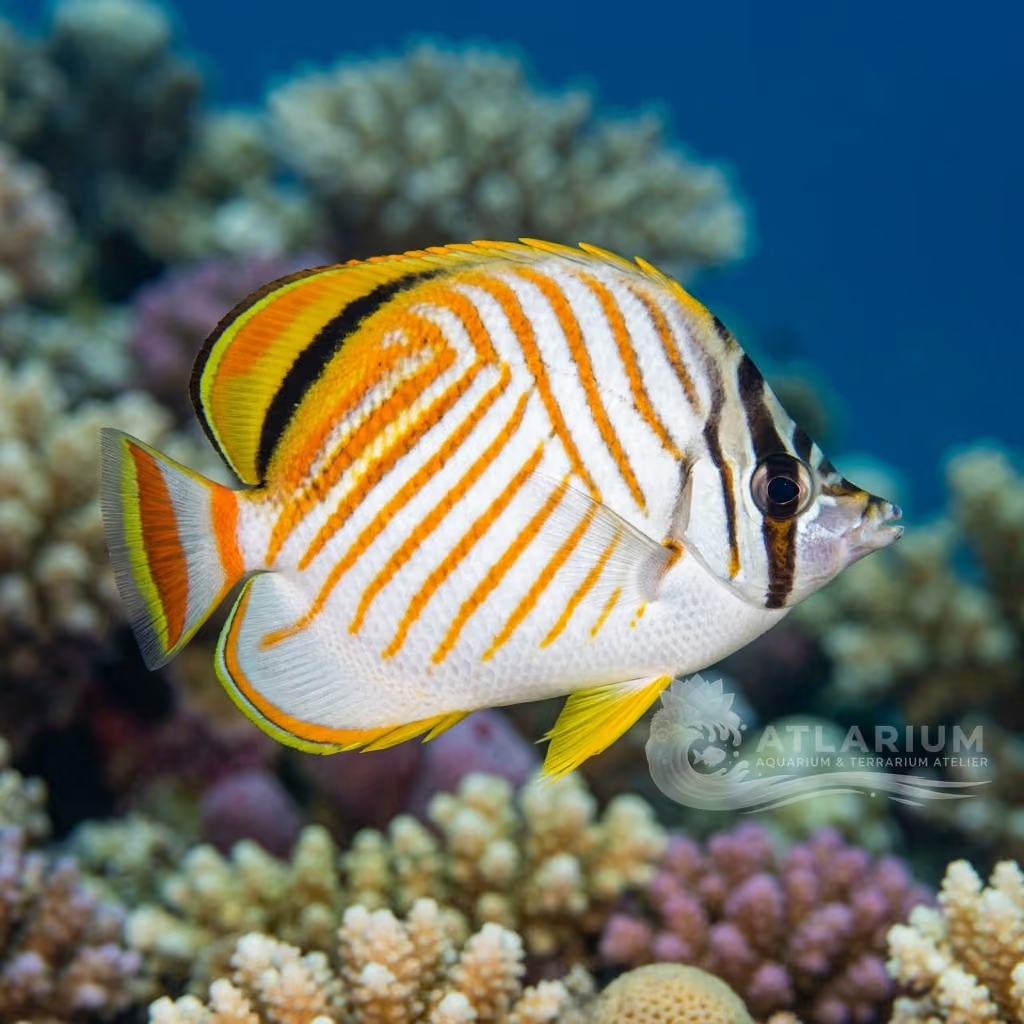
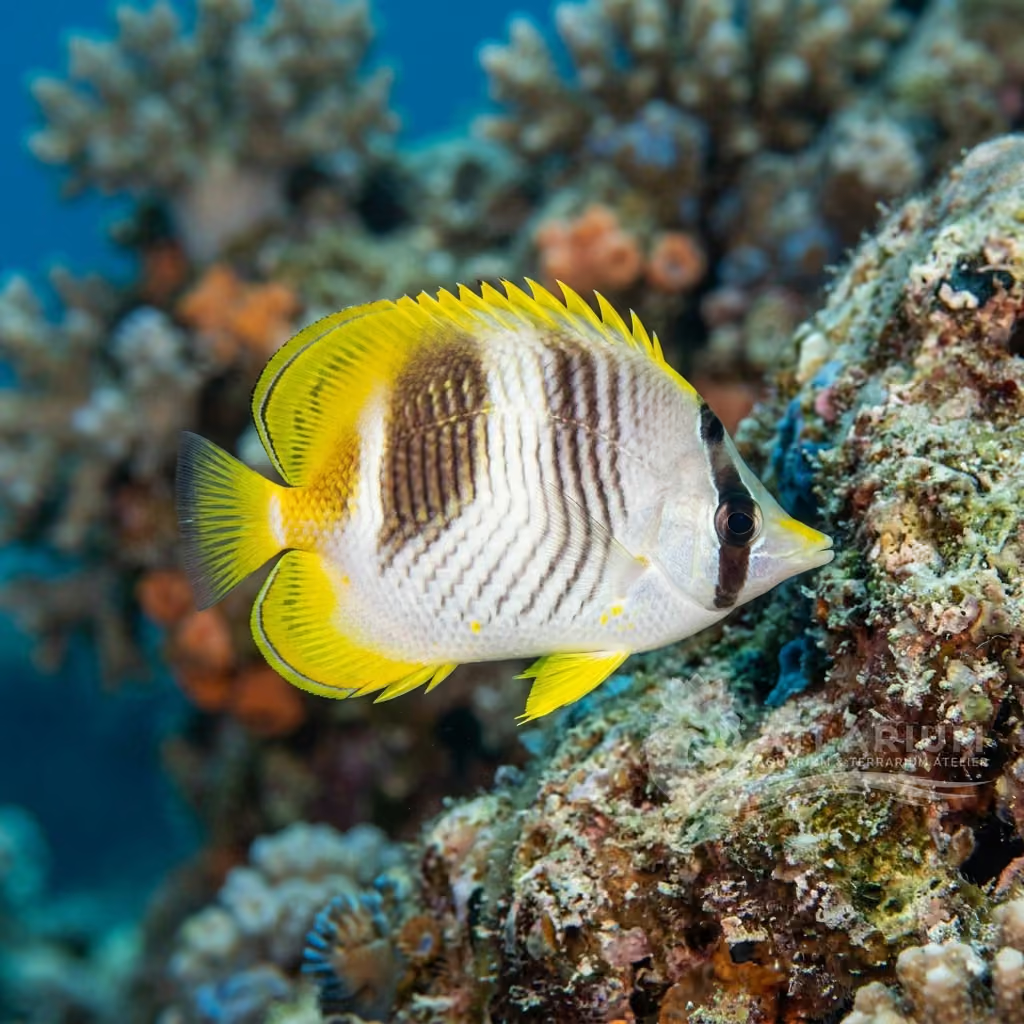
Vibrantly colored butterflyfish (14 cm) from the Pacific, featuring an orange-yellow body with thin horizontal purple stripes and a red-and-black anal fin.
Température de l’eau
22 - 27 °C
Valeur du pH
8.1 - 8.4
Type d'eau
Marin
Niveau dans le bac
Fond et milieu
Taille adulte
14 cm
Volume minimal du bac
>= 300 L
Groupe minimal
>= 1

Description de l'espèce
Geographical Origin and Habitat: This species primarily inhabits coral-rich reefs, preferring sheltered lagoons and seaward reefs where the growth of staghorn and plate corals of the genus Acropora is dense and continuous.
Taxonomy and Morphology: Member of the family Chaetodontidae. Closely related to the Indian Ocean species Chaetodon trifasciatus, which replaces it in the western parts of the Indo-Pacific. It exhibits a highly compressed, oval body shape that allows it to easily navigate the complex structures of hard corals. Its small snout and strong lips are perfectly adapted for nipping individual coral polyps.
Social Behavior: Peaceful and highly social. Almost always seen in pairs. Spends daylight hours searching coral branches for polyps, requiring a quiet tank setup. The species is strictly monogamous and forms long-term breeding pairs. These pairs establish large feeding territories on the reef and will actively defend them against intruders of the same or similar species.
Coloration and Sexual Dimorphism: Bright orange-yellow overall body color with thin horizontal purple stripes. Features three dark vertical bars on the head and a bright red anal fin. The bright yellow-orange body is decorated with thin, curved purple stripes running horizontally. The tail base and anal fin display distinctive red and black bands. No visual sexual dimorphism is present.

Soins, reproduction et cohabitation
Aquarium Setup: Requires a large, well-established reef-style aquarium of at least 300 liters with plenty of high-quality live rock and open swimming areas. A spacious marine aquarium with plenty of mature live rock is essential. Provide numerous caves and overhangs, leaving enough open space for swimming while ensuring top-tier mechanical and biological filtration.
Diet and Feeding: Obligate corallivore, feeding exclusively on hard coral polyps. Very difficult to maintain long-term in home aquariums without offering live corals as food. As an obligate corallivore, feeding is the greatest challenge in captivity. Offer high-quality frozen foods, paste containing clam or squid pressed into coral skeleton, and specialized gel diets multiple times a day.
Water Quality: Demands pristine marine conditions: temperature 22-27 °C, pH 8.1-8.4, salinity 1.020-1.025 with zero organic waste, strong skimming, and high water flow. Maintain pristine water quality with a stable salinity of 1.020-1.025, pH between 8.1 and 8.4, and temperature of 24-26°C. Regular water changes and a high-performance protein skimmer are mandatory.
Compatibility and Cohabitation: Obligate corallivore, feeding exclusively on hard coral polyps. Very difficult to maintain long-term in home aquariums without offering live corals as food. Best housed with peaceful, non-aggressive tankmates that will not compete for food. Avoid placing them with territorial damselfishes or fast-swimming predators that could cause chronic stress.
Aquarium Breeding: Highly peaceful. Not reef safe as it consumes hard corals. Best housed in large fish-only systems with non-aggressive, quiet tankmates. Breeding has not been successfully achieved in home aquariums. Their pelagic spawning behavior and the microscopic size of the delicate larvae present extreme obstacles for hobbyists.
Risks and Diseases: Very high risk of starvation in captivity. Recommended only for public aquaria or expert hobbyists capable of providing live corals for food. Highly susceptible to common marine parasites such as Marine Ich (Cryptocaryon) and Marine Velvet (Oodinium). A strict quarantine protocol is highly recommended for all new specimens.

Origine et répartition géographiques
This species primarily inhabits coral-rich reefs, preferring sheltered lagoons and seaward reefs where the growth of staghorn and plate corals of the genus Acropora is dense and continuous.
Origine
Océans tropicaux et récifsAsie du Sud et du Sud-EstAustralie, Nouvelle-Guinée et Océanie

Profil de poisson
- Tempérament
- Territorial
- This species is generally peaceful and non-aggressive toward most other non-related marine fish. They are active and curious, spending their days foraging peacefully along the rockwork. However, they can display territorial behavior and aggression toward conspecifics or similar-looking butterflyfish species. Because of their docile nature, they should not be housed with highly aggressive tankmates that might bully or outcompete them.
- Régime alimentaire
- Corallivore
- Chaetodon lunulatus is an obligate corallivore, feeding almost exclusively on the polyps of live stony corals in the wild. This highly specialized diet makes them incredibly difficult to feed in captivity, as they often refuse standard aquarium foods. To sustain them, hobbyists must provide live SPS corals or train them onto gel-based and frozen foods with great difficulty. Because of their feeding requirements, they are completely unsuitable for standard reef aquariums where corals are meant to be preserved.
- Espérance de vie
- 8-12 years
- Taille adulte
- 14 cm
- Ratio des sexes
- 1:1 ratio
- In their natural habitat, Pacific Redfin Butterflyfish are known to form strong monogamous pair bonds and are almost always observed swimming in pairs. In an aquarium setting, it is highly recommended to keep them in a male-female pair (a 1:1 ratio) rather than singly, as they benefit from the companionship of their mate. Introducing unformed groups can result in territorial disputes and severe stress. If a compatible pair cannot be acquired, keeping a single specimen is the safest alternative.
- Fréquence d'alimentation
- Twice daily
- To support their active lifestyle and specialized metabolic needs, this species requires feeding multiple times throughout the day. It is recommended to offer small portions of food three to four times daily to ensure they receive sufficient nutrients. Frequent feeding is especially important when attempting to transition them to aquarium foods, as it encourages grazing behavior. Utilizing automatic feeders for dry foods and manually feeding specialized frozen diets can help meet these requirements.
- Charge biologique
- Medium to High
- Chaetodon lunulatus is a medium-sized marine fish that requires a highly efficient filtration system to manage its biological waste. Due to its diet consisting mainly of live coral polyps, feeding this species in captivity can quickly lead to water quality degradation, making a protein skimmer and regular water changes essential. The bioload is considered medium-high, and maintaining low nitrate and phosphate levels is crucial for its long-term health. A robust mechanical and biological filtration system helps replicate the pristine conditions of its natural reef environment.
- Courant
- Strong
- This species thrives in environments with moderate to strong water flow, which mimics the shallow, current-swept coral reefs they inhabit. Proper water movement is essential for maintaining high oxygenation levels and keeping waste from settling on the rocks. The circulation should include areas of varying intensity so the fish can swim actively but also find low-flow zones to rest. Well-positioned wavemakers will help create a natural reef-like water movement.
- Risque de saut
- No
- Reproduction
- Oviparous
- Chaetodon lunulatus is an oviparous, pelagic broadcast spawner that releases its gametes into the water column. In nature, spawning occurs in pairs, typically at dusk, with the eggs drifting as plankton before settling. There are no records of successful breeding or rearing of this species in home aquariums due to the extreme difficulty of maintaining the microscopic planktonic larvae. In captivity, they may exhibit basic courtship behaviors, but successful reproduction remains limited to natural reef systems.
- Compatibilité et compagnons
- Peaceful
- They are compatible with peaceful, non-aggressive marine species such as tangs, dwarf angels, wrasses, and clownfish. However, they are not reef-safe and will rapidly consume or damage hard corals, zoanthids, and other sessile invertebrates. Therefore, they are best suited for a fish-only-with-live-rock (FOWLR) aquarium setup where their dietary nipping will not destroy valuable reef displays. Avoid keeping them with aggressive predators or territorial tankmates that could stress them.
- Niveau dans le bac
- Middle/Bottom
- This species is highly active and spends most of its time swimming in the bottom and middle levels of the water column. They are benthic-oriented, constantly hovering near the substrate and live rock to search for food in crevices. They require ample open swimming space combined with complex rockwork to explore their preferred depth zones. It is rare to see them at the surface, except briefly during feeding times if they have acclimated to aquarium foods.

Modèles et paramètres scientifiques
FishBase
Fenêtre sur les données scientifiques officielles de l’espèce
FishBase v25.04Données synchronisées le : 15/06/2026
- Niveau trophique
- 3,3 ± 0,61 se
- Résilience
- Élevée (moins de 15 mois)
- Singularité phylogénétique (PD50)
- 0.5
- Relation bayésienne longueur-poids
- a = 0.02291, b = 3
- VulnérabilitéVulnérabilité faible (17 / 100)

Espèces associées
Recommandations regroupées par proches parents, compagnons et soins similaires.