White-face butterflyfish
Chaetodon mesoleucos
Native to the Red Sea, this striking butterflyfish features a unique vertically split two-tone body. It requires a spacious setup and is best kept in fish-only aquariums.
Température de l’eau
22 - 27 °C
Valeur du pH
8.1 - 8.4
Type d'eau
Marin
Niveau dans le bac
Fond et milieu
Taille adulte
18 cm
Volume minimal du bac
>= 300 L
Groupe minimal
>= 1
KH
8 - 12 dKH

Description de l'espèce
Geographical Origin and Habitat: Chaetodon mesoleucos is native primarily to the tropical waters of the southern Red Sea, the Gulf of Aden, and adjacent parts of the western Indian Ocean. It inhabits shallow coastal reefs, lagoons, and outer reef slopes rich in hard and soft coral growth, at depths ranging from 1 to 20 meters. It is frequently found in areas with strong water movement and plenty of hiding spaces among staghorn or table corals.
Taxonomy and Morphology: It belongs to the family Chaetodontidae and the genus Chaetodon. It features the typical disc-like, highly compressed, and deep body of butterflyfish. The snout is moderately short and pointed, ending in a small mouth equipped with brush-like teeth, which are highly adapted for plucking coral polyps and small invertebrates from rock crevices. The posterior dorsal and anal fins are broad and rounded. It grows to 13-15 cm.
Social Behavior: This species is mostly monogamous, living and foraging in stable, long-term pairs that patrol a defined home range on the reef. It displays moderate territoriality toward other butterflyfish, especially conspecifics, but is peaceful toward other reef dwellers. It is diurnal, seeking shelter inside caves and crevices to rest during the night.
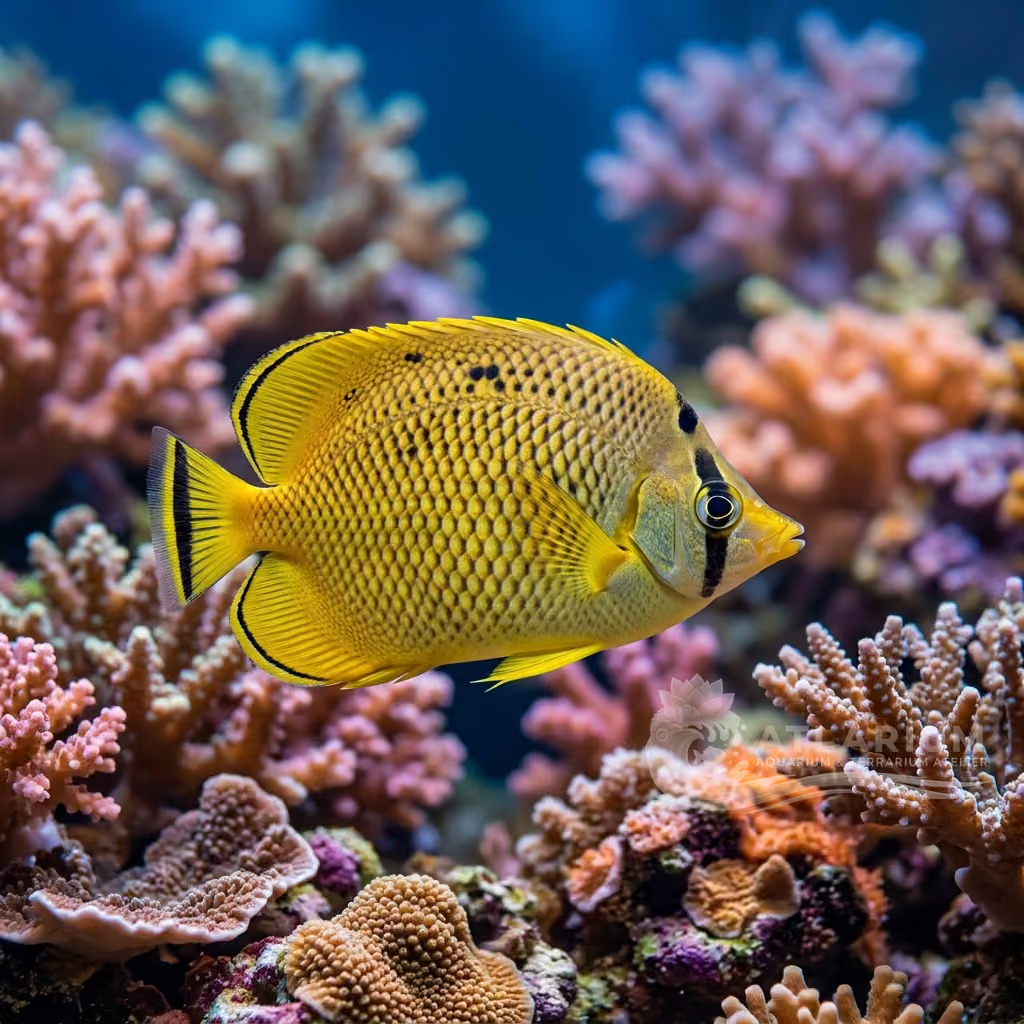
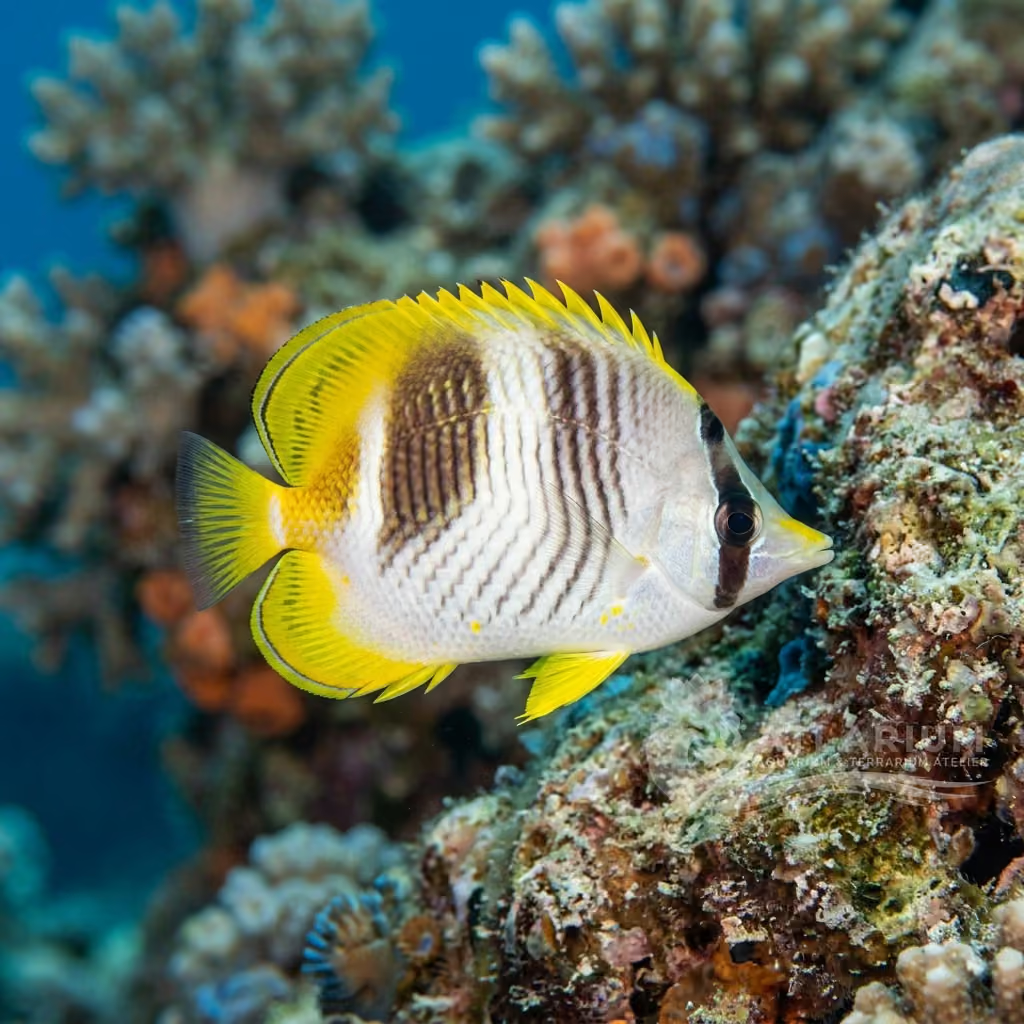
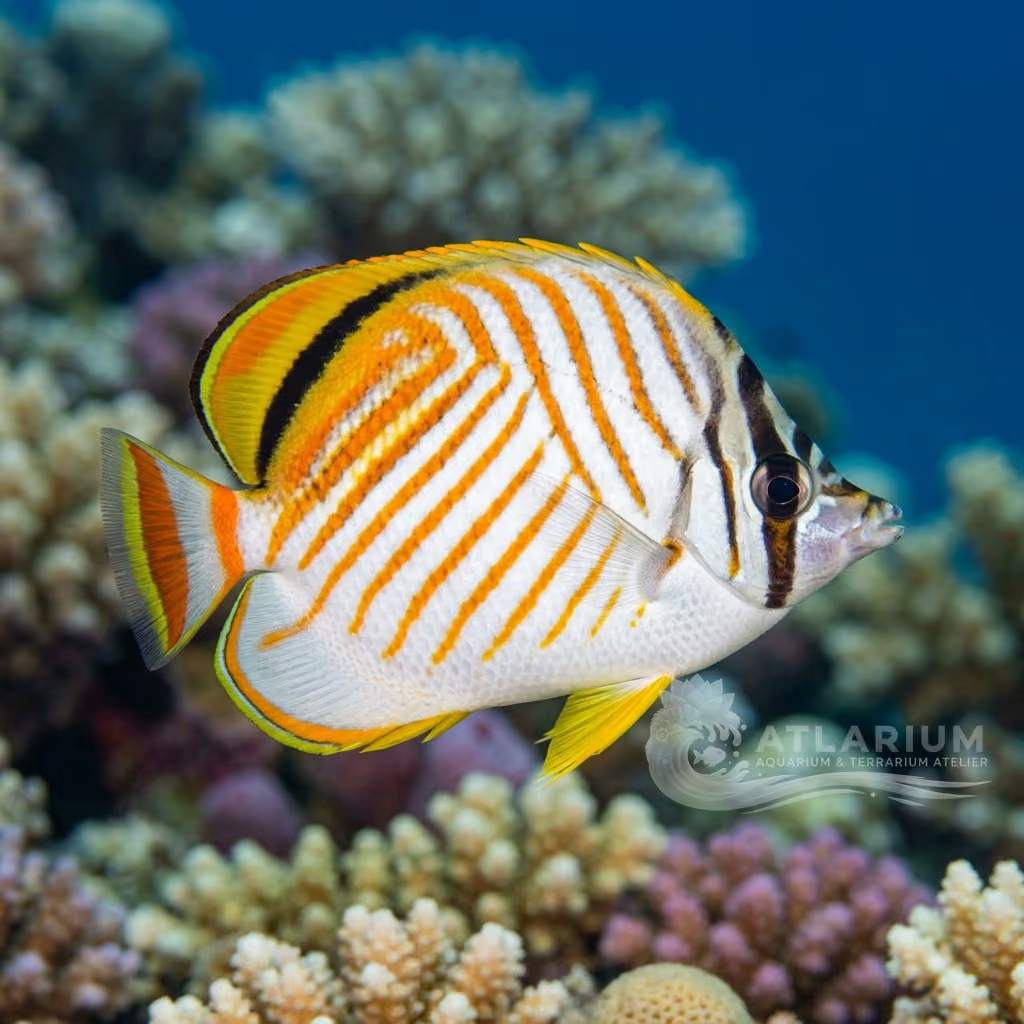
Coloration and Sexual Dimorphism: The color pattern is striking and unique: the body is vertically split into two zones. The anterior half, including the head and throat, is white to light grey, crossed by a broad vertical black bar covering the eye. The posterior half fades into dark brown to blackish, marked with fine vertical dark stripes. The caudal fin and the edges of the posterior fins show bright yellow or orange tints. No external sexual dimorphism exists.

Soins, reproduction et cohabitation
Aquarium Setup: Requires a large aquarium with a minimum recommended volume of 300 liters to accommodate a pair. The aquascape should feature a complex, mature rockwork structure containing numerous crevices, caves, and swim-throughs to provide safety, while maintaining open swimming space in the front. Maintain moderate to strong water flow and high dissolved oxygen levels.
Diet and Feeding: It is a facultative corallivore and omnivore, making food acclimation in captivity difficult. Initially, they may refuse prepared commercial foods. They must be fed multiple times a day with a variety of high-quality frozen foods like mysis, brine shrimp, chopped clams, and shrimp. Offering fresh clam or mussel on the half-shell attached to rocks is an excellent way to stimulate their feeding instinct.
Water Quality: Water parameters must remain pristine and stable: temperature 23-26 °C, pH 8.1-8.4, specific gravity 1.020-1.025, and KH 8-12. They are sensitive to organic pollutants, particularly nitrates and phosphates, which can cause stress and loss of appetite. An efficient protein skimmer and regular water changes are mandatory.
Compatibility and Cohabitation: This species is not reef-safe. It will actively nip at and consume the polyps of stony corals (both SPS and LPS), soft corals, and clam mantles, making it unsuitable for reef aquariums. It is ideal for fish-only-with-live-rock (FOWLR) aquariums, where it can be housed with peaceful community fish like tangs, clownfish, gobies, and calm wrasses. Avoid keeping with aggressive tankmates.
Aquarium Breeding: Breeding has not been successfully achieved in home aquariums. In the wild, they form monogamous pairs that spawn in open water at dusk, releasing pelagic eggs that drift with the currents. Rearing the microscopic larvae requires highly specialized aquaculture facilities and specific live micro-plankton cultures.
Risks and Diseases: It is a sensitive species susceptible to acclimation stress, marine ich (Cryptocaryon), and velvet. Starvation is a major risk if the fish does not accept prepared foods quickly. Close monitoring during the initial feeding phase is critical, and a strict quarantine period is highly recommended to ensure they are feeding well before reef introduction.

Origine et répartition géographiques
Chaetodon mesoleucos is native primarily to the tropical waters of the southern Red Sea, the Gulf of Aden, and adjacent parts of the western Indian Ocean. It inhabits shallow coastal reefs, lagoons, and outer reef slopes rich in hard and soft coral growth, at depths ranging from 1 to 20 meters. It is frequently found in areas with strong water movement and plenty of hiding spaces among staghorn or table corals.
Origine
Océans tropicaux et récifsAfrique et MadagascarAsie du Sud et du Sud-Est

Profil de poisson
- Tempérament
- Territorial
- This butterflyfish is generally peaceful toward unrelated tank mates but can be quite shy and nervous when first introduced to a new environment. However, it displays strong territorial aggression toward members of its own species and other butterflyfish of similar shape or genus. To ensure a peaceful community, they should be housed with non-aggressive fish and given plenty of hiding places to feel safe. Introducing them as one of the last additions to the aquarium helps curb potential territorial disputes.
- Régime alimentaire
- Omnivore
- In their natural habitat, these fish are corallivores and opportunistic predators feeding on coral polyps, worms, and small benthic invertebrates. In the aquarium, transitioning them to prepared foods can be challenging, requiring live foods like brine shrimp or blackworms to stimulate their feeding response. Once acclimated, they should be offered a varied diet of frozen mysis shrimp, enriched brine shrimp, chopped clams, and high-quality marine preparations. Because of their dietary habits, they are not considered reef-safe and will nip at stony and soft corals.
- Espérance de vie
- 5-10 years
- Taille adulte
- 18 cm
- Ratio des sexes
- 1:1 ratio
- In the wild, Chaetodon mesoleucos is commonly found in monogamous pairs, but in a home aquarium, it is usually best kept as a single specimen. Attempting to keep multiple individuals or similar butterflyfish species together in a standard tank often results in intense territorial aggression. If you wish to keep a pair, they must be introduced as a pre-established mated pair and housed in a very large aquarium. For general hobbyists, stocking just one individual per aquarium is the safest recommendation.
- Fréquence d'alimentation
- Twice daily
- The White-faced Butterflyfish has a high metabolic rate and should be fed small portions multiple times a day, ideally two to three times. Regular feeding is necessary to maintain their body weight and overall health, as they are continuous grazers in the wild. If the fish is hesitant to feed initially, offering food on a clip or inside a shell can encourage natural grazing behavior. Providing vitamin-enriched foods during these feedings helps bolster their immune system.
- Charge biologique
- Medium to High
- The White-faced Butterflyfish has a medium-high bioload due to its active nature and the necessity of frequent feeding. In captivity, these fish require robust filtration systems, including a high-quality protein skimmer, to manage organic waste effectively. Regular water changes and carbon filtration are also highly recommended to maintain the pristine water quality they need. Poor water conditions can quickly lead to stress and susceptibility to diseases like marine ich.
- Courant
- Strong
- This species thrives in environments with moderate to strong water flow, which mimics the natural conditions of their native coral reef slopes. Good water movement not only helps keep the fish active but also ensures high oxygenation levels and efficient filtration turnover. However, the tank design must include calmer areas and caves where the fish can rest without constantly fighting the current. A combination of strategically placed wavemakers and return outlets works best to achieve this balance.
- Risque de saut
- Yes
- Chaetodon mesoleucos poses a moderate to high jump risk, especially when startled, stressed, or during its initial acclimation phase. Like many butterflyfish, they are prone to sudden darting movements and can easily jump out of an open-topped aquarium. To prevent tragic accidents, a secure and tightly fitting lid or screen cover is absolutely essential. Dimming the aquarium lights gradually rather than shutting them off abruptly can also minimize the risk of startle-induced jumping.
- Reproduction
- Oviparous
- Reproduction of Chaetodon mesoleucos in the home aquarium is exceptionally difficult and rarely achieved by hobbyists. In nature, they are egg-scatterers that form monogamous pairs and spawn at dusk, releasing pelagic eggs into the water column. The resulting larvae undergo a complex planktonic stage that is extremely difficult to replicate and sustain in captivity. Consequently, almost all specimens available in the aquarium trade are wild-caught.
- Compatibilité et compagnons
- Peaceful
- Chaetodon mesoleucos is compatible with a wide variety of peaceful to semi-aggressive marine fish, such as tangs, wrasses, and clownfish. They should not be housed with highly aggressive tank mates that might bully them, as they are naturally shy. Furthermore, they are not compatible with reef aquariums containing corals, anemones, or feather dusters, which they will readily consume. Keeping them with conspecifics or similar-looking butterflyfish should also be avoided unless the aquarium is exceptionally large.
- Niveau dans le bac
- Middle/Bottom
- This species primarily swims in the bottom-middle areas of the aquarium, where it actively grazes on rockwork looking for food. While they will occasionally explore the upper water column during feeding times, they prefer to stay close to the shelter of live rock. Providing plenty of caves and crevices in these lower levels is crucial to help them feel secure in their environment. A spacious tank layout with open swimming space in the middle section is also beneficial.

Modèles et paramètres scientifiques
FishBase
Fenêtre sur les données scientifiques officielles de l’espèce
FishBase v25.04Données synchronisées le : 15/06/2026
- Niveau trophique
- 3,3 ± 0,6 se
- Résilience
- Élevée (moins de 15 mois)
- Singularité phylogénétique (PD50)
- 0.5
- Relation bayésienne longueur-poids
- a = 0.02291, b = 3
- VulnérabilitéVulnérabilité faible (10 / 100)

Espèces associées
Recommandations regroupées par proches parents, compagnons et soins similaires.