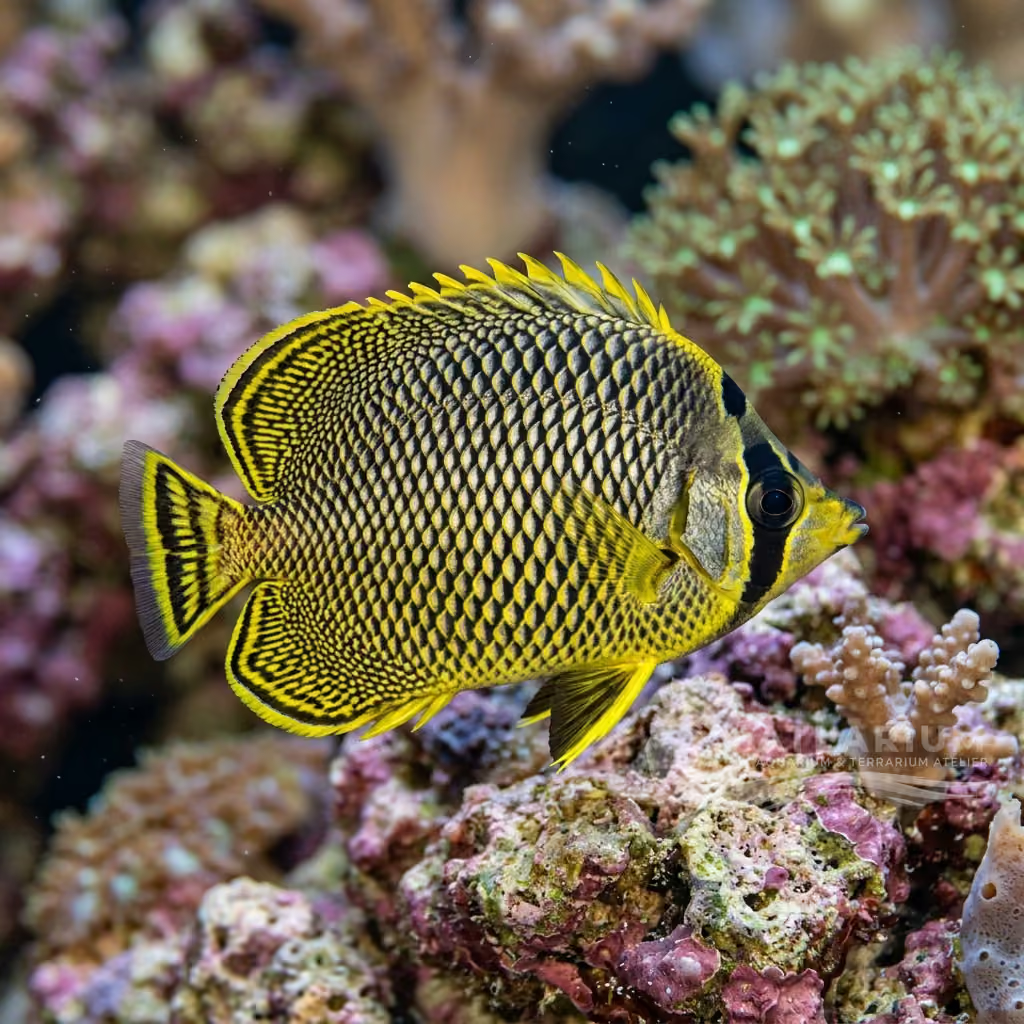
Weibel's Butterflyfish
Chaetodon wiebeli
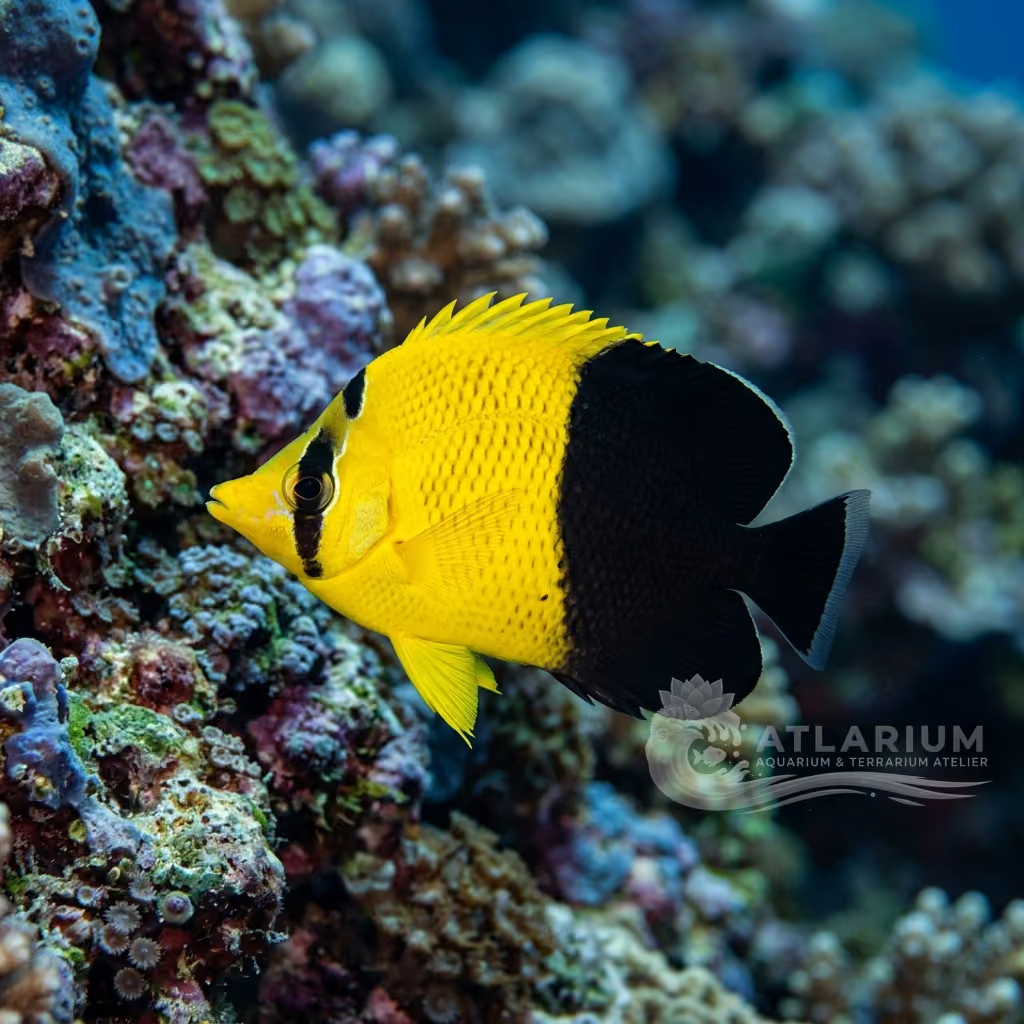
Weibel's Butterflyfish features a brilliant yellow body with a distinctive dark dorsal saddle and facial band. It thrives in large FOWLR aquariums but is not reef-safe due to its coral diet.
Température de l’eau
20 - 25 °C
Valeur du pH
8.1 - 8.4
Type d'eau
Marin
Niveau dans le bac
Fond et milieu
Taille adulte
18 cm
Volume minimal du bac
>= 300 L
Groupe minimal
>= 1
KH
8 - 12 dKH

Description de l'espèce
Geographical Origin and Habitat: Native to the subtropical and tropical Western Pacific Ocean, with major populations distributed along the southern coasts of China, Taiwan, Vietnam, and southern Japan. It inhabits shallow coastal rocky reefs, stony coral fields, and exposed bays at depths ranging from 4 to 25 meters, capable of withstanding cooler waters.
Taxonomy and Morphology: A member of the Chaetodontidae family in the genus Chaetodon. Commonly known as Weibel's Butterflyfish or the Hong Kong Butterflyfish. It reaches a maximum adult size of 18 centimeters (7 inches). Features a disc-like, deep, and highly compressed body with a continuous dorsal fin and a pointed snout.
Social Behavior: An active and constant swimmer. Naturally found singly or in stable mated pairs, occasionally forming loose seasonal groups in food-rich areas. They spend the day exploring rocky substrate and coral heads to feed on algae and small invertebrates, displaying a bold temperament.
Coloration and Sexual Dimorphism: The body coloration is a striking, brilliant yellow. It is characterized by a dark grey-to-black saddle-like patch on the upper rear dorsum, a vertical black band running through the eye, and a distinct white patch on the forehead right behind the eye bar. The caudal fin is yellow with a black margin.

Soins, reproduction et cohabitation
Aquarium Setup: Requires a large aquarium of at least 300 liters (80 gallons) equipped with robust live rock structures arranged to form caves, arches, and ledges for exploration and shelter. Keep the center of the tank open to allow for continuous horizontal swimming. A secure lid is recommended to prevent accidental jumps.
Diet and Feeding: Omnivorous. In captivity, feed a varied diet including frozen foods such as mysis shrimp, brine shrimp, krill, and chopped seafood. A constant supply of vegetable matter is essential, such as dried nori seaweed and spirulina-based preparations. They will adapt to high-quality dry granulate or flakes.
Water Quality: Maintain stable water parameters: temperature between 20 and 25°C (68-77°F), as they tolerate cooler waters better than equatorial butterflyfish. Keep pH 8.1-8.4, specific gravity 1.020-1.025, and KH 8-12. Efficient biological filtration and moderate water movement are necessary to maintain high oxygenation.
Compatibility and Cohabitation: Not reef-safe. They will feed on and destroy stony/soft coral polyps and ornamental tubeworms. They are ideal for fish-only with live rock (FOWLR) setups. Can be housed with other active, peaceful reef species such as tangs, damselfish, and clownfish. Avoid keeping multiple males together.
Aquarium Breeding: Spawning in home aquariums is undocumented. Broadcast spawners that release pelagic eggs into the water column. The larvae undergo a unique planktonic stage called the tholichthys stage, which is highly complex and has not been successfully raised in domestic hobbyist marine systems.
Risks and Diseases: Moderately hardy once established. They are susceptible to common marine skin parasites such as marine ich (Cryptocaryon) or velvet (Amyloodinium) during the acclimation phase or if subjected to sudden temperature swings. Starvation is a risk if the fish refuses dry foods initialy.

Origine et répartition géographiques
Native to the subtropical and tropical Western Pacific Ocean, with major populations distributed along the southern coasts of China, Taiwan, Vietnam, and southern Japan. It inhabits shallow coastal rocky reefs, stony coral fields, and exposed bays at depths ranging from 4 to 25 meters, capable of withstanding cooler waters.
Origine
Océans tropicaux et récifsAsie du Sud et du Sud-EstAsie de l'Est

Profil de poisson
- Tempérament
- Territorial
- This species generally exhibits a peaceful temperament towards most other marine community fish of similar size. However, it can show territorial behavior and mild aggression toward conspecifics or other closely related butterflyfish species of similar shape and color. To prevent conflict, they should be housed singly or as an established pair in a spacious aquarium.
- Régime alimentaire
- Omnivore
- Chaetodon wiebeli is an omnivorous species that feeds on coral polyps, small benthic invertebrates, and algae in the wild. In a home aquarium, acclimating them to food can require patience, often starting with live foods like enriched brine shrimp or fresh clams on the half-shell. Once established, they should be offered meaty frozen foods like mysis and krill, supplemented with algae-based foods containing spirulina or nori.
- Espérance de vie
- 8-12 years
- Taille adulte
- 18 cm
- Ratio des sexes
- 1:1 ratio
- In the wild, Chaetodon wiebeli is known to be monogamous and forms stable pairs during the breeding season. In captivity, it is best kept singly or as a compatible male-female pair, as individuals of the same sex can exhibit territorial aggression. Introducing an established pair simultaneously to the aquarium is highly recommended to minimize conflict and ensure a peaceful dynamic.
- Fréquence d'alimentation
- Twice daily
- Due to their digestive physiology and small stomach capacity, butterflyfishes like Chaetodon wiebeli need to be fed multiple times daily. It is recommended to offer small portions two to three times a day to sustain their active metabolism and prevent weight loss. Feeding them regularly also helps minimize their urge to nip at ornamental corals or other sessile invertebrates.
- Charge biologique
- Medium to High
- Chaetodon wiebeli exhibits a moderate to medium-high bioload due to its adult size of up to 19 cm and continuous feeding habits. A robust filtration system, including a high-performance protein skimmer and efficient biological filtration, is essential to handle the organic waste. Regular water changes and a well-maintained sump system will ensure that water parameters remain stable and pollutant levels like nitrates are kept low.
- Courant
- Strong
- Chaetodon wiebeli prefers moderate to strong water flow, replicating the natural currents of the reefs and rocky shores they inhabit. Proper water movement is essential to support high oxygen levels and stimulate the natural swimming behavior of the fish. Care should be taken to avoid overly violent, direct currents, ensuring instead a diverse flow pattern with calmer resting areas.
- Risque de saut
- Yes
- The risk of jumping for Chaetodon wiebeli is generally low to moderate, as it is a species that prefers to stay near the reef structures and lower water levels. However, like most marine fishes, it can leap out of the aquarium if startled by sudden movements, abrupt lighting changes, or aggressive tankmates. Installing a tight-fitting lid or a protective mesh cover is highly recommended to prevent any accidental escapes.
- Reproduction
- Oviparous
- Breeding Chaetodon wiebeli in the home aquarium is exceptionally difficult, and there are no recorded instances of successful commercial propagation. In the wild, they are pelagic spawners that release buoyant eggs into the water column following complex courtship behaviors. The intricate planktonic larval stages make captive breeding virtually impossible for hobbyists at this time.
- Compatibilité et compagnons
- Peaceful
- This species is compatible with peaceful or moderately semi-aggressive marine community fish, such as tangs, reef-safe wrasses, and large damselfishes. However, it is not considered reef-safe, as it will likely nip at and feed on both stony and soft coral polyps. They may also prey upon small feather dusters, ornamental worms, and other delicate invertebrates.
- Niveau dans le bac
- Middle/Bottom
- Chaetodon wiebeli spends the majority of its time swimming in the bottom and middle zones of the aquarium, actively exploring rockwork and coral formations in search of food. It prefers to navigate through structures containing numerous crevices and caves, while still requiring open water space for free swimming. It rarely ventures close to the surface, except occasionally during feeding times.

Modèles et paramètres scientifiques
FishBase
Fenêtre sur les données scientifiques officielles de l’espèce
FishBase v25.04Données synchronisées le : 15/06/2026
- Niveau trophique
- 2,7 ± 0,24 se
- Résilience
- Élevée (moins de 15 mois)
- Singularité phylogénétique (PD50)
- 0.5
- Relation bayésienne longueur-poids
- a = 0.02291, b = 3
- VulnérabilitéVulnérabilité faible (10 / 100)

Espèces associées
Recommandations regroupées par proches parents, compagnons et soins similaires.