Panda Butterflyfish
Chaetodon adiergastos
The Panda Butterflyfish is a striking marine species with a distinct dark eye patch reminiscent of a panda, requiring a large tank and specialized feeding.
Température de l’eau
22 - 27 °C
Valeur du pH
8.1 - 8.4
Type d'eau
Marin
Niveau dans le bac
Fond et milieu
Taille adulte
20 cm
Volume minimal du bac
>= 350 L
Groupe minimal
>= 1

Description de l'espèce
Geographical Origin and Habitat: Chaetodon adiergastos is widely distributed across the Western Pacific Ocean, with records from the Ryukyu Islands in southern Japan, Taiwan, the Philippines, Indonesia, and down to the northwestern coast of Australia. It inhabits sheltered coastal reefs, calm lagoons, and outer slopes rich in soft and hard corals, at depths ranging from 3 to 25 meters, often associated with large Acropora coral heads.
Taxonomy and Morphology: A member of the Chaetodontidae family. It features a disc-shaped, laterally compressed body with a pointed mouth equipped with small brush-like teeth ideal for picking at coral polyps or small benthic invertebrates. It can reach a maximum adult length of approximately 20 cm.
Social Behavior: This is a gregarious species, frequently observed in the wild swimming in stable pairs or small cohesive schools. They are active during the day, navigating through reef structures. They are peaceful towards most other marine species, but can display territorial aggression toward other similar butterflyfishes.
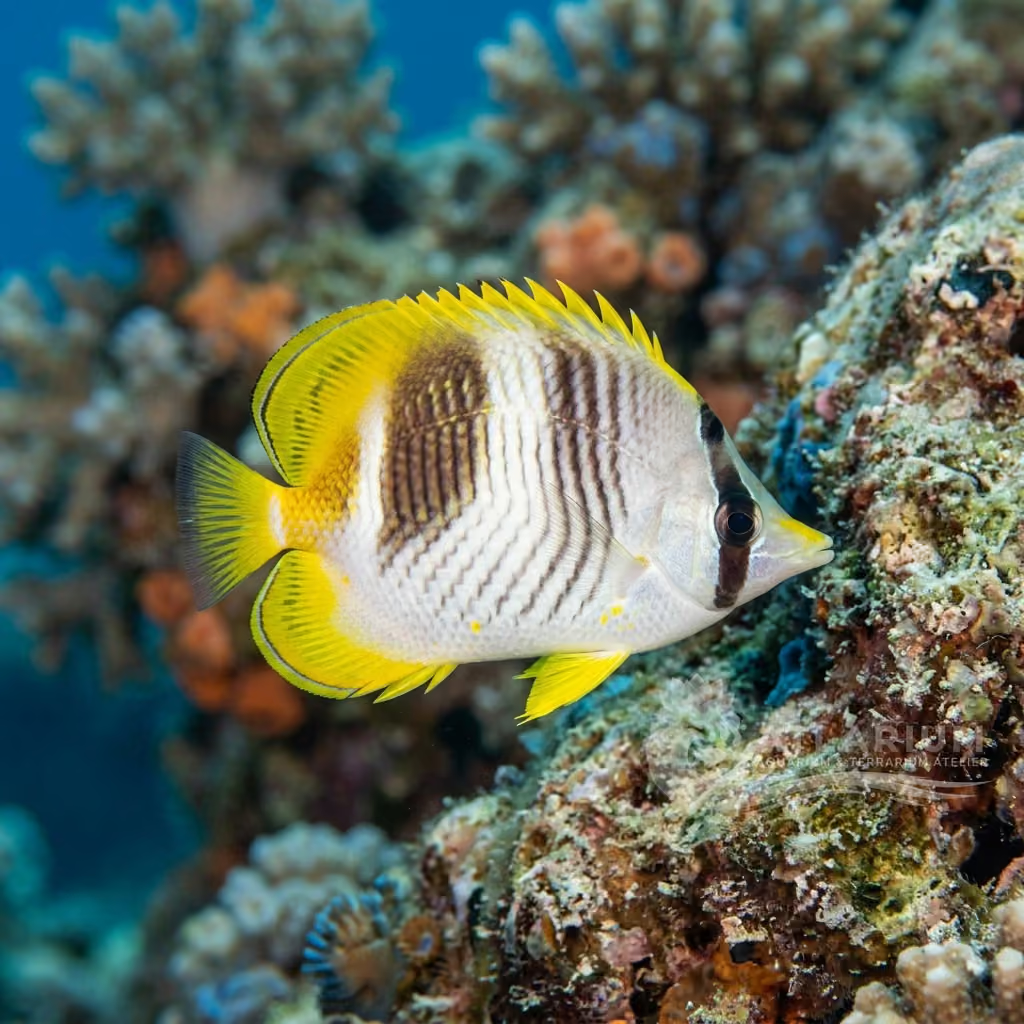
Coloration and Sexual Dimorphism: The body coloration is silvery-white, crossed by thin diagonal brown stripes. Its key identifying feature is a large black patch covering the eye and extending over the head like a mask, resembling a panda. The dorsal, anal, and caudal fins are bright yellow. There is no visible sexual dimorphism.

Soins, reproduction et cohabitation
Aquarium Setup: Requires a large aquarium of at least 400 liters for a pair. Provide generous open areas for swimming, alongside a well-structured rockwork containing caves and overhangs for shelter. Moderate water flow is optimal, simulating lagoon or sheltered reef environments.
Diet and Feeding: A challenging carnivore, feeding primarily on coral polyps, polychaete worms, and small invertebrates in the wild. In captivity, training them to eat dry food is difficult; their diet should consist of high-quality frozen foods (mysis, krill, brine shrimp, chopped clam). Feeding foods pressed into rock crevices helps stimulate foraging.
Water Quality: High water quality is essential. Keep temperature between 24°C and 27°C, pH between 8.1 and 8.4, salinity (SG) between 1.021 and 1.025, and nitrates below 15 mg/l. Strong filtration, an oversized protein skimmer, and routine water changes are vital to maintain low organic levels.
Compatibility and Cohabitation: Not reef-safe. They will consume hard coral polyps (both SPS and LPS) and pick at clams, anemones, and zoanthids. Ideal for fish-only systems or tanks with noxious soft corals. They live peacefully with tangs, wrasses, anthias, and clownfish.
Aquarium Breeding: Form monogamous pairs that spawn pelagic eggs floating in the water column. There are no successful records of breeding and raising this species in home aquariums, due to the difficulty of replicating spawning triggers and feeding the microscopic larvae.
Risks and Diseases: Highly susceptible to common marine parasites, particularly Cryptocaryon (marine ich) and Amyloodinium (marine velvet). They can also develop Head and Lateral Line Erosion (HLLE) under high stress or poor nutrition. A strict quarantine protocol is crucial before introduction.

Origine et répartition géographiques
Chaetodon adiergastos is widely distributed across the Western Pacific Ocean, with records from the Ryukyu Islands in southern Japan, Taiwan, the Philippines, Indonesia, and down to the northwestern coast of Australia. It inhabits sheltered coastal reefs, calm lagoons, and outer slopes rich in soft and hard corals, at depths ranging from 3 to 25 meters, often associated with large Acropora coral heads.
Origine
Océans tropicaux et récifsAsie du Sud et du Sud-EstAsie de l'EstAustralie, Nouvelle-Guinée et Océanie

Profil de poisson
- Tempérament
- Aggressive
- This species is generally peaceful, shy, and gentle, making it a great addition to a calm community tank. However, they can show minor territorial aggression toward conspecifics or similar-looking butterflyfish if space is limited. Because of their timid nature, they can easily be bullied by highly aggressive or fast-swimming species. It is best to introduce them to the aquarium early or alongside other peaceful tank mates to ensure they acclimate without stress.
- Régime alimentaire
- Omnivore
- The Panda Butterflyfish is a carnivore that feeds naturally on coral polyps, worms, crabs, and other small benthic invertebrates. In an aquarium, they can be quite finicky and difficult to transition to prepared foods. Initial feedings may require live foods, such as brine shrimp or clams on the half-shell, to stimulate their appetite. Once acclimated, they should be offered a varied diet of frozen mysis, enriched artemia, krill, and high-quality chopped seafood.
- Espérance de vie
- 5-10 years
- Taille adulte
- 20 cm
- Ratio des sexes
- 1:1 ratio
- In their natural habitat, these butterflyfish are known to form monogamous pairs and maintain stable social bonds. In captivity, they are best kept as a single specimen or as an established male-female pair introduced to the aquarium simultaneously. Keeping them in small groups is possible but requires a very large aquarium to prevent territorial conflicts between conspecifics. If kept in pairs, a 1:1 sex ratio is ideal to minimize aggression and mimic their natural social structure.
- Fréquence d'alimentation
- Twice daily
- It is recommended to feed Chaetodon adiergastos three to four times daily in small portions that they can consume within a few minutes. In the wild, they are continuous grazers that spend the day searching for food across the reef. Frequent feedings are necessary to sustain their high metabolism and prevent them from losing weight. Providing a constant supply of small meals also reduces food competition and keeps them healthy.
- Charge biologique
- Medium to High
- The biological waste produced by Chaetodon adiergastos is considered medium to medium-high. Because this species grows up to 20 cm in length and requires frequent daily feedings of meaty foods, it places a significant demand on filtration. A high-quality protein skimmer and efficient biological filtration are essential to maintain low nitrate and phosphate levels. Regular water changes and a well-established live rock system will help process the organic load and keep the water pristine.
- Courant
- Moderate
- This species prefers moderate water flow, which replicates the conditions of the shallow coral reefs and lagoons they inhabit. A good flow rate helps keep the aquarium well-oxygenated and prevents detritus from settling on the substrate or rocks. However, it is important to provide calmer areas and structural retreats within the tank where they can rest without fighting the current. Excessive or turbulent water movement should be avoided to prevent stress.
- Risque de saut
- Yes
- Although not notorious high-jumpers, Panda Butterflyfish can easily jump out of the aquarium if they are startled or chased by aggressive tank mates. Sudden changes in ambient light or loud noises near the tank can trigger a flight response, causing them to leap toward the surface. A tight-fitting lid or a fine-mesh screen cover is strongly recommended to prevent accidental escapes. Providing ample hiding spaces where the fish can retreat when frightened will also help reduce this risk.
- Reproduction
- Oviparous
- Breeding Chaetodon adiergastos in captivity is exceptionally difficult and has not been achieved successfully in home aquariums. They are oviparous broadcast spawners that form monogamous pairs and release pelagic eggs and sperm into the water column. The fertilized eggs float and hatch into tiny, planktonic larvae that are extremely difficult to feed and raise. Due to their complex larval stage and specialized dietary needs, captive propagation remains limited to advanced scientific projects.
- Compatibilité et compagnons
- Peaceful
- Panda Butterflyfish are compatible with a variety of peaceful marine fish, including tangs, clownfish, wrasses, and gobies. They are not reef-safe and will readily pick at stony and soft corals, anemones, and small ornamental invertebrates. Care should be taken to avoid housing them with aggressive species like triggers, groupers, or large damselfish that might harass them. They can be kept with conspecifics if introduced together in a sufficiently large tank.
- Niveau dans le bac
- Middle/Bottom
- Chaetodon adiergastos is an active swimmer that primarily occupies the middle and bottom levels of the aquarium. It spends much of its time hovering close to the rockwork, searching for food and exploring caves or crevices. While they will venture to the upper water column during feeding, they generally rely on the lower zones for shelter and security. Providing a spacious open swimming area alongside complex rock structures is key to accommodating their vertical habits.

Modèles et paramètres scientifiques
FishBase
Fenêtre sur les données scientifiques officielles de l’espèce
FishBase v25.04Données synchronisées le : 15/06/2026
- Niveau trophique
- 3,5 ± 0,37 se
- Résilience
- Élevée (moins de 15 mois)
- Singularité phylogénétique (PD50)
- 0.5
- Relation bayésienne longueur-poids
- a = 0.02291, b = 3
- VulnérabilitéVulnérabilité faible (10 / 100)

Espèces associées
Recommandations regroupées par proches parents, compagnons et soins similaires.