Eastern triangular butterflyfish
Chaetodon baronessa
An extraordinary marine butterflyfish with a striking triangular profile, native to the Pacific. Extremely difficult to keep, as it feeds exclusively on live Acropora corals.
Température de l’eau
22 - 27 °C
Valeur du pH
8.1 - 8.4
Type d'eau
Marin
Niveau dans le bac
Fond et milieu
Taille adulte
15 cm
Volume minimal du bac
>= 300 L
Groupe minimal
>= 1

Description de l'espèce
Geographical Origin and Habitat: Chaetodon baronessa is widely distributed throughout the tropical Western Pacific. It inhabits the coral-rich waters of Indonesia, the Philippines, New Guinea, northern Australia (Great Barrier Reef), and extends east to the Solomon and Fiji Islands. It primarily frequents sheltered lagoons rich in hard corals and exposed seaward reefs, at depths between 1 and 15 meters. It lives in close association with branching corals of the genus Acropora (particularly table corals), which constitute both its territory and its sole food source.
Taxonomy and Morphology: It belongs to the class Actinopterygii, order Perciformes, family Chaetodontidae. It features a unique, extremely deep, laterally compressed, and triangular body profile, with a highly sloped forehead and an elongated, pointed snout with a narrow terminal mouth. It reaches a maximum size of about 15 centimeters. It is closely related to Chaetodon triangulum (an Indian Ocean species), sharing the same specialized morphology for obligate corallivory.
Social Behavior: It is a diurnal, strongly territorial, and monogamous species. Adults live mostly in stable pairs that actively defend one or more colonies of tabular Acropora from intrusion by conspecifics or other food competitors. Juveniles exhibit solitary and shy behavior, hiding deep within coral branches. In the aquarium, intraspecific aggression is very high, and the presence of other individuals of the same genus is not tolerated in the same space.
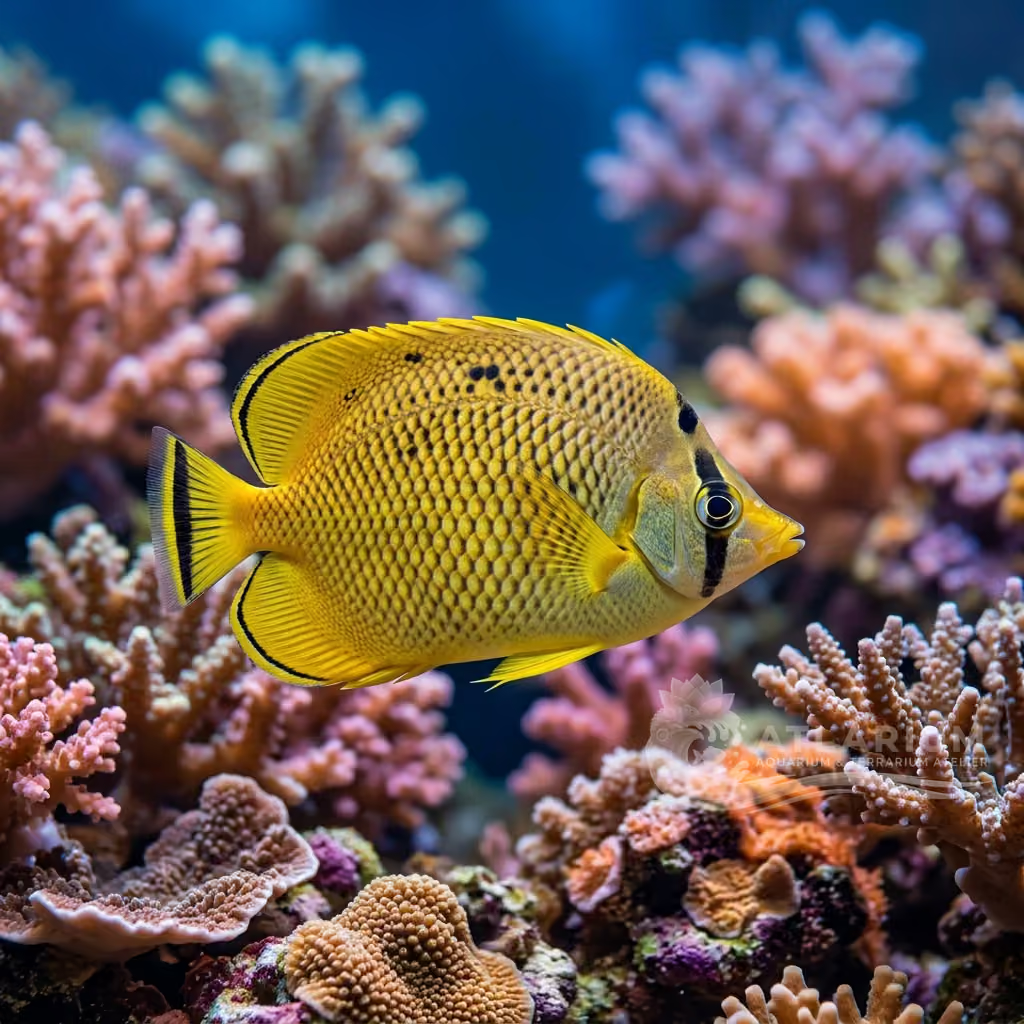
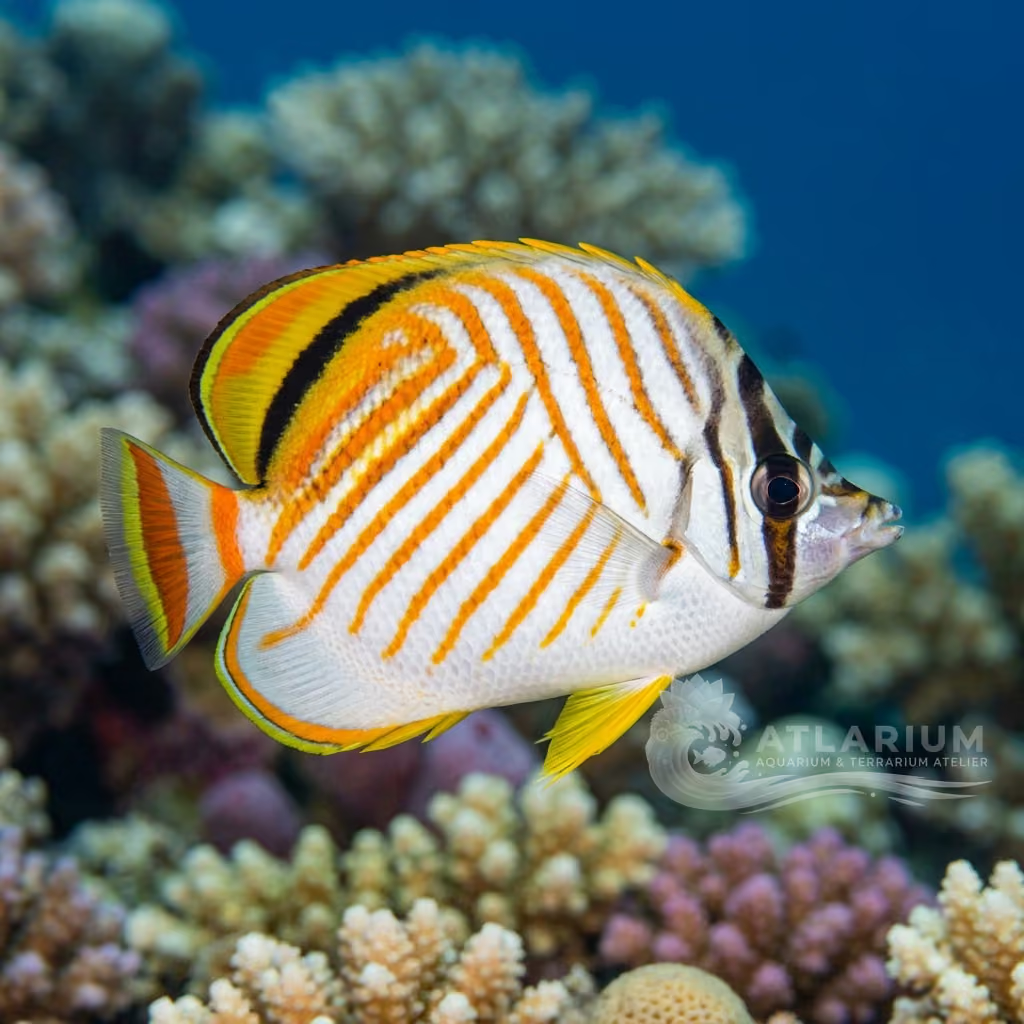
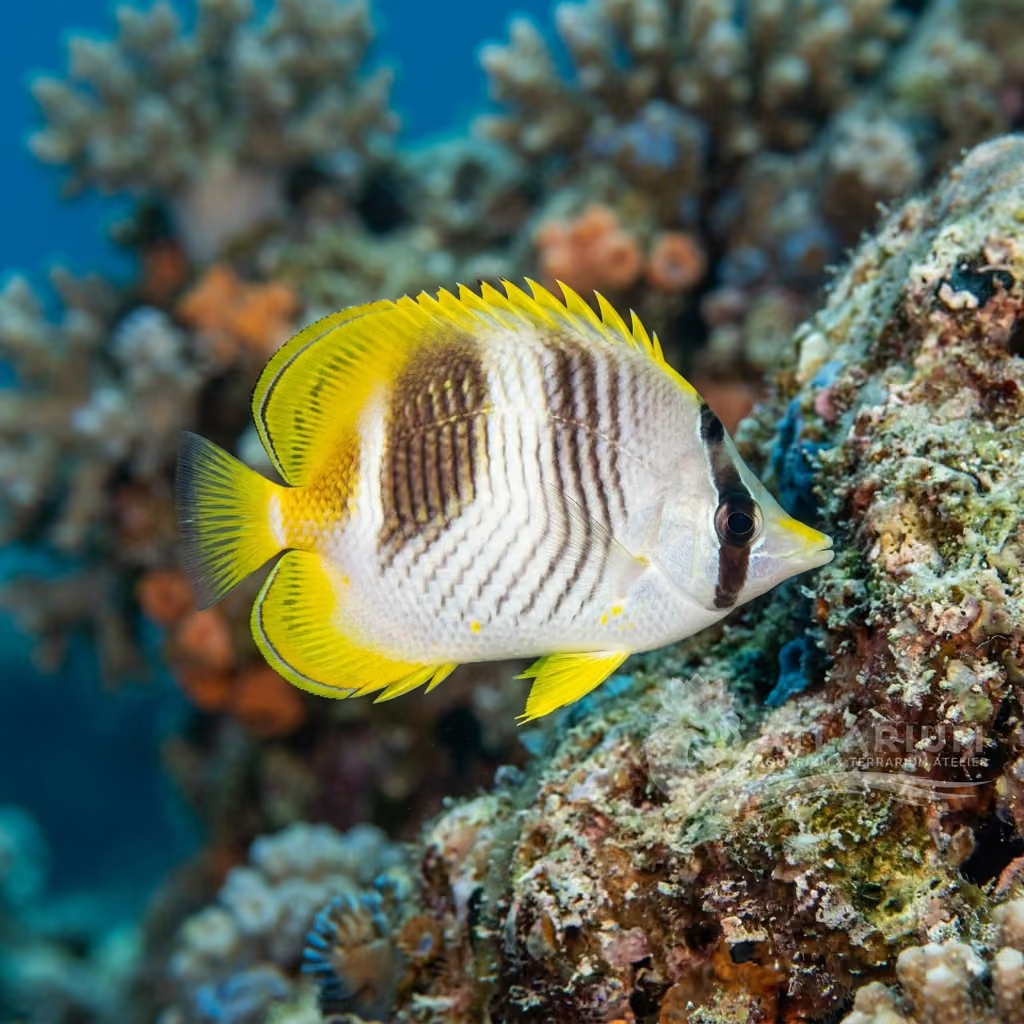
Coloration and Sexual Dimorphism: The color pattern consists of a grey-cream or yellowish base body, highlighted by a dense series of dark lines forming a tight chevron (herringbone) pattern across the flanks. Three vertical black-and-yellow bands cross the head, obscuring the eye, while the tail is dark with a yellow margin. There is no visible external sexual dimorphism between males and females.

Soins, reproduction et cohabitation
Aquarium Setup: It requires a marine aquarium established for years with a minimum volume of 400 liters, featuring optimal conditions for the growth of SPS corals. Since it is an obligate corallivore, it is imperative that the tank houses numerous large and healthy colonies of Acropora corals. Excellent water movement and intense lighting must be present to support both the corals and the fish. Numerous rocky crevices must be available for night shelter.
Diet and Feeding: Keeping this fish in captivity is extremely difficult and considered virtually impossible for beginners, as the species feeds exclusively on the live polyps of Acropora corals. It almost always rejects any artificial, dry, or frozen foods. Some experienced aquarists manage to maintain it by continuously providing live Acropora colonies or by attempting to induce it to accept finely chopped clam and gel pastes spread on coral skeletons, though long-term success rates remain very low.
Water Quality: It requires extremely high water purity standards, similar to those needed for the most demanding reef corals. Ideal values are: constant temperature between 24°C and 26°C, stable pH between 8.1 and 8.4, specific gravity between 1.023 and 1.025, and undetectable nitrates and phosphates. The use of a professional filtration system with an efficient protein skimmer, nutrient reactors, and frequent partial water changes with high-quality RO water is fundamental.
Compatibility and Cohabitation: It can only coexist with very peaceful fish that are not dietary competitors, such as small gobies, clownfish, and calm damselfish. It must not be housed with fast, turbulent, or aggressive fish (such as large surgeonfish or triggerfish), which would cause it to starve due to stress. It is not reef-safe in any way, as it will destroy and consume the Acropora coral colonies in the tank.
Aquarium Breeding: Breeding in aquariums has never been achieved in the hobby. It follows the pelagic spawning model: at dusk, pairs rise up the water column to release eggs and sperm. The floating eggs hatch into planktonic larvae that spend months carried by marine currents before undergoing metamorphosis and settling on the reef bottom in search of protective corals.
Risks and Diseases: The single greatest risk is death by starvation due to its refusal to feed on non-live foods. The species suffers heavily from malnutrition stress, which weakens its immune system, making it an easy victim for skin parasites like Velvet (Oodinium) and Marine Ich (Cryptocaryon). Any treatment in the display tank is highly problematic due to the sensitivity of the live corals required for its survival.

Origine et répartition géographiques
Chaetodon baronessa is widely distributed throughout the tropical Western Pacific. It inhabits the coral-rich waters of Indonesia, the Philippines, New Guinea, northern Australia (Great Barrier Reef), and extends east to the Solomon and Fiji Islands. It primarily frequents sheltered lagoons rich in hard corals and exposed seaward reefs, at depths between 1 and 15 meters. It lives in close association with branching corals of the genus Acropora (particularly table corals), which constitute both its territory and its sole food source.
Origine
Océans tropicaux et récifsAfrique et MadagascarAsie du Sud et du Sud-EstAustralie, Nouvelle-Guinée et Océanie

Profil de poisson
- Tempérament
- Aggressive
- It is a generally peaceful species toward fish from other families, but it exhibits strong intra-specific territoriality. It will become aggressive toward conspecifics or other butterflyfish species with similar coloration and shapes if space is limited. It is important to provide a spacious tank with many defined territories to maintain peace in the aquarium.
- Régime alimentaire
- Corallivore
- This fish is an obligate corallivore, meaning that in the wild it feeds almost exclusively on the polyps of Acropora corals. In the aquarium, this specialized diet represents the greatest challenge, as most specimens reject dry or frozen foods. To stimulate feeding, aquarists must often offer live stony corals or fresh clam meat pressed onto rocks.
- Espérance de vie
- 3-7 years
- Taille adulte
- 15 cm
- Ratio des sexes
- 1:1 ratio
- In the wild, this species primarily lives in stable, monogamous pairs and shares a strong pair bond. It is recommended to keep them either as an established mated pair or by introducing two young individuals simultaneously to facilitate pairing. Avoid housing multiple individuals or single specimens of the same sex in the same aquarium to prevent severe territorial aggression.
- Fréquence d'alimentation
- Twice daily
- Due to their continuous grazing behavior in the wild, these fish must be fed multiple times a day in captivity. It is recommended to offer small portions of food three to four times daily to support their active metabolism. If the aquarium does not have live corals for them to graze on constantly, frequent feedings are even more critical to prevent wasting.
- Charge biologique
- Medium
- The biological load of this species is considered medium, but it requires an exceptionally efficient and powerful filtration system. Since it feeds almost exclusively on live coral polyps, any uneaten food or decaying organic matter can quickly compromise water quality. Frequent water changes and an oversized protein skimmer are necessary to maintain nutrient levels close to zero.
- Courant
- Strong
- This species prefers moderate to strong water movement, which mimics the currents of the outer reefs and lagoons where it lives. Good water flow helps keep the water well-oxygenated and prevents detritus from accumulating on corals and rocks. It is advisable to use wavemakers directed to create turbulent, non-linear flows throughout the tank.
- Risque de saut
- Yes
- Although not considered exceptional jumpers, these fish can leap out of the tank if startled or during the night. It is essential to cover the aquarium with a tight-fitting lid or a fine-mesh screen to prevent accidental escapes. Providing adequate hiding places among the rocks will also reduce stress and the likelihood of jumping behavior.
- Reproduction
- Oviparous
- Breeding in the aquarium is extremely difficult, and there are no reports of success achieved by home aquarists. In the wild, they are pelagic spawners that release eggs and sperm into the open water column during coordinated spawning events. The larvae float as plankton for several weeks before settling on the reef, a phase that is impossible to replicate in a standard home system.
- Compatibilité et compagnons
- Aggressive
- This species is compatible with most peaceful, non-aggressive reef fish such as blennies, gobies, and clownfish. However, it is not compatible with small or large-polyp stony corals, which will be constantly nipped and consumed. Additionally, avoid cohabitation with aggressive species like triggerfish or lionfish that could intimidate them and prevent them from feeding.
- Niveau dans le bac
- Middle/Bottom
- This fish primarily swims in the middle and lower zones of the aquarium, constantly weaving through the branches of stony corals. In its natural habitat, it is found at depths between 5 and 20 meters, always in close association with Acropora colonies. The tank should be furnished with extensive live rock structures and corals to replicate this complex three-dimensional reef.

Modèles et paramètres scientifiques
FishBase
Fenêtre sur les données scientifiques officielles de l’espèce
FishBase v25.04Données synchronisées le : 15/06/2026
- Niveau trophique
- 3,3 ± 0,61 se
- Résilience
- Élevée (moins de 15 mois)
- Temps de génération
- 1,1 ans
- Singularité phylogénétique (PD50)
- 0.5
- Relation bayésienne longueur-poids
- a = 0.02344, b = 3
- VulnérabilitéVulnérabilité faible (14 / 100)

Espèces associées
Recommandations regroupées par proches parents, compagnons et soins similaires.