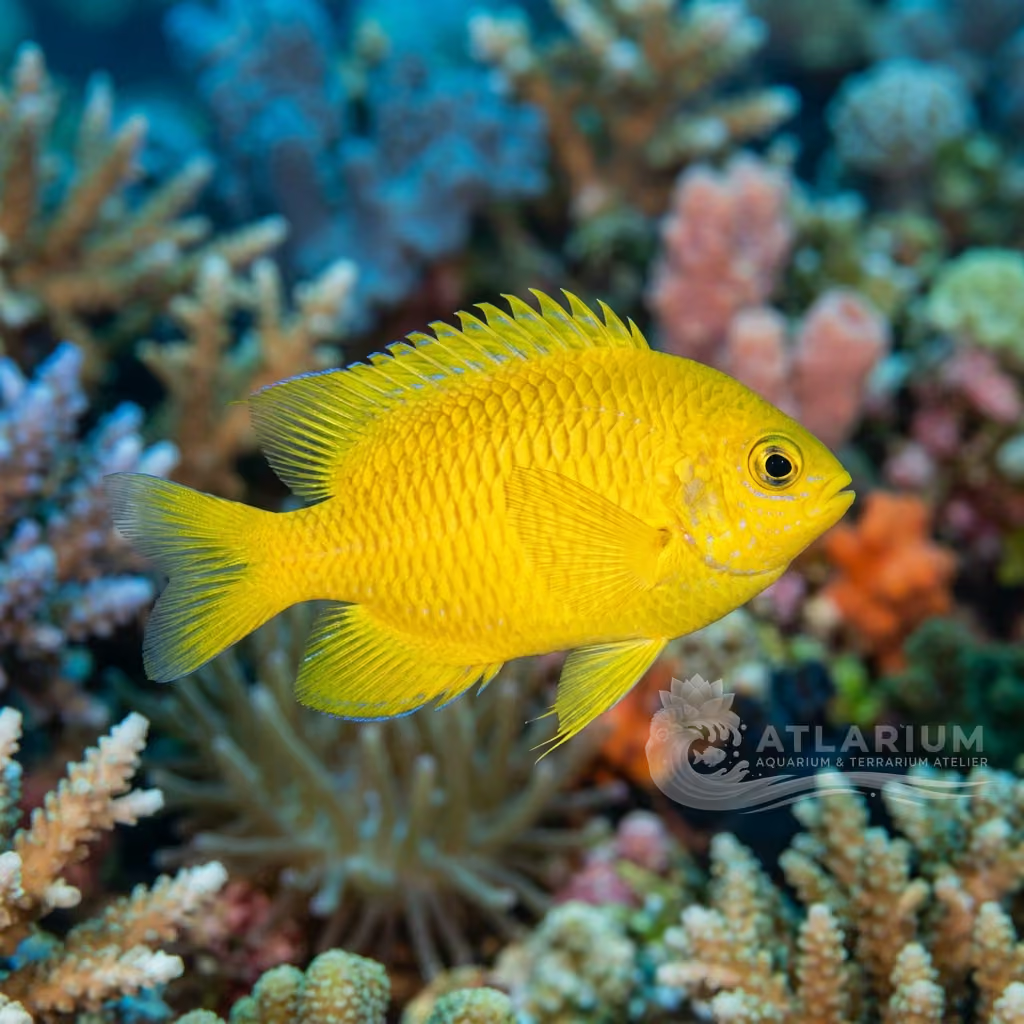
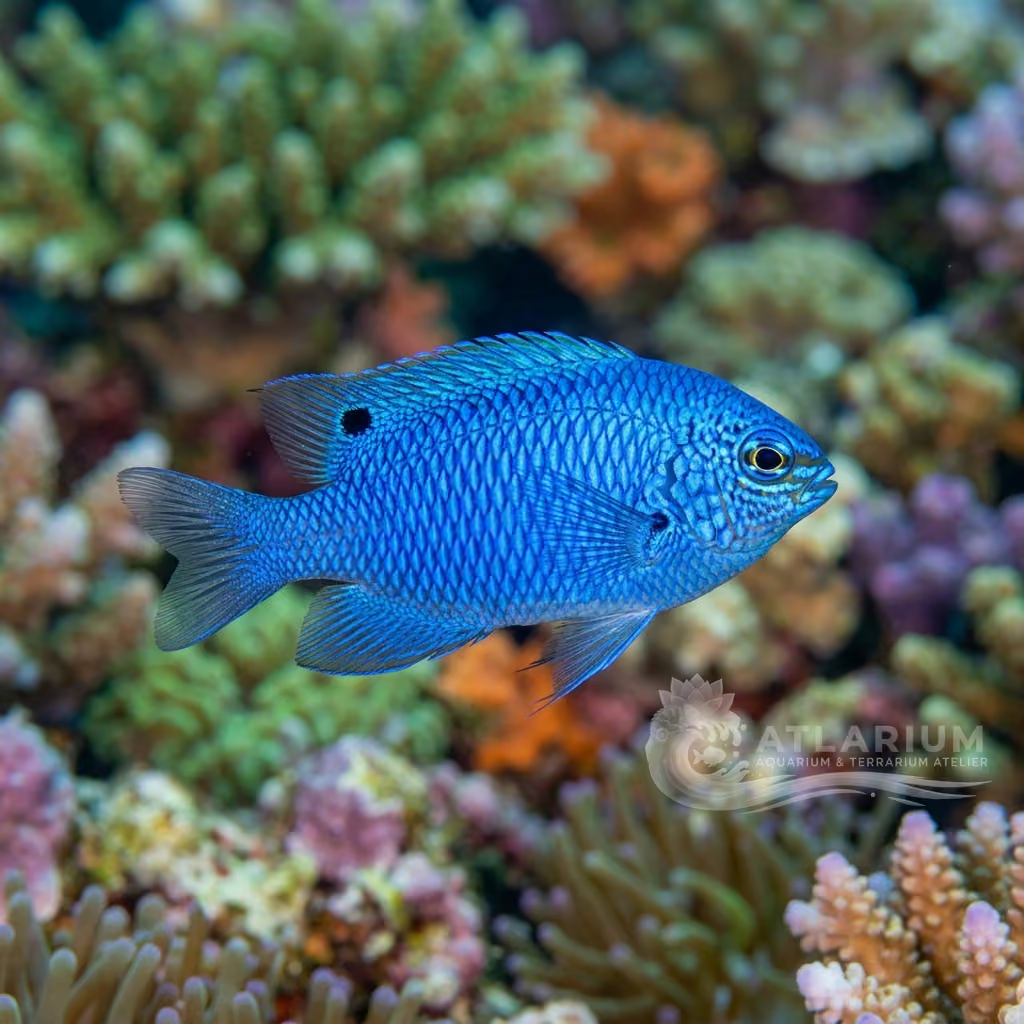
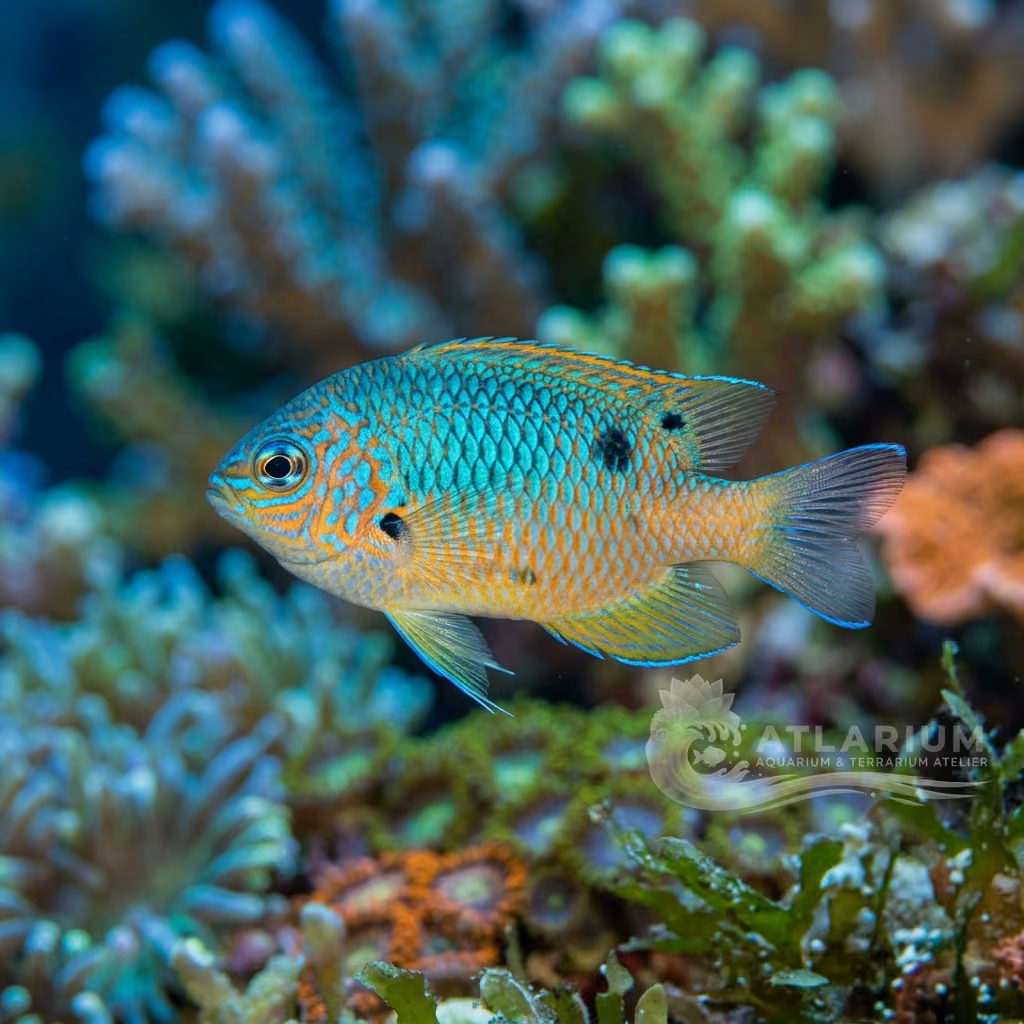
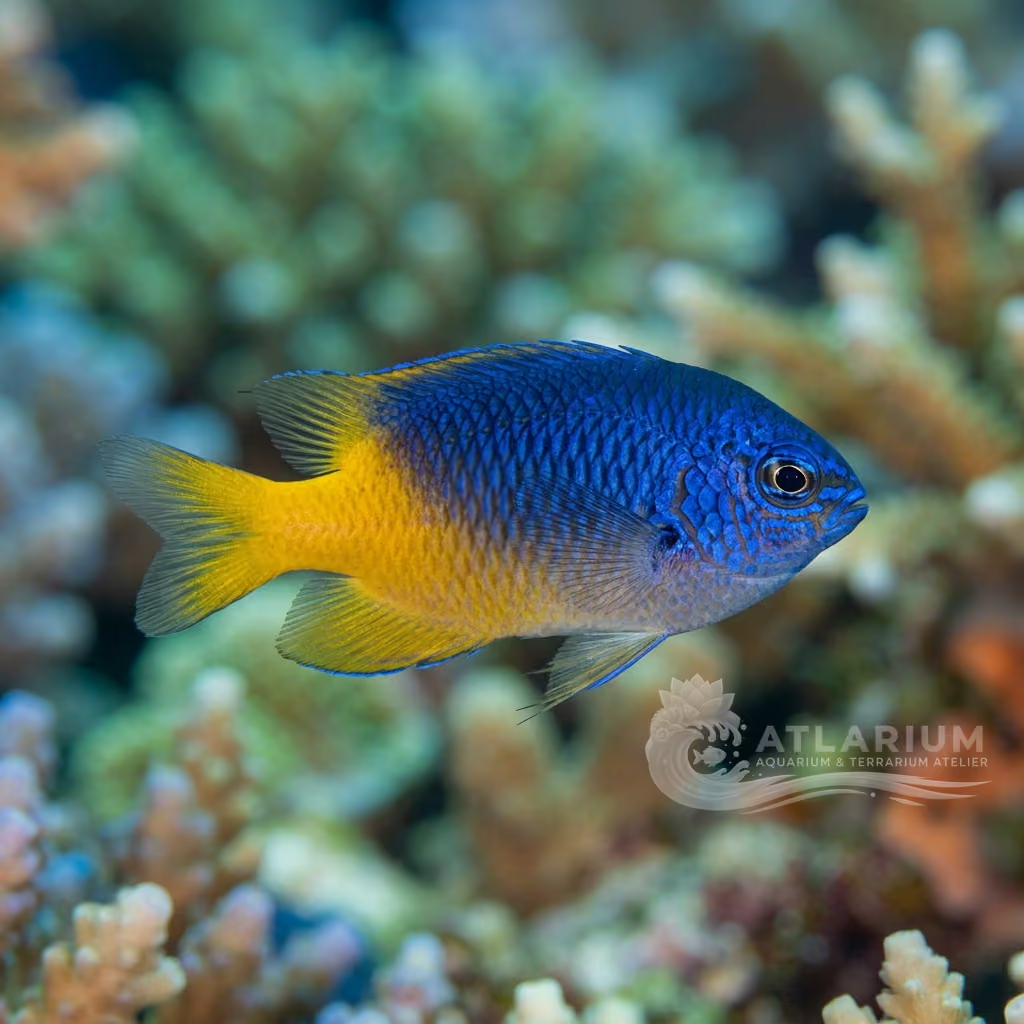
Bicolor Chromis
Pycnochromis margaritifer
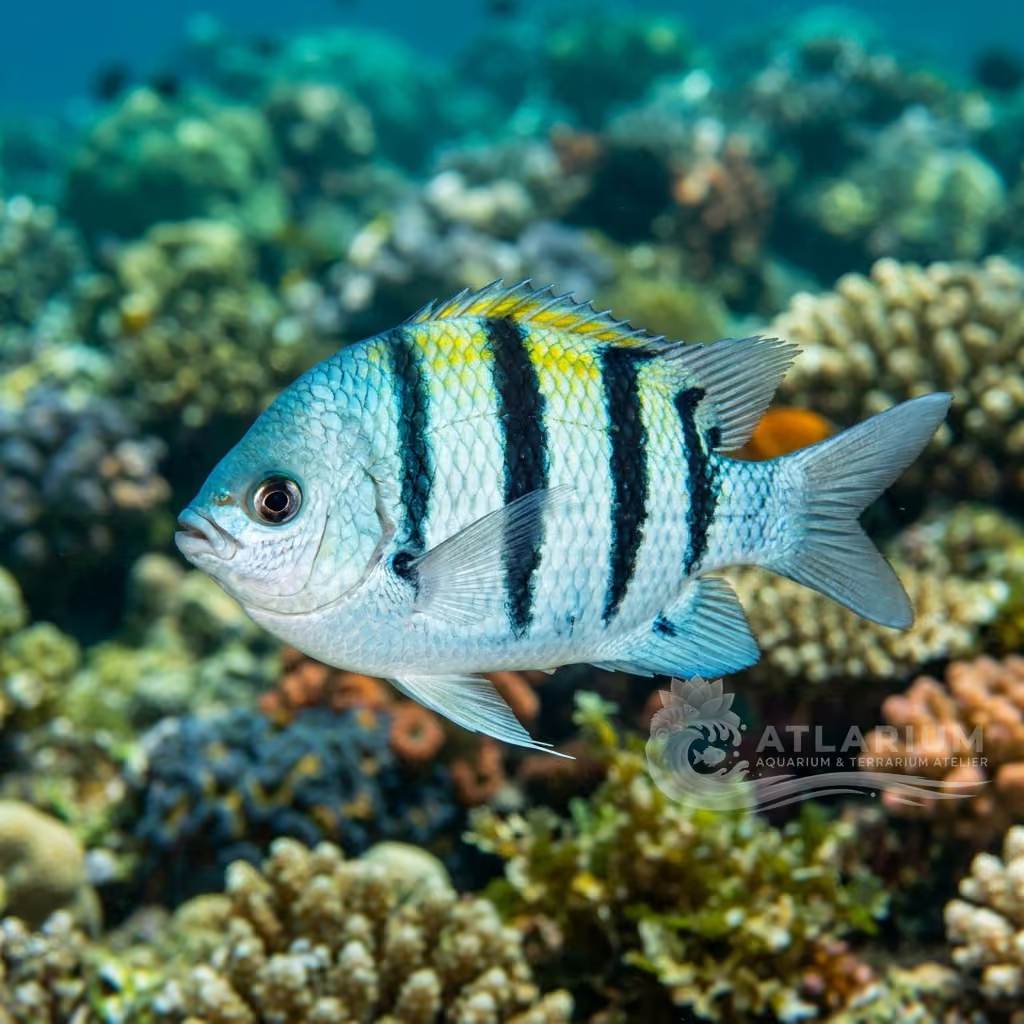
Small and peaceful damselfish (9 cm) from the Indo-Pacific, featuring a striking bicolor coloration: dark blackish-brown anteriorly and stark white posteriorly.
Température de l’eau
23 - 28 °C
Valeur du pH
8.1 - 8.4
Type d'eau
Marin
Niveau dans le bac
Milieu
Taille adulte
9 cm
Volume minimal du bac
>= 100 L
Groupe minimal
>= 6

Description de l'espèce
Geographical Origin and Habitat: Indo-Pacific region, distributed from Christmas Island and Western Australia to the Line Islands, north to southern Japan, and south to the Great Barrier Reef. Inhabits exposed seaward reefs and rich coral areas up to 20 meters deep.
Taxonomy and Morphology: Member of the Pomacentridae family, subfamily Chrominae. Features a streamlined, slender body profile adapted for constant swimming in open water column currents.
Social Behavior: Peaceful and schooling species. Forms large groups that swim together above coral heads, feeding on drifting zooplankton. Displays minimal aggression within the school.
Coloration and Sexual Dimorphism: Stark contrast color pattern: the front half of the body is dark brown to black, while the rear portion, including the caudal fin and tail base, is bright white.

Soins, reproduction et cohabitation
Aquarium Setup: Requires a tank of at least 100 liters to accommodate a small group. Provide open swimming areas with strong currents and live rock structures mimicking a reef slope.
Diet and Feeding: Planktivorous. In captivity, feed multiple times daily with small frozen foods like copepods, mysis, and brine shrimp, alongside high-quality dry micro-granules.
Water Quality: Prone to high oxygen demand. Maintain temperature 23-28 °C, pH 8.1-8.4, and salinity 1.020-1.025 with vigorous water movement and skimming.
Compatibility and Cohabitation: Highly peaceful and 100% reef safe. Peaceful with corals, invertebrates, and other non-aggressive tankmates. Must be kept in a group of 6 or more to prevent stress.
Aquarium Breeding: Reproduction in home aquariums is rare. Males clear a nesting site on rockwork, guard the adhesive eggs deposited by females, and fan them until hatching.
Risks and Diseases: Generally hardy, but prone to starvation if fed infrequently. Susceptible to marine ich (Cryptocaryon) and bacterial infections if water quality is neglected.

Origine et répartition géographiques
Indo-Pacific region, distributed from Christmas Island and Western Australia to the Line Islands, north to southern Japan, and south to the Great Barrier Reef. Inhabits exposed seaward reefs and rich coral areas up to 20 meters deep.
Origine
Océans tropicaux et récifsAsie de l'EstAustralie, Nouvelle-Guinée et Océanie

Profil de poisson
- Tempérament
- Semi-aggressive
- Overall, the Chromis margaritifer possesses a peaceful and social temperament that makes it ideal for community tanks. While generally amicable, there is a strict hierarchical structure within their schools that involves mild bickering. This internal squabbling rarely results in physical damage if the group is large enough. Their constant, darting movement adds wonderful energy to any marine display.
- Régime alimentaire
- Planktivore
- As a natural planktivore, the Chromis margaritifer feeds constantly from the water column in the wild. In captivity, it enthusiastically accepts a wide variety of meaty foods, including mysis shrimp, cyclopods, and high-quality flakes. It should also be offered finely chopped seafoods to ensure a well-rounded nutritional profile. Occasional vitamin soaking can help maintain its vibrant natural coloration.
- Espérance de vie
- 5-8 years
- Taille adulte
- 9 cm
- Ratio des sexes
- Solitary
- It is highly recommended to keep the Chromis margaritifer in odd-numbered groups of five, seven, or more to disperse natural aggression. If kept in too small a group, the dominant individuals may systematically harass the weakest member to death. A large school provides a stunning visual display and promotes more natural social dynamics. Providing ample swimming space is crucial to maintaining harmony within the group.
- Fréquence d'alimentation
- Twice daily
- Due to its high metabolism and continuous swimming, this species requires multiple feedings throughout the day. Offering small amounts of food three to four times daily is the ideal approach for long-term success. If underfed, it can quickly lose body mass and become susceptible to disease or aggression from tank mates. Automatic feeders can be extremely beneficial for maintaining this rigorous schedule.
- Charge biologique
- Medium
- The Chromis margaritifer has a moderate bioload due to its highly active nature and constant need for nutrition. A school of these fish will continuously produce waste that requires efficient protein skimming and biological filtration. They process food very quickly, which means their metabolic output is surprisingly high for their size. Regular water changes are recommended to keep nitrate levels in check.
- Courant
- Strong
- The Chromis margaritifer strongly prefers high-flow environments that mimic the open water above natural coral reefs. Strong water movement encourages them to school tightly and swim actively in the upper water column. Stagnant water can lead to lethargy and may discourage their natural schooling behaviors. Ensure the flow is properly dispersed to prevent pinning smaller fish against the glass or rockwork.
- Risque de saut
- No
- Reproduction
- Oviparous
- The Chromis margaritifer is a substrate spawner that occasionally breeds in well-established home aquariums. During spawning, males will clear a patch of sand or rock and aggressively court females to deposit their eggs. The male then diligently guards and aerates the eggs until they hatch a few days later. Raising the resulting pelagic larvae is exceedingly difficult and requires specialized rotifer cultures.
- Compatibilité et compagnons
- Peaceful
- This fish is highly compatible with nearly all peaceful and semi-aggressive reef inhabitants. The Chromis margaritifer is completely reef-safe and will not bother corals, clams, or ornamental invertebrates. It serves as an excellent "dither fish," helping shyer species feel secure enough to swim in the open. However, larger predatory fish may view them as a natural food source.
- Niveau dans le bac
- Middle
- This species is a classic open-water swimmer that predominantly occupies the middle to upper levels of the aquarium. It rarely seeks shelter in the rockwork during the day, preferring to remain highly visible. At night, however, it will retreat into rocky crevices or branches of stony corals to sleep safely. Its active presence brings a tremendous amount of life and movement to the upper tank regions.

Modèles et paramètres scientifiques
FishBase
Fenêtre sur les données scientifiques officielles de l’espèce
FishBase v25.04Données synchronisées le : 15/06/2026
- Niveau trophique
- 3 ± 0,25 se
- Résilience
- Moyenne (1,4 - 4,4 ans)
- Temps de génération
- 3,7 ans
- Singularité phylogénétique (PD50)
- 0.5
- Relation bayésienne longueur-poids
- a = 0.0166, b = 2.97
- VulnérabilitéVulnérabilité faible à modérée (29 / 100)

Espèces associées
Recommandations regroupées par proches parents, compagnons et soins similaires.