Chestnut Eyelash Blenny
Cirripectes castaneus
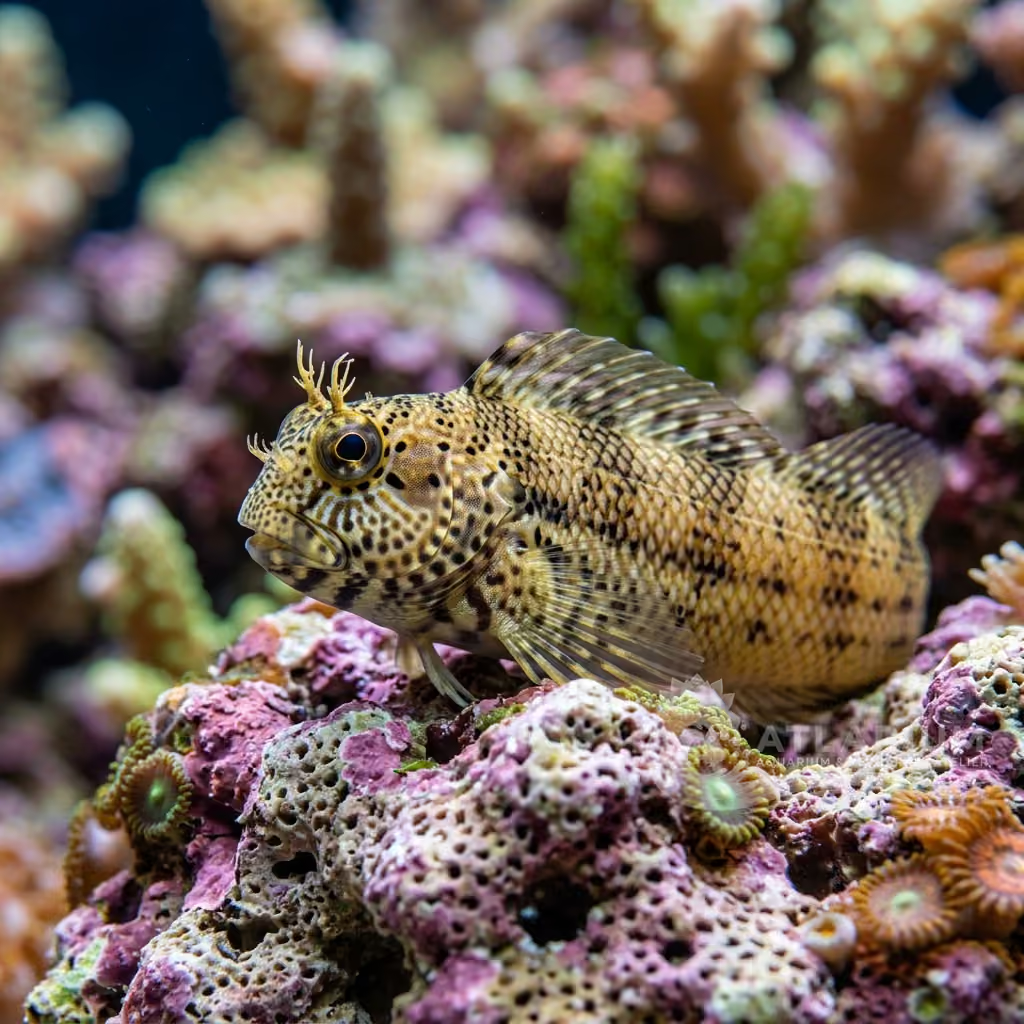
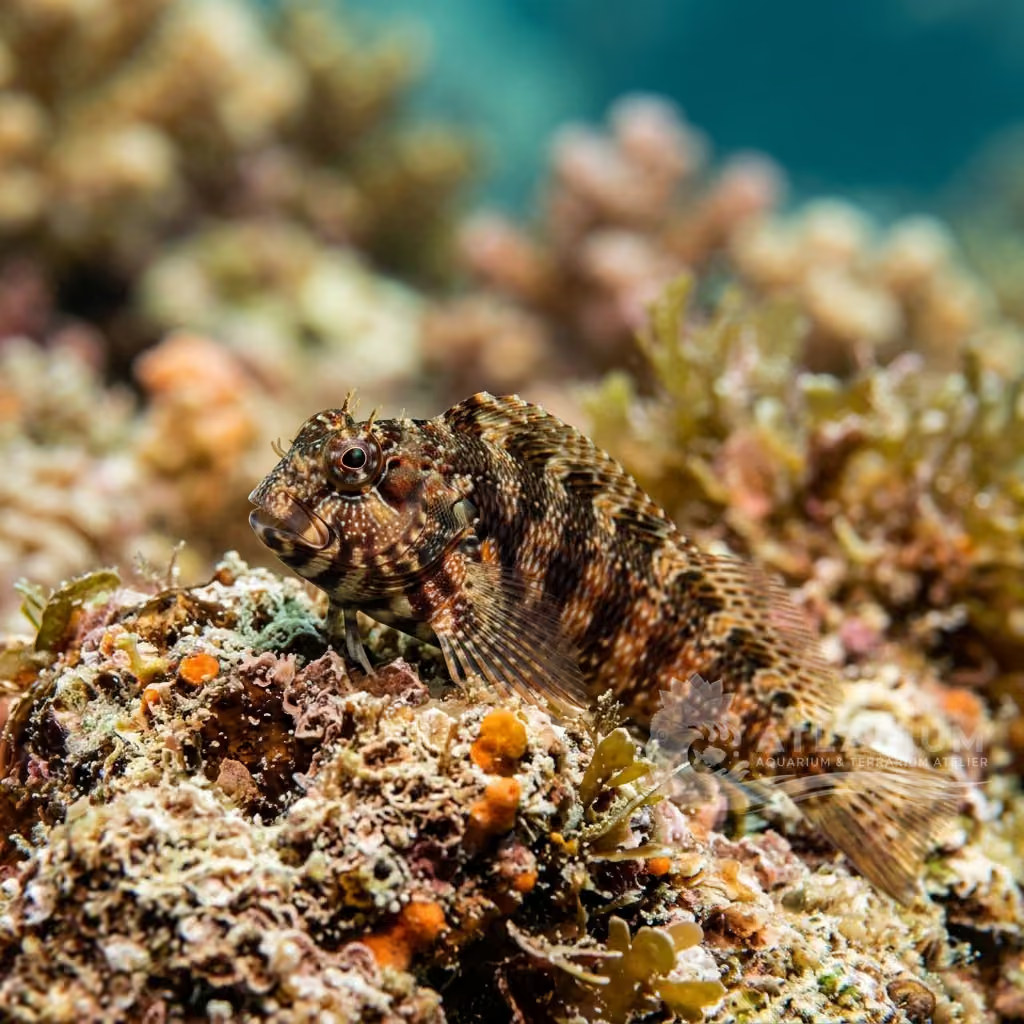
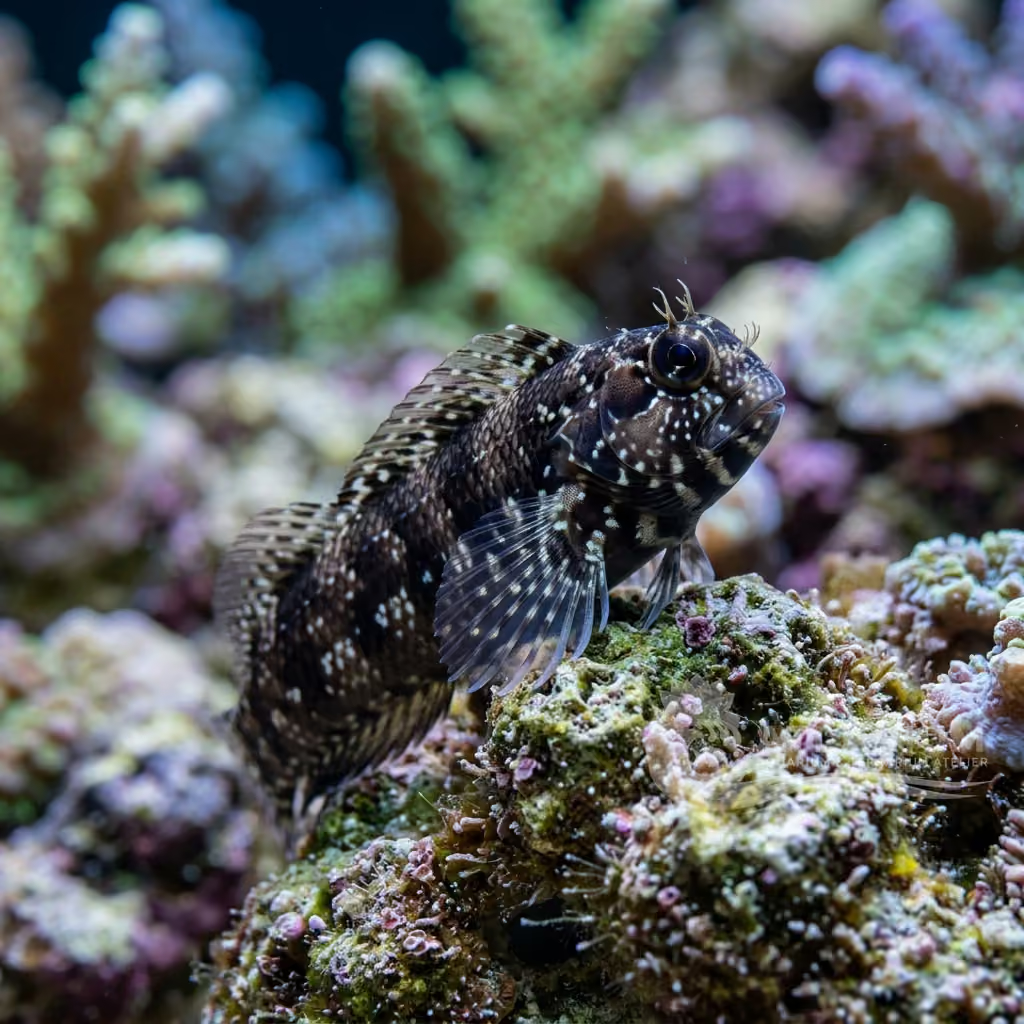
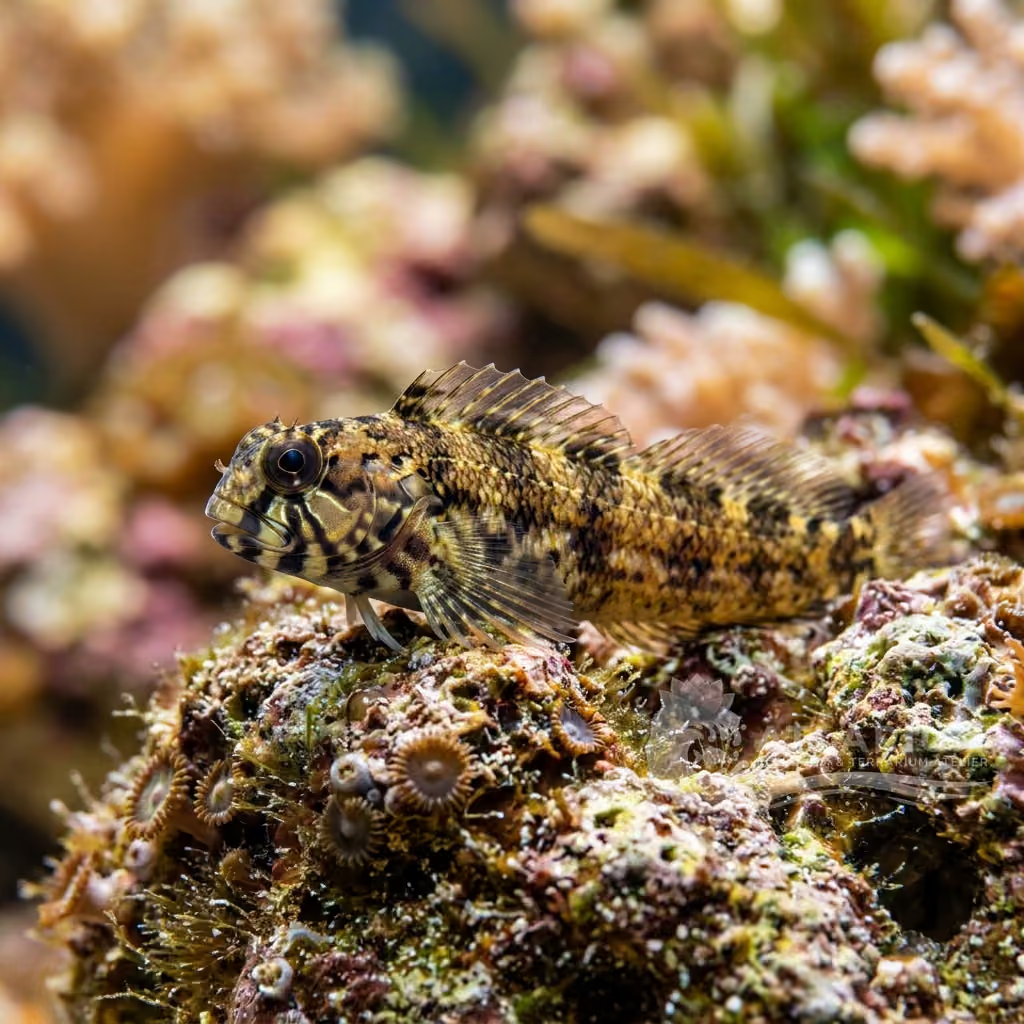
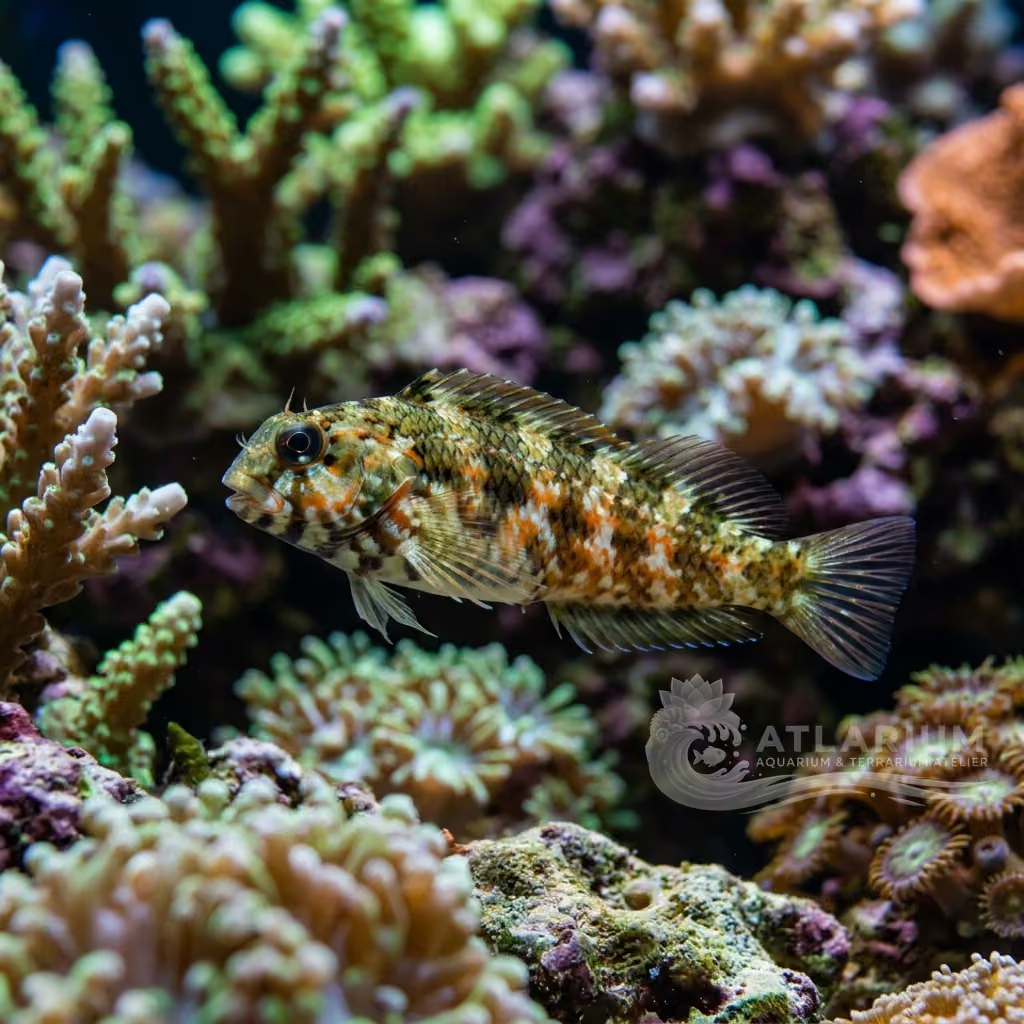
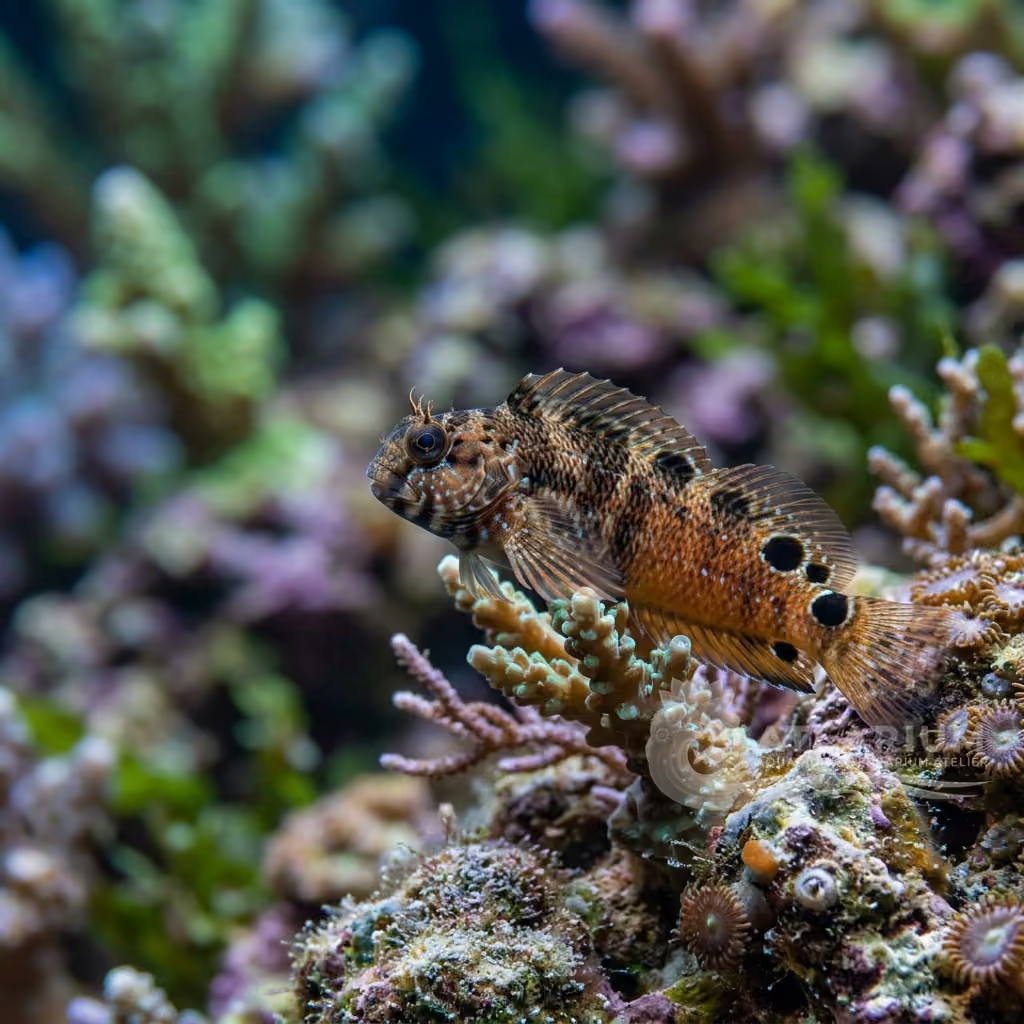
This active, dark brown marine blenny showcases eyelash-like cirri on its nape. It fiercely defends its rocky territory while constantly grazing on microalgae and detritus.
Température de l’eau
22 - 26 °C
Valeur du pH
8.1 - 8.4
Type d'eau
Marin
Niveau dans le bac
Fond et milieu
Taille adulte
10 cm
Volume minimal du bac
>= 120 L
Groupe minimal
>= 1
KH
8 - 12 dKH

Description de l'espèce
Geographical Origin and Habitat: Widely distributed in the tropical Indo-Pacific, including the coasts of South Africa, the Red Sea, the Persian Gulf, Madagascar, and the islands of the Western Pacific. It inhabits intertidal reef zones, shallow outer coral reefs exposed to wave action, and tide pools, typically at depths between 0 and 10 meters.
Taxonomy and Morphology: Belongs to the family Blenniidae, subfamily Salariinae. It features a robust, elongated, and scaleless body with a large, rounded head. It reaches a maximum size of about 12 centimeters in length. It is distinguished by the presence of a transverse row of short, dense nuchal cirri (eyelash-like tentacles) on its nape.
Social Behavior: An active and territorial species, especially towards conspecifics or fish of similar shape. It spends the day perching on live rock or inside small rocky holes from which it observes the environment. It swims with quick, darting movements close to the substrate.
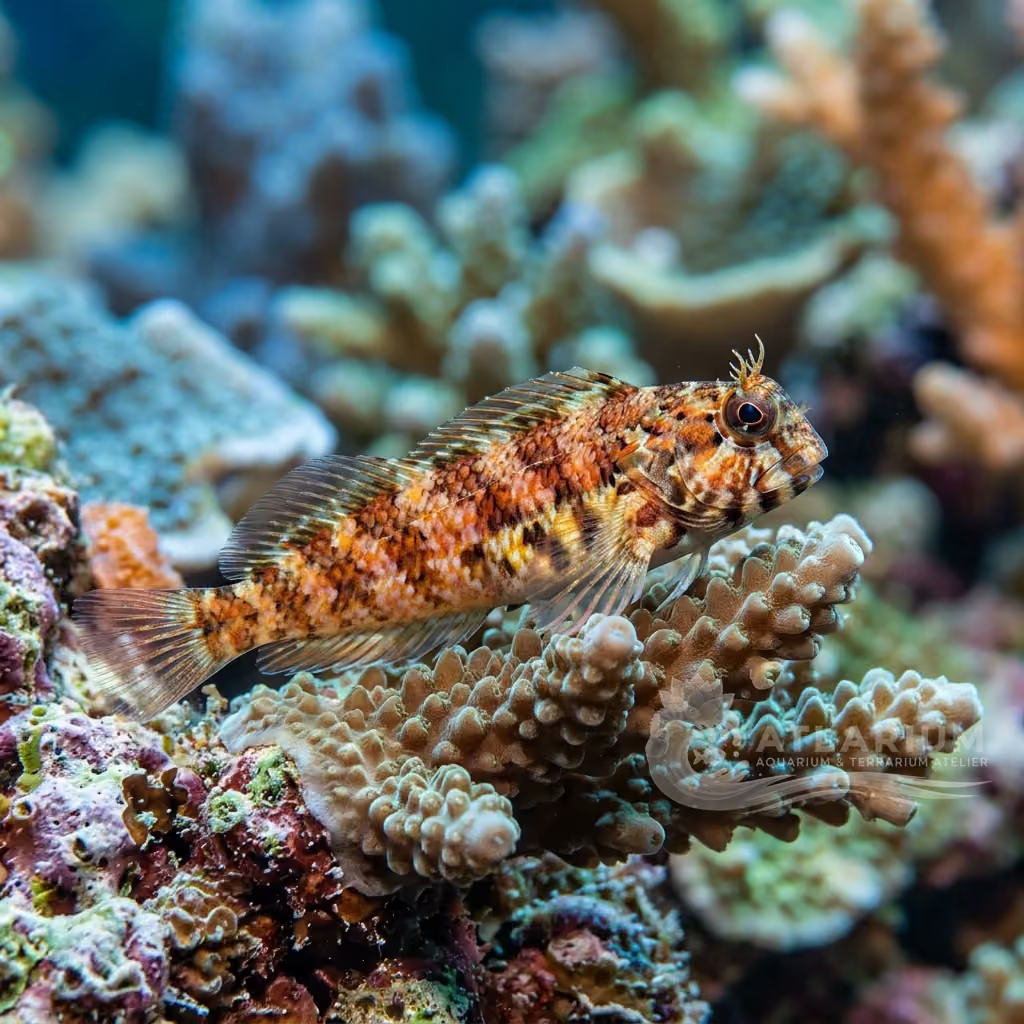
Coloration and Sexual Dimorphism: The body coloration is predominantly dark brown, chestnut, or blackish, sometimes with lighter grey or brown vertical bars on the flanks. Spawning adult males can develop orange or reddish hues on the head and caudal fin. Sexual dimorphism is also visible in the structure of the urogenital organs.

Soins, reproduction et cohabitation
Aquarium Setup: Requires a marine aquarium of at least 150 liters with a rich presence of live rock arranged to form numerous cavities and small holes that simulate their natural shelter. It is important to equip the tank with a secure lid, as this species is an exceptional jumper when startled.
Diet and Feeding: Primarily a herbivorous species. In the wild, it feeds by grazing on rocks to consume filamentous algae, microalgae, and associated organic detritus. In the aquarium, it readily accepts dry flakes or pellets based on spirulina, shredded nori algae, and frozen foods such as mysis, brine shrimp, and cyclops.
Water Quality: Requires stable marine parameters: water temperature between 24 and 28 °C (75-82 °F), pH between 8.1 and 8.4, and specific gravity at 1.020-1.025. Good water movement and high oxygenation are essential to replicate the coastal reef zones where it lives.
Compatibility and Cohabitation: Compatible with most peaceful reef fish (tangs, clownfish, damselfish). It can show territorial aggression towards other blennies or species competing for the same rocky space. It is preferable to house only one specimen per tank unless the aquarium is very large.
Aquarium Breeding: Oviparous species with demersal spawning. The adhesive eggs are deposited inside small rocky crevices or empty shells. The male assumes the responsibility of guarding, fanning, and protecting the eggs from potential predators until the larvae hatch.
Risks and Diseases: A hardy fish and resistant to most common diseases. The main risk is the lack of natural algae to graze on when first introduced, which can lead to rapid weight loss. It is recommended to introduce it to mature aquariums and monitor its feeding.

Origine et répartition géographiques
Widely distributed in the tropical Indo-Pacific, including the coasts of South Africa, the Red Sea, the Persian Gulf, Madagascar, and the islands of the Western Pacific. It inhabits intertidal reef zones, shallow outer coral reefs exposed to wave action, and tide pools, typically at depths between 0 and 10 meters.
Origine
Océans tropicaux et récifsAfrique et Madagascar

Profil de poisson
- Tempérament
- Semi-aggressive
- The Chestnut Eyelash Blenny is active, alert, and peaceful but territorial. They occupy the lower sections of the tank, perching on rocks and darting around using their pectoral fins. They possess a curious and highly personable nature, often observing activity outside the tank.
- Régime alimentaire
- Herbivore
- This species is primarily herbivorous, feeding on microalgae and detritus by grazing on rocky surfaces. In captivity, they must be provided with plenty of natural algae to graze on. Supplement their diet with high-quality spirulina flakes, algae wafers, nori sheets, and occasional small portions of frozen foods.
- Espérance de vie
- 4-6 years
- Taille adulte
- 10 cm
- Ratio des sexes
- Solitary
- Solitary
- Fréquence d'alimentation
- Twice daily
- They should be fed once or twice daily with supplemental vegetable matter if natural algae in the aquarium is scarce. In a mature reef tank with abundant algal growth, they will graze continuously throughout the day. Frequent feeding checks are important to ensure they maintain a rounded belly.
- Charge biologique
- Low to Medium
- The chestnut blenny exerts a moderate bioload on the marine aquarium system, largely dependent on its continuous grazing behavior. As an active herbivore and detritivore, it constantly consumes microalgae and expels a steady stream of waste, though this is generally well-handled by typical reef filtration. Supplemental feedings of algae-based foods can slightly increase its waste production if not fully consumed. Maintaining an efficient clean-up crew and good water flow will easily offset its bioload impact.
- Courant
- Moderate
- They prefer moderate to strong water flow, which reflects their native shallow reef and intertidal habitats. Good water movement helps simulate the surge zones they inhabit and keeps algae-grazing sites clean. High oxygenation is also vital for this active, bottom-dwelling species.
- Risque de saut
- Yes
- Blennies are notorious for being exceptional jumpers, and the chestnut blenny is no exception to this rule. They are easily spooked by sudden movements, lighting changes, or aggressive tank mates, which can trigger a leap out of the water. Therefore, a tightly fitted lid or a custom mesh screen is absolutely necessary to keep them securely inside the aquarium. Even gaps around filter outputs or wiring should be carefully sealed to prevent escape.
- Reproduction
- Oviparous
- They are oviparous with demersal spawning, where adhesive eggs are deposited into small rock crevices or empty shells. The male assumes the role of guarding and fanning the nest until the larvae hatch. Successfully breeding them in home aquariums is highly challenging due to the difficulty of raising the planktonic larvae.
- Compatibilité et compagnons
- Reef safe
- They are peaceful and reef-safe, making them excellent community fish. However, they can show territorial behavior toward other blennies or species with a similar appearance that compete for grazing space. Provide plenty of rockwork to allow territory definition and keep only one per tank.
- Niveau dans le bac
- Middle/Bottom
- This species is a classic benthic dweller that spends nearly all of its time navigating the live rock structure in the lower to middle tiers of the tank. They utilize small crevices and holes as safe retreats, darting out to graze on nearby algae. You will rarely see them swimming in the open upper areas, as they heavily depend on the physical security of the hardscape. Their activity is almost entirely confined to the bottom and mid-level rockwork surfaces.

Modèles et paramètres scientifiques
FishBase
Fenêtre sur les données scientifiques officielles de l’espèce
FishBase v25.04Données synchronisées le : 15/06/2026
- Niveau trophique
- 2 ± 0 se
- Résilience
- Élevée (moins de 15 mois)
- Singularité phylogénétique (PD50)
- 0.5
- Relation bayésienne longueur-poids
- a = 0.00955, b = 3.03
- VulnérabilitéVulnérabilité faible (10 / 100)

Espèces associées
Recommandations regroupées par proches parents, compagnons et soins similaires.