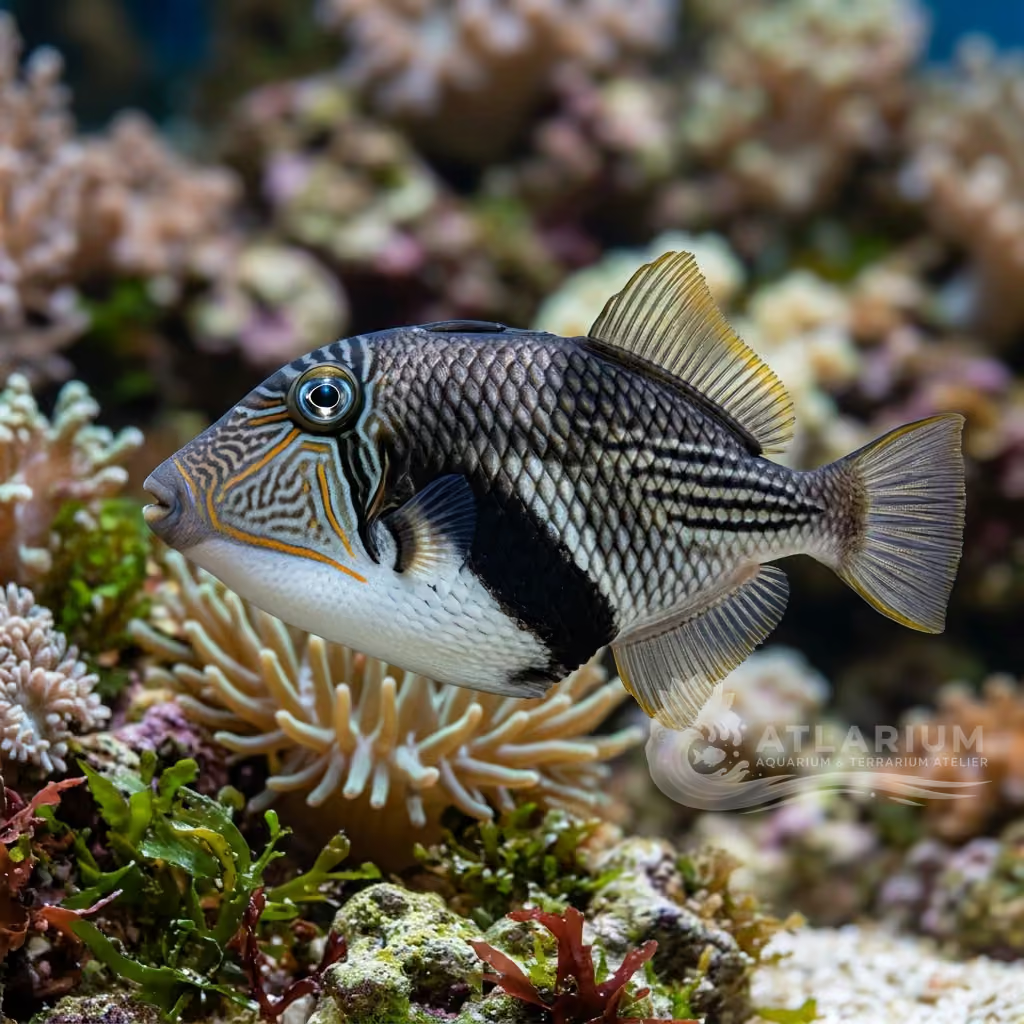
Indian triggerfish
Melichthys indicus
The Indian triggerfish is a robust marine species characterized by its dark, almost black body contrasted by striking white or light-blue margins on its fins.
Température de l’eau
23 - 28 °C
Valeur du pH
8.1 - 8.4
Type d'eau
Marin
Niveau dans le bac
Tous les niveaux
Taille adulte
25 cm
Volume minimal du bac
>= 470 L
Groupe minimal
>= 1
KH
8 - 12 dKH

Description de l'espèce
Geographical Origin and Habitat: Melichthys indicus is native to the tropical Indian Ocean, ranging from the Red Sea and East Africa to Sumatra and western Indonesia. It is typically found on outer reef slopes, channel walls with strong currents, and deep reef drop-offs rich in coral growth, at depths ranging from 5 to 30 meters.
Taxonomy and Morphology: Belonging to the family Balistidae, this species is characterized by a deep, laterally compressed body covered with tough, scale-like plates. It features a small but powerful mouth containing strong teeth designed for crushing hard shells. Adults can reach a maximum length of about 25 to 30 centimeters in captivity.
Social Behavior: While considered one of the more docile triggerfish species, it remains territorial and semi-aggressive. It will establish a home cave and may harass newly introduced tankmates or smaller fish. It has a habit of biting equipment like heater cables or filter returns, which must be protected.
Coloration and Sexual Dimorphism: The body is a uniform, rich dark brown to velvet black. The most prominent identification mark is a bright white or pale blue line running along the bases of both the soft dorsal and anal fins. The tail fin also features a thin white outline. There is no visible sexual dimorphism between males and females.

Soins, reproduction et cohabitation
Aquarium Setup: Needs a large tank of at least 400 to 500 liters due to its size and active swimming behavior. The rockwork must be heavy and securely stacked, as this fish is capable of overturning loose rocks. Provide large caves and crevices where it can lock itself in at night using its trigger spine.
Diet and Feeding: An opportunistic omnivore with a hearty appetite. In the wild, they feed on algae, sponges, detritus, and hard-shelled invertebrates. In captivity, feed them a varied diet of chopped shrimp, krill, squid, clams, and mussels in their shells to help wear down their continuously growing teeth.
Water Quality: Because they are large, messy eaters, a heavy bioload is produced. A highly efficient filtration system, including a powerful protein skimmer, is mandatory. Maintain standard parameters: temperature at 24-28°C, pH of 8.1-8.4, and specific gravity of 1.020-1.025. Perform frequent water changes.
Compatibility and Cohabitation: Not reef-safe. It will readily consume ornamental shrimp, crabs, snails, sea urchins, and small fish. It is best suited for a fish-only-with-live-rock (FOWLR) tank alongside other large, semi-aggressive fish like large angelfish, surgeonfish, groupers, and other triggerfish.
Aquarium Breeding: Breeding in home aquariums is not documented. In their natural habitat, they dig nests in the sandy substrate to lay eggs, which the female guards aggressively against any predators. The larvae are pelagic and drift in open ocean currents, making raising them in captivity unsuccessful so far.
Risks and Diseases: Known for being extremely hardy and resistant to most common marine parasites. The primary risks involve physical damage to equipment and potential bites to the aquarist's hands during maintenance. Ensure all heaters and cords are shielded, and avoid hand-feeding.

Origine et répartition géographiques
Melichthys indicus is native to the tropical Indian Ocean, ranging from the Red Sea and East Africa to Sumatra and western Indonesia. It is typically found on outer reef slopes, channel walls with strong currents, and deep reef drop-offs rich in coral growth, at depths ranging from 5 to 30 meters.
Origine
Océans tropicaux et récifsAfrique et MadagascarAsie du Sud et du Sud-Est

Profil de poisson
- Tempérament
- Semi-aggressive
- Their temperament is highly aggressive. They can become fiercely territorial over caves. Care is needed when placing hands inside.
- Régime alimentaire
- Omnivore
- They are primarily carnivorous. Feed them hard-shelled invertebrates and meaty foods. Crunchy foods wear down their growing teeth.
- Espérance de vie
- 10+ years
- Taille adulte
- 25 cm
- Ratio des sexes
- Solitary
- They are usually kept singularly. They exhibit high aggression toward conspecifics. Avoid mixing multiple individuals to prevent fights.
- Fréquence d'alimentation
- Twice daily
- Feed substantial portions twice a day. They are voracious and aggressive eaters. Ensure all tank mates get adequate food.
- Charge biologique
- Medium to High
- They produce a remarkably large bioload. Powerful skimmers and robust filtration are critical. Frequent water changes control nitrate levels.
- Courant
- Strong
- They require strong water flow. This replicates the dynamic currents of reefs. Rapid water turnover is necessary.
- Risque de saut
- Yes
- They present a moderate jump risk. A secure and heavy lid is needed. They spook easily at outside movements.
- Reproduction
- Nest builder
- They are extremely difficult to breed. They are pelagic spawners in the wild. Tank breeding is virtually undocumented.
- Compatibilité et compagnons
- Semi-aggressive
- They are generally aggressive and not reef safe. Keep with large, robust tank mates. Small invertebrates will be eaten.
- Niveau dans le bac
- All levels
- They swim actively at all levels. They constantly explore rocks for hidden food. They require extremely large swimming spaces.

Modèles et paramètres scientifiques
FishBase
Fenêtre sur les données scientifiques officielles de l’espèce
FishBase v25.04Données synchronisées le : 15/06/2026
- Niveau trophique
- 3 ± 0,29 se
- Résilience
- Élevée (moins de 15 mois)
- Singularité phylogénétique (PD50)
- 0.625
- Relation bayésienne longueur-poids
- a = 0.02754, b = 2.91
- VulnérabilitéVulnérabilité faible (15 / 100)

Espèces associées
Recommandations regroupées par proches parents, compagnons et soins similaires.