Spotted Boxfish
Ostracion meleagris
The Spotted Boxfish is an exquisite marine species with a rigid, box-like body. It demands massive aquariums to dilute potential toxins and prevent severe stress in captivity.
Température de l’eau
22 - 28 °C
Valeur du pH
7.9 - 8.5
Type d'eau
Marin
Niveau dans le bac
Tous les niveaux
Taille adulte
25 cm
Volume minimal du bac
>= 750 L
Groupe minimal
>= 1
KH
8 - 12 dKH

Description de l'espèce
Geographical Origin and Habitat: Tropical Indo-Pacific, from East African coasts to Hawaii and French Polynesia. Inhabits shallow, protected coral reefs and lagoons rich in corals and algae.
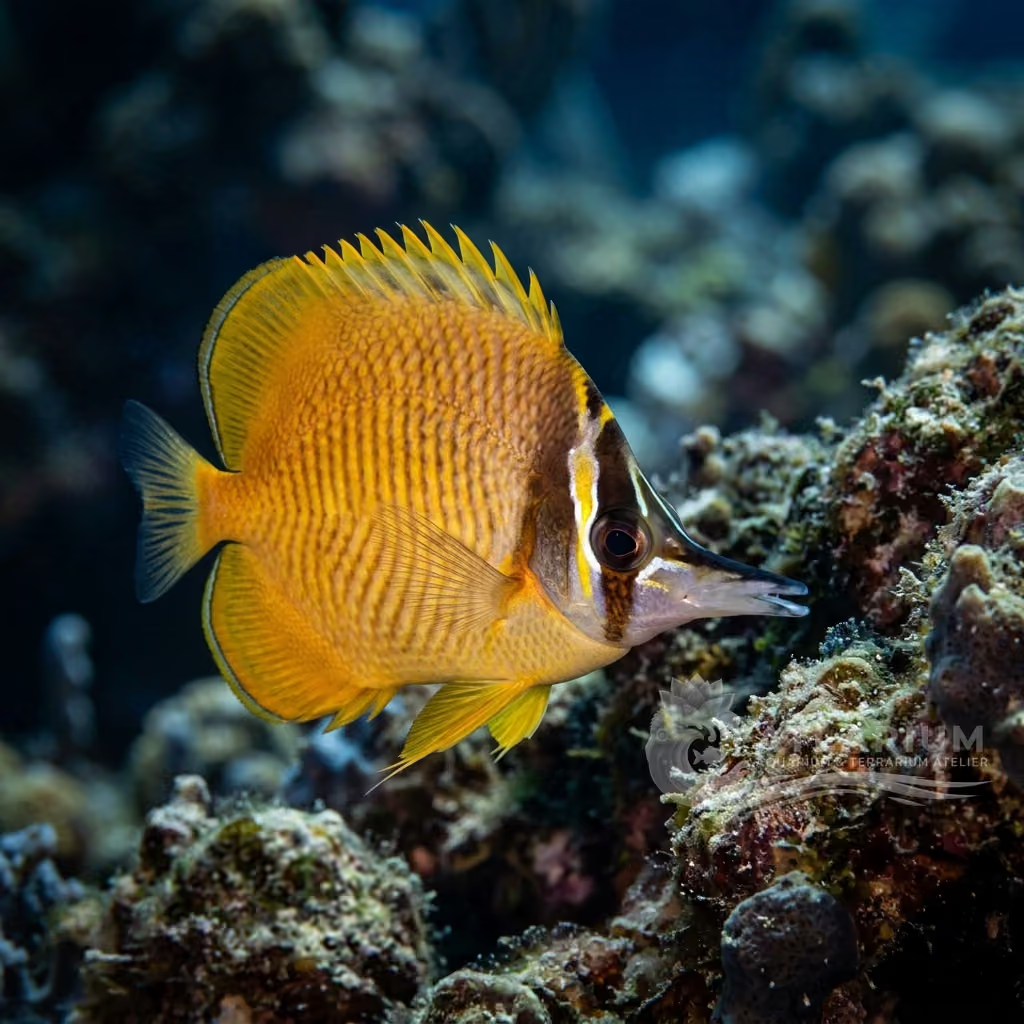
Taxonomy and Morphology: Belongs to the family Ostraciidae. Reaches 25 cm in length. Characterized by an unusual, rigid box-like carapace formed by fused hexagonal bony plates, with openings only for the mouth, eyes, and fins.
Social Behavior: Shy and solitary fish. Males are highly territorial and aggressive toward other males of the same species, while females are more tolerant.
Coloration and Sexual Dimorphism: Strong sexual dimorphism. Males exhibit a bright blue coloration on their flanks with golden spots, and a black back with white spots. Females and juveniles are entirely black or dark brown with small white spots all over the body.

Soins, reproduction et cohabitation
Aquarium Setup: Requires large tanks (at least 750 liters / 200 gallons) to dilute potential toxins and provide free swimming space. Lots of live rock for grazing and hiding spots, but without sharp obstacles that could damage its delicate body.
Diet and Feeding: Benthic omnivore. In the aquarium, it requires a varied diet: algae, frozen foods (mysis, krill, clam pulp), and sinking pellet foods. Avoid floating food to prevent air ingestion.
Water Quality: Excellently filtered and stable water. Specific gravity 1.020-1.026, pH 8.0-8.4, dKH 8-12. Sensitive to nitrate accumulation and requires a strong protein skimmer.
Compatibility and Cohabitation: Not considered reef-safe as it nips at corals and sessile invertebrates. Cohabits with calm and non-aggressive fish; active or boisterous tankmates easily stress it.
Aquarium Breeding: Reproduction in the aquarium is extremely difficult and not documented at the hobbyist level. They are pelagic spawners, releasing eggs that float on the water surface.
Risks and Diseases: Extreme risk: under high stress, illness, or death, it releases a lethal toxin (ostracitoxin) that can decimate all fish in the tank. High-quality activated carbon must be run constantly.

Origine et répartition géographiques
Tropical Indo-Pacific, from East African coasts to Hawaii and French Polynesia. Inhabits shallow, protected coral reefs and lagoons rich in corals and algae.
Origine
Océans tropicaux et récifsAfrique et MadagascarAsie de l'Est

Profil de poisson
- Tempérament
- Peaceful
- They are peaceful, deliberate swimmers with a curious disposition. Like all boxfish, if severely harassed or dying, they can secrete a lethal toxin into the water. Great care must be taken to ensure they are never bullied or overly stressed.
- Régime alimentaire
- Omnivore
- They are omnivores requiring a mix of meaty and vegetable foods. Offer them mysis shrimp, chopped clam, and high-quality herbivore preparations containing spirulina. Providing varied textures helps stimulate their natural grazing behavior.
- Espérance de vie
- 4-8 years
- Taille adulte
- 25 cm
- Ratio des sexes
- Harem
- This species displays stunning sexual dimorphism; females are brown with white spots, while males have vibrant blue sides with golden spots. They are highly aggressive toward their own kind. Only one individual should be kept per aquarium.
- Fréquence d'alimentation
- Twice daily
- Feed them small amounts two or three times a day. Their awkward body shape means they burn energy continuously and need constant nourishment. Target feeding is often necessary to ensure they get enough to eat.
- Charge biologique
- High
- The Spotted Boxfish has a moderate bioload that demands robust filtration. They produce quite a bit of waste and require high water quality to stay healthy. Excellent protein skimming and regular water changes are required.
- Courant
- Strong
- Gentle to moderate water movement is absolutely essential. Strong currents are too stressful for their rigid bodies and weak fins. They need calm areas within the tank to rest and sleep safely.
- Risque de saut
- No
- Reproduction
- Egg scatterer
- Breeding has not been successfully achieved in home aquariums. They spawn in the water column at dusk, releasing pelagic eggs that drift with the currents. The microscopic larvae are extremely delicate and require specialized care beyond standard hobbyist capabilities.
- Compatibilité et compagnons
- Peaceful
- They must be kept with peaceful, slow-moving tank mates. Fast or aggressive fish will intimidate them and outcompete them for food. They are generally considered reef safe with caution, but may nip at tunicates and small invertebrates.
- Niveau dans le bac
- All levels
- They primarily inhabit the lower and middle zones of the aquarium. They enjoy inspecting rockwork and swimming in and out of caves. They typically avoid the open, upper water column.

Modèles et paramètres scientifiques
FishBase
Fenêtre sur les données scientifiques officielles de l’espèce
FishBase v25.04Données synchronisées le : 15/06/2026
- Niveau trophique
- 2,7 ± 0 se
- Résilience
- Élevée (moins de 15 mois)
- Singularité phylogénétique (PD50)
- 0.502
- Relation bayésienne longueur-poids
- a = 0.03715, b = 2.8
- VulnérabilitéVulnérabilité faible (15 / 100)

Espèces associées
Recommandations regroupées par proches parents, compagnons et soins similaires.