Magnificent Rabbitfish
Siganus magnificus
A striking rabbitfish from the Andaman Sea with a white head, dark body, and red-margined fins. This hardy herbivore is great for reef tanks but possesses venomous dorsal spines for defense.
Température de l’eau
22 - 27 °C
Valeur du pH
8.1 - 8.4
Type d'eau
Marin
Niveau dans le bac
Milieu
Taille adulte
23 cm
Volume minimal du bac
>= 450 L
Groupe minimal
>= 1
KH
8 - 12 dKH

Description de l'espèce
Geographical Origin and Habitat: Siganus magnificus is native to the eastern Indian Ocean, with its range primarily restricted to the Andaman Sea, along the coasts of Thailand, Myanmar, Indonesia (Sumatra), and the Andaman Islands. It inhabits coral-rich reefs, rocky shores, and shallow lagoons at depths ranging from 3 to 30 meters. It is typically found swimming in pairs near mixed coral and rocky structures where macroalgae are abundant.
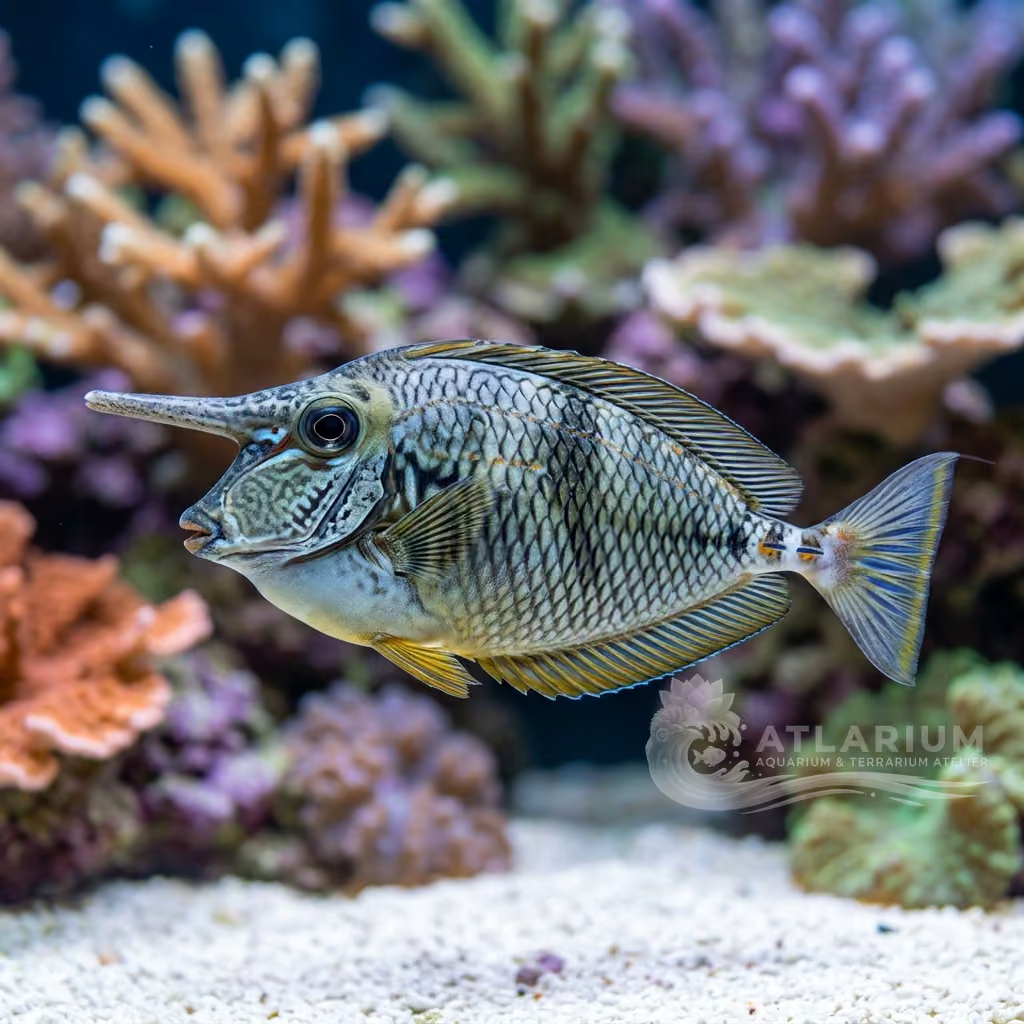
Taxonomy and Morphology: This species belongs to the family Siganidae. It features an oval, laterally compressed body with a pointed, fox-like snout (sharing characteristics with the Foxface Rabbitfish). Its most important anatomical feature is the venomous spines on its dorsal, anal, and pelvic fins, which are connected to venom glands and used strictly for passive defense against predators.
Social Behavior: Juveniles often form small schools for protection, whereas adults are typically found in stable, monogamous pairs. It exhibits a peaceful and calm temperament toward other aquarium inhabitants. However, it can show territorial aggression toward conspecifics or other Siganus species if housed in smaller aquariums or introduced after it has established its territory.
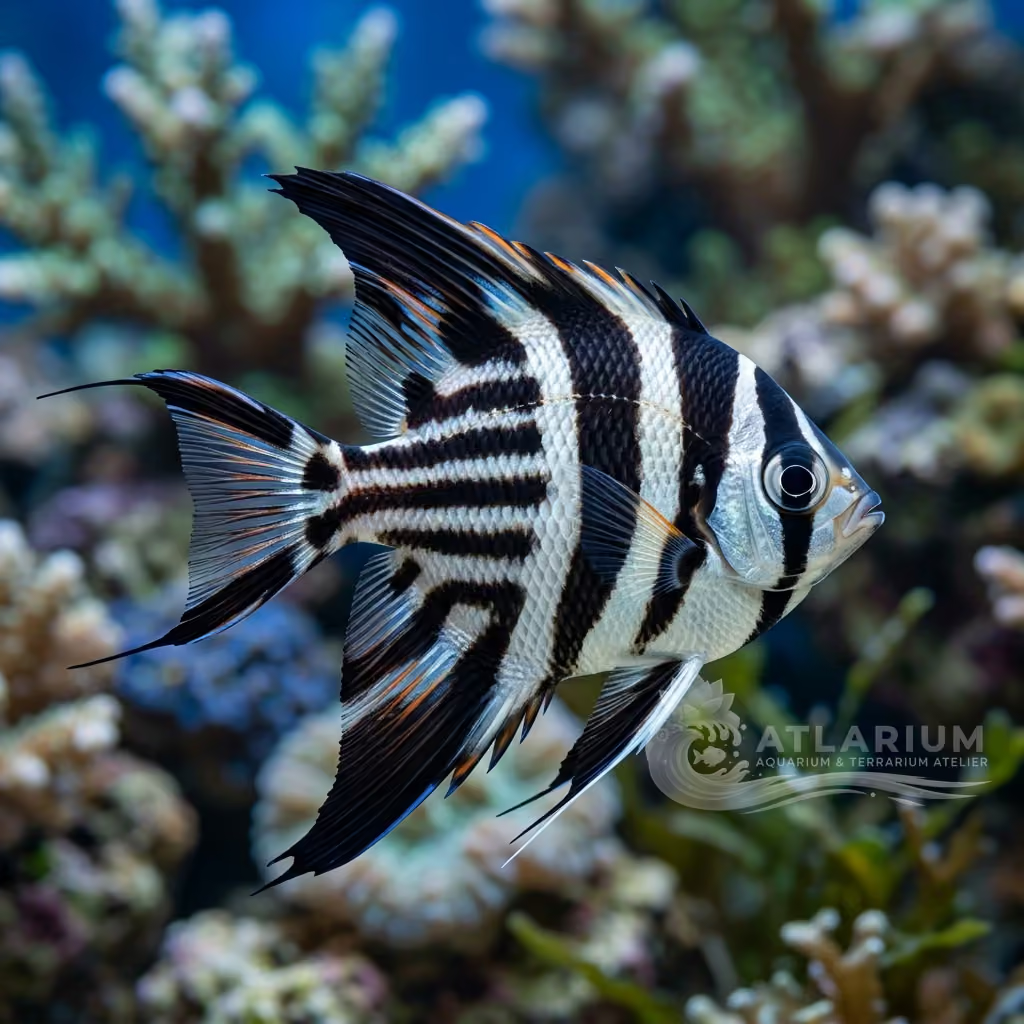
Coloration and Sexual Dimorphism: The color pattern is striking: the anterior half of the body and head are white, divided by a bold diagonal black band running through the eye. The posterior half of the body is dark brown to blackish. The margins of the dorsal fin and caudal fin are trimmed with a bright red or orange band. There is no visible external sexual dimorphism; males and females look identical.

Soins, reproduction et cohabitation
Aquarium Setup: Requires an aquarium of at least 350 to 400 liters for a single specimen. The aquascape should include a significant amount of live rock arranged to create caves and swim-throughs where the fish can hide when startled. Safe swimming space is also necessary. Caution must be exercised during tank maintenance to avoid contact with the venomous spines.
Diet and Feeding: It is a voracious herbivore. In the wild, it feeds on filamentous algae and benthic macroalgae. In the aquarium, it is highly valued for consuming nuisance algae, including bubble algae (Valonia). It should be fed dried nori, plant-based pellets, spirulina, and blanched vegetables, supplemented with occasional frozen foods like mysis and brine shrimp.
Water Quality: Requires stable marine parameters: temperature of 24°C to 28°C, pH of 8.1 to 8.4, and salinity between 1.022 and 1.025. Good water movement and efficient filtration with a protein skimmer are necessary to maintain low nitrate and phosphate levels, ensuring the health and coloration of the fish.
Compatibility and Cohabitation: Generally reef-safe, but underfed specimens may occasionally nip at the polyps of LPS corals or soft corals. It coexists well with peaceful to moderately aggressive fish like tangs, anthias, wrasses, and clownfish. Avoid keeping it with other rabbitfish species to prevent aggressive territorial disputes.
Aquarium Breeding: Breeding in home aquariums has not been documented. In nature, they spawn in pairs, releasing adhesive eggs onto the substrate. The eggs hatch within 24 to 36 hours, and the resulting larvae spend their initial stages as plankton in open waters before settling back onto reefs.
Risks and Diseases: The primary risk to keepers is the venomous dorsal spines; a puncture causes intense pain and swelling (hot water immersion is the standard first-aid treatment). The fish is relatively hardy, but stress can make it susceptible to common marine parasites like marine ich (Cryptocaryon).

Origine et répartition géographiques
Siganus magnificus is native to the eastern Indian Ocean, with its range primarily restricted to the Andaman Sea, along the coasts of Thailand, Myanmar, Indonesia (Sumatra), and the Andaman Islands. It inhabits coral-rich reefs, rocky shores, and shallow lagoons at depths ranging from 3 to 30 meters. It is typically found swimming in pairs near mixed coral and rocky structures where macroalgae are abundant.
Origine
Océans tropicaux et récifsAsie du Sud et du Sud-Est

Profil de poisson
- Tempérament
- Peaceful
- They are tranquil and generally ignore other fish species in the aquarium. They possess venomous spines in their dorsal, anal, and pelvic fins which they use defensively if threatened. They exhibit a fascinating behavior of rapidly camouflaging themselves when stressed or resting at night.
- Régime alimentaire
- Herbivore
- Their diet is heavily herbivorous, requiring a large intake of algae to thrive. Provide them with plenty of marine seaweed, spirulina flakes, and vegetable-based pellets. They will also enthusiastically consume meaty offerings like mysis shrimp and krill.
- Espérance de vie
- 10-12 years
- Taille adulte
- 23 cm
- Ratio des sexes
- Flexible
- They are best kept as solitary specimens or as a known mated pair. Keeping two unmatched individuals of the same sex usually results in severe aggression. They are generally intolerant of other rabbitfish species as well.
- Fréquence d'alimentation
- 2-3 times daily
- They should be fed small amounts two to three times per day. Securing a sheet of nori to the tank glass daily allows them to graze naturally throughout the daylight hours. This constant feeding mimics their natural behavior and keeps them healthy.
- Charge biologique
- High
- The Magnificent Rabbitfish creates a substantial bioload due to its constant grazing and eating habits. They excrete large amounts of waste that must be managed by an efficient filtration system. A high-capacity protein skimmer is highly recommended for keeping the water pristine.
- Courant
- Moderate
- They require a moderate to strong water current within the aquarium. Originating from active reef environments, they enjoy swimming against the flow. Excellent water movement helps keep oxygen levels high and prevents detritus buildup.
- Risque de saut
- Yes
- There is a moderate jump risk associated with this species. When frightened, they can bolt at incredible speeds and may launch themselves out of the water. Ensuring the tank has a secure lid or canopy is a necessary precaution.
- Reproduction
- Oviparous
- Successful breeding of the Magnificent Rabbitfish in home aquariums is virtually unknown. In their natural habitat, they spawn in pairs or large groups, releasing eggs into the current. The resulting larvae require very specific and difficult-to-culture planktonic foods.
- Compatibilité et compagnons
- Not reef safe
- They are peaceful community fish that mix well with most other marine species. However, they should not be housed with very aggressive predatory fish that might try to swallow them. They are considered "reef-safe with caution" as they may occasionally nip at some soft corals or zoanthids.
- Niveau dans le bac
- Middle
- They are active swimmers that will utilize the middle and bottom levels of the tank. They spend the day darting in and out of the rockwork searching for algae to eat. Ample swimming room is just as important as having complex rock structures.

Modèles et paramètres scientifiques
FishBase
Fenêtre sur les données scientifiques officielles de l’espèce
FishBase v25.04Données synchronisées le : 15/06/2026
- Niveau trophique
- 2,7 ± 0,29 se
- Résilience
- Élevée (moins de 15 mois)
- Singularité phylogénétique (PD50)
- 0.5
- Relation bayésienne longueur-poids
- a = 0.01413, b = 3.05
- VulnérabilitéVulnérabilité faible (19 / 100)

Espèces associées
Recommandations regroupées par proches parents, compagnons et soins similaires.