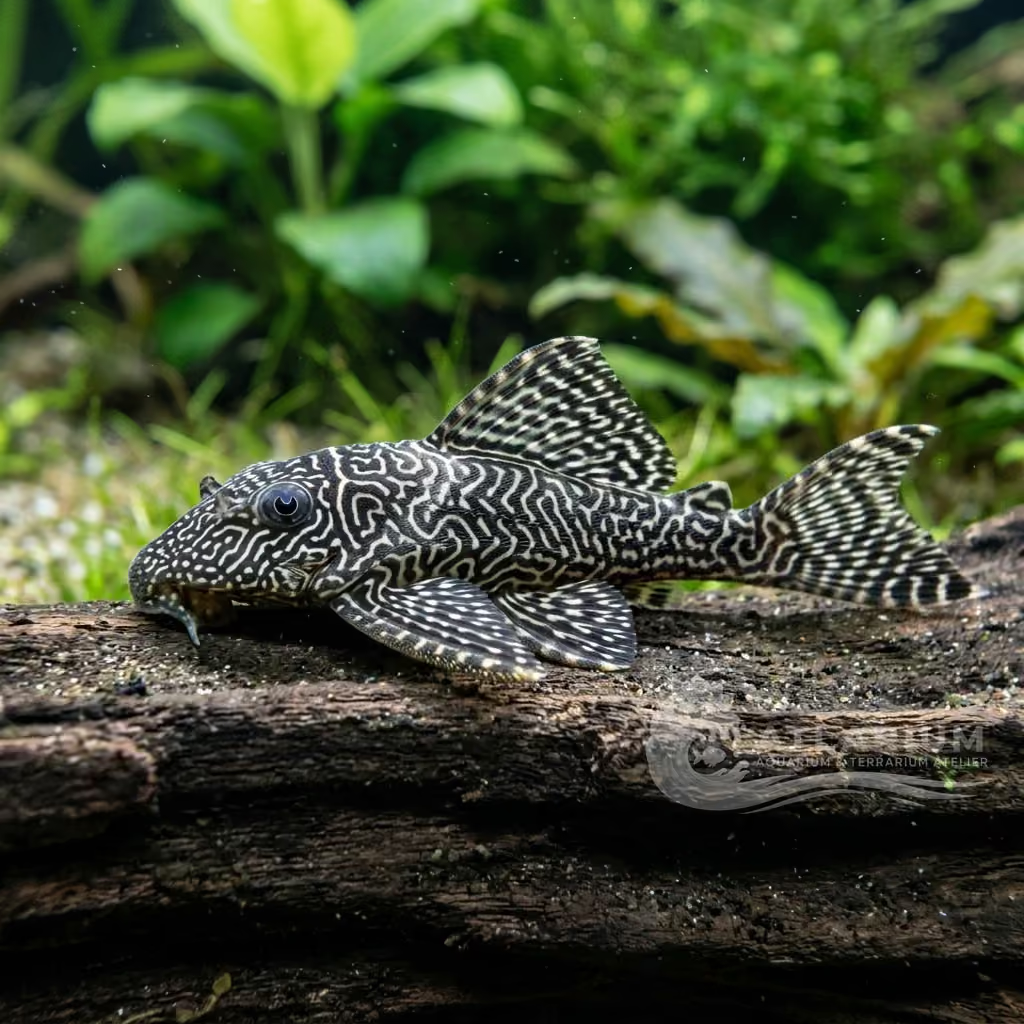
Big-Eyed Ancistrus (L144a)
Ancistrus macrophthalmus
A variety with predominantly nocturnal habits, equipped with large eyes that suggest an adaptation to murkier and darker waters or to deeper zones of the Orinoco rivers.
Température de l’eau
23 - 27 °C
Valeur du pH
6 - 7.5
Type d'eau
Eau douce
Niveau dans le bac
Fond
Taille adulte
11 cm
Volume minimal du bac
>= 100 L
Groupe minimal
>= 1
GH
2 - 15 dGH
KH
3 - 10 dKH
TDS
60 - 325 ppm
Conductivité
94 - 508 uS/cm

Description de l'espèce
Geographical Origin and Habitat: Originating from the lower Orinoco River basin (Venezuela). Inhabits sandy and muddy bottoms, where the water takes on a turbid coloring (whitewater) and fish must rely on other senses besides sight.
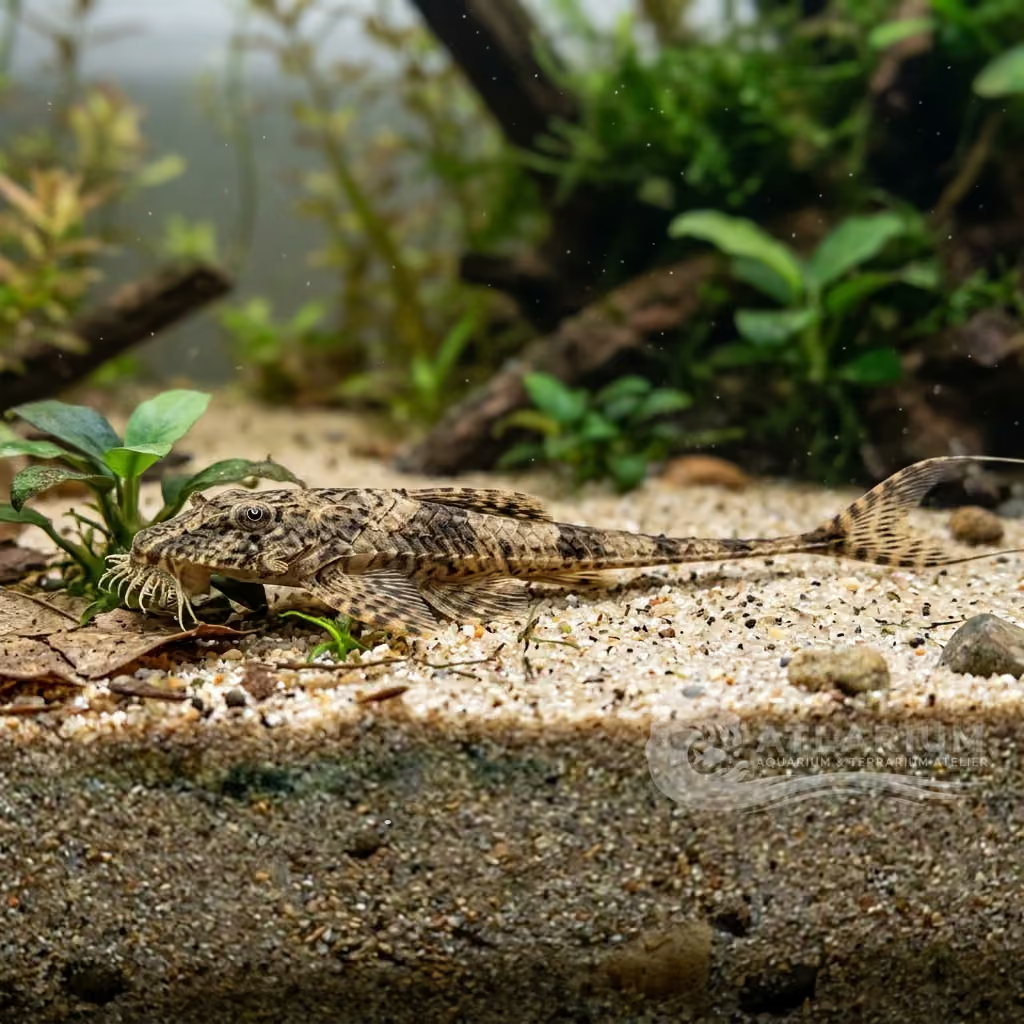
Taxonomy and Morphology: Large-eyed Bristlenose Pleco (Ancistrus macrophthalmus). The defining feature of this benthic little fish is explicit in its scientific name: it possesses staggeringly large and protruding eyes, proportionally enormous compared to the head.
Social Behavior: Very peaceful and reserved. During the day it stays motionless exploiting the formidable camouflage of its color, only to dart away very fast as soon as night falls to scrape the surface of logs and leaves.
Coloration and Sexual Dimorphism: Sand gray or clay background, covered by a myriad of very fine darker dots that make it invisible on the silty bottom. Males exhibit the typical facial fleshy ramifications (the "Y" shaped bristles), almost totally absent in females.

Soins, reproduction et cohabitation
Aquarium Setup: Modest dimensions: an 80 cm (32 inches) tank is sufficient. Fundamental the use of very soft sand. The aquarium must feature large shaded areas, provided by horizontal slate slabs and plenty of dry wood to gnaw on.
Diet and Feeding: Exclusively or predominantly vegetarian. The intake of cellulose fibers (from gnawing wood) and plant-based foods (Spirulina, chlorella, pleco wafers) is fundamental to guarantee its gastrointestinal motility.
Water Quality: Moderately warm water (23-27°C / 73-81°F). Does not like "stadium" lighting: soft or strongly shielded lights are necessary, otherwise this Loricariid will remain hidden, refusing to feed, until it dies of starvation.
Compatibility and Cohabitation: The emblem of the peaceful community fish. Coexists without any friction with small Characins (Neons, Cardinals), Rasboras, and Corydoras. Due to the small size, avoid it if you own predatory fish with an easy bite or large dominant algae eaters.
Aquarium Breeding: Reproduces in narrow clay tubes, often ignored if the orifice is too wide for the size of the male. Spawning generally of 30-50 amber eggs, strenuously cared for by the male who even prevents the female from approaching.
Risks and Diseases: Quartering it in tanks of digging Cichlids will lead to irreparable injuries to its large prominent eyes, an easy vehicle for septicemia (infectious exophthalmos). Preventive wood hydration to avoid abdominal scratches.

Origine et répartition géographiques
Originating from the lower Orinoco River basin (Venezuela). Inhabits sandy and muddy bottoms, where the water takes on a turbid coloring (whitewater) and fish must rely on other senses besides sight.
Origine
Océans tropicaux et récifsAmazonie, Orénoque et Guyanes

Profil de poisson
- Tempérament
- Semi-aggressive
- This catfish is generally peaceful and non-aggressive toward midwater and surface-dwelling species, making it an excellent community resident. However, it can be highly territorial toward other bottom dwellers, particularly conspecific males or other plecos. They are mostly nocturnal or crepuscular, preferring to hide in caves or shaded areas during the day and becoming active at night.
- Régime alimentaire
- Herbivore
- Primarily an herbivore and biofilm grazer, this species requires a diet rich in vegetable matter and algae. Feeding should include high-quality algae wafers, sinking spirulina pellets, and fresh vegetables such as zucchini, cucumber, and blanched spinach. Crucially, they must have access to natural driftwood in the tank, as scraping and consuming wood fibers is essential for their digestive health.
- Espérance de vie
- 5-10 years
- Taille adulte
- 11 cm
- Ratio des sexes
- Harem
- This species is best kept individually or in a harem consisting of one male and two or more females. Males are territorial and can become aggressive toward rival males in small tanks, potentially causing severe stress or injury. If you plan to keep multiple males, a very large aquarium with numerous caves and physical barriers is essential to establish distinct territories.
- Fréquence d'alimentation
- Twice daily
- Feeding once a day, preferably in the evening just before the aquarium lights are turned off, is ideal for this nocturnal species. This timing allows them to feed naturally without competition from more active daytime fish. Fresh vegetables can be left in the tank for up to 24 hours, but any uneaten portions must be removed promptly to avoid fouling the water.
- Charge biologique
- Low to Medium
- The Big-Eyed Ancistrus (Ancistrus macrophthalmus) has a low-medium bioload, but like all armored catfishes, it produces a noticeable amount of waste from continuous grazing. It requires a robust filtration system with both efficient mechanical and biological media to keep the water clean. Regular weekly water changes of 20-30% are highly recommended to prevent the accumulation of nitrates and maintain optimal water chemistry.
- Courant
- Stagnant
- Coming from the Orinoco River basin, Ancistrus macrophthalmus prefers moderate to strong water flow with high oxygenation levels. A setup utilizing powerheads, spray bars, or wavemakers will replicate their natural riverine environment and encourage active behavior. Ensuring excellent oxygen levels is vital, as this species does not tolerate stagnant or oxygen-depleted conditions well.
- Risque de saut
- No
- Reproduction
- Oviparous
- Breeding is moderately difficult but highly rewarding, occurring in dark caves where the male establishes a territory. After courting and spawning, the female is expelled, and the male takes sole responsibility for guarding and fanning the eggs. The eggs hatch in about 4 to 5 days, and the fry will consume their yolk sacs before requiring micro-foods such as baby brine shrimp or powdered algae.
- Compatibilité et compagnons
- Community
- They are highly compatible with peaceful community fish that inhabit the middle and upper regions of the water column, such as tetras, hatchetfish, and peaceful cichlids. Care should be taken when keeping them with other bottom-dwellers, as territorial disputes may arise in smaller setups. Avoid housing them with overly aggressive or very large tankmates that might outcompete them for food or view them as prey.
- Niveau dans le bac
- Bottom
- Ancistrus macrophthalmus is a strictly demersal species that spends almost all of its time on the bottom of the aquarium. It will continuously graze on the substrate, rocks, and driftwood, occasionally climbing up the aquarium glass or plants in search of food. Hiding spots like caves or hollow logs near the substrate are critical for its comfort and natural behavior.

Modèles et paramètres scientifiques
FishBase
Fenêtre sur les données scientifiques officielles de l’espèce
FishBase v25.04Données synchronisées le : 15/06/2026
- Singularité phylogénétique (PD50)
- 0.5
- Relation bayésienne longueur-poids
- a = 0.01479, b = 2.98
- VulnérabilitéVulnérabilité faible (10 / 100)

Espèces associées
Recommandations regroupées par proches parents, compagnons et soins similaires.