Queen Arabesque Pleco (L260)
Hypancistrus sp. L260
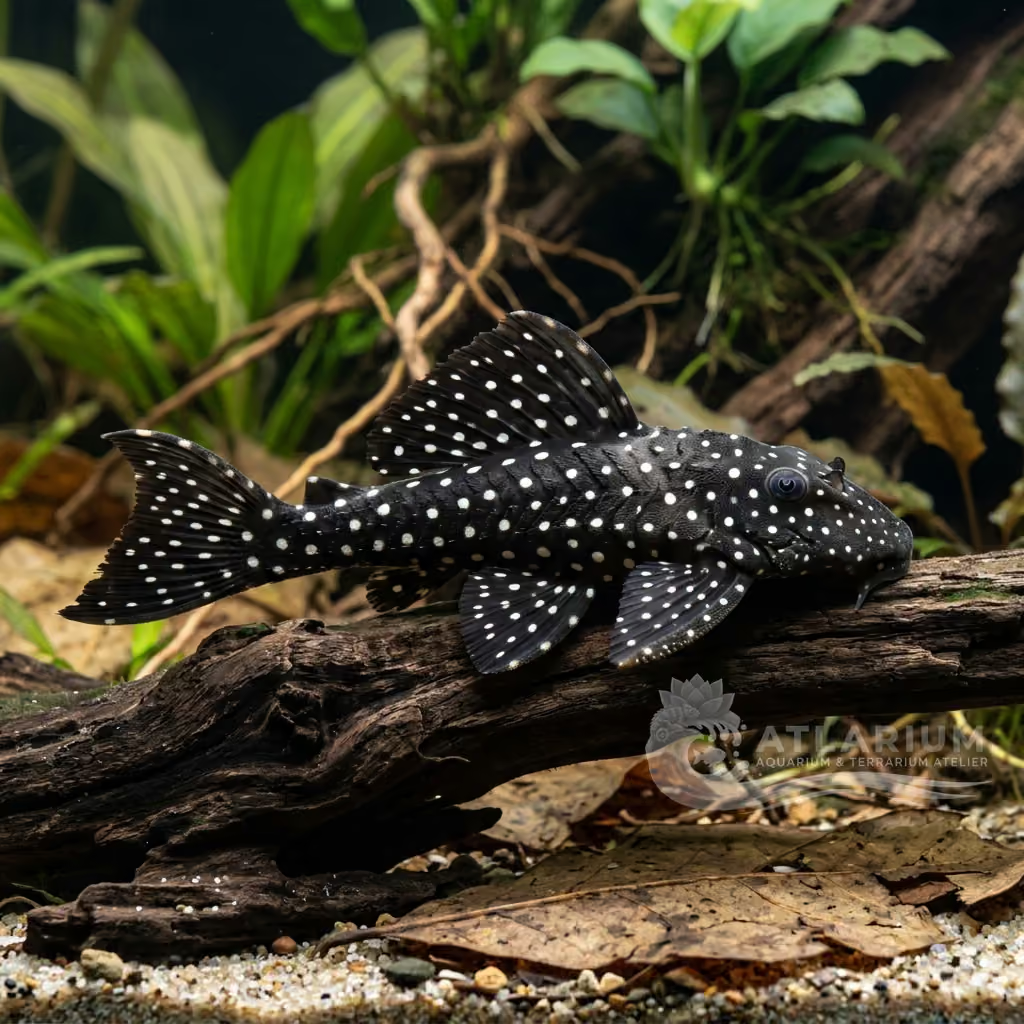
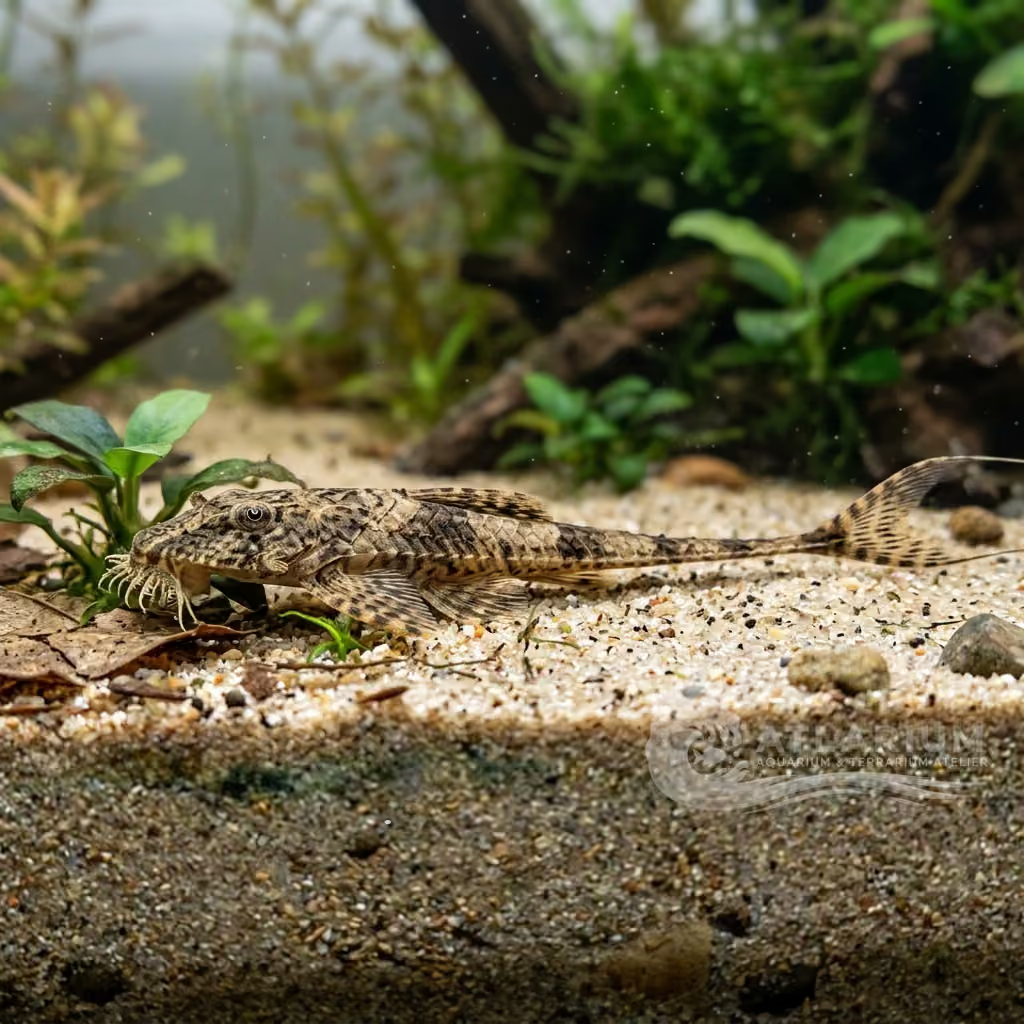
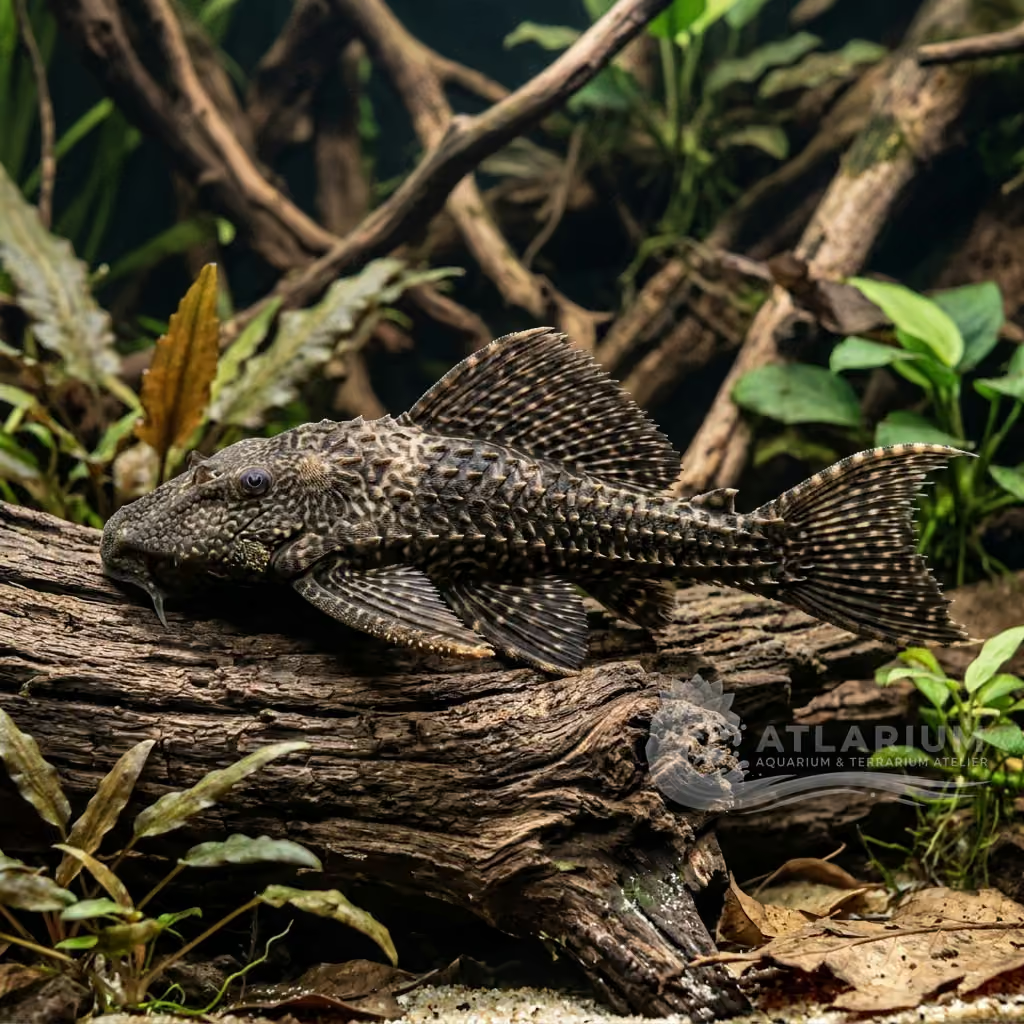
The marvelous 'Queen Arabesque'. Considered one of the most breathtaking Loricariids, it flaunts an intricate, extremely fine, and elegant lace of thousands of silver-white lines on an absolute black background.
Température de l’eau
26 - 30 °C
Valeur du pH
5.5 - 7.5
Type d'eau
Eau douce
Niveau dans le bac
Fond
Taille adulte
9 cm
Volume minimal du bac
>= 100 L
Groupe minimal
>= 1
GH
1 - 12 dGH
KH
1 - 6 dKH
TDS
25 - 240 ppm
Conductivité
39 - 375 uS/cm

Description de l'espèce
Geographical Origin and Habitat: Small elite catfish collected solely from the impetuous and scorching tropical waters of the Tapajós River in Brazil, a gigantic highway of clear, oxygen-rich water, surrounded by the majestic Amazon jungle. It spends its entire existence in nature hidden and wedged in extremely narrow and microscopic crevices between pointed rock formations, far from the strong lights of the central hours of the day.
Taxonomy and Morphology: Loricariidae family. Known in the high-end market as the 'Queen Arabesque Pleco' or simply L-260. Unlike the giant plecos mistakenly sold to novices, the L260 is an armored 'dwarf': it does not exceed 9 cm (3.5 inches) in maximum bulk. The build is more compact and round compared to Ancistrus, and, typical of Hypancistrus genetics, the mouth has very few upper teeth and a few bicuspid lower teeth: perfect for chewing dead shrimp or worms, absolutely useless for scraping hard algae from the glass.
Social Behavior: Infinitely more shy and vulnerable than the cocky 'King Tiger' (L066). It spends its time paralyzed in the rearguard of the aquarium (always and exclusively inside its inseparable ceramic tube to which it elects residence for life). Absolutely inept at asserting itself in the search for food: it will flee terrified if touched by larger or greedier benthic fish. Only in total nocturnal darkness will it sneakily crawl on the sand floor to hunt fallen micro-larvae.
Coloration and Sexual Dimorphism: The absolute pinnacle of Loricariid aesthetics for many enthusiasts (hence the royal prefix 'Queen'). The base of the spiny armor is a deep, sharp charcoal black. Unlike all others, this fish does not have wide bands, but is entirely tattooed and traversed by an endless and incredibly dense hypnotic cobweb ('arabesque') of hundreds of tiny, fine, curved and sinuous dazzling chalk-white or faded silver lines. A weave of Venetian lace. Mature MALES are distinguished by a first ray of the pectoral fin immensely thickened and covered by innumerable and conspicuous rigid bristling hairs similar to wire brushes, and long cheek spines. Females are 'bald' and wider at the belly, with a visibly shorter head.

Soins, reproduction et cohabitation
Aquarium Setup: Demands vital respect for its minute dimensions and fears. MANDATORY ARTIFICIAL DENS: If you do not provide an extremely narrow cylindrical cave (terracotta or slate 'breeding tubes') perfectly sized to its body, the Arabesque will die of desperate psychic stress wandering in the light, or will be slaughtered by stress in overcrowded communities. Water with excellent oxygenated movement with vigorous surface-breaking jets (wave-makers). Sand is not optional: it prevents abdominal abrasions to the specimen's highly delicate smooth belly.
Diet and Feeding: WILL IGNORE ANY VEGETABLE, ALGAE, OR DEAD LEAF. In an algae-filled tank or one with plant remains, it will waste away into a skeleton in a month. It is a pure carnivorous scavenger. If there are active and voracious fish in the tank (cichlids, loaches), you will inevitably have to hand-feed your expensive jewel at night (turning off the neons for hours beforehand): aim and drop in front of its little cave fixed rations two or three times a week of massive flakes and pellets of fish meat, daphnia, mysis pulp, and decanted frozen buckets of the superb red bloodworm (chironomus). It will ignore basic spirulina discs for ordinary cleaners, causing it to fade away.
Water Quality: Very high fragility. Erratic tolerances are not excused: it inflexibly requires, as with the famous thermophilic Amazonian companions, frighteningly HIGH temperatures (a stable and mandatory range from 26 up to a mighty 30°C / 79-86°F in summer to avoid lethal intestinal blockage stasis from coldness or fatal stopped digestion in asphyxiating icy novice urban winter months at 23° / 73°F), but simultaneously needs extremely pure waters with Zero nitrates and impurities (titanic and unstoppable weekly changes of excellent neutral or soft and acidic osmotic water - pH: 5.5 / 7.5, GH from 1 to a 12 maximum pure from chlorine and heavy metals, its immediate suffocating fulminating neurotoxic poison).
Compatibility and Cohabitation: The Queen must reign unmolested in dedicated high-level South American tanks. Cohabitation and insane mixing together with aggressive Central American Cichlids, violent enormous Mbuna, aggressor algae-eaters (CAE), and greedy gigantic and very fast Loricariids (Gibbiceps, large Panaque) must be absolutely and morally banned, as they would drive away, terrifying and covertly killing the Arabesque, devouring all its precious fleshy meal and blocking the dark access of the furnishings. Sublime peaceful combination under the floating and stately aura of round Discus fish, large sparkling fiery schools in movement like neon cardinals, tireless peaceful Rummy-Nose tetras, and tiny South American earth-eating Geophagus, unaware of its dark cave-dwelling nature.
Aquarium Breeding: Highly prestigious achievement for the amateur elite of the field. The coveted gestation begins with massive, refreshing (barely measured cold shocks simulating torrential forest monsoons), filling feasts of brine shrimp and fat frozen insect larvae, which will instigate the hairy master of the den (the rough little male) to forcefully barricade and segregate, closing the vital bodily opening with his tail to his consort, forcing, between vigorous and exhausting jolts to expel highly precious enormous spherical and compact ochre and orange eggs, brooding them for terrible endless very long weeks frantically blowing his fins at every dark solitary hour until the highly fragile birth of the millimetric fry in perennial risk of vital asphyxia from starvation in absolute lethal disastrous lack of the finest pulverized fleshy crumbled feed not to be blown around with the filter but delivered in the dark among the sand to the surgical millimeter to his blind microscopic non-autonomous and inexperienced frightened nocturnal offspring.
Risks and Diseases: Lethal agony of the occluded and obstructed rotten digestive system causing explosive swellings of the internal abdomen caused by the abominable prolonged abuse of an insane exclusive vegetarian diet (lettuce, flakes for herbivorous red carp) that weaken and poison the intestinal walls of the hyper-selective carnivore or intestinal blockage if the water never reaches boiling fixed 26 degrees (79 F), but languishes at a medium 22 (71 F) freezing digestion slowly turning it off, disoriented by the blinding irradiation power of hypertrophic LED lights from underwater competition lawns with fatal asphyxiating stress due to scarce refuges asphyxiating frightened devoid of the dark pure wood element and dens forcing it to a frightened life on the exposed glass a fugitive to be pecked by the eyes and assaults of the biting aggressive tetras intrigued by its strange velvety white decor.

Origine et répartition géographiques
Small elite catfish collected solely from the impetuous and scorching tropical waters of the Tapajós River in Brazil, a gigantic highway of clear, oxygen-rich water, surrounded by the majestic Amazon jungle. It spends its entire existence in nature hidden and wedged in extremely narrow and microscopic crevices between pointed rock formations, far from the strong lights of the central hours of the day.
Origine
Amazonie, Orénoque et GuyanesAmérique du Nord

Profil de poisson
- Tempérament
- Semi-aggressive
- They have a very peaceful, shy, and reclusive temperament, making them somewhat difficult to observe during peak daylight hours. Males can exhibit mild territoriality towards one another when competing for the most desirable spawning caves. Providing multiple caves per individual will almost completely eliminate any territorial aggression.
- Régime alimentaire
- Omnivore
- They are decidedly carnivorous and require a diet rich in meaty proteins to thrive and show their best colors. Offer sinking carnivore pellets, frozen bloodworms, brine shrimp, and the occasional piece of chopped raw shrimp. They are not effective algae eaters, so vegetable matter should only make up a very small, infrequent portion of their diet.
- Espérance de vie
- 10-12 years
- Taille adulte
- 9 cm
- Ratio des sexes
- Group
- Determining sex is easiest in mature adults; males develop much longer and thicker odontodes on their pectoral fins and cheeks. Males also display a broader, more robust head shape, while females appear noticeably rounder in the abdominal area. Keeping a ratio of one male to two or three females is generally the best approach for a breeding group.
- Fréquence d'alimentation
- Twice daily
- They should be fed once daily, and being nocturnal, it is best to feed them just before or after the aquarium lights are turned off. They are slow, methodical eaters that may be outcompeted by fast, greedy tank mates during the day. Target feeding them near their favorite hiding spots ensures they receive adequate nutrition.
- Charge biologique
- Low to Medium
- This stunningly patterned pleco produces a moderate bioload that is easily handled by standard, high-quality filtration. Because their diet consists largely of protein-rich foods, water quality can degrade if uneaten food is left to rot. Regular weekly partial water changes of at least 25% are recommended to keep the environment optimal.
- Courant
- Stagnant
- Originating from the fast-flowing Rio Tapajos, they strongly prefer moderate to high water flow environments. Powerful filtration and additional powerheads should be utilized to ensure the water is highly oxygenated and constantly moving. Excellent water quality and high oxygen saturation are the keys to keeping this species healthy.
- Risque de saut
- No
- Reproduction
- Oviparous
- They are known as secretive cave spawners, and successful breeding requires patience and excellent water conditions. The male will select a suitably sized cave, court a gravid female, and then forcefully guard the resulting eggs. The male takes full responsibility for fanning the eggs and protecting the fry until they absorb their yolk sacs.
- Compatibilité et compagnons
- Peaceful
- They are highly peaceful fish that make fantastic additions to Amazonian biotope community aquariums. They mix wonderfully with small tetras, rasboras, and other mid-to-top dwelling species that do not compete for bottom space. Care should be taken not to house them with overly aggressive or very large bottom feeders.
- Niveau dans le bac
- Bottom
- They are strict bottom dwellers that require an aquarium floor heavily decorated with rockwork, slate caves, and driftwood. They spend the vast majority of the day securely wedged into tight crevices, emerging mostly at night to forage. An open tank with no hiding places will cause them extreme stress and lead to deteriorating health.

Espèces associées
Recommandations regroupées par proches parents, compagnons et soins similaires.