Three Beacon Pleco (L091)
Leporacanthicus triactis
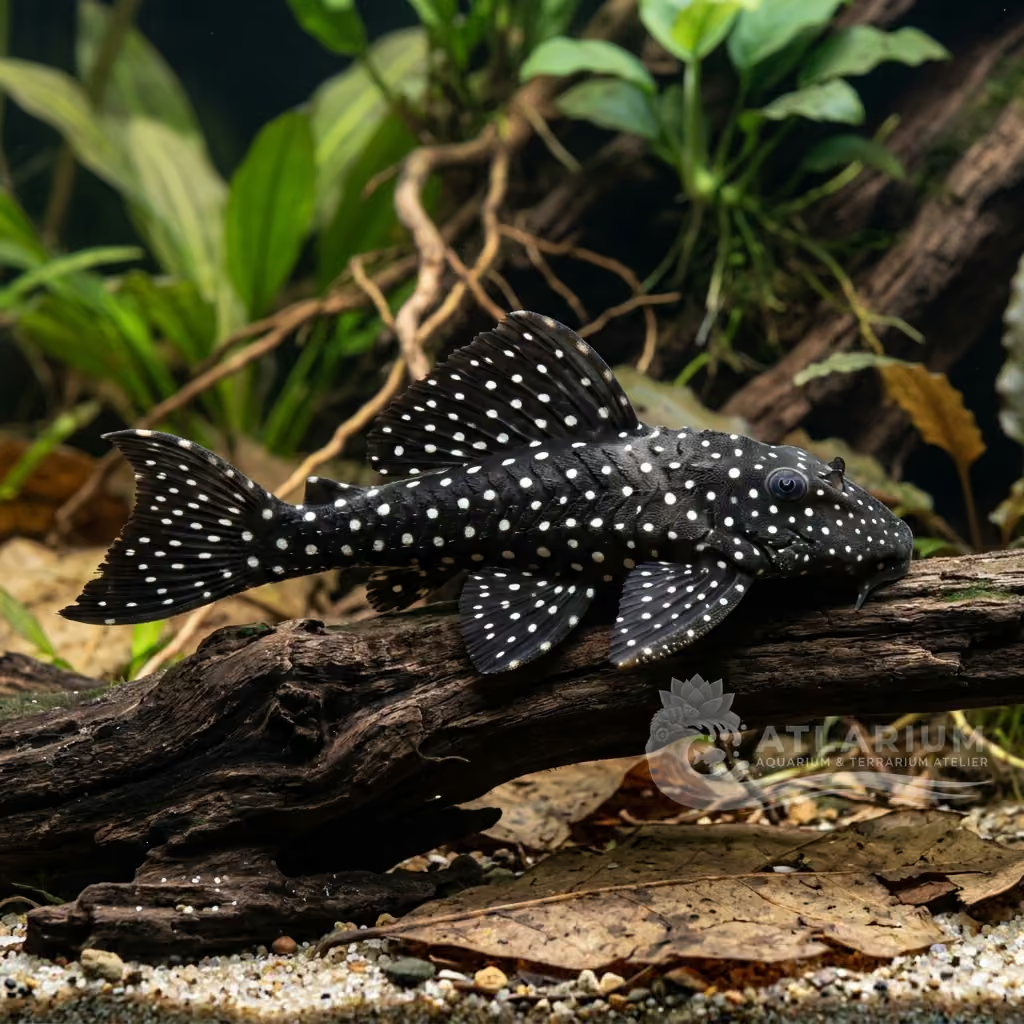
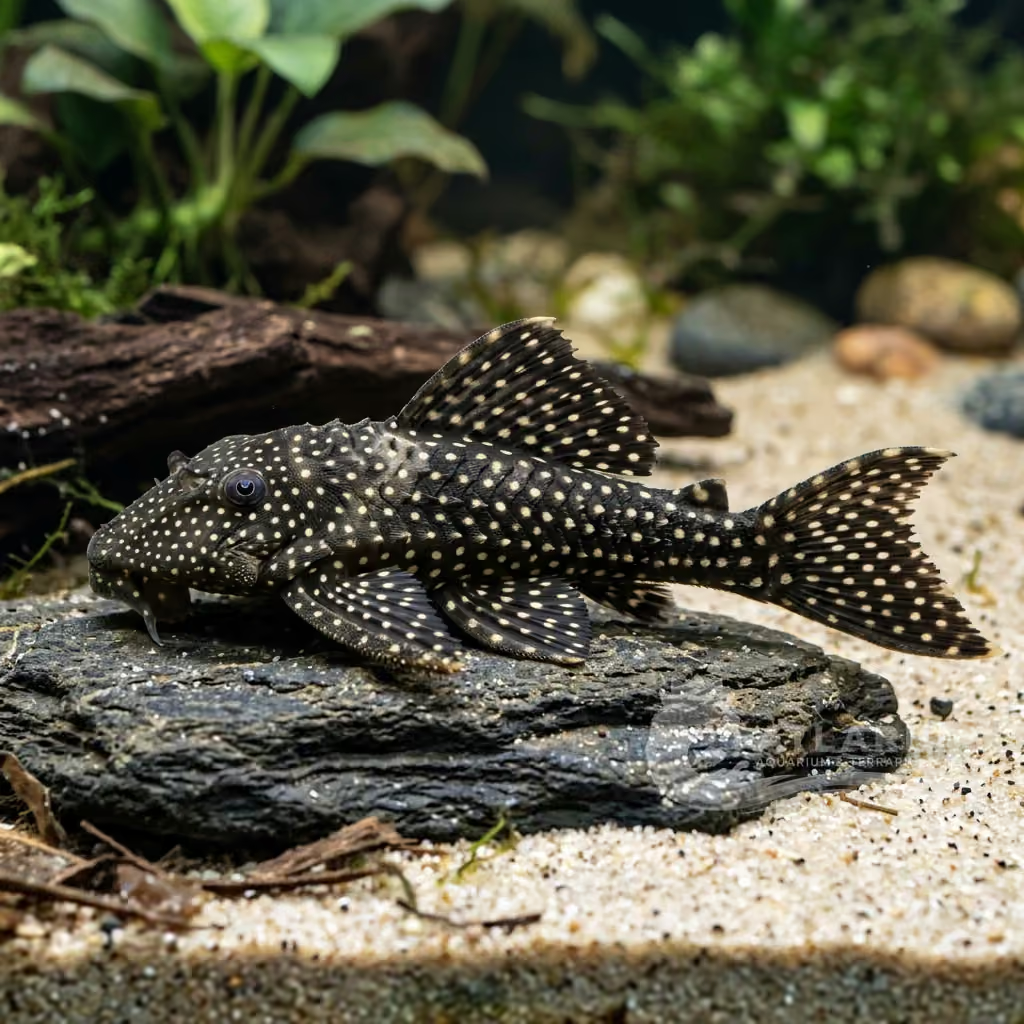
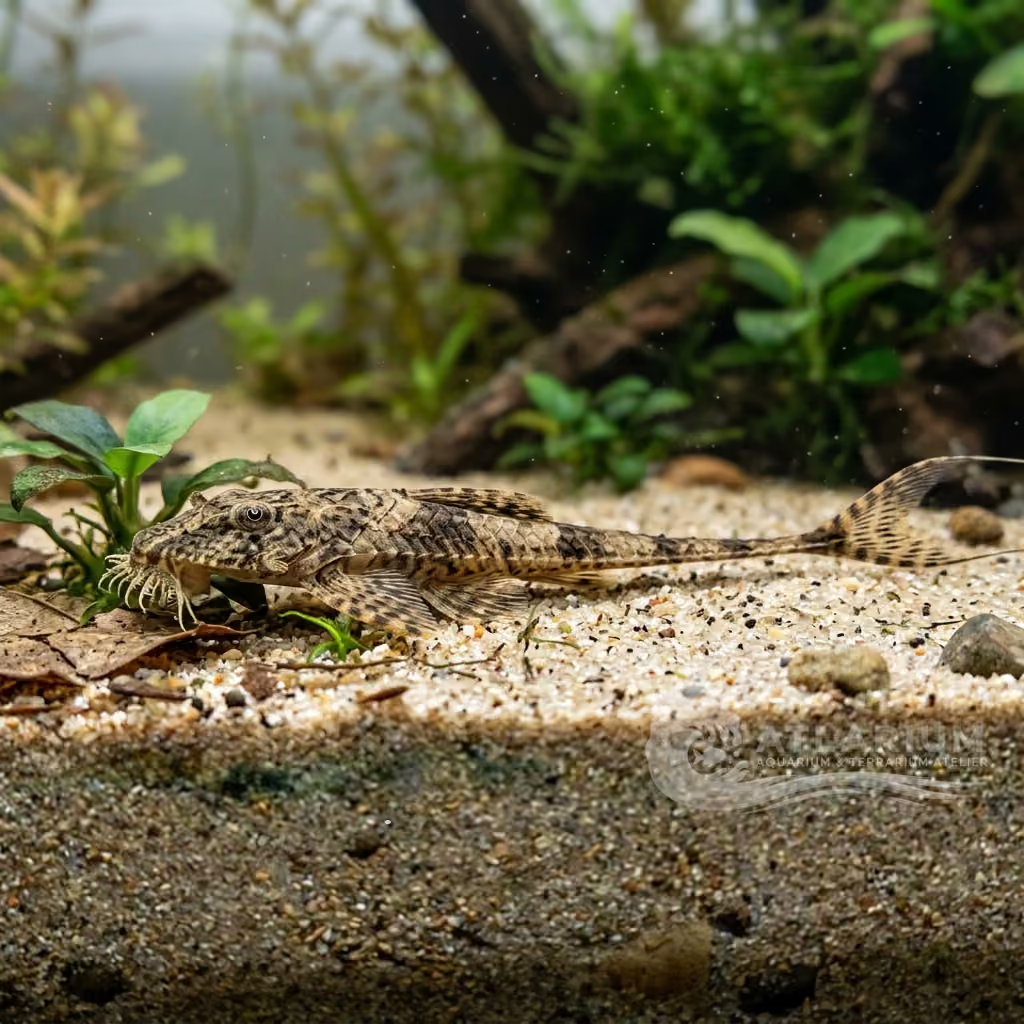
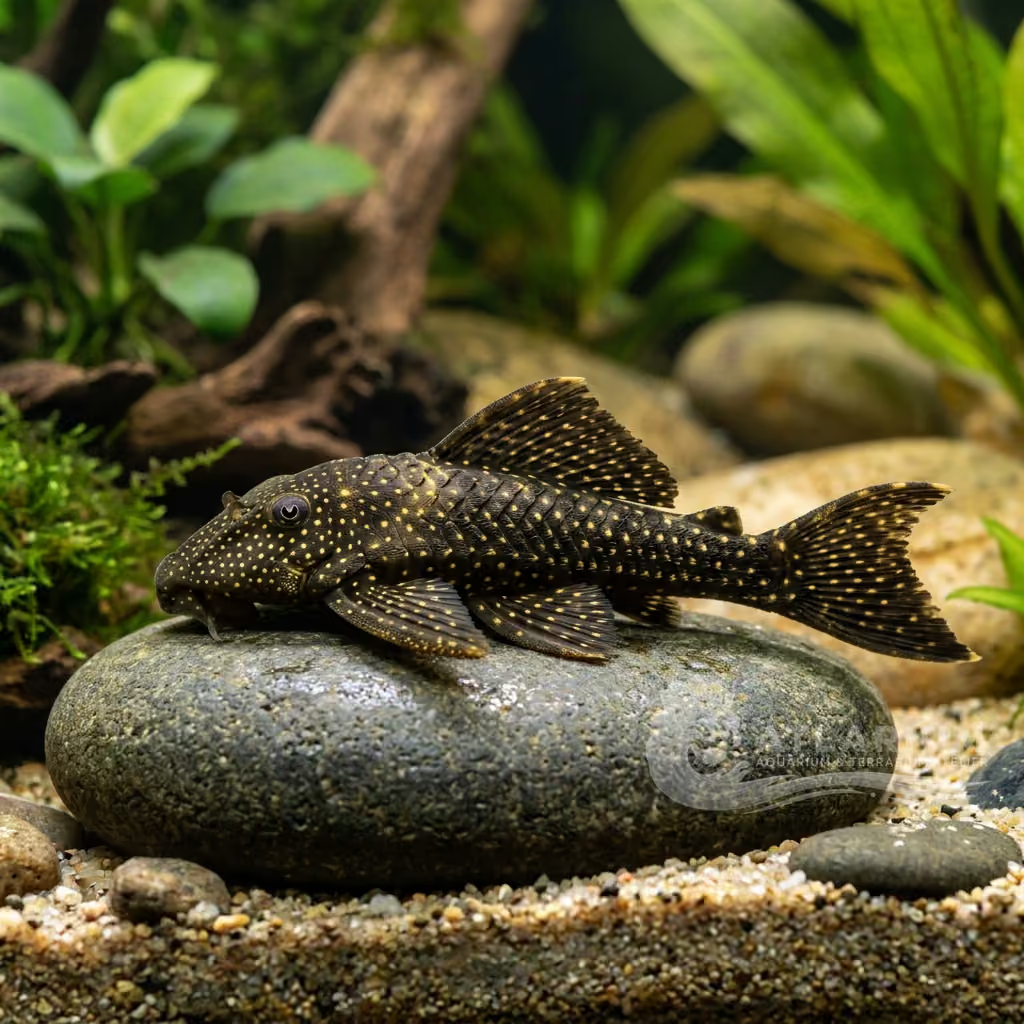
The striking L091 'Three Beacon', so called for the bright orange spots on the dorsal, caudal, and adipose fins that contrast with the brown-black body.
Température de l’eau
25 - 29 °C
Valeur du pH
6 - 7.4
Type d'eau
Eau douce
Niveau dans le bac
Fond
Taille adulte
25 cm
Volume minimal du bac
>= 300 L
Groupe minimal
>= 1
GH
2 - 12 dGH
KH
2 - 10 dKH
TDS
50 - 280 ppm
Conductivité
78 - 438 uS/cm

Description de l'espèce
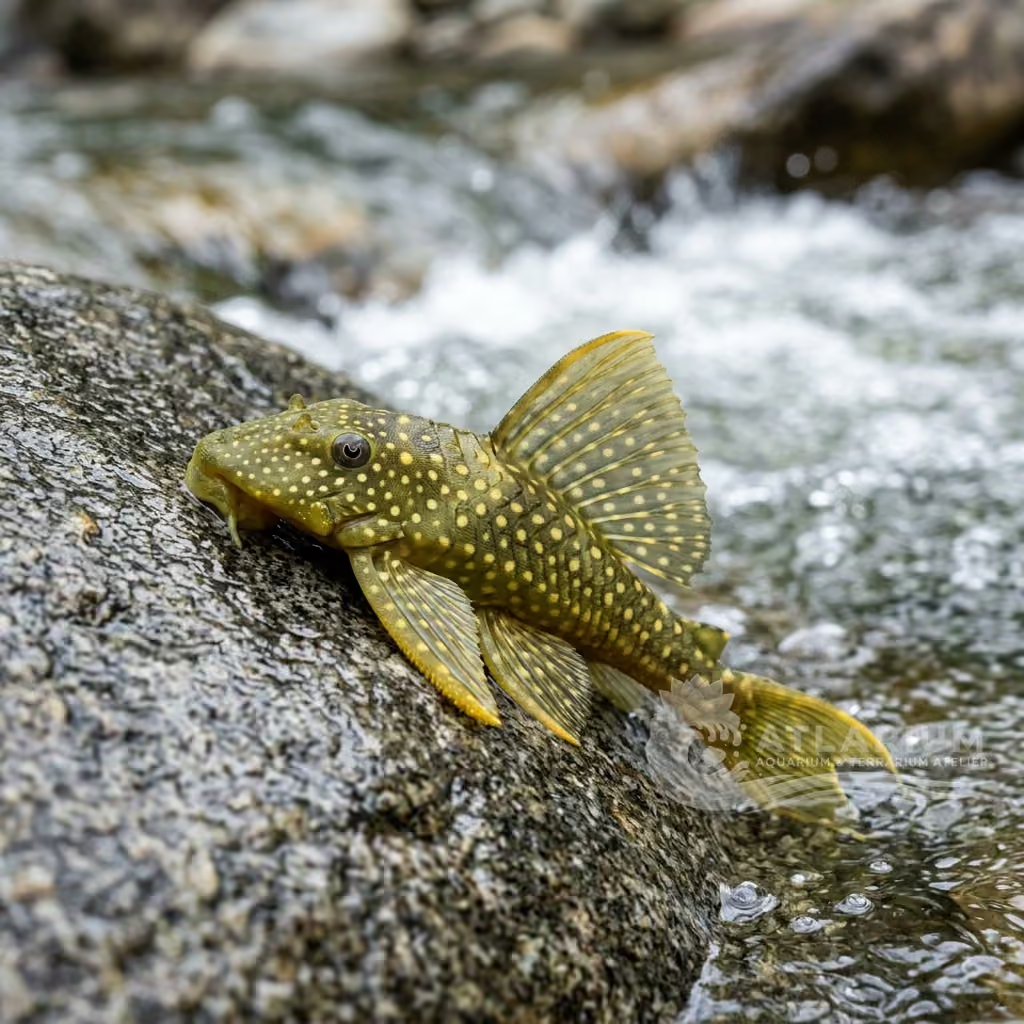
Geographical Origin and Habitat: Originating from the Orinoco River basin (Venezuela). Lives in the high-flow sections and rapids of the river, hiding among polished granite boulders or in the thick of logs wedged under the powerful water jet.
Taxonomy and Morphology: Three-beacon Pleco (L091 / Leporacanthicus triactis). Known for the three conspicuous colored "beacons" on its fins. Possesses the typical elongated snout and massive needle-like maxillary teeth of the "Vampire Plecos", useful for feeding on invertebrates.
Social Behavior: Strongly territorial nocturnal fish. Will not hesitate to aggressively defend its main den against other loricariids or bottom-dwelling fish. Tends to be more visible if reassured by numerous dark hiding places.
Coloration and Sexual Dimorphism: Chocolate brown to charcoal black body. The distinguishing feature is the three intense yellow or bright orange spots (beacons), located on the tip of the dorsal fin and on the lobes of the caudal fin. Males with a more angular head and large odontodes.

Soins, reproduction et cohabitation
Aquarium Setup: Demands huge tanks (at least 120-150 cm / 48-60 inches). Fundamental to recreate a rheophilic river: powerful water currents, oversized filtration, large ceramic tubes for dens, and round boulders. No sharp gravel that would injure its soft belly.
Diet and Feeding: Predominantly carnivorous. In nature, it extracts snails and invertebrates. In the aquarium, feed it after lights out with whole clams, shelled shrimp, protein pellets for bottom fish, and occasional pieces of vegetables.
Water Quality: Very oxygenated, warm (25-29°C / 77-84°F), and pristine water. Fish of the genus Leporacanthicus are exceptionally intolerant to accumulations of nitrogenous waste (nitrates); massive and frequent water changes are mandatory.
Compatibility and Cohabitation: Ideal for tanks with robust mid-water Cichlids (Severum, Geophagus, Uaru) or large South American characins. Avoid coexistence with small bottom fish that could be injured during nocturnal territorial disputes.
Aquarium Breeding: Occurs in captivity in large caves. The male traps the female, fertilizes the huge yellow eggs, and cares for them by fanning them for weeks until the fry's yolk sac is absorbed.
Risks and Diseases: Lack of oxygen or insufficient filtration will quickly lead to asphyxia or severe fungal infections on the fins. It has a tendency to fatally wedge itself in rocks with holes that are too narrow.

Origine et répartition géographiques
Originating from the Orinoco River basin (Venezuela). Lives in the high-flow sections and rapids of the river, hiding among polished granite boulders or in the thick of logs wedged under the powerful water jet.
Origine
Amazonie, Orénoque et Guyanes

Profil de poisson
- Tempérament
- Semi-aggressive
- They are highly territorial over their caves. Aggression is directed at similar species. Otherwise, they ignore mid-water fish.
- Régime alimentaire
- Carnivore
- Leporacanthicus triactis requires a meaty diet. Feed it sinking carnivore pellets. Fresh vegetables can be offered occasionally.
- Espérance de vie
- 8-15 years
- Taille adulte
- 25 cm
- Ratio des sexes
- Flexible
- Keep one male per tank. Multiple females can be kept. Males are very territorial.
- Fréquence d'alimentation
- Twice daily
- Feed them once a day. Nighttime feeding is preferred. Remove uneaten food promptly.
- Charge biologique
- High
- Leporacanthicus triactis generates a high bioload. This is due to its size and diet. Strong filtration is required.
- Courant
- Stagnant
- This species thrives in strong water flow. Good oxygenation is essential. Use powerheads to simulate natural rivers.
- Risque de saut
- No
- Reproduction
- Oviparous
- Breeding in captivity is difficult. They are cave spawners. The male guards the eggs.
- Compatibilité et compagnons
- With caution
- It is peaceful with top-dwelling fish. It can be aggressive to other bottom dwellers. Keep it as the only pleco.
- Niveau dans le bac
- Bottom
- Leporacanthicus triactis is a bottom-dwelling fish. It needs plenty of hiding spots. Driftwood and caves are necessary.

Modèles et paramètres scientifiques
FishBase
Fenêtre sur les données scientifiques officielles de l’espèce
FishBase v25.04Données synchronisées le : 15/06/2026
- Résilience
- Moyenne (1,4 - 4,4 ans)
- Singularité phylogénétique (PD50)
- 0.5625
- Relation bayésienne longueur-poids
- a = 0.01549, b = 2.96
- VulnérabilitéVulnérabilité faible (20 / 100)

Espèces associées
Recommandations regroupées par proches parents, compagnons et soins similaires.