Aponogeton undulatus
Aponogeton undulatus
Fast-growing Indian subcontinent bulb plant with undulating leaves. Demands medium to high light to prevent weak stems and pale, faded coloration.
Température de l’eau
22 - 28 °C
Valeur du pH
6 - 7.5
Type d'eau
Eau douce
Lumière
Moyenne
CO2
Faible
Hauteur attendue
40 cm
Largeur attendue
20 cm
GH
4 - 20 dGH
KH
5 - 15 dKH

Description de l'espèce
Geographical Origin and Habitat: Endemic to the Indian subcontinent, specifically thriving in the seasonal ponds, flooded rice paddies, marshes, and slow-moving tropical rivers of India, Bangladesh, and Myanmar. Like all species in its genus, Aponogeton undulatus is a highly specialized geophyte (bulb plant). It has evolved to survive the extreme, bipolar nature of the Southeast Asian monsoon cycle. During the scorching dry season when its habitat turns to baked mud, the plant dies back to its subterranean starchy tuber, lying completely dormant until the furious monsoon rains return to violently flood the plains and trigger explosive new growth.
Taxonomy & Genetics: First scientifically cataloged in the mid-19th century, Aponogeton undulatus is a true, genetically distinct species. The Latin specific epithet "undulatus" translates directly to "wavy" or "undulating," which is the defining characteristic of its spectacular leaf morphology. It is a highly unique species within the genus due to its incredibly bizarre reproductive strategy: while it can produce flowers, it heavily favors asexual reproduction by producing viviparous adventitious plantlets directly on specialized floating stems, completely bypassing the need for seed germination.
Physical Structure: The foundational base of the plant is a small, hard, starchy subterranean bulb. From the crown of this bulb, an incredibly dense, lush rosette of flexible stems emerges. These stems support long, deeply textured, lanceolate (spear-shaped) leaves that can easily reach 30 to 50 cm (12-20 inches) in height. The overall physical structure of A. undulatus is highly chaotic and wild, forming a dense, tangled, jungle-like thicket rather than the neat, orderly fountain shape seen in Aponogeton crispus.
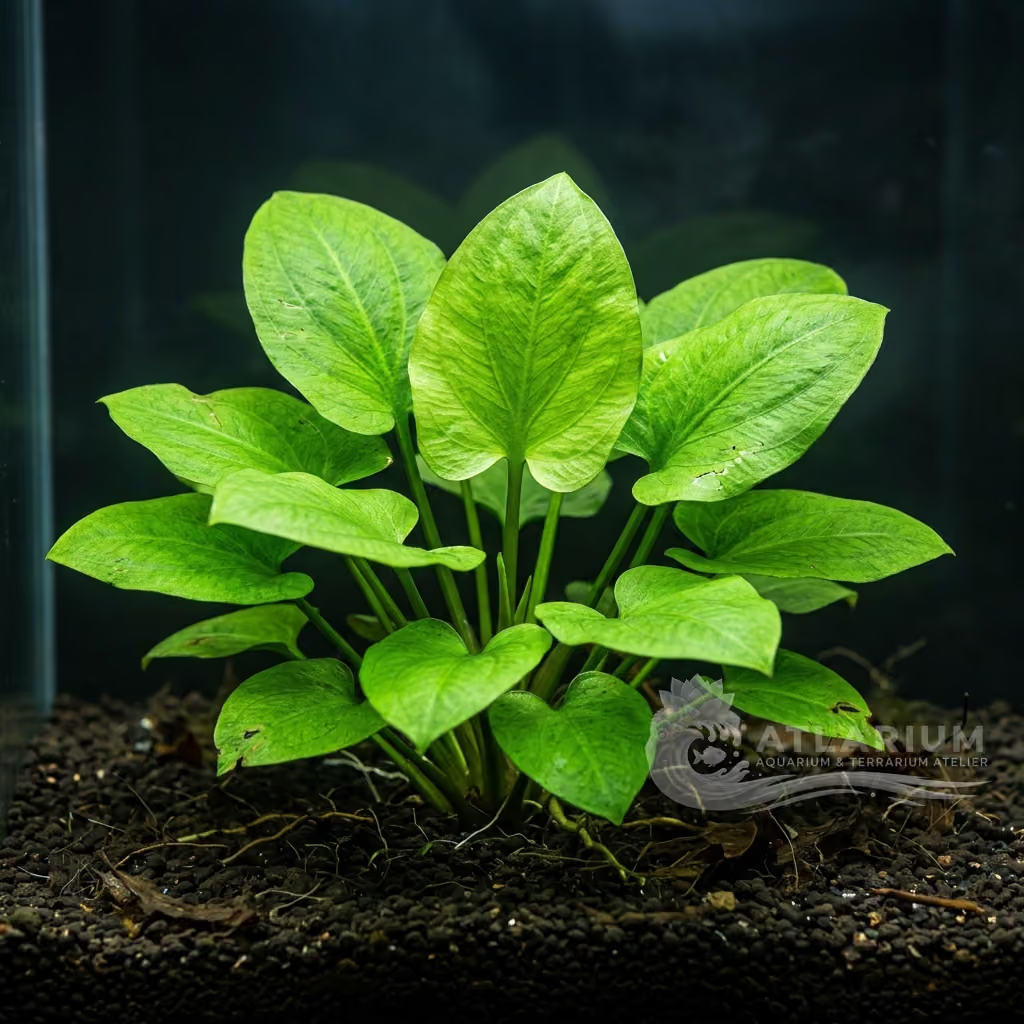
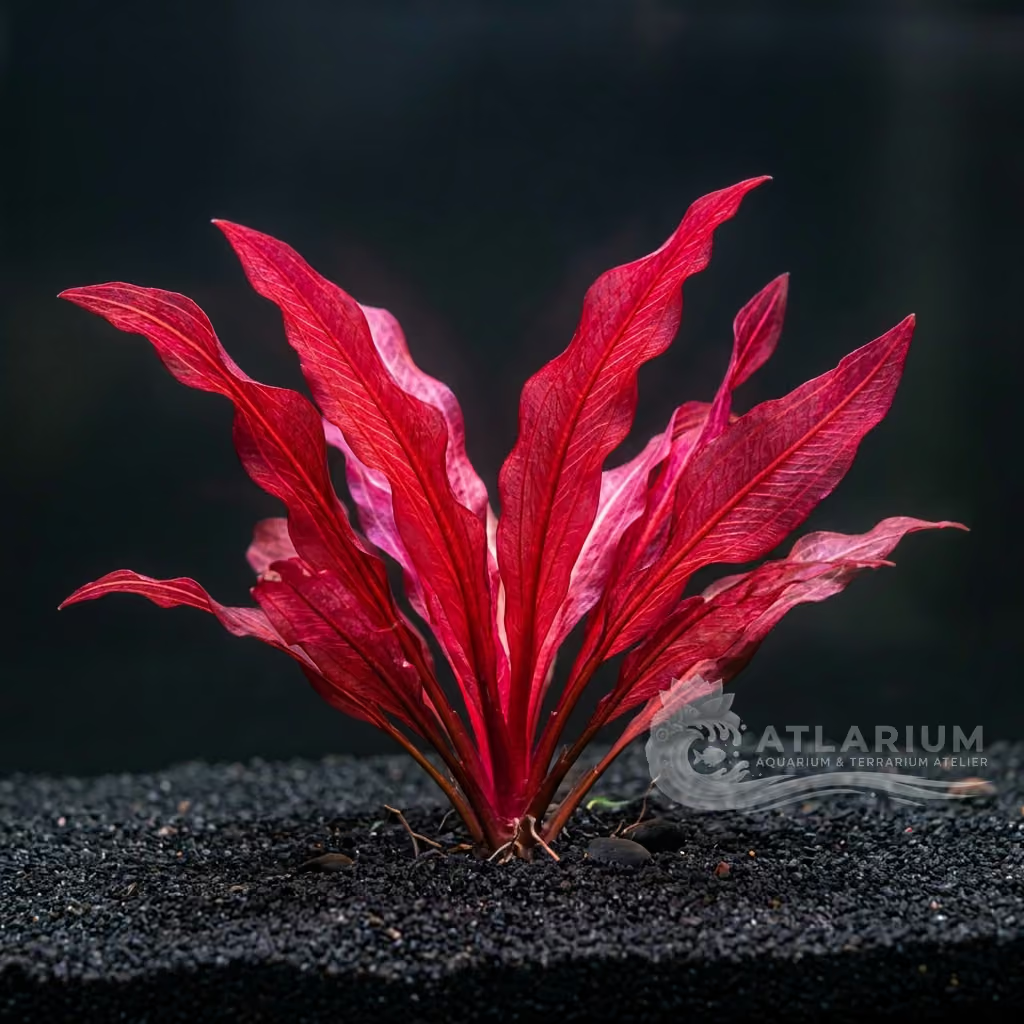
Color & Texture: The coloration is a vibrant, translucent, glowing light-green, with young emerging leaves frequently displaying beautiful, mottled patterns of brownish-red or bronze. The texture is the plant's most spectacular feature: the entire surface of the leaf is heavily rippled, fluted, and intensely wavy (undulated). The leaves are exceptionally thin and highly translucent, creating a stunning visual effect as the rippled cell walls catch the aquarium lighting and physically dance in the water current.

Soins, reproduction et cohabitation
Lighting & CO2: It is a fast-growing, high-energy plant that strongly prefers medium to high-intensity lighting. Under low light, the stems become weak, leggy, and pale, and the bulb will slowly exhaust its energy reserves. To sustain its blistering growth rate and force the production of densely rippled, massive leaves, pressurized CO2 injection is highly recommended. High light and CO2 will also trigger the plant to rapidly send out its unique floating reproductive runners.
Nutrition & Substrate: It is an aggressive root feeder that MUST be planted in a deep, highly nutritious substrate. A premium aquasoil fortified with iron-rich root tabs is absolutely mandatory. A sterile, inert gravel or sand bed will quickly starve the plant to death. The roots extending from the subterranean bulb will aggressively colonize the surrounding substrate, violently outcompeting neighboring plants for buried macronutrients. Never bury the crown of the bulb, only the base, to prevent rot.
Water Chemistry: Originating from the tropical waters of the Indian subcontinent, it thrives effortlessly in standard tropical temperatures (24-28°C) but is notably adaptable to cooler water. It is surprisingly forgiving of water chemistry, preferring slightly acidic, soft to moderately hard water, but easily adapting to most standard tap water conditions. Gentle to moderate water flow is recommended to keep its delicate, heavily rippled leaves free of suffocating detritus and algae spores.
Space Management & Placement: Due to its chaotic, towering vertical height (often exceeding 50 cm) and wild, sprawling leaf rosette, it must be used exclusively as a dominant background centerpiece in large aquariums (40+ gallons). It requires a massive amount of vertical space. It should be planted deeply in the rear corners or background of the aquascape, where its long, rippled leaves can stretch toward the surface and bend gracefully across the top of the tank without overshadowing smaller foreground plants.
Pruning: Aggressive pruning is required to manage its wild, chaotic growth. Use long scissors to cut the oldest or algae-covered leaves as close to the bulb as possible. Its unique reproductive strategy requires special attention: it will shoot a long stem to the surface, but instead of a flower, a miniature baby bulb and leaves will form at the tip! Once the baby plant develops its own small roots and bulb, snip the runner stem and plant the baby directly into the substrate.
Risks & Diseases: The most significant threat is "Bulb Rot," caused by burying the crown entirely beneath anaerobic sand. Furthermore, like all Aponogetons, it retains the biological programming for a mandatory dormancy phase. If the plant suddenly stops growing, loses its vibrancy, and drops all its leaves after 8-12 months of explosive growth, the bulb is resting. Leave it in the substrate or move it to a cool, dark container of damp sand for two months to recuperate.

Origine et répartition géographiques
Endemic to the Indian subcontinent, specifically thriving in the seasonal ponds, flooded rice paddies, marshes, and slow-moving tropical rivers of India, Bangladesh, and Myanmar. Like all species in its genus, Aponogeton undulatus is a highly specialized geophyte (bulb plant). It has evolved to survive the extreme, bipolar nature of the Southeast Asian monsoon cycle. During the scorching dry season when its habitat turns to baked mud, the plant dies back to its subterranean starchy tuber, lying completely dormant until the furious monsoon rains return to violently flood the plains and trigger explosive new growth.
Origine
Asie du Sud et du Sud-Est

Profil de plante
- Emplacement
- Arrière-plan
- This plant is an excellent choice for the midground to background of medium to large aquariums. Its transparent, undulating leaves provide a lovely vertical accent and look stunning when gently swaying in the water current. It should be given enough space to ensure its leaves are not crowded by other tall plants.
- Forme botanique
- Rosette, Tubercule
- Characterized by its bright green, semi-translucent leaves with highly undulated margins, this plant adds a beautiful rippling texture to the aquarium. It grows from a small tuber, and the leaves can reach lengths of up to 40 cm. The unique wavy edges of the leaves are its most defining and attractive feature.
- Croissance
- Moyenne
- Under favorable conditions, including good lighting and CO2, Aponogeton undulatus grows quite rapidly. It can quickly reach the water surface, where its leaves will spread out. While it can survive in lower tech setups, its growth will be significantly slower and the leaves less robust.
- Substrat
- Élevé
- This tuberous species requires a nutrient-dense substrate layer of at least 2 to 3 inches to comfortably accommodate its expansive root system. The tuber itself should be planted only partially, leaving the crown exposed to the water column to prevent decay. It relies heavily on root-absorbed nutrients, making active aqua soils or sand and gravel enriched with fertilizer tabs ideal.
- Fertilisation de la colonne d'eau
- Recommandée
- Liquid fertilization is effective, as the large surface area of its leaves readily absorbs nutrients from the water. Regular dosing of a complete liquid fertilizer will support its rapid growth rate and ensure the foliage remains vibrant. It is important to maintain balanced nutrient levels to prevent algae growth on its wide leaves.
- Fertilisation racinaire
- Nécessaire
- While it draws nutrients from the water column, Aponogeton undulatus greatly benefits from a fertile substrate. Placing root tabs near its tuber will encourage a strong, healthy root system and robust leaf development. The tuber should be planted shallowly, with the growing tip exposed to the water.
- Taille
- Occasionnelle
- Trimming involves removing older, decaying leaves or those that have become too long by cutting them cleanly near the base of the plant. If the plant becomes too dense, removing outer leaves will allow light to reach the newer growth at the center. Do not cut the leaves in half, as the remaining portion will simply rot.
- Propagation
- Stolons
- Aponogeton undulatus is unique among its genus as it frequently reproduces by forming adventitious plantlets on long flower stalks. Instead of flowers, small plantlets develop, which eventually form their own small tubers. Once these plantlets have developed roots and several leaves, they can be separated and planted in the substrate.
- Sensibilité
- Modérée
- This species may occasionally go through a dormant period where it loses its leaves; during this time, the tuber should not be discarded but left to rest. It is somewhat sensitive to sudden, drastic changes in water chemistry. Providing a stable environment with moderate water flow is ideal for its long-term health.
- Rôle dans le décor
- Plan intermédiaire, Arrière-plan
- Its striking, wavy, bright green leaves make it a fantastic structural plant that draws the eye. It is perfect for creating contrast against dark wood, rocks, or red background plants. Its graceful appearance softens hard edges and brings a dynamic, flowing element to the aquascape.

Galerie d'images
Images sous licence liées à l'espèce ou, lorsqu'elles sont indiquées, au taxon représentatif le plus proche.

Espèces associées
Recommandations regroupées par proches parents, compagnons et soins similaires.