Cryptocoryne crispatula var. flaccidifolia
Cryptocoryne crispatula var. flaccidifolia
A highly elegant rheophytic plant from Malaysia featuring extremely narrow, gracefully wavy ribbon leaves. Very adaptable, it creates a striking, delicate background texture and easily survives in low-tech setups.
Température de l’eau
20 - 28 °C
Valeur du pH
6.5 - 8
Type d'eau
Eau douce
Lumière
Faible
CO2
Faible
Hauteur attendue
40 cm
Largeur attendue
15 cm
GH
4 - 20 dGH
KH
5 - 21 dKH

Description de l'espèce
Geographical Origin and Habitat: Endemic to the fast-flowing, highly oxygenated tropical rivers and deeply shaded monsoon streams of southern Thailand and peninsular Malaysia. Cryptocoryne crispatula var. flaccidifolia is a highly elegant, specialized rheophytic (flow-loving) aquatic plant. It thrives in an extreme amphibious lifestyle, anchoring its deep root system directly into rocky, sandy riverbeds. It is perfectly adapted to violent seasonal changes, surviving fully submerged in rushing rapids during the monsoon and entirely emersed on muddy banks during the dry season.
Taxonomy & Genetics: Scientifically classified within the Araceae family, it is a distinctly separate and highly prized botanical variant within the vast Cryptocoryne crispatula complex. Taxonomically, its genetics strictly differentiate it from its famous cousin, var. balansae. While 'balansae' is defined by massive, heavily hammered (bullate) leaves, the genetics of 'flaccidifolia' completely suppress that texturing, forcing the production of exceptionally narrow, relatively smooth, and intensely flaccid (limp) leaves that offer zero resistance to the water current.
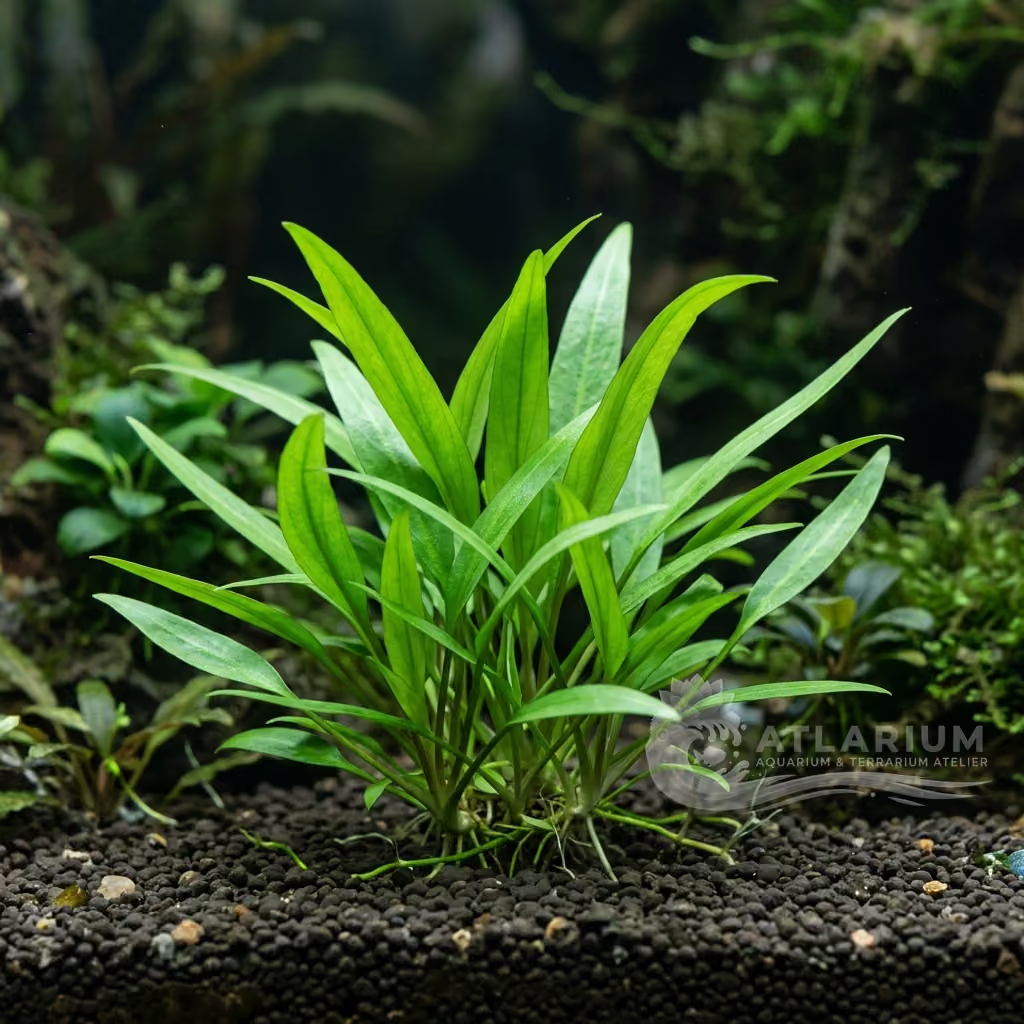
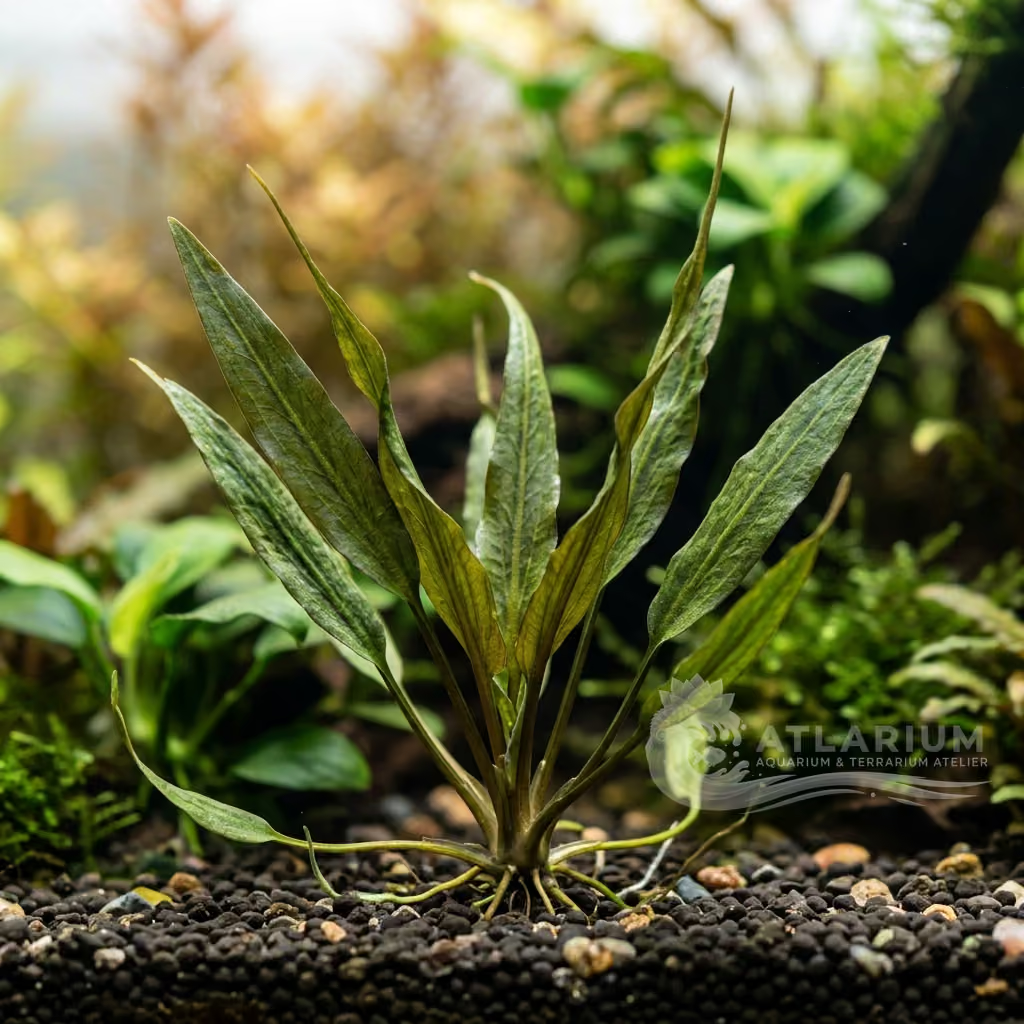
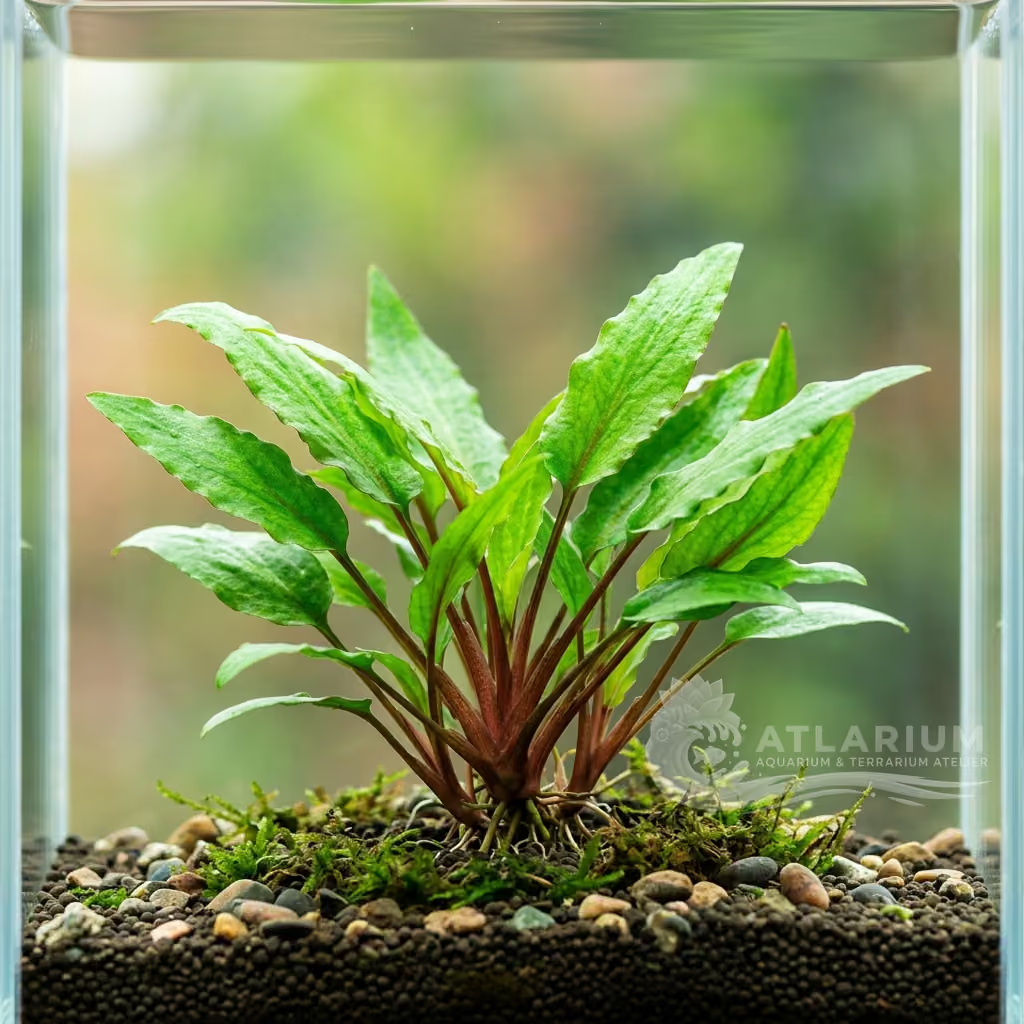
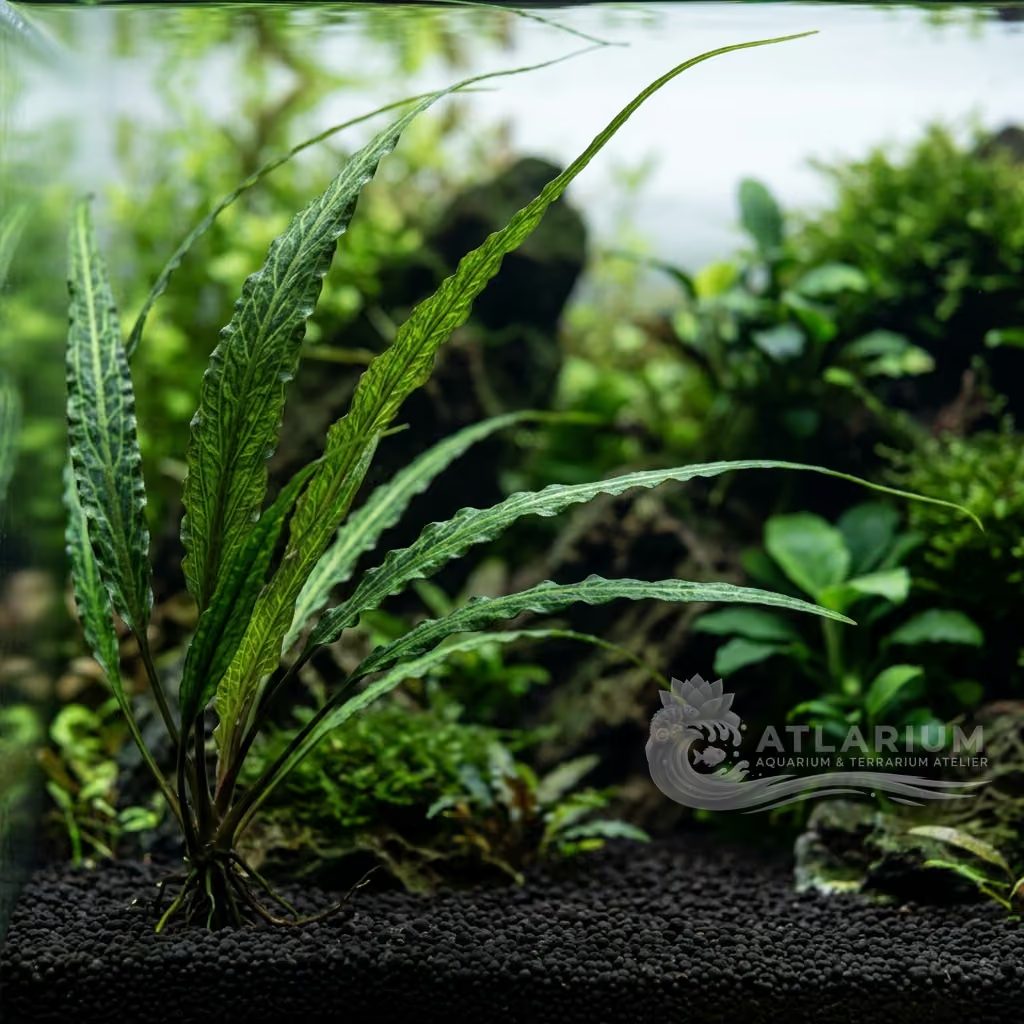
Physical Structure: The architectural structure of C. crispatula var. flaccidifolia is incredibly delicate, intensely narrow, and radically flowing. It is a true rosette plant that completely lacks vertical stems. The foundation is a creeping subterranean rhizome that deploys aggressive white roots deep into the substrate. The defining feature is the foliage: the leaves are strictly linear, surprisingly long (capable of reaching 40-50 cm / 20 inches), extremely narrow (often less than 1 cm wide), and almost completely smooth, lacking heavy hammering.
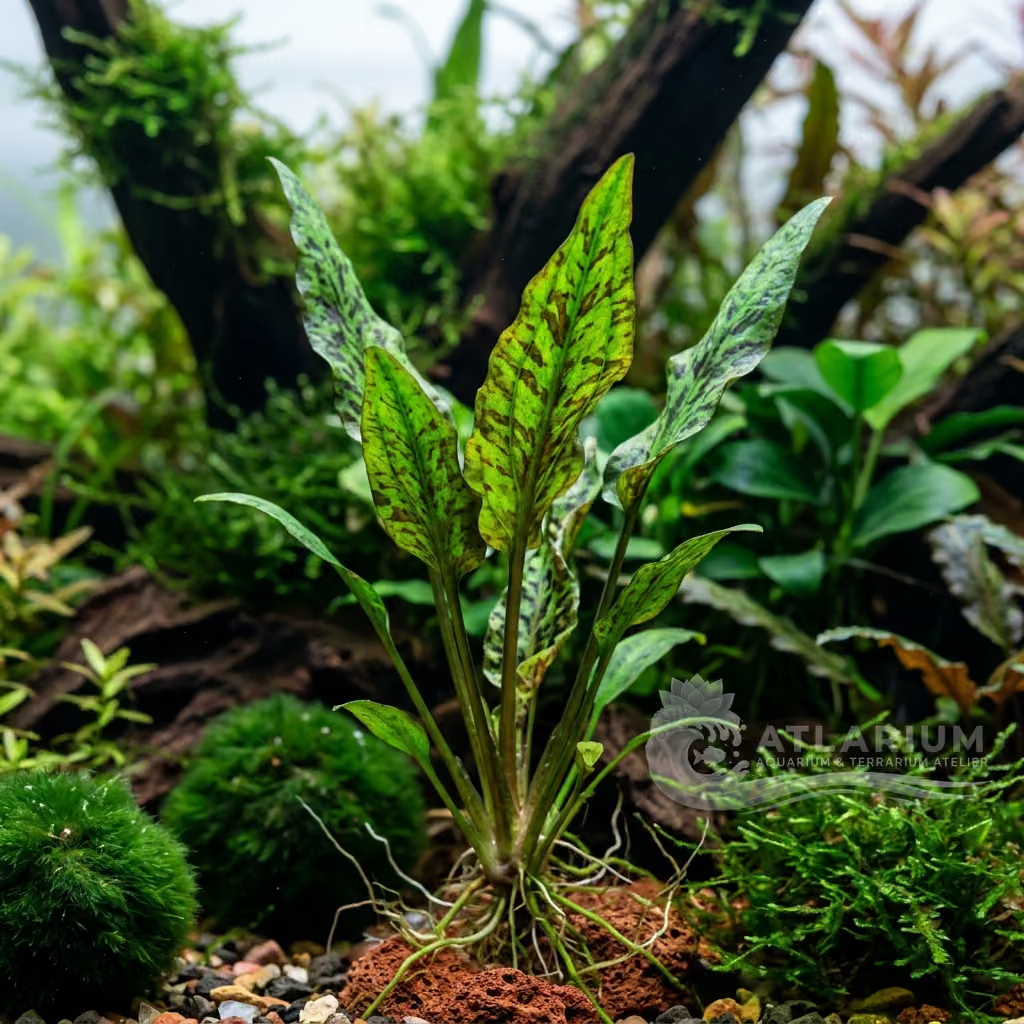
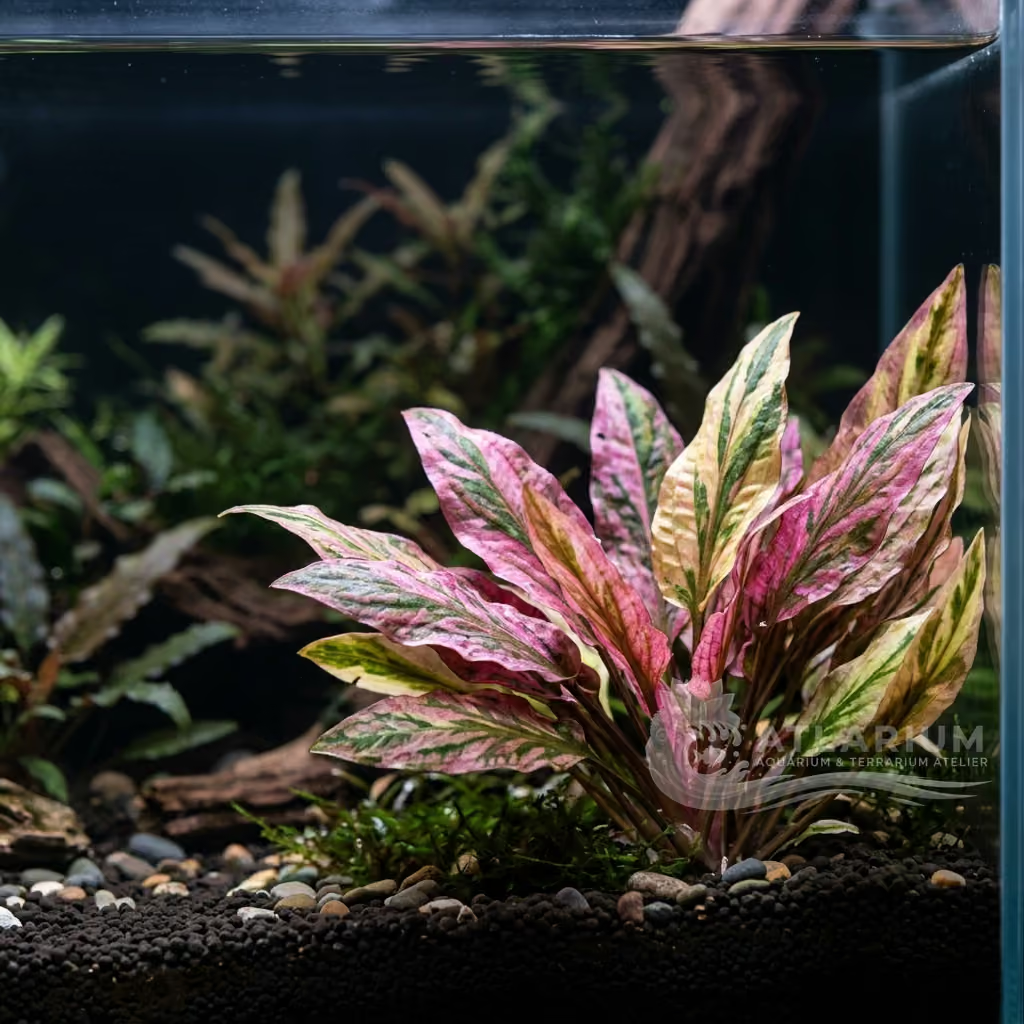
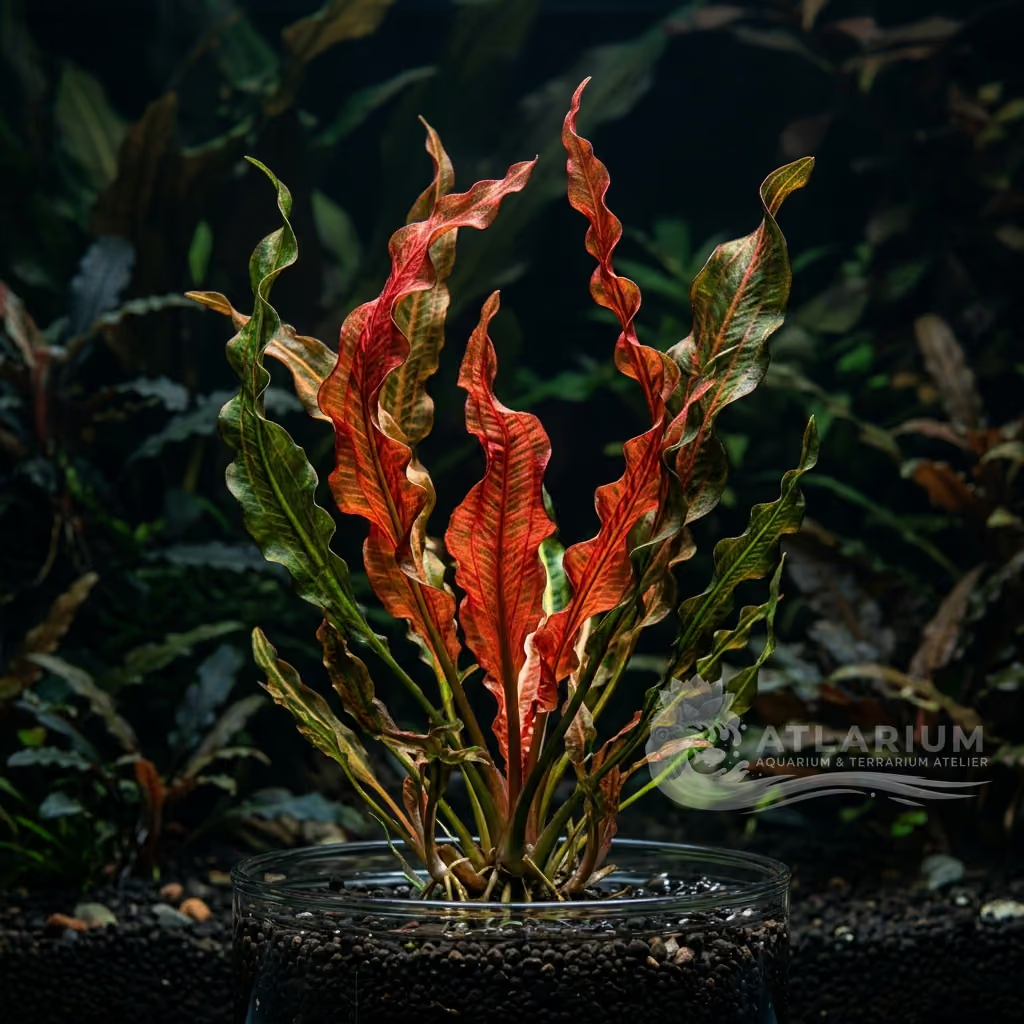
Color & Texture: The coloration is highly variable and deeply sophisticated, depending heavily on the specific light intensity. Grown submerged under standard lighting, the narrow leaves range from a solid, bright apple-green to a striking, moody olive-brown or bronze. The texture of the leaves is its namesake feature: it is exceptionally smooth, papery thin, and completely "flaccid" (soft and limp). Because the incredibly narrow leaves are so soft and thin, they flutter wildly and gracefully in the aquarium current like underwater ribbons.

Soins, reproduction et cohabitation
Lighting & CO2: It is an incredibly adaptable, highly forgiving rosette plant. In deeply shaded, low-tech aquariums, it will easily survive, producing extremely long, thin green leaves that stretch desperately toward the light. To force the plant to develop a dense, compact rosette and to unlock its highly prized bronze and olive-brown coloration, medium to high-intensity LED lighting is mandatory. While injected CO2 is not required for survival, pressurized CO2 drastically accelerates its growth rate and forces it to quickly carpet the substrate.
Nutrition & Substrate: Like all species in the crispatula complex, 'flaccidifolia' is an absolute, obligate root feeder. Its highly aggressive root system strongly demands a mature, nutrient-dense substrate (minimum 5 cm / 2 inches deep). It heavily prefers fine, sandy substrates or high-quality aquasoil. If planted in sterile, inert gravel without supplementation, it will quickly stunt, turn pale, and melt away. The substrate MUST be heavily enriched with premium, iron-rich root tabs directly beneath the rhizome. It absorbs zero nutrition from the water column.
Water Chemistry: Originating from the fast-flowing monsoon rivers of Southeast Asia, it demands pristine water quality and high dissolved oxygen. It thrives in standard tropical temperatures (22-26°C). It is exceptionally adaptable regarding water hardness, comfortably tolerating both soft, slightly acidic blackwater (pH 6.0) and moderately hard, alkaline tap water (pH 7.8). However, the absolute most critical environmental requirement is heavy, relentless water flow. It must be placed directly in the path of a powerful filter output to thrive.
Space Management & Placement: Due to its radically narrow, elegantly flowing leaves and tall stature (up to 50 cm), 'flaccidifolia' is a spectacular, premium background or extreme midground transition plant. It should be planted tightly in clusters directly behind hardscape, allowing its incredibly long, thin, bronze-green leaves to gracefully whip and flutter in the current, creating a stunning sense of aquatic motion. Because it spreads relentlessly via creeping subterranean runners, it will eventually form a dense, flowing underwater thicket.
Pruning: Pruning is a very delicate, infrequent procedure. Never attempt to trim the narrow, ribbon-like leaves in half with scissors; the cut edge will instantly turn black, rot, and destroy the elegant aesthetic of the plant. To prune dead, melting, or heavily shaded older leaves, you must reach down to the absolute base of the rosette and cleanly slice or snap the petiole directly at the gravel line. To manage its spread, physically dig into the substrate and cleanly sever the subterranean runner connecting the baby clone to the mother plant.
Risks & Diseases: Like all Cryptocorynes, the absolute greatest threat to 'flaccidifolia' is the infamous "Crypt Melt." This species is highly sensitive to sudden environmental instability. A rapid change in pH, a massive water change with cold water, or forcefully uprooting the established plant will trigger a violent biological panic, causing all the elegant, flaccid leaves to dissolve into a slimy mush within hours. However, the creeping underground rhizome is nearly indestructible; if the leaves melt, do not remove the roots, and it will regrow.

Origine et répartition géographiques
Endemic to the fast-flowing, highly oxygenated tropical rivers and deeply shaded monsoon streams of southern Thailand and peninsular Malaysia. Cryptocoryne crispatula var. flaccidifolia is a highly elegant, specialized rheophytic (flow-loving) aquatic plant. It thrives in an extreme amphibious lifestyle, anchoring its deep root system directly into rocky, sandy riverbeds. It is perfectly adapted to violent seasonal changes, surviving fully submerged in rushing rapids during the monsoon and entirely emersed on muddy banks during the dry season.
Origine
Asie du Sud et du Sud-Est

Profil de plante
- Emplacement
- Arrière-plan
- Its narrow, soft leaves make it an excellent background or midground plant, depending on the size of the aquarium. It looks particularly striking when placed in the path of the water flow, where its flaccid leaves can wave gently in the current. Grouping several plants together enhances the visual impact of its thin foliage.
- Forme botanique
- Rosette
- As its name suggests, var. flaccidifolia is characterized by very narrow, flaccid leaves that lack the stiffness of var. balansae. The leaves are smooth or only slightly ruffled at the margins, typically measuring a fraction of an inch in width. Its coloration is predominantly a vibrant light green, growing from a dense central rosette.
- Croissance
- Moyenne
- This variety grows at a moderate pace, steadily producing new leaves once it has fully rooted into the substrate. While it can adapt to lower light conditions, medium to high lighting combined with CO2 injection will promote denser, more vigorous growth. It generally grows faster than broader-leaved Cryptocoryne species.
- Substrat
- Élevé
- Cryptocoryne crispatula var. flaccidifolia features a robust root network that relies heavily on the substrate for its nutritional needs. A high-quality aqua soil or a clay-based substrate layered beneath fine gravel is strongly recommended to ensure a steady uptake of essential trace elements. The bottom layer must be relatively deep, around 2 to 3 inches (5-8 cm), to properly secure the plant and accommodate its extensive root spread. In the absence of a nutrient-rich base, continuous targeted feeding through root capsules is necessary to prevent nutrient deficiencies.
- Fertilisation de la colonne d'eau
- Recommandée
- Water column dosing should be light but regular, focusing on micronutrients to keep the leaves looking healthy and vibrant. Excess macronutrients in the water can lead to algae growth on the delicate leaves, which can be difficult to remove without damaging the plant. A high-quality, comprehensive trace element supplement is usually sufficient.
- Fertilisation racinaire
- Nécessaire
- A good quality aquasoil or a sandy substrate enriched with root tabs is highly recommended to achieve the best growth form. Root nutrition is key to ensuring the plant reaches its maximum height and produces thick clusters of foliage. Replenish root tabs every 3-4 months to keep the plant thriving.
- Taille
- Occasionnelle
- Maintenance is minimal; simply prune away older, decaying leaves by snipping them off near the crown. Avoid trimming healthy leaves, as this will only detract from its natural, flowing appearance. Due to the softness of the leaves, take care not to accidentally damage adjacent foliage while pruning.
- Propagation
- Division du rhizome, Stolons
- Like other crispatula varieties, it reproduces via runners that spread through the substrate. Daughter plants will emerge a short distance from the parent and can be snipped off once they are fully formed. It is a prolific runner producer in nutrient-rich soil.
- Sensibilité
- Modérée
- It is susceptible to 'Crypt melt' caused by sudden fluctuations in water chemistry or temperature. However, due to its vigorous root system, it often bounces back relatively quickly compared to other varieties. Keep water parameters as stable as possible to prevent massive leaf loss.
- Rôle dans le décor
- Plan intermédiaire, Arrière-plan
- The fine, grass-like texture of its foliage provides an excellent contrast to broader, darker leaves in the aquascape. It works wonderfully as a tall background accent in smaller tanks or as a midground bush in larger setups. Its flowing nature adds a dynamic, lively element to the layout as it sways in the water current.

Galerie d'images
Images sous licence liées à l'espèce ou, lorsqu'elles sont indiquées, au taxon représentatif le plus proche.

Espèces associées
Recommandations regroupées par proches parents, compagnons et soins similaires.