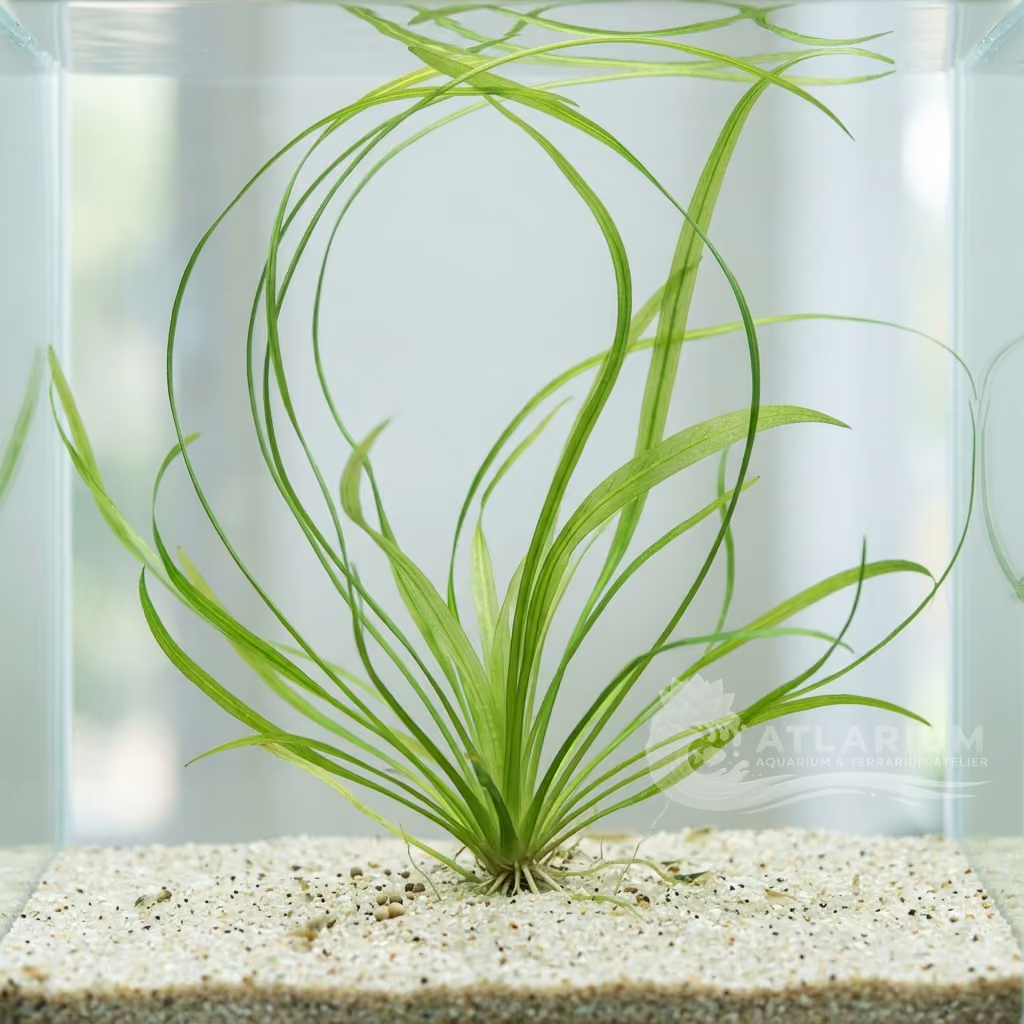
Echinodorus grisebachii 'Amazonicus'
Echinodorus grisebachii 'Amazonicus'
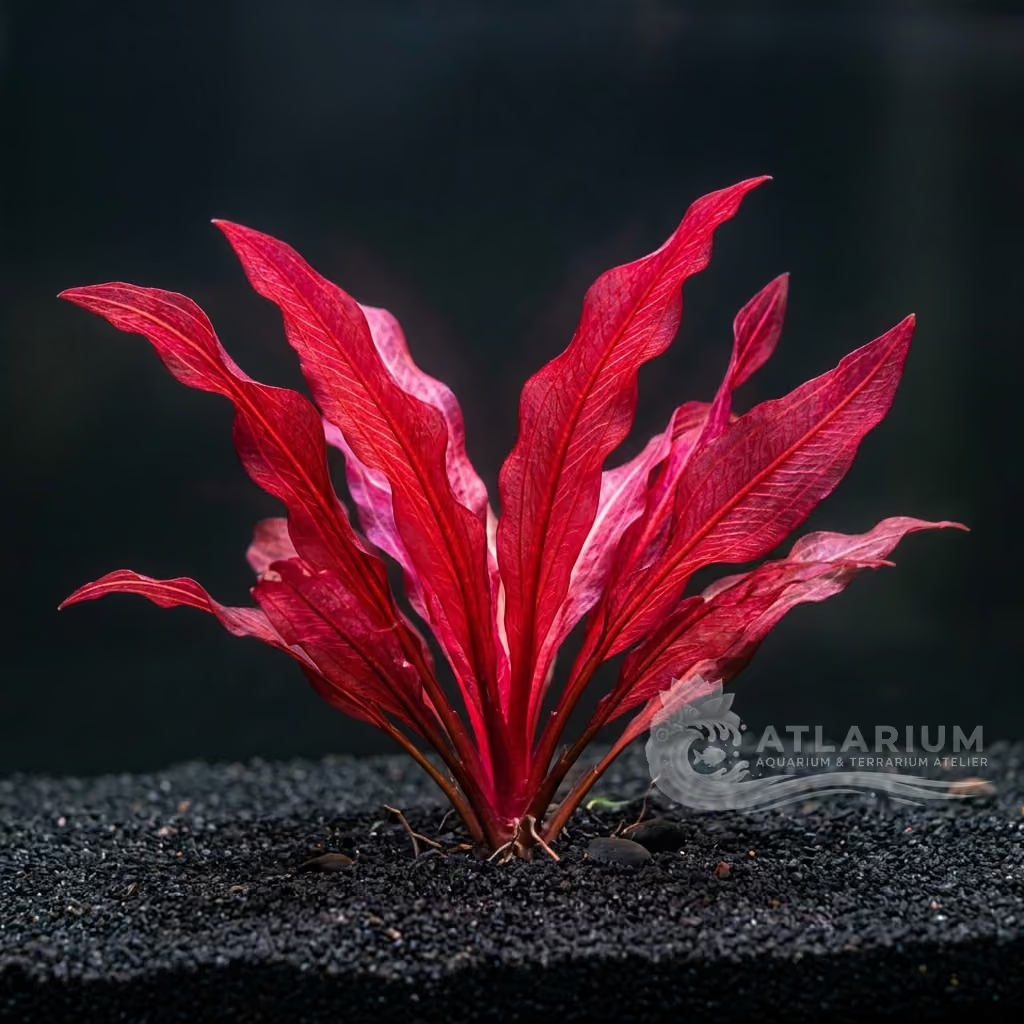
Echinodorus grisebachii 'Amazonicus' is the legendary, slender-leaved Amazon Sword, forming massive, graceful light-green rosettes that command the mid-to-background.
Température de l’eau
20 - 28 °C
Valeur du pH
6 - 8
Type d'eau
Eau douce
Lumière
Moyenne
CO2
Faible
Hauteur attendue
40 cm
Largeur attendue
25 cm
GH
4 - 20 dGH
KH
2 - 15 dKH

Description de l'espèce
Geographical Origin and Habitat: Endemic to the incredibly vast Amazon River basin across South America, stretching deeply into Brazil, Colombia, and Peru. Echinodorus grisebachii 'Amazonicus', globally famous as the "Amazon Sword," is a legendary, towering aquatic swamp plant. It completely dominates temporary Amazonian ponds, flooded jungle marshlands, and slow-moving river margins. It is a wildly fast-growing, virtually indestructible survivor perfectly evolved to exploit both the deeply submerged wet season and the terrestrial dry season.
Taxonomy & Genetics: Scientifically classified within the Alismataceae family, it is a massive, true wild-type Echinodorus species, originally classified simply as E. amazonicus. Taxonomically, it is the absolute defining staple of the global aquarium hobby. Genetically, it is completely hard-wired for extreme structural gigantism and rapid vegetative propagation via long runners. It completely lacks the biological mechanism to produce any red or bronze anthocyanin pigments, ensuring it remains an unwavering, pure bright green under all conditions.
Physical Structure: The architectural structure of the "Amazon Sword" is overwhelmingly dominant, violently fast-growing, and towering. It is a gigantic rosette plant completely lacking vertical stems. The foundation is a massive, incredibly thick, tuberous subterranean rhizome that deploys an aggressive, deep-reaching root system capable of shattering pots. The leaves emerge directly from the crown. The foliage is the defining structural feature: strictly narrowly lanceolate (sword-shaped), beautifully curved, and monstrously long (reaching 40-60 cm).
Color & Texture: The coloration is distinctly pure, solid, and completely uniform. Grown submerged under standard lighting, the massive, sword-like leaves are a solid, glowing bright apple-green. Because it completely lacks red pigments, it remains an intensely bright pure green even under blasting high-intensity light. The texture is intensely rigid, extremely leathery, and perfectly smooth, completely lacking any dimples or ruffled edges. The massive leaves feel exactly like thick, heavy, perfectly smooth green plastic blades.

Soins, reproduction et cohabitation
Lighting & CO2: It is an incredibly resilient but highly demanding titan. To sustain its terrifyingly rapid, towering growth rate, medium to high-intensity LED lighting is mandatory. If severely shaded, the massive green leaves will turn pale yellow, rot, and the plant will melt. Because it is biologically programmed to rapidly breach the surface, pressurized CO2 drastically accelerates its vertical race. Once it breaches the surface, the massive emerged leaves will completely shadow the entire aquarium, killing the submerged plants below.
Nutrition & Substrate: As the ultimate, colossal Amazon Sword, 'Amazonicus' is a terrifyingly aggressive, obligate root feeder. Its massive root system strictly demands a very deep (minimum 10 cm / 4 inches), heavily nutrient-dense substrate. It absolutely demands premium aquasoil heavily enriched with iron and macro-nutrient root tabs directly beneath the massive tuber. It will rapidly strip a standard gravel bed of all nutrients within weeks. If starved of root nutrients, the towering green leaves will quickly turn white, rot, and dissolve into mush.
Water Chemistry: Originating from the vast Amazon basin, it is practically invincible regarding standard water parameters. It thrives effortlessly in heated tropical aquariums (22-28°C) but is also exceptionally adaptable, tolerating both soft, highly acidic blackwater and rock-hard, highly alkaline tap water (pH 6.0 - 8.5). The single most critical environmental requirement is intense, continuous root nutrient supplementation. It drastically prefers moderate water flow to keep its massive, smooth, sword-like leaves perfectly clean.
Space Management & Placement: Due to its absolute monstrous size (capable of reaching 60+ cm in height) and wildly dominant nature, this plant is strictly reserved as an extreme background centerpiece for very large, tall aquariums (minimum 300 liters). It MUST be planted singularly. If you allow it to mature, it will violently breach the surface, producing massive, rigid, emerged leaves that will aggressively block out all light to the tank below while sending out massive, towering flower stalks and incredibly long propagation runners.
Pruning: Pruning is a constant, brutal, and necessary procedure if you wish to keep the plant fully submerged. Because the plant naturally wants to breach the surface, you must constantly, aggressively prune off the taller, mature leaves before they reach the air. To prune, you must reach down to the absolute base of the massive rosette and cleanly slice the incredibly thick petiole directly at the crown. It throws out massive, thick runners covered in baby plants that must be aggressively severed to control its spread.
Risks & Diseases: The absolute greatest threat to this titan is nutrient starvation and self-shading. Because its growth rate is so violently fast, it will rapidly strip the substrate of all available nutrients. The moment it runs out of food, the massive green leaves will immediately turn translucent and melt into a massive amount of slimy organic waste. The second major risk is self-shading; once the massive, leathery emerged leaves breach the surface, they completely block the light, causing all submerged leaves to rot and die off.

Origine et répartition géographiques
Endemic to the incredibly vast Amazon River basin across South America, stretching deeply into Brazil, Colombia, and Peru. Echinodorus grisebachii 'Amazonicus', globally famous as the "Amazon Sword," is a legendary, towering aquatic swamp plant. It completely dominates temporary Amazonian ponds, flooded jungle marshlands, and slow-moving river margins. It is a wildly fast-growing, virtually indestructible survivor perfectly evolved to exploit both the deeply submerged wet season and the terrestrial dry season.
Origine
Amazonie, Orénoque et Guyanes

Profil de plante
- Emplacement
- Arrière-plan
- Given its potential to grow quite large, 'Amazonicus' is best suited for the background of most aquariums. It forms an imposing, broad rosette that can serve as a striking centerpiece or be grouped to create a dense green backdrop. In smaller tanks, it can quickly dominate the space, so strategic placement to avoid shading other plants is important. Ensure sufficient space around the plant for the broad leaves to unfurl.
- Forme botanique
- Rosette
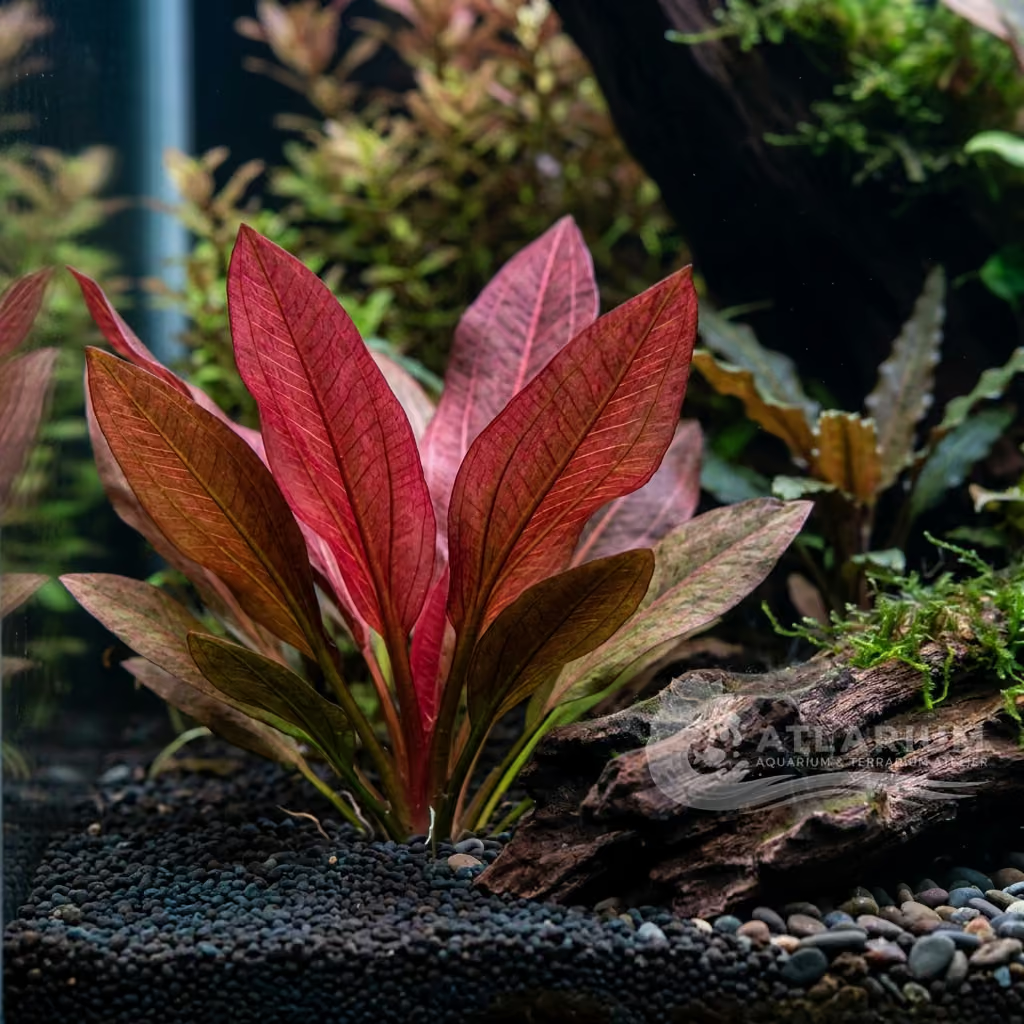
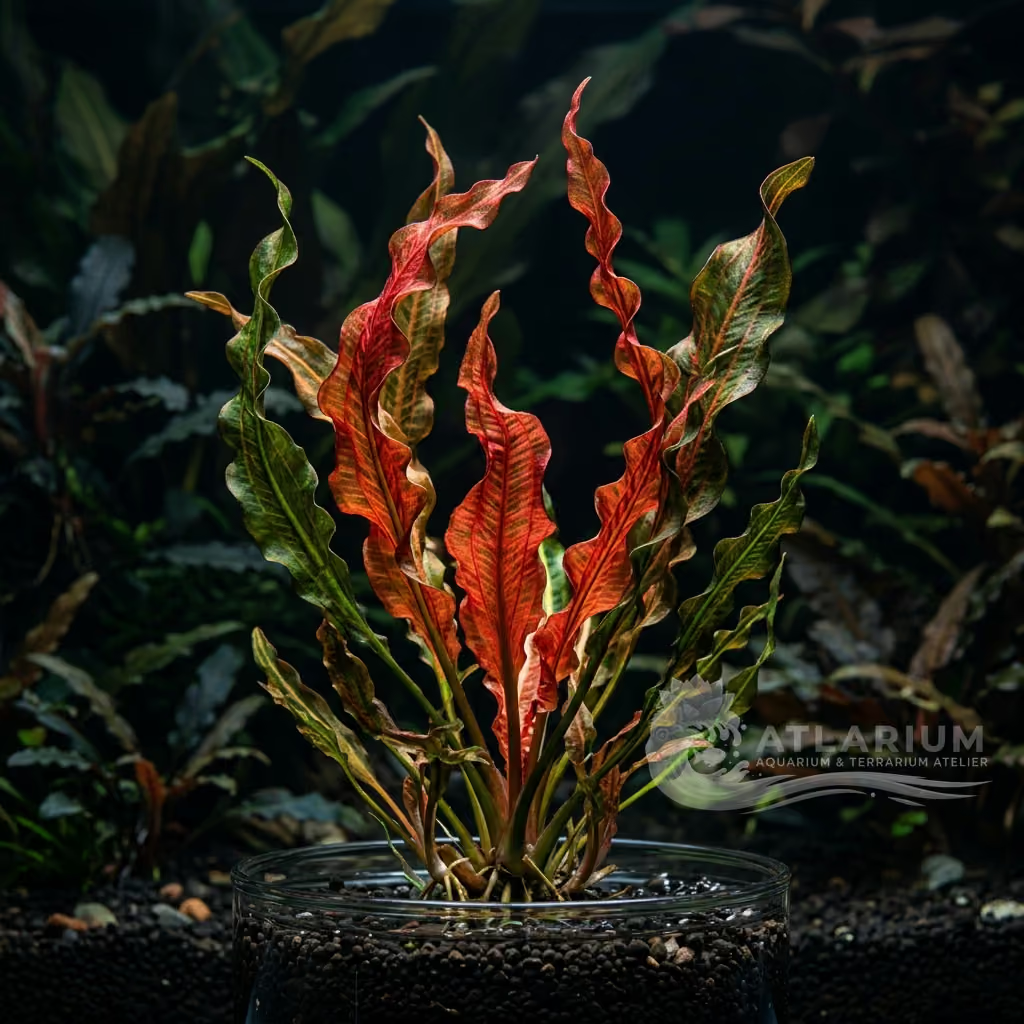
- This classic species features a classic rosette growth habit, characterized by long, lanceolate (sword-shaped) leaves radiating from a central crown. The leaves are a vibrant, light to medium green, slightly crinkled along the margins, and can reach impressive lengths. A healthy specimen forms a dense, bushy rosette that provides excellent cover for fish and a striking visual impact.
- Croissance
- Rapide
- The growth rate of the Amazon Sword is typically fast, especially when provided with optimal lighting, CO2, and abundant nutrients. Under these conditions, it can rapidly produce large, sword-shaped leaves. In lower-tech setups, the growth rate slows to a moderate pace, but the plant remains relatively undemanding. Regular removal of older, decaying leaves encourages continuous new growth from the center of the rosette.
- Substrat
- Élevé
- This plant relies heavily on its extensive root system to extract nutrients, making a rich, deep substrate crucial. A specialized planted aquarium soil is ideal, but a layer of nutrient-rich laterite or soil capped with gravel also works well. The substrate must be at least two to three inches deep to accommodate the massive root structure. Regular supplementation with root tabs is highly recommended to replenish depleted substrate nutrients over time.
- Fertilisation de la colonne d'eau
- Recommandée
- While it draws most of its nourishment from the substrate, supplementary column fertilization is beneficial, particularly in mature tanks. Dosing a comprehensive liquid fertilizer ensures trace elements and micronutrients are readily available. This helps prevent deficiencies and promotes the vibrant green coloration of the foliage.
- Fertilisation racinaire
- Nécessaire
- Root fertilization is non-negotiable for the long-term health of the Amazon Sword. Inserting high-quality root tabs deep into the substrate around the base of the plant every few months is essential. This targeted feeding directly supports the massive root system and fuels the rapid growth of its large leaves.
- Taille
- Régulière
- Pruning should be done by cutting the older, outer leaves as close to the base as possible. This encourages the plant to channel energy into fresh inner leaves. Avoid cutting leaves halfway, as the remaining parts will rot.
- Propagation
- Stolons, Division du rhizome
- Propagation is primarily achieved through the development of adventitious plantlets on long, flowering stalks (inflorescences) that grow upwards toward the surface. Once these plantlets develop their own small root systems and multiple leaves, they can be carefully snipped from the stalk and planted in the substrate. Less commonly, mature crowns can be carefully divided.
- Sensibilité
- Modérée
- Generally robust, but it can suffer if its crown is buried too deep in the substrate. It may attract spot algae on older leaves if lighting is too intense without adequate CO2. Very soft water might occasionally lead to mineral deficiencies.
- Rôle dans le décor
- Arrière-plan, accent
- Acts as an iconic background filler or a strong centerpiece in classic nature aquariums. Its large leaves provide excellent shelter and spawning grounds for fish like angelfish. The bold texture contrasts beautifully with fine-leaved plants.

Galerie d'images
Images sous licence liées à l'espèce ou, lorsqu'elles sont indiquées, au taxon représentatif le plus proche.

Espèces associées
Recommandations regroupées par proches parents, compagnons et soins similaires.