Large-leaf Sword
Aquarius macrophyllus
A marsh plant native to tropical South America, especially Brazil. Inhabits swamps, riverbanks, and temporarily flooded areas, growing both emersed an.
Température de l’eau
20 - 28 °C
Valeur du pH
6 - 8
Type d'eau
Eau douce
Lumière
Moyenne
CO2
Faible
Hauteur attendue
50 cm
Largeur attendue
30 cm
GH
4 - 15 dGH
KH
2 - 15 dKH

Description de l'espèce
Geographical Origin and Habitat: Echinodorus macrophyllus is a marsh plant native to tropical South America, widely distributed in Brazil, Bolivia, and Paraguay. It inhabits wetlands, floodplains, marshes, and the margins of slow-flowing rivers and lakes. It is highly adapted to growing both submerged during high-water seasons and emersed in damp, muddy soils.
Taxonomy & Genetics: Belonging to the family Alismataceae, genus Echinodorus, commonly known as Amazon sword plants. The specific epithet 'macrophyllus' originates from Greek, meaning 'large-leafed.' The species exhibits high phenotypic plasticity, allowing it to morphologically adapt to fluctuating water levels.
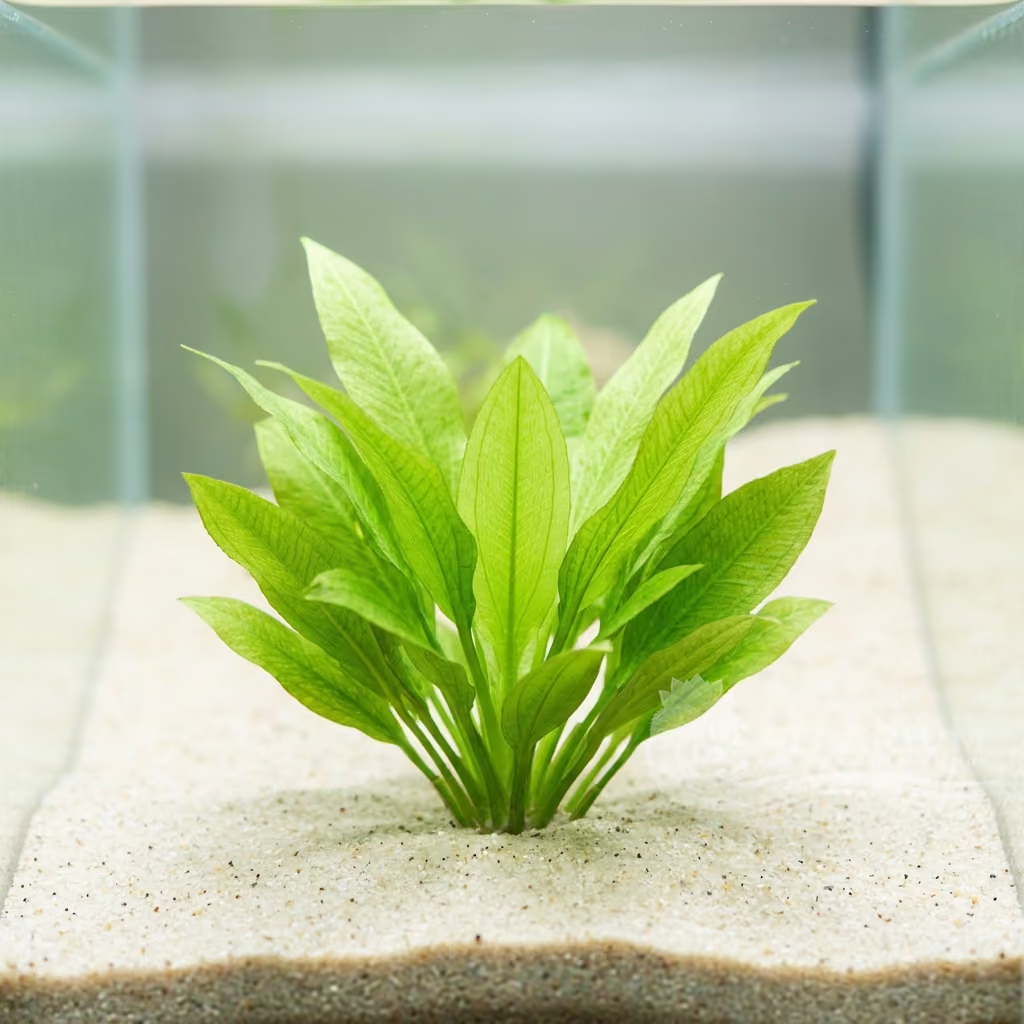
Physical Structure: It features a classic rosette structure with long-petioled leaves. Submerged leaves are slightly narrower and more flexible, while emersed leaves develop stout petioles and large, ovate, or heart-shaped blades. In a mature aquarium, the plant can reach a substantial height of 50 to 70 cm.
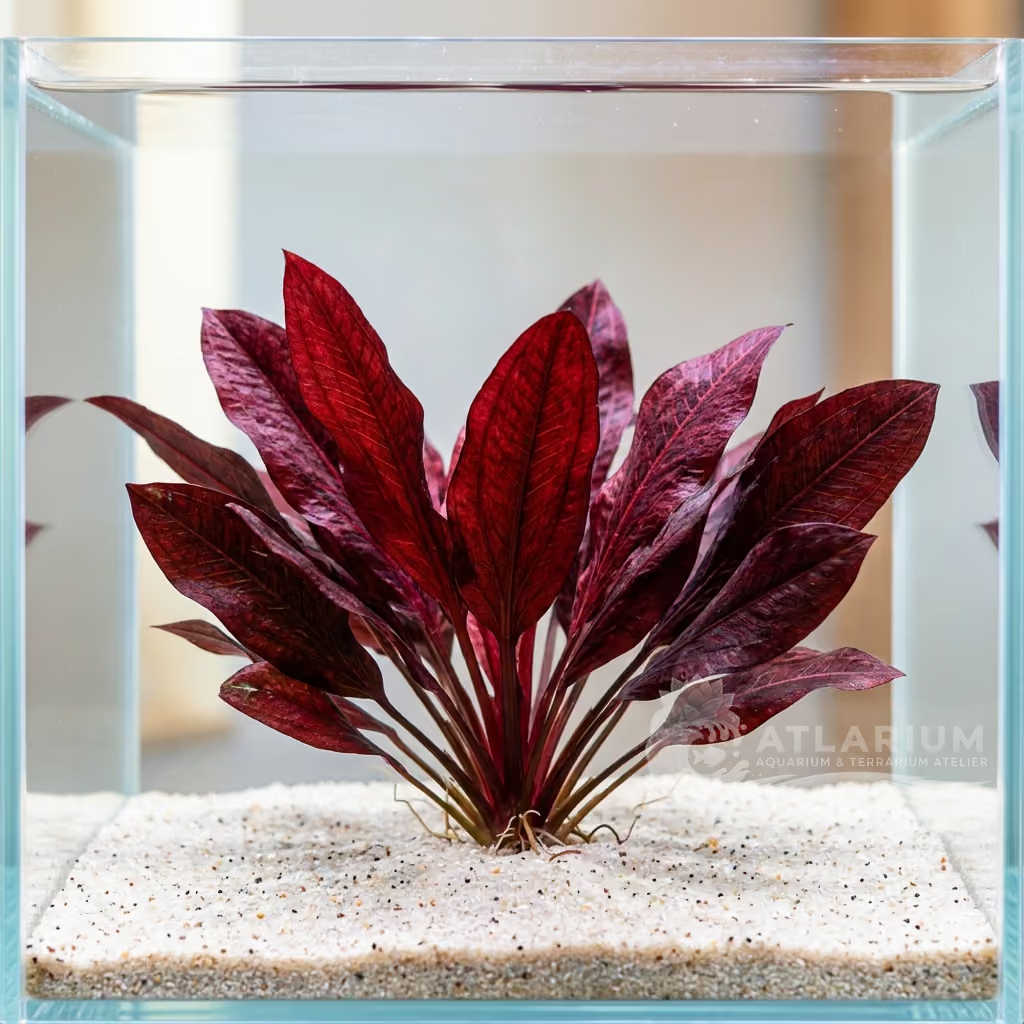
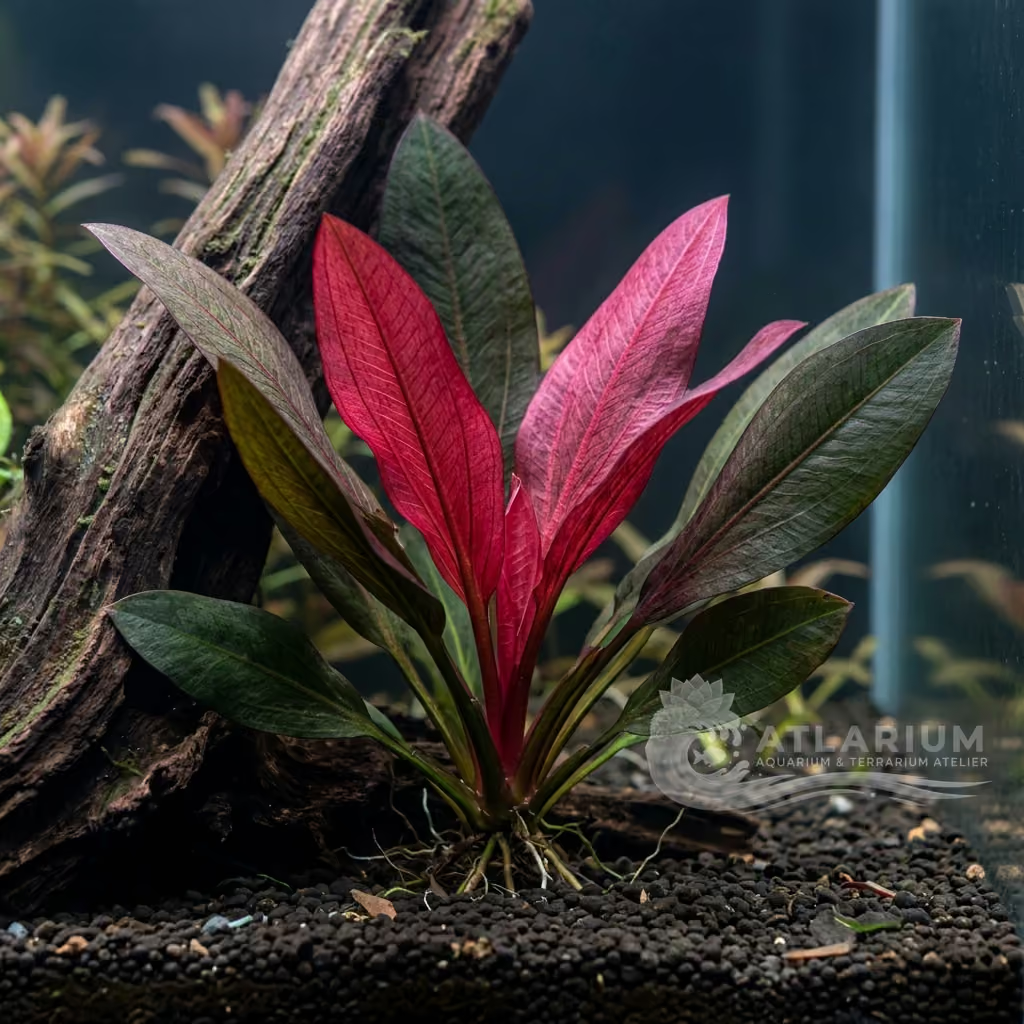
Color & Texture: Submerged leaves display a bright light-green color, sometimes developing golden-bronze highlights under intense lighting. The texture is characterized by prominent, highly visible longitudinal veins that run across the leaf surface, giving it a strong, structured, and decorative appearance.

Soins, reproduction et cohabitation
Lighting & CO2: Requires medium to high light intensity to thrive. Subdued lighting will lead to elongated, weak petioles and stunted leaf development. CO2 injection is not strictly mandatory, but it significantly accelerates growth and produces thicker, healthier leaves.
Nutrition & Substrate: As a heavy root feeder, it develops a massive root system. It requires a nutrient-rich, deep substrate loaded with iron and essential microelements. Regular addition of root fertilizer tablets (root tabs) directly into the substrate near the roots is highly recommended.
Water Chemistry: Highly adaptable. It prefers a temperature range of 20 to 28 °C, pH levels between 6.0 and 7.5, and water hardness from soft to moderately hard (GH 4-15). Ensure stable water conditions and perform regular water changes to prevent excessive nutrient accumulation.
Space Management & Placement: Due to its large adult size, it should be placed in the background of large aquariums (at least 200 liters) or used as a central specimen plant. It requires ample lateral space, so avoid planting it too close to delicate, slow-growing species.
Pruning: Pruning is straightforward: regularly remove older, yellowing, or damaged leaves by cutting them at the base of the petiole near the rosette. If the plant sends out emersed leaves that block light, or long flowering stems, they can be pruned off to encourage submerged growth.
Risks & Diseases: The primary risk is iron deficiency (chlorosis), which causes the leaves to turn yellow or translucent. It is also susceptible to damage from herbivorous fish (like silver dollars) or snails that chew holes in the leaves. Maintain consistent fertilization to avoid growth stalls.

Origine et répartition géographiques
Echinodorus macrophyllus is a marsh plant native to tropical South America, widely distributed in Brazil, Bolivia, and Paraguay. It inhabits wetlands, floodplains, marshes, and the margins of slow-flowing rivers and lakes. It is highly adapted to growing both submerged during high-water seasons and emersed in damp, muddy soils.
Origine
Amazonie, Orénoque et GuyanesAmérique du Sud hors Amazonie

Profil de plante
- Emplacement
- Arrière-plan
- This giant species should be placed strictly in the background or as a solitary centerpiece in very large aquariums. It requires substantial vertical and horizontal space, as it often breaches the water surface. Smaller plants placed nearby will easily be completely shaded. In open-top tanks, it will readily grow emerged leaves.
- Forme botanique
- Rosette
- It features enormous, broad, spade-shaped leaves on long, sturdy petioles. When grown submerged, the leaves are lighter green and slightly softer. As it reaches the surface, the emersed leaves become tougher and more distinctly rounded or heart-shaped. It builds a massive root system to anchor itself.
- Croissance
- Moyenne
- The growth rate is extremely fast when its high nutrient and light demands are met. It can produce several large leaves per month under optimal conditions. The addition of CO2 significantly increases the sheer size and speed of growth. Growth may stall if the substrate becomes exhausted of nutrients.
- Substrat
- Élevé
- The Large-leaf Sword (Aquarius macrophyllus) requires a very deep and nutrient-rich substrate to support its massive size and extensive root structure. A substrate bed of at least 8-10 cm composed of aqua soil or heavily amended gravel is necessary to keep this large plant properly anchored. Because of its sheer mass, it rapidly depletes local substrate nutrients, making the frequent insertion of root tabs vital. A well-fed root zone is the key to preventing nutrient deficiencies and sustaining its large, imposing foliage.
- Fertilisation de la colonne d'eau
- Facultative
- While it depends heavily on root nutrition, water column fertilization prevents secondary deficiencies. A broad-spectrum liquid fertilizer helps maintain the health of its numerous large leaves. Potassium dosing is critical, as deficiencies will cause pinholes in the older foliage. Adequate column nutrients also support the growth of submerged adventitious plantlets.
- Fertilisation racinaire
- Recommandée
- A thick, soil-based substrate or frequent addition of numerous root tabs is mandatory. Place fertilizer tablets deeply and evenly around its extensive root zone every month or two. Insufficient root feeding will lead to stunted growth and premature shedding of older leaves. It is one of the most demanding plants regarding substrate nutrition.
- Taille
- Occasionnelle
- Regular pruning is required to keep it from dominating the entire aquarium. Cut the oldest, outermost leaves at the base of the petiole to reduce its spread. Remove any leaves that are blocking too much light from reaching the lower levels of the tank. If you wish to keep it submerged, cut off leaves that begin to grow above the water surface.
- Propagation
- Division
- Propagation is usually achieved via adventitious plants that form on its long floral stalks. These stalks often grow above the water surface and produce small white flowers before plantlets appear. Once the plantlets develop roots, they can be carefully detached and replanted. It is a highly productive plant when allowed to flower.
- Sensibilité
- Modérée
- It is quite hardy but very sensitive to nutrient depletion in the substrate. It does not tolerate prolonged shading and will shed lower leaves if light is insufficient. Sudden shifts in water chemistry can cause some leaf melt, though it usually recovers quickly. The massive leaves can occasionally attract spot algae if water circulation is poor.
- Rôle dans le décor
- Arrière-plan, accent
- It serves as a dramatic, dominant background feature in large aquascapes and biotope tanks. Its massive canopy provides excellent shade and shelter for larger fish species. In open-top aquariums, its emersed growth creates a stunning, natural riparian look. It is often the primary focal point due to its sheer scale.

Espèces associées
Recommandations regroupées par proches parents, compagnons et soins similaires.