Bloodfin tetra
Aphyocharax anisitsi
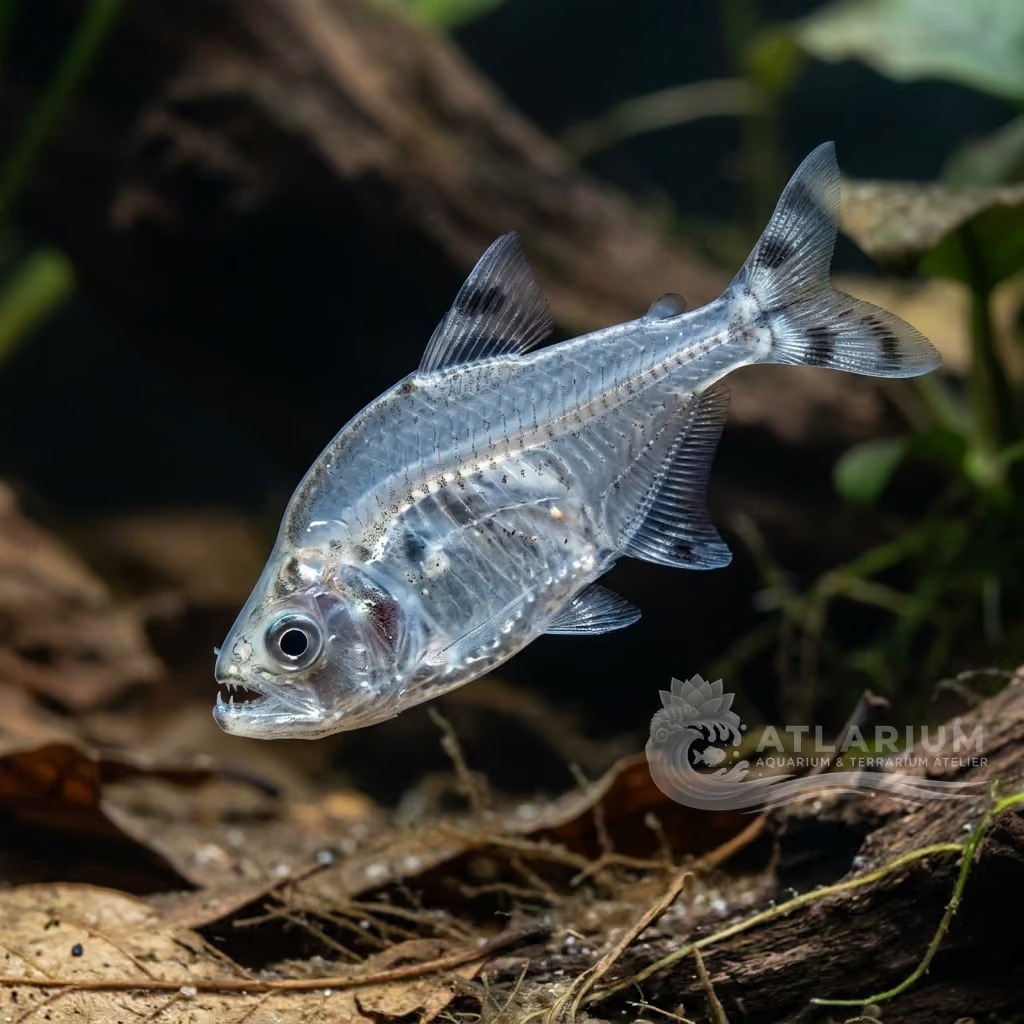
A tetra with a brilliant silver body and fins tinted in deep blood-red — spectacular in large schools under sidelight. Native to the Paraná basin and Argentina, it is one of the hardiest and longest-lived tetras: it can exceed 8 years with proper care and tolerates unusually low temperatures for a tropical (down to 18 °C). A fast, tireless swimmer, it enlivens the upper water column with ceaseless activity. A solid classic of fishkeeping, suitable for beginners and experts alike.
18 - 28 °C
6 - 8
Eau douce
Surface et milieu
5 cm
>= 80 L
>= 6
5 - 25 dGH
2 - 12 dKH
95 - 495 ppm
148 - 773 uS/cm

Description de l'espèce

Soins, reproduction et cohabitation

Origine et répartition géographiques
Origine

Profil de poisson
- Tempérament
- Peaceful
- Bloodfin tetras are generally peaceful, energetic, and highly active schooling fish that bring constant movement to the aquarium. They are not aggressive by nature, but their fast-swimming style can sometimes stress very shy or slow-moving tank mates. If kept in too small a group, they may exhibit mild fin-nipping behavior due to frustration or boredom. When housed in an adequate shoal, their focus remains on each other, resulting in peaceful coexistence with other community species.
- Régime alimentaire
- Omnivore
- In their natural habitat, bloodfin tetras are opportunistic omnivores feeding on small insects, crustaceans, and plant matter. In captivity, they are unfussy eaters that will readily accept high-quality dried flakes, granules, or micro-pellets. To encourage vibrant coloration and optimal health, their diet should be regularly supplemented with live or frozen foods. Offerings such as daphnia, brine shrimp, and bloodworms are highly beneficial and eagerly consumed.
- Espérance de vie
- 5-10 years
- Taille adulte
- 5 cm
- Ratio des sexes
- Group
- When stocking bloodfin tetras, there is no strict male-to-female ratio required, as they do not form harems or territorial pairs. Instead, they should be purchased as a mixed-sex group of at least six, and ideally ten or more, individuals. Keeping them in a larger group helps distribute any minor conspecific aggression and ensures they display natural shoaling behavior. In larger groups, males will engage in harmless sparring and showing off their vibrant red fins without causing injury.
- Fréquence d'alimentation
- Twice daily
- Bloodfin tetras should be fed small amounts once or twice daily, providing only what they can fully consume within two to three minutes. Because they are active swimmers with fast metabolisms, regular feeding keeps their energy levels high and colors vibrant. Care should be taken not to overfeed, as uneaten food will sink to the bottom and quickly degrade water quality. Occasional fasting for one day a week can also help maintain their digestive health.
- Charge biologique
- Low to Medium
- An individual bloodfin tetra has a relatively low biological waste impact due to its small adult size of around two inches. However, because they are schooling fish that must be kept in groups of at least six to eight individuals, their cumulative bioload is low-medium. To keep the water parameters stable and prevent waste accumulation, a reliable filter system with mechanical and biological filtration is recommended. Regular water changes of ten to fifteen percent weekly or twenty percent biweekly are essential to maintain low nitrate levels.
- Courant
- Strong
- These tetras prefer a moderate water flow that mimics the gently moving waters of their native river basins. While they are strong swimmers that can handle moderate to strong currents, they should also have access to calm areas where they can rest. A standard filter outlet or spray bar can easily generate the desired circulation without exhausting the fish. Integrating tall plants and decorations helps break up the current, creating ideal low-flow resting zones.
- Risque de saut
- Yes
- Due to their highly active and sometimes skittish nature, bloodfin tetras carry a high risk of jumping out of the aquarium. They can easily leap out of the water if startled by sudden movements, lights turning on, or during playful chases. It is highly recommended to equip their tank with a tight-fitting cover or lid without any gaps. Floating plants can also help cover the water surface, providing a natural barrier and making the fish feel more secure.
- Reproduction
- Oviparous
- Reproduction of bloodfin tetras is relatively straightforward and achievable for hobbyists. They are egg-scatterers that spawn in groups or pairs, often leaping slightly out of the water to deposit eggs on plants. A separate breeding tank equipped with spawning mops or fine-leaved plants like Java moss is necessary to protect the eggs. The parents must be removed immediately after spawning, as they will readily consume their own eggs and fry, which hatch in about twenty-four to thirty-six hours.
- Compatibilité et compagnons
- Peaceful
- The bloodfin tetra is an excellent candidate for a community aquarium with other active and peaceful species of similar size. Ideal tank mates include other hardy tetras, rasboras, corydoras catfish, danios, and peaceful dwarf cichlids. However, they should not be housed with slow-moving or long-finned species, such as angelfish or guppies, as the tetras may nip at their fins. Extremely small shrimp might also be viewed as food, though adult dwarf shrimp are usually safe in well-planted tanks.
- Niveau dans le bac
- Top/Middle
- Bloodfin tetras are active swimmers that primarily occupy the middle and upper levels of the water column. They are rarely seen resting on the bottom, preferring instead to navigate open spaces and dart among floating or tall plants near the surface. Providing a tank with plenty of open swimming area in these upper zones is crucial to accommodate their energetic behavior. High-growing stem plants and floating vegetation can offer security without obstructing their preferred swimming paths.

Modèles et paramètres scientifiques
Fenêtre sur les données scientifiques officielles de l’espèce
- Niveau trophique
- 3,2 ± 0,37 se
- Résilience
- Moyenne (1,4 - 4,4 ans)
- Singularité phylogénétique (PD50)
- 0.5005
- Relation bayésienne longueur-poids
- a = 0.01122, b = 3.04
- VulnérabilitéVulnérabilité faible (10 / 100)

Galerie d'images
Images sous licence liées à l'espèce ou, lorsqu'elles sont indiquées, au taxon représentatif le plus proche.

Espèces associées
Recommandations regroupées par proches parents, compagnons et soins similaires.