Cryptocoryne affinis
Cryptocoryne affinis
A legendary Malaysian rosette plant adapted to shaded limestone rivers. It produces deeply blistered, bullate leaves with reddish undersides. It thrives in low-light, hard water, but melts under intense LEDs.
Température de l’eau
22 - 28 °C
Valeur du pH
6 - 8
Type d'eau
Eau douce
Lumière
Faible
CO2
Faible
Hauteur attendue
15 cm
Largeur attendue
15 cm
GH
4 - 20 dGH
KH
3 - 21 dKH

Description de l'espèce
Geographical Origin and Habitat: Endemic exclusively to the central and northern regions of the Malay Peninsula (West Malaysia). Cryptocoryne affinis is a legendary, historically significant aquatic rosette plant. It thrives in the deeply shaded, fast-flowing, and heavily mineralized limestone rivers of the tropical rainforest. Unlike the vast majority of Cryptocoryne species that evolved in soft, highly acidic blackwater swamps, C. affinis uniquely evolved to anchor its massive root system deep into hard, calcareous clay and gravel beds, making it an extreme survivor in highly alkaline, calcium-rich waters.
Taxonomy & Genetics: Scientifically classified within the Araceae family, it was famously the very first Cryptocoryne species to be widely cultivated in the global aquarium hobby, earning massive popularity in the 1950s. Taxonomically, its genetics dictate a highly specific, low-lying rosette structure and a remarkable resistance to "Crypt Melt" in hard water. It produces a distinct, heavily twisted spathe (flower) when grown emersed, which is the absolute diagnostic feature used by botanists to genetically differentiate it from closely related Malayan species.
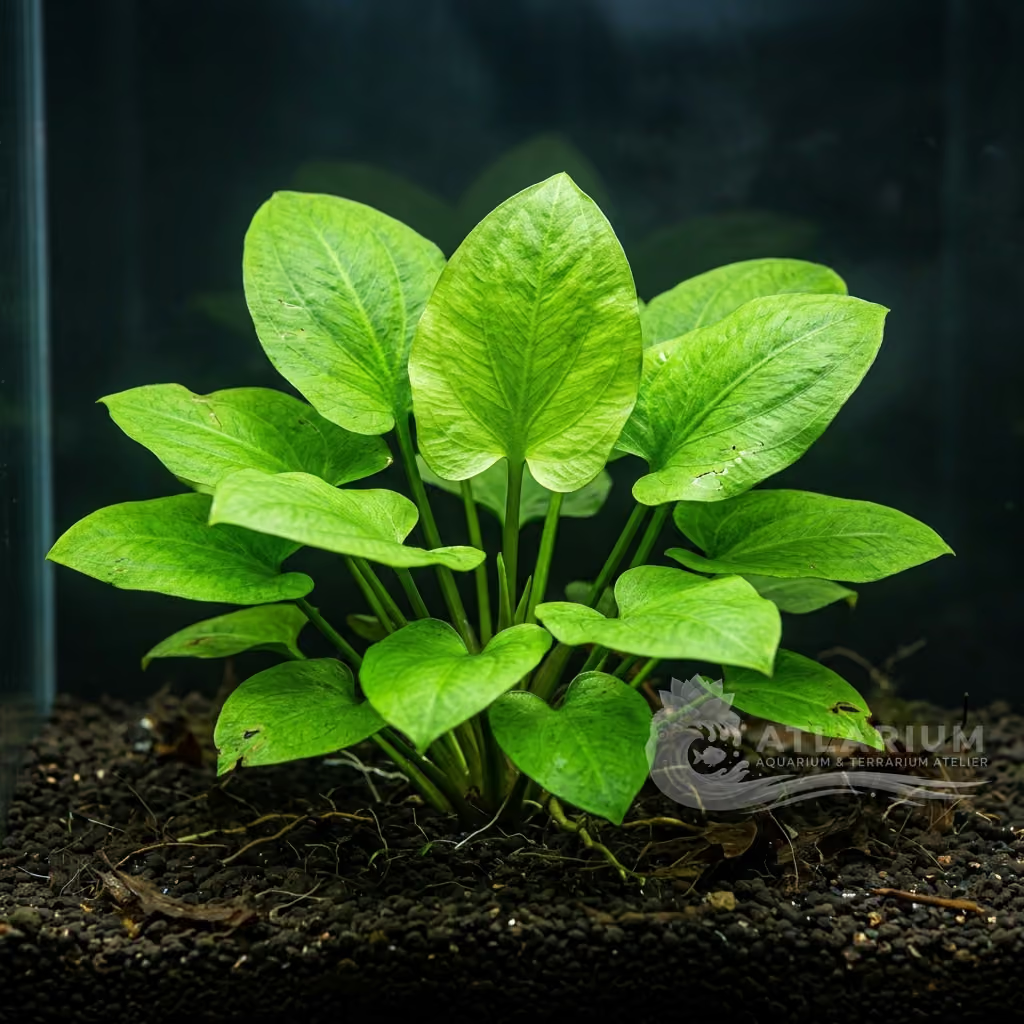
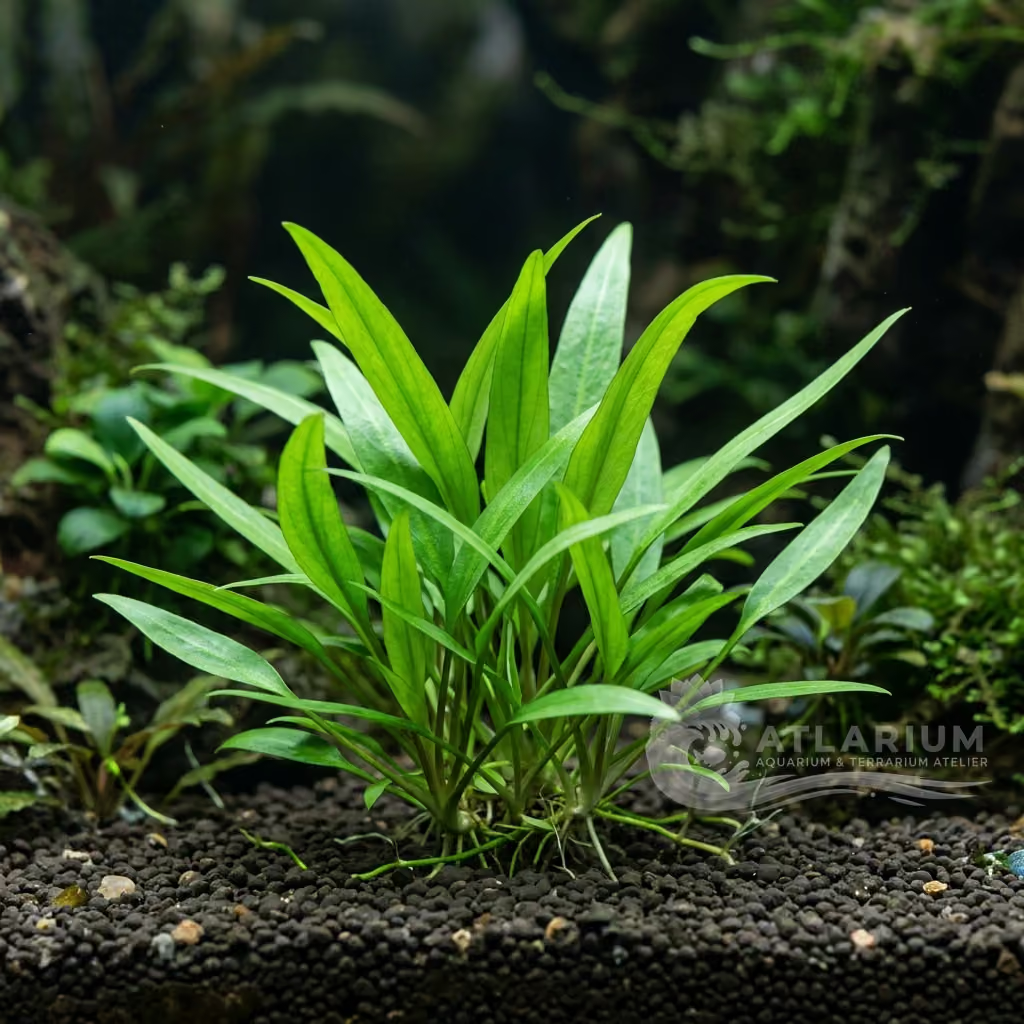
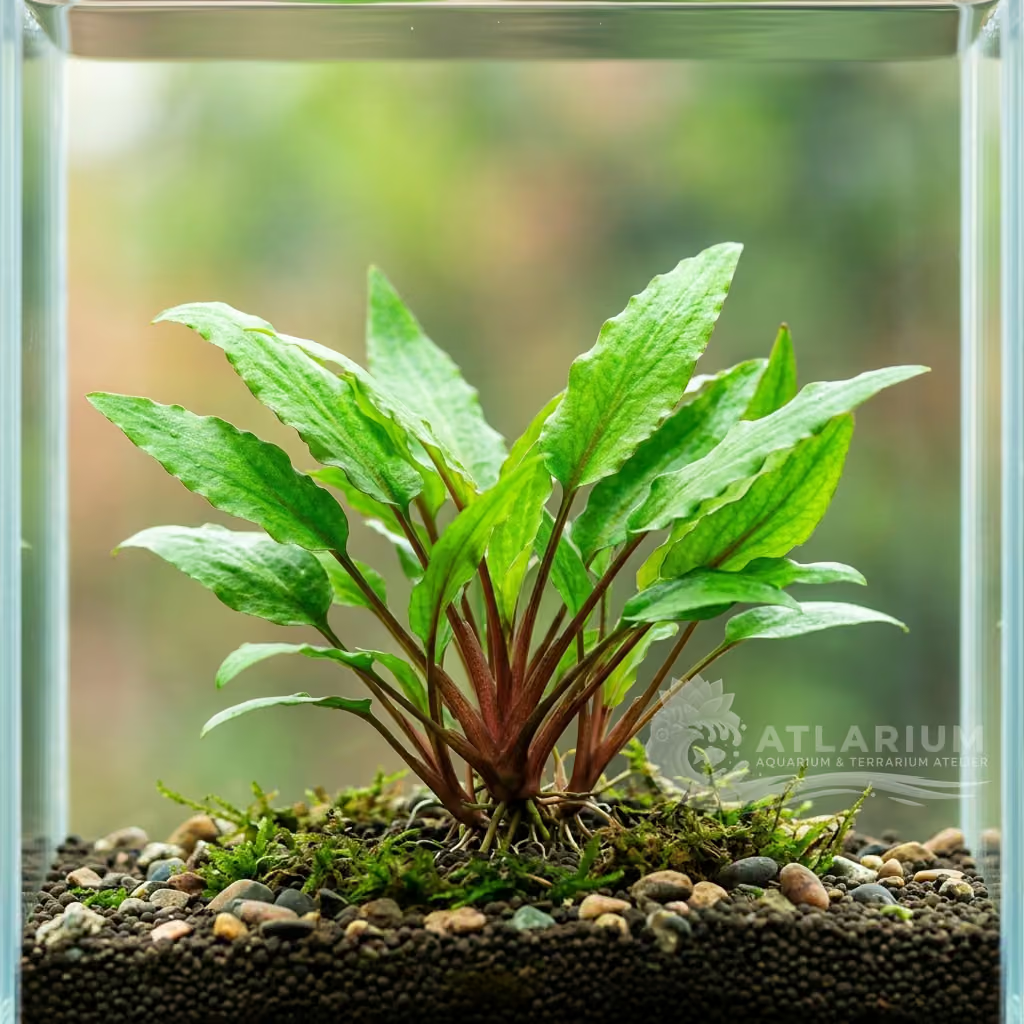
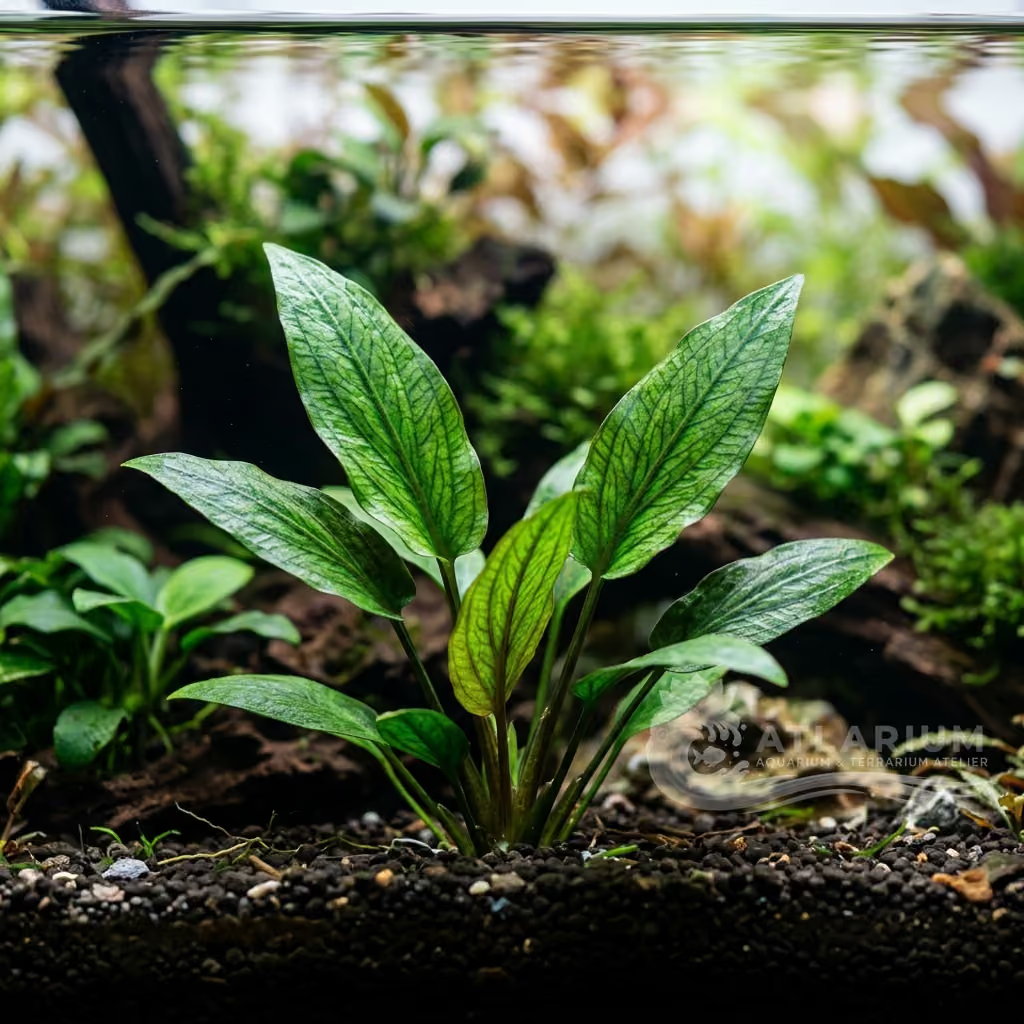
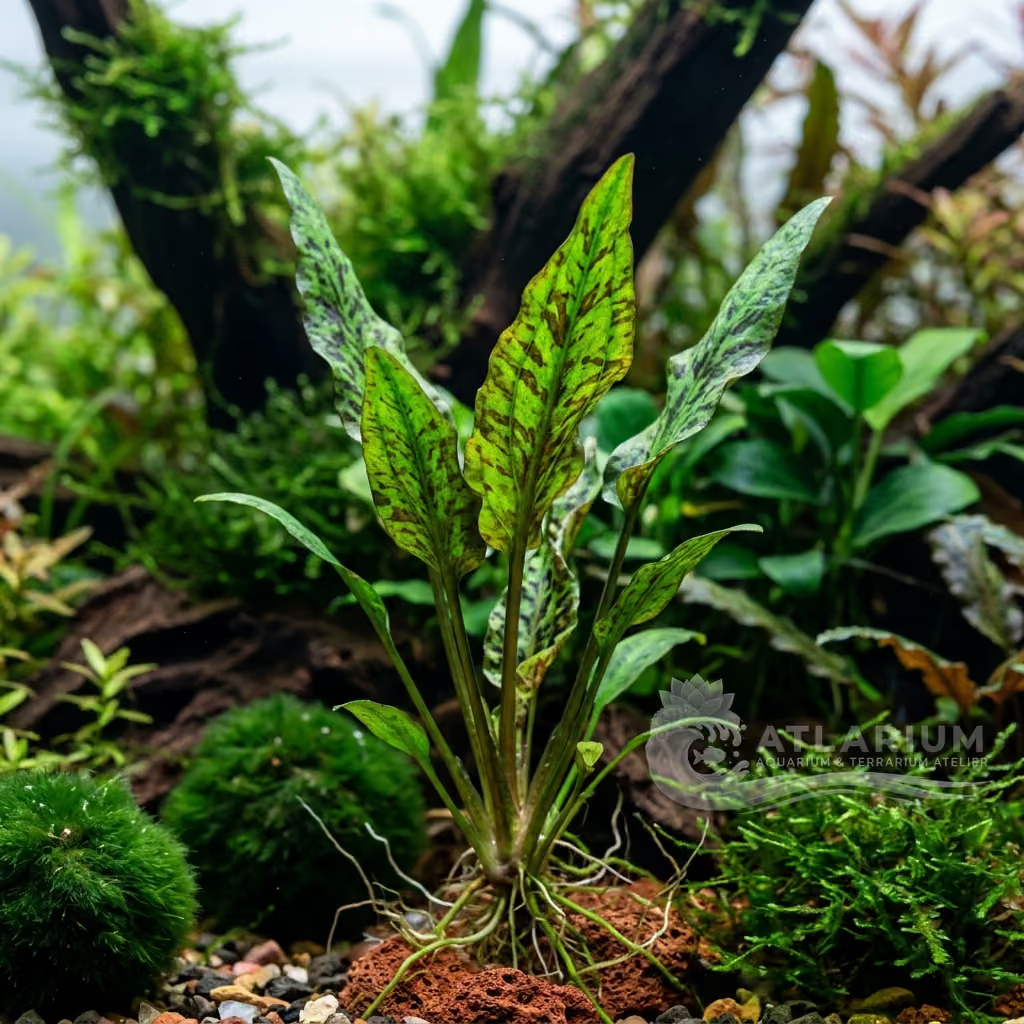
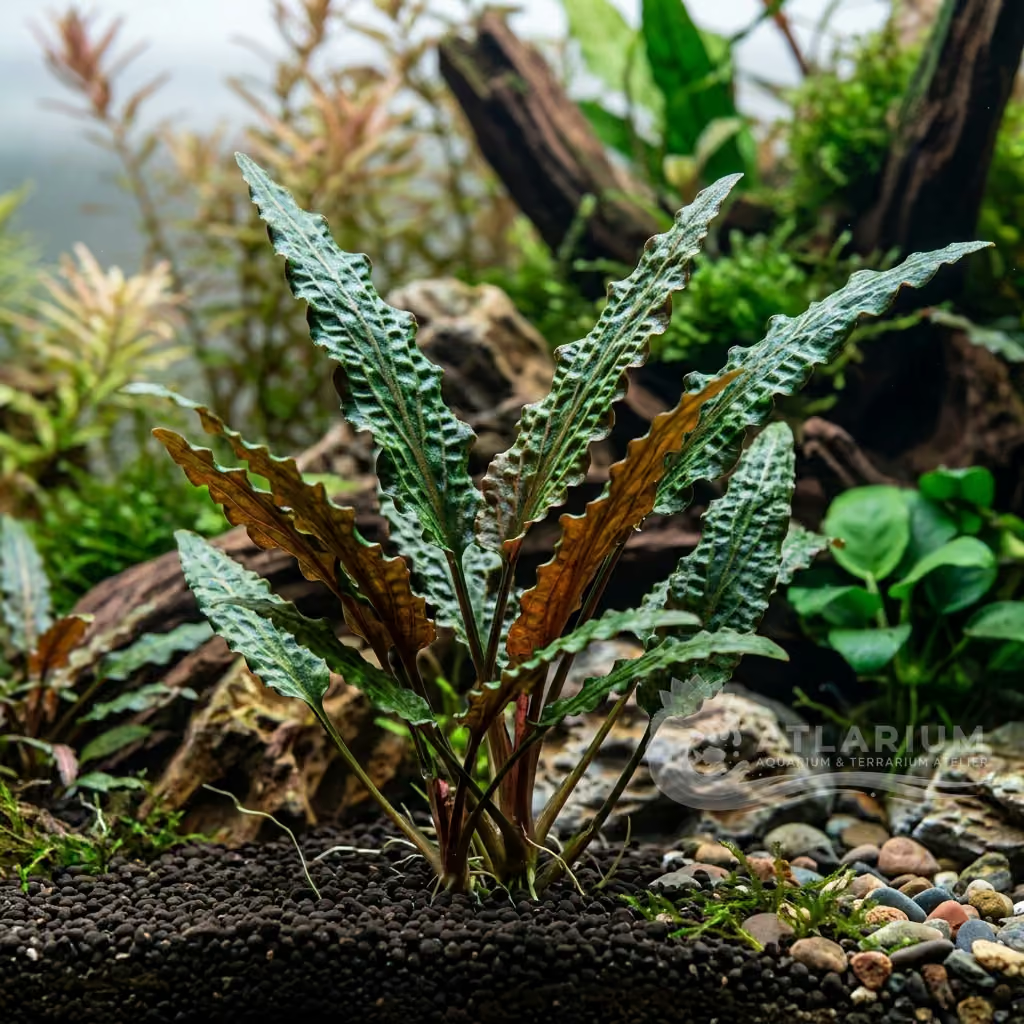
Physical Structure: The architectural structure of C. affinis is defined by a dense, sprawling central rosette that hugs the substrate. It completely lacks vertical stems. The foundation is a thick, fleshy underground rhizome that deploys a massive, extremely aggressive white root system. The leaves emerge directly from the rhizome on short, flexible petioles. The leaves themselves are distinctly lanceolate (spear-shaped), relatively soft, and beautifully textured with slightly ruffled or heavily hammered (bullate) surfaces, giving the plant a highly detailed, textured appearance.
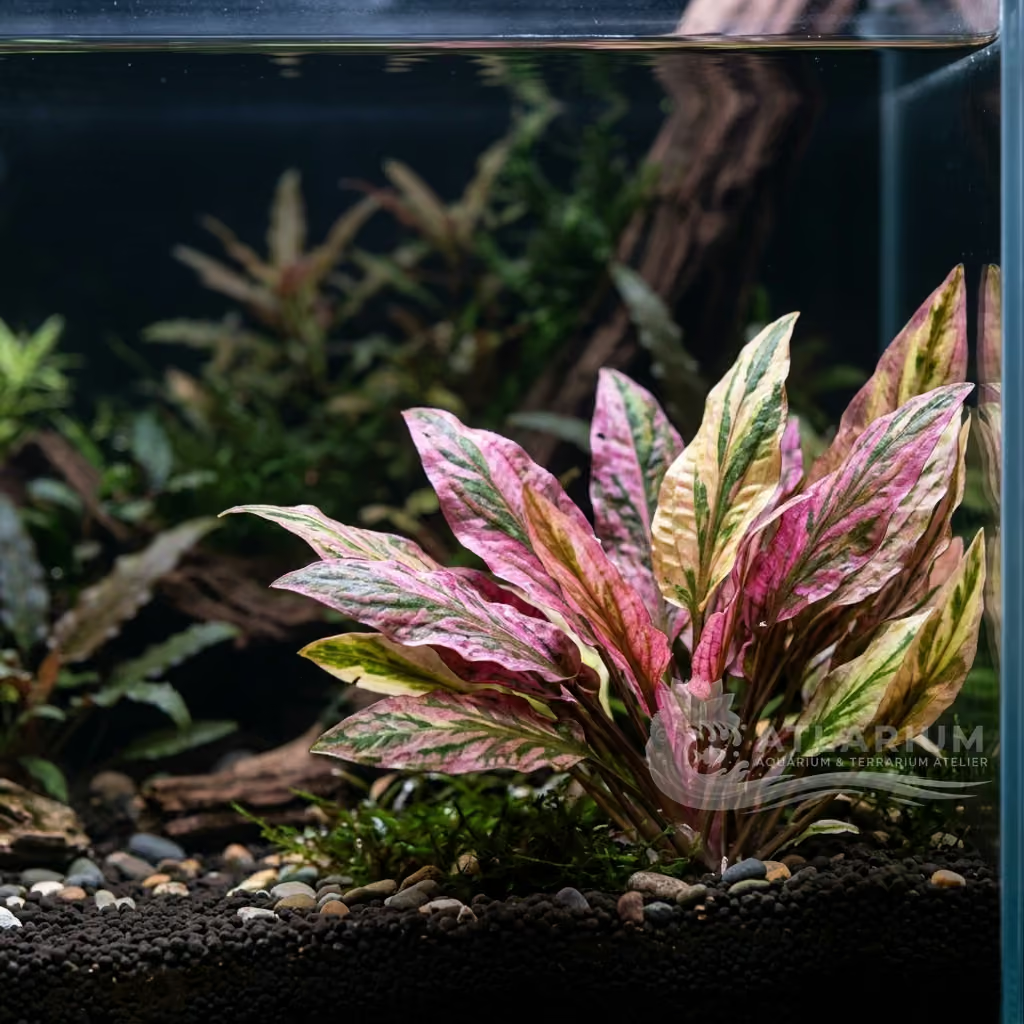
Color & Texture: The coloration is breathtaking and features a famous, highly striking two-toned effect. The upper surface of the heavily hammered leaves is a rich, silky, solid emerald green. Conversely, the underside of the leaves is a brilliant, glowing wine-red to deep magenta. This spectacular bi-color contrast is its defining aesthetic trait. The texture of the leaves is relatively soft and fleshy, unlike the rigid stiffness of Anubias, allowing the ruffled foliage to flutter gracefully in the aquarium current.

Soins, reproduction et cohabitation
Lighting & CO2: It is a shade-loving, slow-to-moderate growing plant that is exceptionally forgiving of low light. It will thrive effortlessly in deeply shaded, low-tech aquariums. If exposed to blasting, high-intensity LED lighting without heavy shading from floating plants, the plant will violently flatten itself against the substrate to escape the light, and its leaves will become severely stunted. Pressurized CO2 is completely unnecessary for its survival, but injecting it will significantly increase the size and deep red coloration of its beautiful leaves.
Nutrition & Substrate: Cryptocoryne affinis is an absolute, obligate root feeder. Its massive root system demands a deep (minimum 5 cm / 2 inches) substrate. Because it evolved in limestone rivers, it absolutely despises sterile sand. It MUST be planted in a heavily nutrient-dense aquasoil or a mature gravel bed heavily enriched with premium, iron-rich root tabs. If the substrate is depleted of nutrients, the plant will completely stop growing, and the older leaves will rapidly turn yellow and melt away. It absorbs very few nutrients directly from the water column.
Water Chemistry: This is its defining biological advantage: C. affinis is the undisputed king of hard water. While most Cryptocorynes melt in alkaline conditions, this species actually demands it. It thrives in standard tropical temperatures (22-26°C) but strongly prefers extremely hard, highly alkaline tap water (pH 7.2 - 8.5) loaded with calcium and magnesium. It completely rejects soft, acidic blackwater setups. It also prefers moderate to high water flow to simulate its native, rushing limestone rivers and to keep its ruffled leaves free of detritus.
Space Management & Placement: Due to its moderate size (10-15 cm height), dense sprawling habit, and spectacular two-toned green and red coloration, it is an elite midground or foreground plant. It should be planted in small groups directly in front of dark hardscape (wood or Seiryu stone) to highlight the wine-red undersides of its leaves. It spreads relentlessly by sending out long subterranean runners beneath the substrate, eventually forming a massive, incredibly dense, connected colony that acts as a stunning, textured bush.
Pruning: Pruning is a very simple, low-maintenance procedure. Never attempt to trim a Cryptocoryne leaf in half; the cut edge will instantly rot. To prune dead, yellowing, or algae-covered leaves, reach down to the base of the rosette and cleanly snap or cut the petiole as close to the gravel as possible. To control its relentless spread, you must physically dig into the substrate and cleanly sever the subterranean runner connecting the baby plant to the mother rhizome, then uproot the clone.
Risks & Diseases: Like all species in its genus, C. affinis is highly vulnerable to the legendary "Crypt Melt." Any sudden, massive fluctuation in environmental conditions—especially a sudden crash in pH, a massive temperature drop, or uprooting the plant—will cause the plant to panic and violently dissolve all of its leaves into a slimy, foul-smelling mush overnight. However, unlike softer species, the massive fleshy rhizome of C. affinis almost never dies; leave the melted stump in the gravel, and it will regrow an entirely new set of leaves within weeks.

Origine et répartition géographiques
Endemic exclusively to the central and northern regions of the Malay Peninsula (West Malaysia). Cryptocoryne affinis is a legendary, historically significant aquatic rosette plant. It thrives in the deeply shaded, fast-flowing, and heavily mineralized limestone rivers of the tropical rainforest. Unlike the vast majority of Cryptocoryne species that evolved in soft, highly acidic blackwater swamps, C. affinis uniquely evolved to anchor its massive root system deep into hard, calcareous clay and gravel beds, making it an extreme survivor in highly alkaline, calcium-rich waters.
Origine
Asie du Sud et du Sud-Est

Profil de plante
- Emplacement
- Plan intermédiaire
- With its moderate height, it is an excellent choice for the midground or foreground of medium to large aquariums. Planting several individual rosettes a few inches apart will eventually allow them to form a dense, striking bush or carpet. Its dark green tops and purplish undersides provide excellent contrast against lighter green plants or hardscape. It thrives even in heavily shaded areas beneath taller plants.
- Forme botanique
- Rosette
- This classic rosette plant features slightly hammered, lanceolate leaves that grow in a dense cluster from a central rhizome. The foliage is unique, showcasing a silky, olive-to-dark green upper surface and a striking reddish-purple underside. Its stems are relatively short, keeping the plant compact and close to the substrate. The leaves have a slightly stiff, leathery texture that is characteristic of the genus.
- Croissance
- Lente
- Like most Cryptocorynes, its growth rate is relatively slow but steady once it has successfully acclimated to the tank. It requires significant patience, as it may pause growth entirely or melt away when first introduced before sending out new, adapted leaves. In optimal conditions with rich substrate, it will steadily produce runners, gradually spreading across the tank floor. Lighting intensity has minimal effect on its overall growth speed.
- Substrat
- Élevé
- A deep, mature, and nutrient-dense substrate is highly beneficial for this species, as it possesses a robust and extensive root system. While it can adapt to sand or plain gravel, its growth will be stunted unless heavily supplemented with root tabs. Aquasoils enriched with laterite or clay are ideal, mimicking its natural habitat in mineral-rich streams. The substrate must not be disturbed frequently, as root damage can also induce melting.
- Fertilisation de la colonne d'eau
- Recommandée
- Water column fertilization should be kept minimal and consistent, as it derives the majority of its sustenance from its roots. Light dosing of a complete liquid fertilizer ensures that trace elements and potassium are available without fueling algae growth. Excessive nitrates or phosphates in the water column do little to enhance its growth and can destabilize the tank. Focus primarily on maintaining clean, stable water chemistry.
- Fertilisation racinaire
- Aucune
- Root fertilization is the absolute key to success with Cryptocoryne affinis, as it is an obligate root feeder. Inserting high-quality, iron-rich root tabs deep beneath the rosette will result in significantly healthier and more vibrant foliage. These should be replenished every few months to ensure continuous nutrient availability. A well-fed root system is also the best defense against environmental stress and Crypt melt.
- Taille
- Occasionnelle
- Trimming is straightforward and simply involves removing older, deteriorating, or algae-covered leaves. Cut the leaf stem as close to the base of the rosette as possible using curved scissors. Avoid massive trims, as the plant grows slowly and relies on its existing leaves for energy.
- Propagation
- Division du rhizome, Stolons
- Propagation happens naturally through the production of subterranean runners that sprout new rosettes a short distance from the mother plant. Once a daughter plant has developed several leaves of its own, the runner connecting them can be snipped. The new plant can then be carefully uprooted and relocated if desired. Uprooting should be done gently to minimize disturbance to the surrounding substrate and other plants.
- Sensibilité
- Modérée
- Cryptocoryne affinis is susceptible to 'Crypt melt', a condition where its leaves dissolve quickly when subjected to sudden environmental changes. Maintaining stable water parameters, lighting, and temperature is crucial to prevent this. If melting occurs, leave the root system undisturbed, as it will often bounce back with new leaves.
- Rôle dans le décor
- Plan intermédiaire, Premier plan
- Its unique texture and striking underside coloration make it an excellent transition plant in aquascaping. It provides a natural, slightly wild look when planted around the base of hardscape materials like rocks or driftwood. It is highly valued for adding depth and contrast to the midground.

Galerie d'images
Images sous licence liées à l'espèce ou, lorsqu'elles sont indiquées, au taxon représentatif le plus proche.

Espèces associées
Recommandations regroupées par proches parents, compagnons et soins similaires.