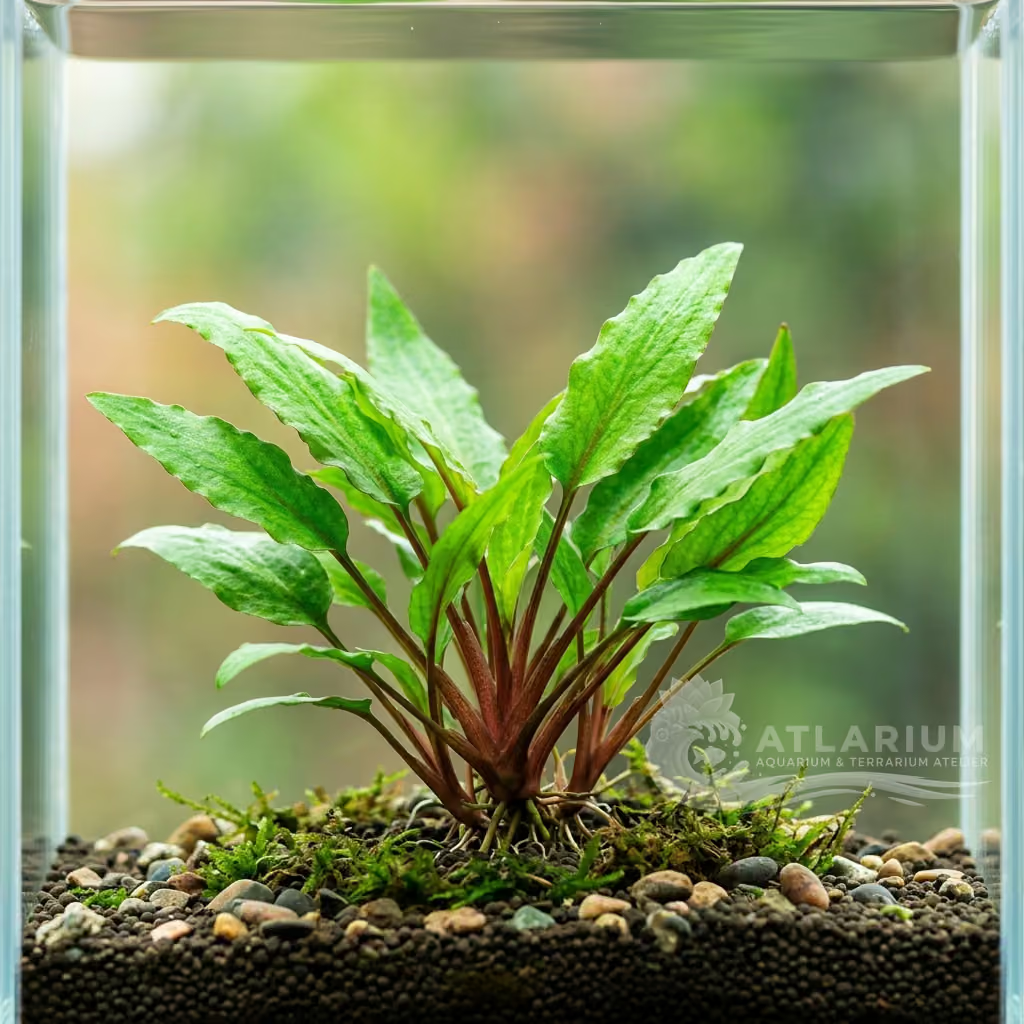
Anubias
Anubias barteri
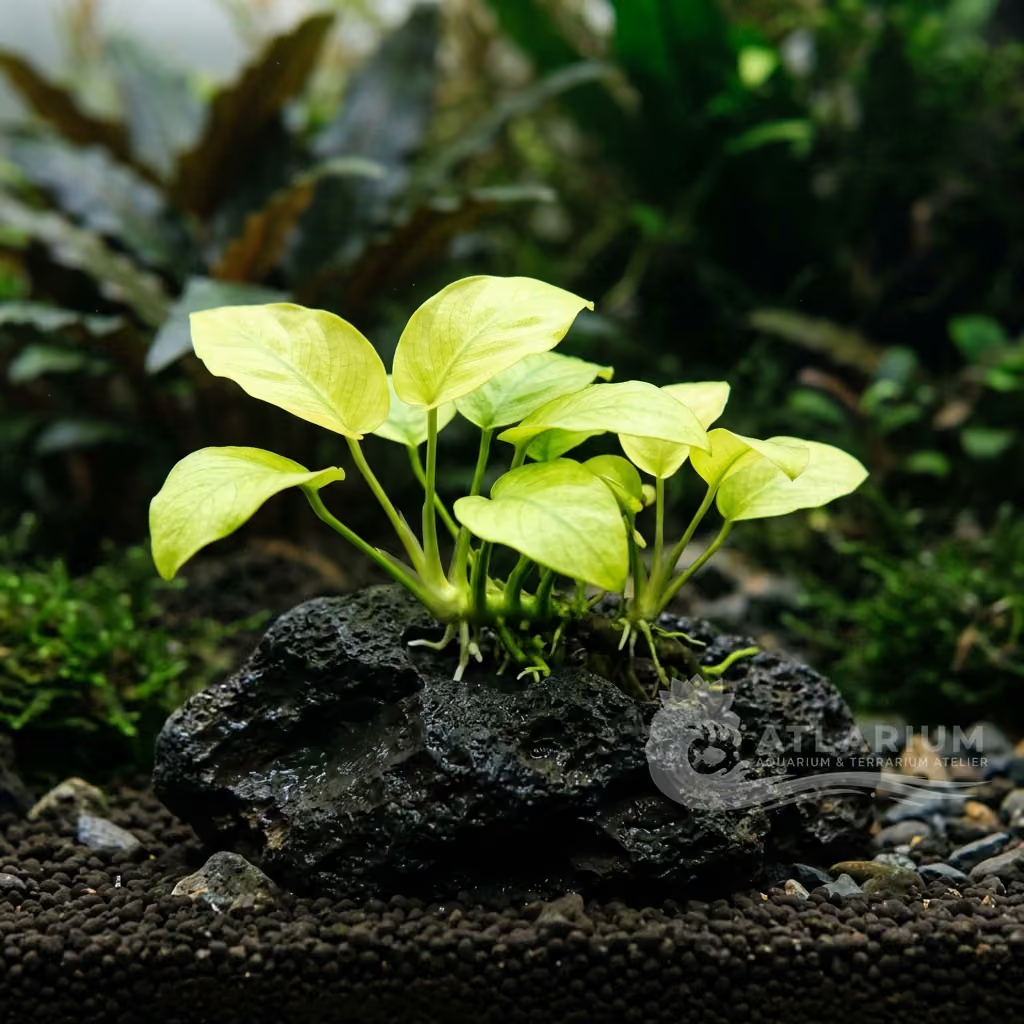
The Indestructible Bulletproof Plant (Epiphyte). Anubias barteri is the undisputed king of beginner planted tanks and aggressive fish setups (like African Cichlids or Goldfish). Its thick, dark-green, leathery leaves are virtually plastic-like, making it unappetizing to herbivores. It must be attached to wood or rocks; burying the rhizome will rot and kill it.
Température de l’eau
22 - 28 °C
Valeur du pH
6 - 8
Type d'eau
Eau douce
Lumière
Bassa
CO2
Bassa
Hauteur attendue
15 cm
Largeur attendue
15 cm
GH
2 - 20 dGH
KH
1 - 15 dKH

Description de l'espèce
Geographical Origin and Habitat: Anubias barteri is native to tropical Western Africa, widely distributed across countries like Cameroon, Nigeria, Liberia, Ivory Coast, and Guinea. In its natural habitat, it grows along the banks of shaded forest streams and fast-flowing rivers. It anchors itself firmly to porous rocks and submerged or semi-submerged wood. The species is rheophilic, adapted to withstand strong water currents when fully submerged during the rainy season and to survive emersed in high humidity under the dense forest canopy during the dry season.
Taxonomy & Genetics: Belonging to the Araceae family, the genus Anubias is named after Anubis, the Egyptian god of the underworld, referencing the plant's preference for deep, shaded areas. The species was first described in the 19th century and named in honor of collector Charles Barter. It is a highly polymorphic species with several recognized varieties (including nana, caladiifolia, and angustifolia). Genetically, it is a diploid plant characterized by an extremely conservative metabolism, resulting in a very slow growth rate.
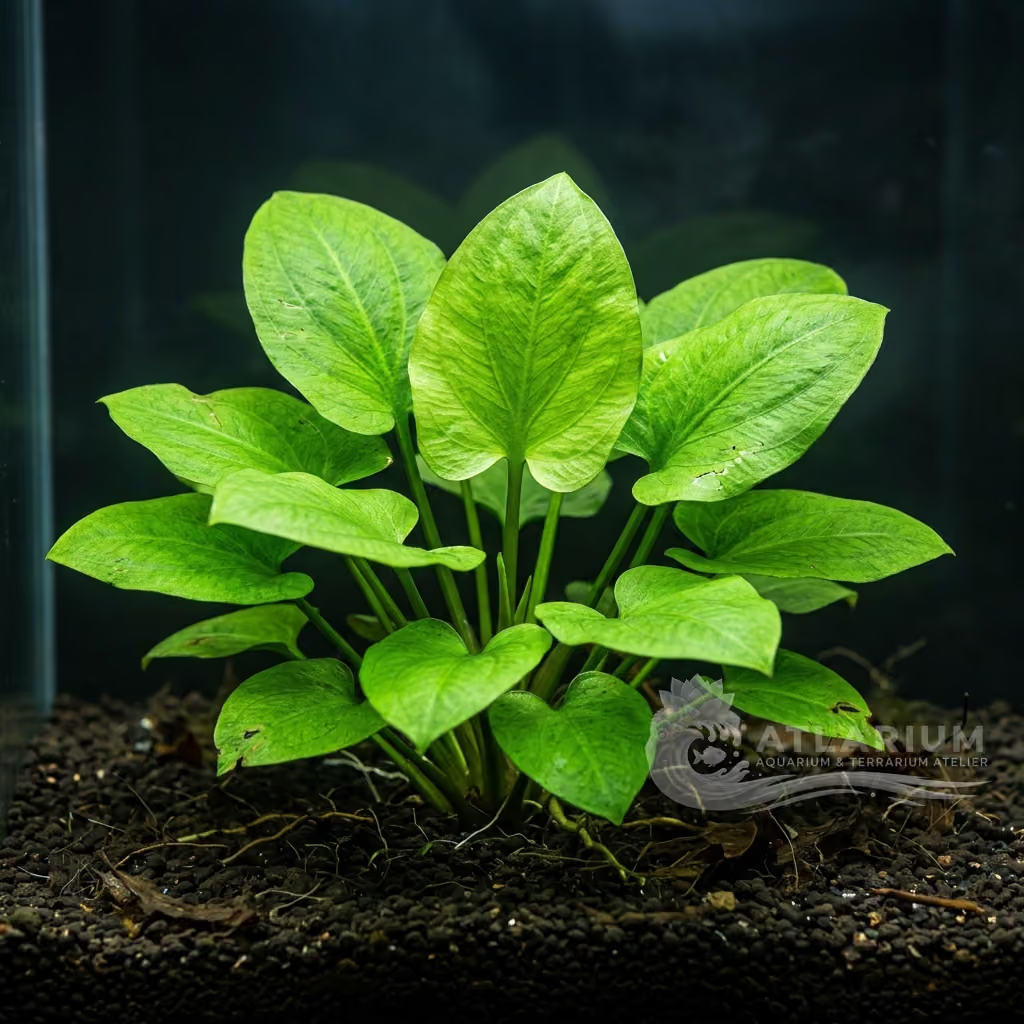
Physical Structure: The plant's anatomy centers on a thick, horizontal, creeping rhizome that acts as a primary energy storage organ. From this rhizome, tough adventitious roots and long leaf petioles emerge. The leaves have a thick, leathery lamina, ranging from ovate to lanceolate, with smooth margins and a prominent central vein from which secondary parallel veins branch outward.
Color & Texture: Adult leaves display a deep, rich dark green color with a glossy finish on the upper surface, while the underside is slightly lighter and matte. The texture is extremely tough, rigid, and leathery to the touch—a crucial evolutionary adaptation that protects the foliage from being damaged by strong river currents or consumed by herbivorous fish.

Soins, reproduction et cohabitation
Lighting & CO2: This plant requires low to moderate lighting. Under high-intensity light, its slow-growing foliage quickly becomes covered in nuisance algae. CO2 injection is not necessary for survival, but low to moderate levels (5-10 mg/L) will promote more compact and vigorous leaf development.
Nutrition & Substrate: Anubias barteri is an epiphytic plant and must never be planted with its rhizome buried in the substrate. If the rhizome is covered with sand or gravel, the lack of oxygenation will lead to rot and the death of the plant. It should be tied or glued to rocks or driftwood, drawing nutrients directly from the water column.
Water Chemistry: It exhibits exceptional tolerance to various chemical parameters. It survives in temperatures between 22 and 28°C (72-82°F), with an optimal pH range of 6.0 to 8.0. It tolerates both soft and extremely hard water (high dKH), making it ideal for African Cichlid aquariums.
Space Management & Placement: It should be positioned mainly in the midground or foreground, anchored to the hardscape. It is crucial to place it in partial shade, sheltered from direct LED light, preferably under floating plants or tall stem plants that filter the light.
Pruning: Propagation is achieved by dividing the rhizome with a clean cut using sharp, sterilized blades. Each divided portion must have at least 3-4 healthy leaves and some roots. Damaged or yellowing leaves can be removed by cutting the petiole close to the rhizome.
Risks & Diseases: The main risk is rhizome rot if buried or infected. Due to its slow growth, the leaves are also a magnet for Black Beard Algae (BBA) and Green Spot Algae (GSA) in the presence of excess light or nutrient imbalances, particularly phosphates.

Origine et répartition géographiques
Anubias barteri is native to tropical Western Africa, widely distributed across countries like Cameroon, Nigeria, Liberia, Ivory Coast, and Guinea. In its natural habitat, it grows along the banks of shaded forest streams and fast-flowing rivers. It anchors itself firmly to porous rocks and submerged or semi-submerged wood. The species is rheophilic, adapted to withstand strong water currents when fully submerged during the rainy season and to survive emersed in high humidity under the dense forest canopy during the dry season.
Origine
Afrique et Madagascar

Profil de plante
- Emplacement
- Plan intermédiaire
- This species works exceptionally well in the midground of the aquarium, depending on the overall tank size. It should ideally be attached to hardscape materials such as driftwood or rocks using thread or aquarium-safe glue. If planted in the substrate, it is absolutely critical to keep the rhizome exposed above the soil to prevent it from rotting.
- Forme botanique
- Épiphyte
- Anubias barteri features large, somewhat variable, teardrop-shaped leaves that stand out in any planted aquarium. The leaves grow from a thick, creeping rhizome that anchors the plant to various surfaces. Its sturdy, leathery foliage is highly resilient, making it a great option for aquariums with herbivorous fish.
- Croissance
- Very slow
- Like most Anubias species, Anubias barteri exhibits a steady but slow growth rate. You can expect it to produce only one or two new leaves per month under standard aquarium conditions. Providing slightly higher carbon dioxide levels and optimal fertilization can marginally speed up this process, but it remains a slow grower. This slow pace makes it an excellent choice for low-maintenance setups.
- Substrat
- Aucun
- As a classic epiphytic plant, Anubias barteri thrives best when attached to hardscape materials like driftwood or stones instead of being planted in soil. The central rhizome strictly requires exposure to open water, as burying it in any fine or compacted substrate will quickly lead to decay. Its resilient roots primarily serve as holdfasts that firmly grip textured surfaces, though they can loosely trail into inert gravel. Nutrient uptake occurs entirely through the leaves and exposed root system, making water-column fertilization much more important than a fertile substrate.
- Fertilisation de la colonne d'eau
- Facultative
- Liquid fertilization in the water column is the primary and most effective method for feeding Anubias barteri. A comprehensive liquid fertilizer applied weekly or bi-weekly will provide all the necessary trace elements and macronutrients. Since it is a slow grower, lean dosing is highly recommended to avoid excess nutrients accumulating in the water.
- Fertilisation racinaire
- Aucune
- Root tabs or nutrient-rich substrates are generally unnecessary for Anubias barteri. Because it is an epiphyte that prefers to be attached to hardscape, its roots primarily serve an anchoring function rather than a nutrient-absorbing one. Even if planted in the substrate, the plant relies more heavily on water column fertilization than root feeding.
- Taille
- Occasionnelle
- Trimming is rarely required due to its very slow growth rate. When pruning is necessary, simply cut the leaves as close to the rhizome as possible using sharp aquascaping scissors. Always remove any yellowing, damaged, or algae-covered leaves to maintain the plant's aesthetic appeal and overall health.
- Propagation
- Rhizome division
- Propagating Anubias barteri is a simple and straightforward process. You simply cut the main rhizome into two or more pieces, ensuring each new section has at least three to four healthy leaves attached. These new sections can then be tied or glued to new pieces of hardscape, where they will eventually develop into full plants.
- Sensibilité
- Modérée
- This plant is incredibly hardy and tolerates a wide range of water parameters and temperatures. However, its slow-growing, broad leaves are particularly susceptible to spot algae and black beard algae if light intensity is too high. It is recommended to place it in shaded areas of the aquarium to mitigate this risk.
- Rôle dans le décor
- Plan intermédiaire, Premier plan, Épiphyte
- Its unique leaf shape makes it an excellent midground anchor. It is often used to bridge the gap between different aquascaping elements or provide shelter for small fish and shrimp. The rich green foliage provides a strong visual anchor and adds a sense of maturity to the aquascape.

Galerie d'images
Images sous licence liées à l'espèce ou, lorsqu'elles sont indiquées, au taxon représentatif le plus proche.

Espèces associées
Recommandations regroupées par proches parents, compagnons et soins similaires.