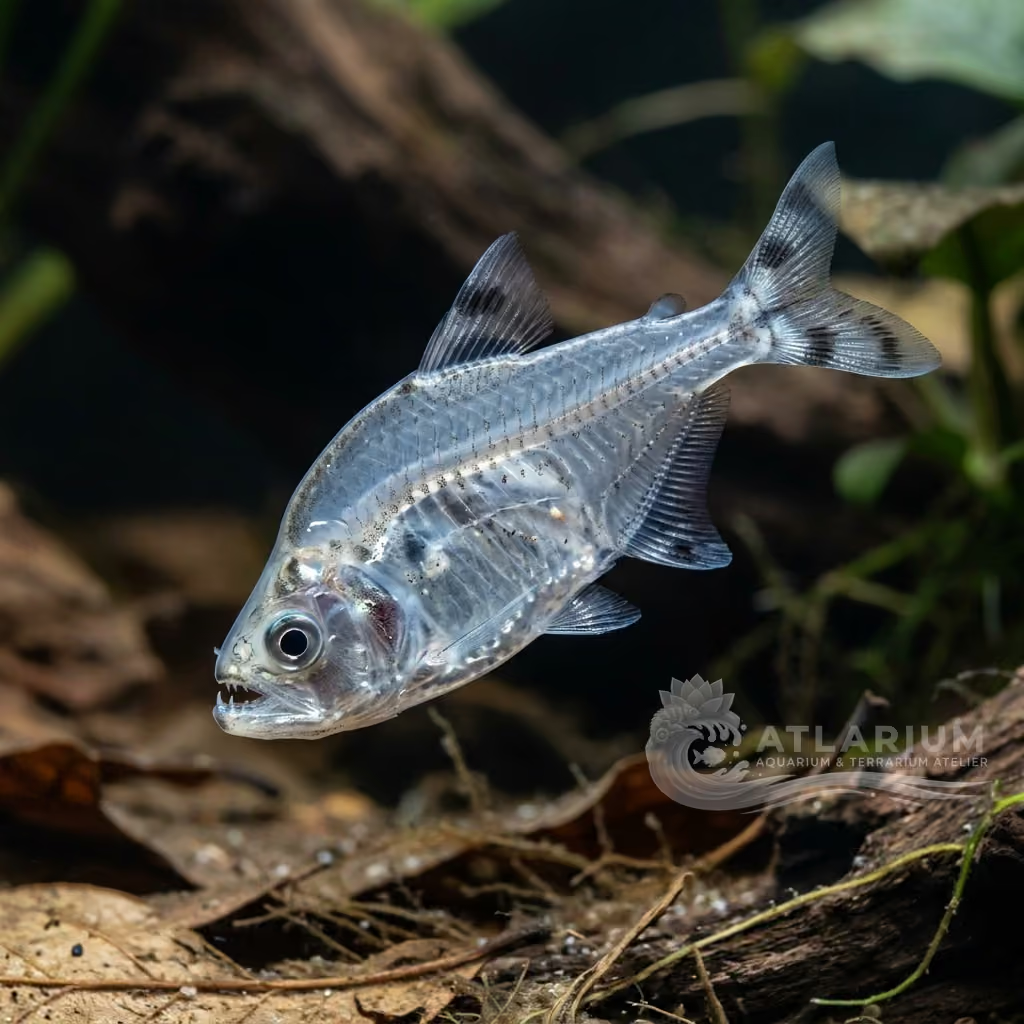
Amazon red-tail tetra
Aphyocharax dentatus
A larger, more assertive relative of the common bloodfin tetra, reaching about 7 cm and showing a semi-aggressive temperament that clearly distinguishes it from more docile characins. The silver body with a pinkish-orange sheen on the caudal fins makes it visually appealing in schools of 5 or more. A fast swimmer almost always in motion, it is often used as a dither fish for medium-sized, semi-aggressive South American cichlids. Not to be confused with smaller, peaceful relatives like A. rathbuni.
22 - 28 °C
6 - 7.5
Eau douce
Surface et milieu
7 cm
>= 110 L
>= 5
5 - 15 dGH
2 - 7 dKH
95 - 295 ppm
148 - 461 uS/cm

Description de l'espèce

Soins, reproduction et cohabitation

Origine et répartition géographiques
Origine

Profil de poisson
- Tempérament
- Semi-aggressive
- The temperament of Aphyocharax dentatus is semi-aggressive and highly active, making them quite different from typical peaceful tetras. They have a tendency to nip fins and can be aggressive, particularly toward slower or long-finned tankmates. To manage this behavior, they must be kept in a sizable group of their own kind, which keeps their focus on internal hierarchy rather than harassing other species. Providing plenty of hiding spots and visual barriers also helps reduce territorial stress.
- Régime alimentaire
- Omnivore
- Aphyocharax dentatus is an omnivore with strong carnivorous and occasionally piscivorous tendencies. In their natural habitat, they feed on small insects, aquatic larvae, zooplankton, and sometimes fry or smaller fish. In the aquarium, they should be offered a varied diet consisting of high-quality flakes, micro-pellets, and regular feedings of live or frozen foods such as brine shrimp, daphnia, and bloodworms. A protein-rich diet is essential to maintain their energy levels and intense coloration.
- Espérance de vie
- 5-10 years
- Taille adulte
- 7 cm
- Ratio des sexes
- Group
- For general aquarium stocking, Aphyocharax dentatus is best kept in a mixed school rather than a specific male-to-female ratio. A group of at least 6 to 8 individuals is strongly recommended to establish a natural social hierarchy and dilute any internal aggression. If breeding is the goal, pairing them in a 1:1 ratio or setting up a small group with a slightly higher ratio of females to males is ideal. A larger group ensures that subdominant fish are not singled out for bullying.
- Fréquence d'alimentation
- Twice daily
- To match their high metabolism and active lifestyle, Aphyocharax dentatus should be fed once or twice daily. Food should be offered in small amounts that they can completely consume within two to three minutes. Overfeeding must be avoided, as uneaten food will quickly decay and degrade the water quality. Providing a varied feeding schedule with alternating dry and frozen foods keeps them healthy and active.
- Charge biologique
- Low to Medium
- Aphyocharax dentatus has a low-medium biological load due to its relatively small size (5–7 cm) and active nature. However, because of their fast metabolism and semi-carnivorous feeding habits, they produce more waste than smaller, sedentary tetra species. A high-quality filtration system with moderate turnover and regular partial water changes is essential to maintain pristine water conditions. Keeping nitrate levels low is critical for their long-term health and vibrant coloration.
- Courant
- Strong
- Native to the flowing river basins of Paraguay and Paraná, Aphyocharax dentatus prefers moderate to strong water currents in the aquarium. A noticeable flow stimulates their natural swimming instincts and helps them burn off energy, resulting in healthier muscular development. The filtration output should be positioned to create structured currents while still leaving some calmer areas near plants where the fish can rest. Utilizing a spray bar or powerhead can effectively replicate their native riverine habitats.
- Risque de saut
- Yes
- Aphyocharax dentatus poses a significant jump risk due to its high activity level and skittish nature when startled. They are agile swimmers capable of launching themselves out of the water, especially during feeding times, tank maintenance, or social chasing. It is absolutely essential to secure the aquarium with a tightly fitting lid or cover slides to prevent escapes. Floating plants can also help diffuse light and reduce the likelihood of them jumping by providing natural cover.
- Reproduction
- Oviparous
- Aphyocharax dentatus is an egg-scattering species, and breeding them in captivity is considered moderately challenging. Successful spawning requires a dedicated breeding tank with soft, slightly acidic water, dense fine-leaved plants like Java moss, or a spawning grid to protect the eggs. The parent fish will readily eat their own eggs and must be removed immediately after spawning is complete. The eggs hatch within 24 to 36 hours, and the fry must be fed infusoria or freshly hatched brine shrimp once they become free-swimming.
- Compatibilité et compagnons
- Community
- Due to their fin-nipping habits and active nature, Aphyocharax dentatus is compatible only with robust, fast-moving tankmates of similar size. Ideal tankmates include active barbs, rasoras, robust tetras, and bottom-dwelling species like Corydoras or smaller catfish. They should never be housed with slow-swimming, long-finned, or delicate species such as Angelfish, Bettas, or Guppies, which would easily become targets for bullying. Keeping them in a large school is key to ensuring peaceful coexistence in a community tank.
- Niveau dans le bac
- Top/Middle
- This active species primarily occupies the middle and upper levels of the water column. They require plenty of open swimming space in these zones to satisfy their energetic behavior and schooling tendencies. Providing dense vegetation along the back and sides of the tank while leaving the top-middle area free of obstructions will make them feel secure while allowing room to swim. They rarely venture to the bottom of the tank, except occasionally to grab falling food.

Modèles et paramètres scientifiques
Fenêtre sur les données scientifiques officielles de l’espèce
- Niveau trophique
- 3,4 ± 0,4 se
- Singularité phylogénétique (PD50)
- 0.5005
- Relation bayésienne longueur-poids
- a = 0.01047, b = 3.04
- VulnérabilitéVulnérabilité faible (10 / 100)

Galerie d'images
Images sous licence liées à l'espèce ou, lorsqu'elles sont indiquées, au taxon représentatif le plus proche.

Espèces associées
Recommandations regroupées par proches parents, compagnons et soins similaires.