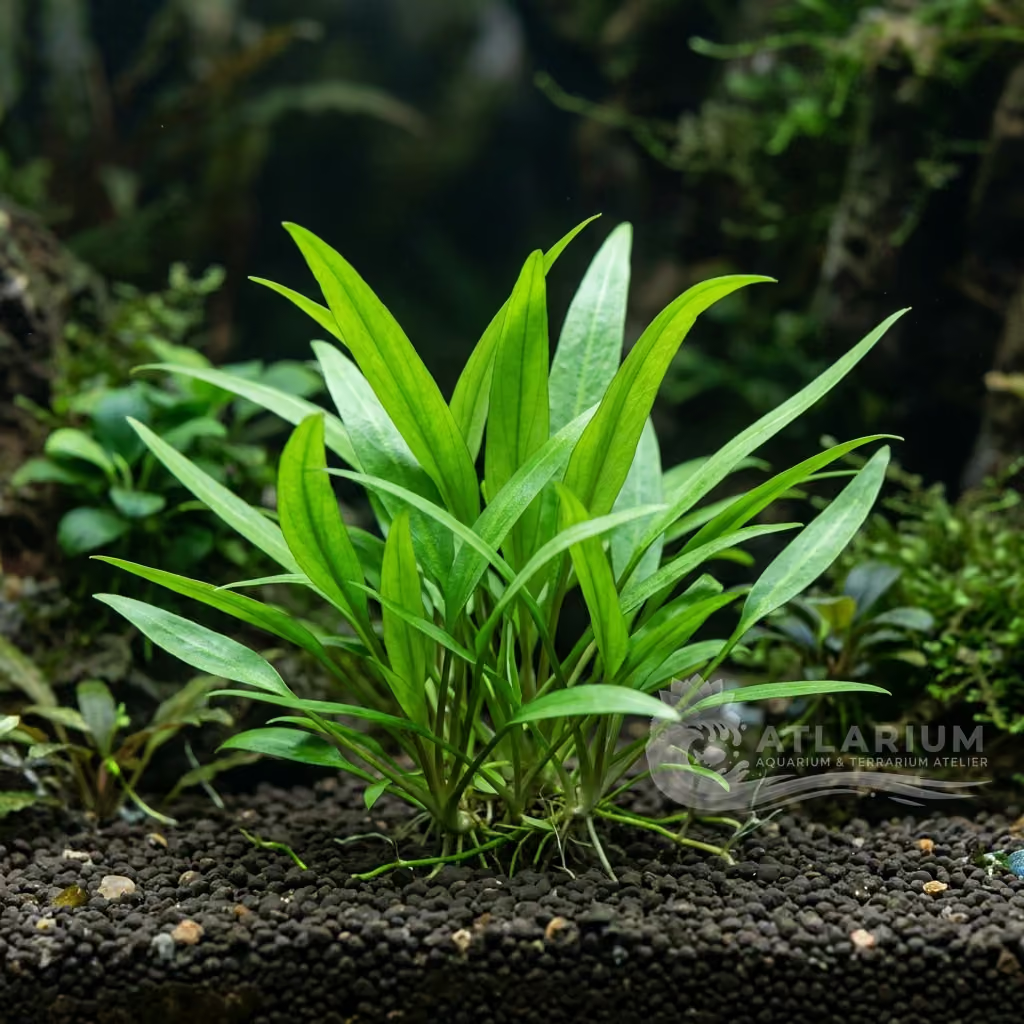
Bucephalandra pygmaea "Kapit"
Bucephalandra pygmaea
An extreme shade-dwelling micro-rheophyte from the isolated jungle watersheds of Kapit, Borneo. Needs protection from intense, direct lighting to thrive.
Température de l’eau
20 - 26 °C
Valeur du pH
6 - 7.5
Type d'eau
Eau douce
Lumière
Faible
CO2
Faible
Hauteur attendue
5 cm
Largeur attendue
5 cm
GH
4 - 20 dGH
KH
0 - 10 dKH

Description de l'espèce
Geographical Origin and Habitat: Endemic exclusively to the remote, dense jungle watersheds near Kapit, a deeply isolated district in Sarawak, Malaysian Borneo. This specific Bucephalandra variant is a highly specialized micro-rheophyte. It has evolved to cling aggressively to wet, shaded basalt rocks along the torrential edges of jungle streams. It lives entirely beneath the dense, impenetrable canopy of the ancient Bornean rainforest, thriving in heavily shaded, nutrient-poor, slightly acidic blackwater environments that frequently flood and recede throughout the brutal monsoon cycle.
Taxonomy & Genetics: Scientifically classified within the Araceae family, the "Kapit" variant is highly prized in the commercial trade for its extreme genetic rarity. It is taxonomically distinct from the common "Wavy Green" variant due to profound genetic mutations affecting its pigmentation and growth rate. While heavily protected in the wild, the specific "Kapit" clones available in the elite aquascaping hobby today are almost exclusively propagated via slow, painstaking tissue culture or rare rhizome division by high-end botanical collectors.
Physical Structure: The structural architecture of the "Kapit" variant is miniature and intensely creeping. Its foundation is a tiny, woody rhizome that firmly encrusts itself onto rocks and wood using iron-strong, white gripping roots. Unlike larger variants, it forms incredibly tight, low-profile, crawling clumps. The leaves are small (usually 1-3 cm), heavily elongated, slightly ruffled, and strictly tear-drop shaped. It completely lacks the large, sprawling, bushy architecture of common variants, looking instead like a metallic, alien moss.
Color & Texture: The defining genetic feature of the "Kapit" variant is its breathtaking, extraterrestrial coloration. While standard Bucephalandra are green, this specific clone produces thick, leathery leaves that are a profoundly dark, glowing metallic blue-green, frequently flushing deep violet or dark navy-blue under the right lighting conditions. The leaves are completely coated in microscopic, iridescent silver dots (stomata) that sparkle violently under LED lights. The texture is exceptionally tough, stiff, and highly resistant to physical damage.

Soins, reproduction et cohabitation
Lighting & CO2: It is an extreme shade-dwelling plant. It MUST be protected from direct, high-intensity LED lighting. If exposed to intense light, its growth will stunt, and it will be rapidly smothered by Black Beard Algae. It thrives in deeply shaded crevices beneath sprawling hardscape. To unlock its legendary metallic dark-blue and violet coloration, pressurized CO2 injection is absolutely mandatory. CO2 also acts as the only catalyst capable of speeding up its agonizingly, painfully slow growth rate.
Nutrition & Substrate: Like all Bucephalandra, it is a strict, obligate epiphyte. It absolutely MUST NOT be buried in aquasoil, sand, or gravel, as burying the tiny woody rhizome will cause it to suffocate and instantly rot. It feeds exclusively from the water column and must be glued or tied tightly to rocks or wood. To support the production of its deeply pigmented, metallic leaves, the water column must be dosed regularly with a premium liquid fertilizer heavily rich in iron and trace elements.
Water Chemistry: Originating from the blackwater streams of Borneo, it demands immaculate water quality. While it can adapt to standard tap water, it prefers soft, slightly acidic water (pH 6.0 - 6.8) and cooler tropical temperatures (20-25°C). The single most critical factor for its survival is relentless, sweeping water flow. The deeply shaded, slow-growing metallic leaves are magnets for detritus; high water flow prevents suffocating sludge from settling on the plant and keeps devastating algae at bay.
Space Management & Placement: Due to its miniature size, extreme rarity, and absolute demand for shade, it is the ultimate "jewel" plant for high-end aquascapes. It should never be used as a general background or filler plant. Instead, glue tiny clusters of the "Kapit" variant deep into the shaded, high-flow crevices of your central hardscape (preferably on dark lava rock or Malaysian driftwood), directly in the path of the filter output, creating a dark, sparkling focal point.
Pruning: Pruning is almost completely unnecessary due to its terrifyingly slow growth rate (often producing only one tiny leaf every few weeks). If you must propagate it, use ultra-sharp, surgical spring scissors to cleanly sever the creeping woody rhizome. The cut segment MUST possess at least 3-4 healthy metallic leaves and its own healthy white roots to survive the shock of transplantation. Use cyanoacrylate gel to instantly glue the precious clone to a new rock.
Risks & Diseases: The absolute greatest threat to this rare variant is "Buce Melt." If the plant experiences a sudden swing in CO2 levels, an ammonia spike, or a sudden change in temperature, it will panic and completely dissolve its priceless metallic leaves into a slimy paste within hours. The second greatest threat is its agonizingly slow growth rate, making it highly susceptible to terminal algae infestations (BBA/GSA) if water flow is poor or lighting is too intense.

Origine et répartition géographiques
Endemic exclusively to the remote, dense jungle watersheds near Kapit, a deeply isolated district in Sarawak, Malaysian Borneo. This specific Bucephalandra variant is a highly specialized micro-rheophyte. It has evolved to cling aggressively to wet, shaded basalt rocks along the torrential edges of jungle streams. It lives entirely beneath the dense, impenetrable canopy of the ancient Bornean rainforest, thriving in heavily shaded, nutrient-poor, slightly acidic blackwater environments that frequently flood and recede throughout the brutal monsoon cycle.
Origine
Asie du Sud et du Sud-Est

Profil de plante
- Emplacement
- Épiphyte
- This epiphyte is perfectly suited for the foreground or midground of the aquascape. Bucephalandra pygmaea "Kapit" should be attached directly to hardscape materials such as wood or porous rocks. Burying its rhizome in the substrate will cause it to rot and die off. Its tiny, green leaves provide an excellent textural contrast when placed in crevices.
- Forme botanique
- Rhizome
- Bucephalandra pygmaea "Kapit" is characterized by its tiny, green leaves that adapt well to submerged life. The foliage often displays tiny silver speckles on the surface, adding to its visual appeal under strong lighting. It grows from a creeping rhizome that firmly attaches to surfaces using strong, specialized roots. The plant occasionally produces beautiful small white underwater flowers.
- Croissance
- Very slow
- Like most Bucephalandra species, Bucephalandra pygmaea "Kapit" exhibits a notoriously slow growth rate even under optimal conditions. The addition of CO2 injection can slightly increase the speed of development and improve leaf density. You can expect only a few new leaves per month from a healthy rhizome. Patience is key when cultivating this plant.
- Substrat
- Aucun
- Designed by nature to grip wet stones in fast-moving rivers, Bucephalandra pygmaea 'Kapit' bypasses the need for traditional planting substrates entirely. Its creeping rhizome must be carefully attached to driftwood or lava rock, ensuring it rests above any sand or gravel to prevent fatal rotting. The roots function more as robust anchors than as typical nutrient-gathering organs found in stem plants. It sustains its slow growth by extracting dissolved minerals and nutrients directly from the water column.
- Fertilisation de la colonne d'eau
- Recommandée
- Liquid fertilization is the preferred method for feeding Bucephalandra pygmaea "Kapit". A comprehensive fertilizer containing iron and micronutrients will enhance its tiny, green appearance. Dosing should be kept lean to prevent algae from outcompeting its slow growth. Regular water column dosing ensures the leaves remain healthy and vibrant.
- Fertilisation racinaire
- Aucune
- Root fertilization is entirely unnecessary for Bucephalandra pygmaea "Kapit" as it does not rely on substrate nutrients. Its roots serve primarily as anchors to grip onto hardscape elements rather than for nutrient uptake. Any root tabs placed in the soil will not directly benefit the plant. Instead, focus entirely on water column enrichment.
- Taille
- Occasionnelle
- Trimming Bucephalandra pygmaea "Kapit" is rarely needed due to its exceptionally slow growth habit. When necessary, use sharp aquascaping scissors to cut the rhizome cleanly, ensuring each separated piece has several healthy leaves. Remove any decaying or older leaves at the base to encourage fresh growth. Regular pruning of damaged foliage helps keep the plant looking pristine.
- Propagation
- Rhizome division
- Propagation of Bucephalandra pygmaea "Kapit" is easily achieved by simply dividing the main rhizome. Ensure that each cut segment contains a growing tip and at least three or four established leaves for best results. Use superglue or cotton thread to attach the newly separated rhizomes to fresh hardscape. Over time, these cuttings will establish their own root systems and continue to creep along the surface.
- Sensibilité
- Modérée
- Bucephalandra pygmaea "Kapit" is somewhat sensitive to sudden fluctuations in water parameters, which can trigger leaf melt. It is also highly susceptible to black beard algae and green spot algae on its slow-growing leaves. Maintaining stable CO2 levels, consistent maintenance, and clean water is crucial to prevent these issues. It generally prefers slightly acidic to neutral water conditions with good flow.
- Rôle dans le décor
- Épiphyte, Plan intermédiaire, Nano
- Bucephalandra pygmaea "Kapit" serves as an exquisite detailing plant in natural, forest, or jungle style aquascapes. The tiny, green leaves offer a beautiful contrast against bright green mosses and light-colored rocks. It works wonderfully for highlighting small focal points or filling gaps in the hardscape structure. Its relatively compact size makes it ideal for both large setups and nano aquariums.

Galerie d'images
Images sous licence liées à l'espèce ou, lorsqu'elles sont indiquées, au taxon représentatif le plus proche.

Espèces associées
Recommandations regroupées par proches parents, compagnons et soins similaires.