Echinodorus grisebachii 'Parviflorus'
Echinodorus grisebachii 'Parviflorus'
Echinodorus grisebachii 'Parviflorus', the Black Amazon Sword, is a stunning, heavily textured rosette plant displaying exceptionally dark-green, rigid foliage.
Température de l’eau
20 - 28 °C
Valeur du pH
6 - 8
Type d'eau
Eau douce
Lumière
Moyenne
CO2
Faible
Hauteur attendue
20 cm
Largeur attendue
15 cm
GH
4 - 20 dGH
KH
2 - 15 dKH

Description de l'espèce
Geographical Origin and Habitat: Endemic to the western Amazon basin, specifically deep within the tropical regions of Peru and Bolivia. Echinodorus grisebachii 'Parviflorus', commonly known in the hobby as the "Black Amazon Sword," is a remarkable, highly specialized aquatic swamp plant. Unlike its colossal cousins, it thrives in heavily shaded, slow-moving jungle streams and intensely flooded forested areas. It is an extremely resilient, slow-growing amphibious survivor, perfectly adapted to lower light levels beneath the dense Amazonian canopy.
Taxonomy & Genetics: Scientifically classified within the Alismataceae family, it is a true wild-type morph, originally classified as E. parviflorus. Taxonomically, its specific name ("parviflorus") means "small-flowered." Genetically, it completely lacks the aggressive gigantism found in other E. grisebachii variants. Crucially, its DNA possesses a striking genetic trait: the youngest, newly emerging leaves violently produce highly concentrated, temporary dark-purple and black anthocyanin pigments, giving it its famous "Black Amazon Sword" moniker.
Physical Structure: The architectural structure of the "Black Amazon Sword" is intensely compact, highly disciplined, and structurally dense. It is a true rosette plant completely lacking vertical stems. The foundation is a massive, incredibly thick, tuberous subterranean rhizome that deploys an aggressive, deep-reaching white root system. The leaves erupt tightly from the crown on distinct, relatively short, stiff petioles. The foliage is the defining structural feature: strictly narrowly lanceolate to elliptic, staying deliberately medium-sized (15-25 cm).
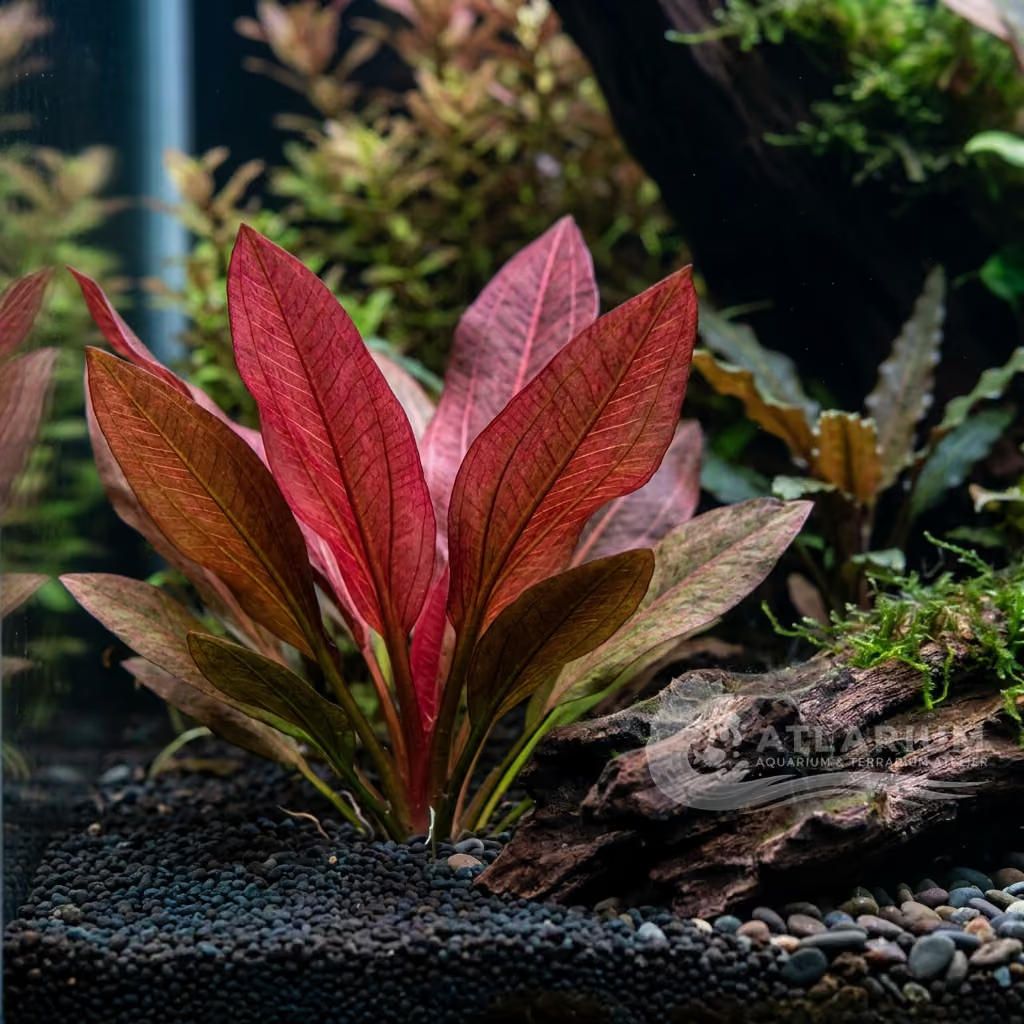
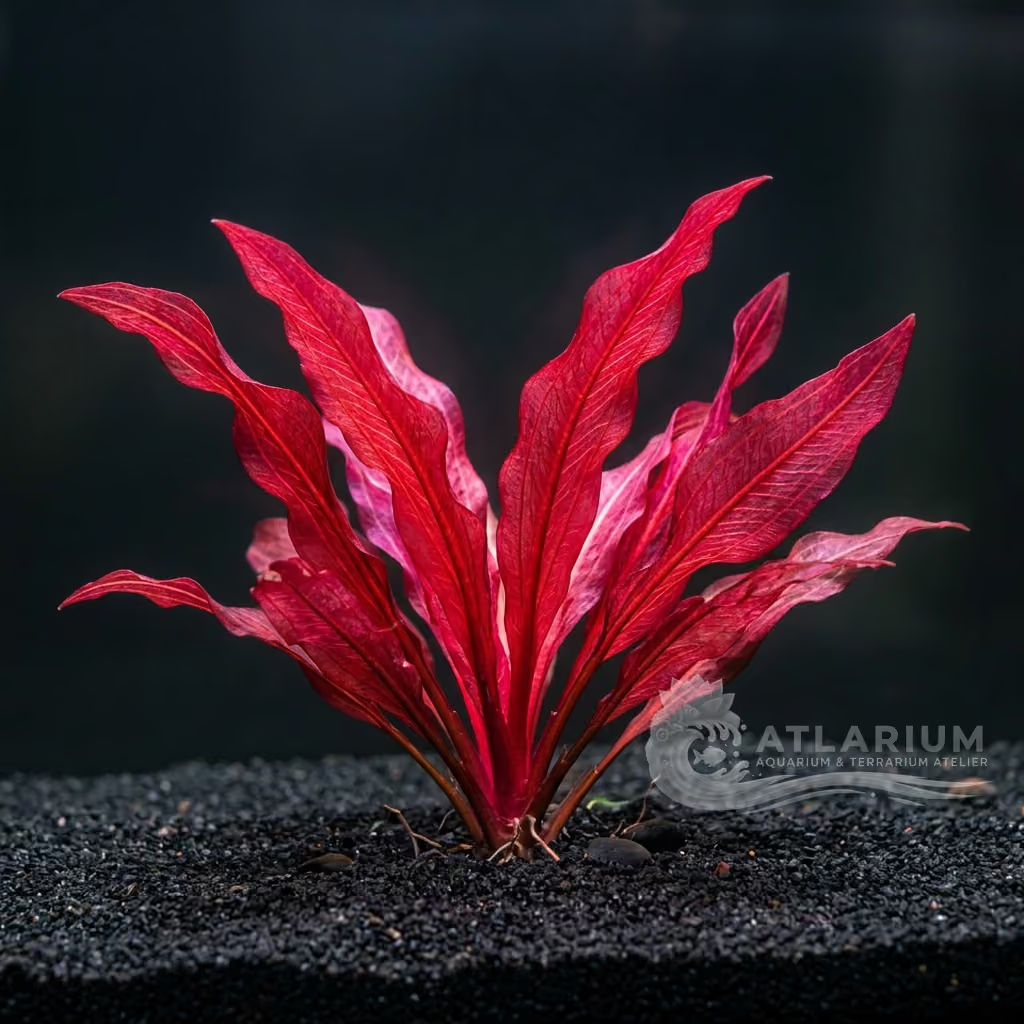
Color & Texture: The coloration is absolutely striking and highly dynamic. Grown submerged under standard lighting, the mature leaves are an unwavering, solid, deeply dark olive-green. However, the true spectacle lies in the new growth: emerging leaves erupt as a shockingly dark, almost black or deep plum-purple color with wildly contrasting pale green veins. As the leaf matures, the black pigment completely vanishes, settling into solid green. The texture is intensely rigid, heavily leathery, and deeply "bullate" (hammered/dimpled).

Soins, reproduction et cohabitation
Lighting & CO2: It is an incredibly resilient, shade-loving species perfectly suited for beginner, low-tech aquariums. It will effortlessly survive and maintain its compact shape in deeply shaded environments, though the new leaves will lose their striking "black" coloration and simply emerge green. To unlock the violent black/purple new growth and deeply hammered texture, medium-intensity LED lighting is recommended. Pressurized CO2 is completely unnecessary for its survival, but moderately speeds up its traditionally slow growth.
Nutrition & Substrate: As a highly specialized, medium-sized Amazon Sword, 'Parviflorus' is an absolute, obligate root feeder. Its massive root system strictly demands a very deep (minimum 5 cm / 2 inches), heavily nutrient-dense substrate. It absolutely demands premium aquasoil or a mature gravel bed heavily enriched with iron and macro-nutrient root tabs directly beneath the massive tuber to fuel its dark "black" pigmentation. If starved of root nutrients, the deeply dimpled green leaves will quickly turn pale yellow and dissolve.
Water Chemistry: Originating from the deeply shaded, acidic regions of the western Amazon, it is practically invincible regarding standard water parameters. It thrives effortlessly in heated tropical aquariums (22-28°C) and is exceptionally adaptable, comfortably tolerating both extremely soft, highly acidic blackwater and rock-hard, highly alkaline tap water (pH 6.0 - 8.0). The single most critical environmental requirement is absolute chemical stability. It drastically prefers stable parameters over perfectly optimized ones. It demands moderate water flow.
Space Management & Placement: Due to its deliberately compact, slow-growing nature (rarely exceeding 15-25 cm in height), intensely rigid, hammered lanceolate leaves, and spectacular "black" new growth, 'Parviflorus' is an elite, indestructible midground centerpiece for small to medium aquariums. It MUST be planted as a singular focal point directly in the midground. Because it grows as a highly disciplined, dense rosette, it provides a perfectly organized visual anchor that will never violently overgrow the tank or aggressively shadow other plants.
Pruning: Pruning is an infrequent, simple, and highly necessary procedure due to its slow, disciplined growth. Never attempt to trim a rigid, hammered leaf in half; the cut edge will instantly turn black, rot, and destroy the aesthetic. To prune dead, yellowing, or algae-covered older outer leaves, you must reach deep down into the absolute base of the dense rosette and cleanly snap or slice the stiff petiole directly at the crown. It rarely spreads via runners; instead, it slowly forms an impenetrable, single-crowned anchor.
Risks & Diseases: The absolute greatest threat to the "Black Amazon Sword" is Green Spot Algae (GSA) and nutrient starvation. Because the highly rigid, heavily dimpled leaves live for years and grow extremely slowly, they act as massive landing pads for devastating Green Spot Algae if phosphate levels drop or light is too intense. Once GSA aggressively spots the tough leaves, it is physically impossible to clean off and ruins the dark green aesthetic. The second risk is nutrient starvation; if root tabs run out, it will melt.

Origine et répartition géographiques
Endemic to the western Amazon basin, specifically deep within the tropical regions of Peru and Bolivia. Echinodorus grisebachii 'Parviflorus', commonly known in the hobby as the "Black Amazon Sword," is a remarkable, highly specialized aquatic swamp plant. Unlike its colossal cousins, it thrives in heavily shaded, slow-moving jungle streams and intensely flooded forested areas. It is an extremely resilient, slow-growing amphibious survivor, perfectly adapted to lower light levels beneath the dense Amazonian canopy.
Origine
Amazonie, Orénoque et Guyanes

Profil de plante
- Emplacement
- Plan intermédiaire
- With its more compact size compared to 'Amazonicus' or 'Bleherae', 'Parviflorus' is an excellent choice for the midground or foreground of larger aquariums. In smaller tanks, it functions perfectly as a focal background plant. Its neat, rosette form adds texture without overly shading adjacent plants, making it versatile in aquascaping layouts.
- Forme botanique
- Rosette
- This plant exhibits a classic rosette form but is characterized by slightly smaller, slightly hammered (textured) leaves compared to other 'grisebachii' variants. The foliage is a bright, clear green, forming a dense and attractive bush. The leaf margins are often slightly undulated, adding to its visual appeal in the planted aquarium.
- Croissance
- Moyenne
- The growth rate is generally moderate, allowing for easy maintenance. Under optimal conditions with strong light, CO2, and rich nutrients, growth accelerates, but it remains manageable. In low-tech setups, it grows slowly and steadily, maintaining its compact form. Regular removal of older outer leaves encourages fresh growth from the center.
- Substrat
- Élevé
- This cultivar benefits greatly from a nutrient-rich substrate, as it develops a strong root system typical of Echinodorus species. Aquarium soil or a substrate enhanced with root tabs provides the ideal environment for nutrient uptake. A deep substrate allows for secure anchoring and optimal root expansion, which is directly correlated with plant health and size.
- Fertilisation de la colonne d'eau
- Recommandée
- Supplemental column fertilization with a comprehensive liquid fertilizer is beneficial, providing readily available micronutrients. This ensures the plant doesn't rely solely on substrate reserves, which can deplete over time. Regular dosing supports leaf health and coloration, especially in tanks with a high plant biomass.
- Fertilisation racinaire
- Nécessaire
- Root feeding is the primary method of nutrient acquisition for 'Parviflorus'. The periodic placement of nutrient-rich root tabs near the root mass is highly recommended to sustain vigorous growth. This localized fertilization strategy is particularly effective for supporting the plant's robust root structure and overall development.
- Taille
- Occasionnelle
- Regularly remove the older, outer leaves to keep the rosette compact and prevent shading of adjacent flora. Snip the leaf stems cleanly at the absolute base of the crown to avoid leaving decaying tissue. This straightforward pruning effectively manages its footprint and rejuvenates the plant.
- Propagation
- Rhizome division
- Propagation is readily achieved through the formation of adventitious plantlets on runners. Once these plantlets develop distinct roots and a few leaves, they can be separated from the runner and planted individually. The division of a mature rhizome is another propagation method, although runners are more common and easier to manage.
- Sensibilité
- Modérée
- While exceptionally hardy, its distinctive dark leaf patterns may fade if iron levels drop significantly. It demands its crown be planted above the soil line to avert crown rot. It adapts well to low-tech setups, but strong light without CO2 may invite algae colonization on its slow-growing older leaves.
- Rôle dans le décor
- Plan intermédiaire, Arrière-plan, accent, Nano
- Its uniquely dark, textured leaves provide an excellent contrast against lighter green carpet plants and brightly colored stem flora. It serves as a formidable midground anchor, blending transitioning zones seamlessly. The sturdy leaves are highly favored by structural breeders and provide robust hiding spots.

Galerie d'images
Images sous licence liées à l'espèce ou, lorsqu'elles sont indiquées, au taxon représentatif le plus proche.

Espèces associées
Recommandations regroupées par proches parents, compagnons et soins similaires.