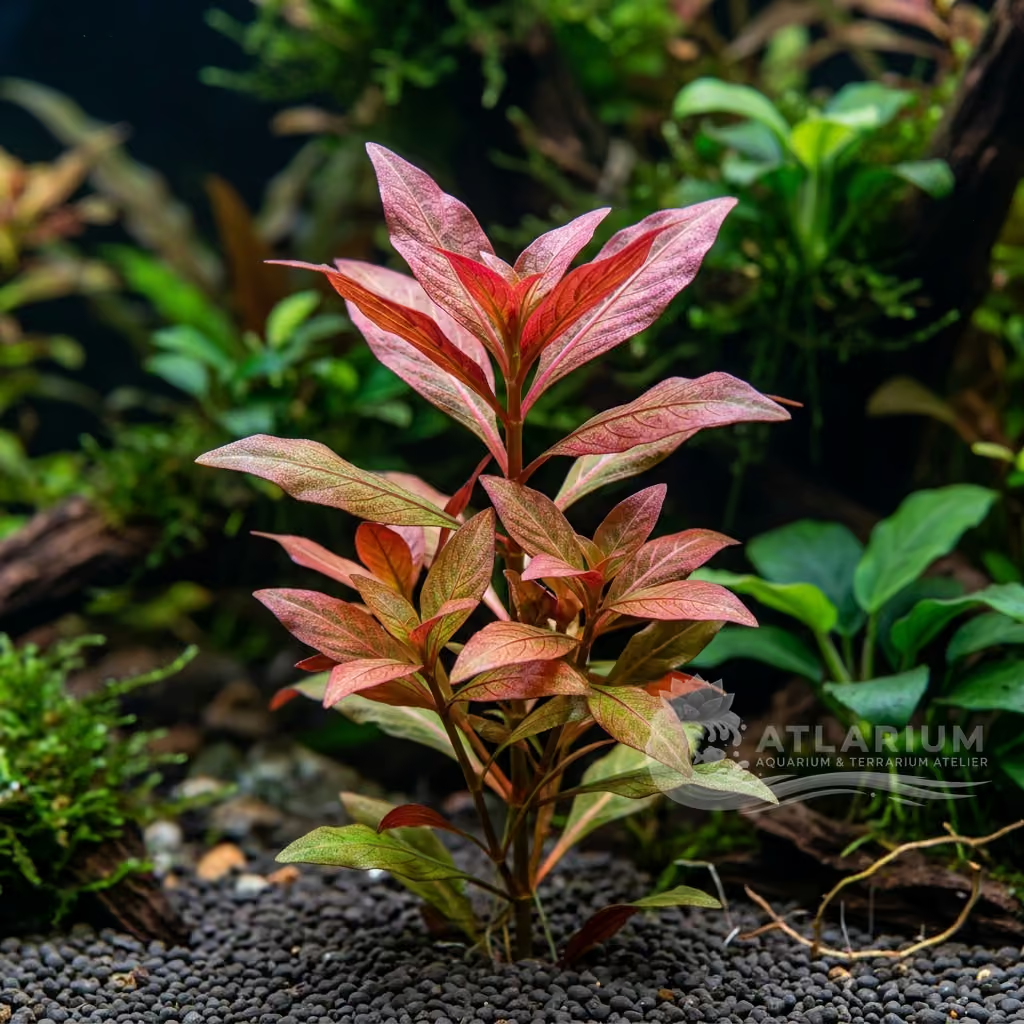
Helanthium bolivianum
Helanthium bolivianum
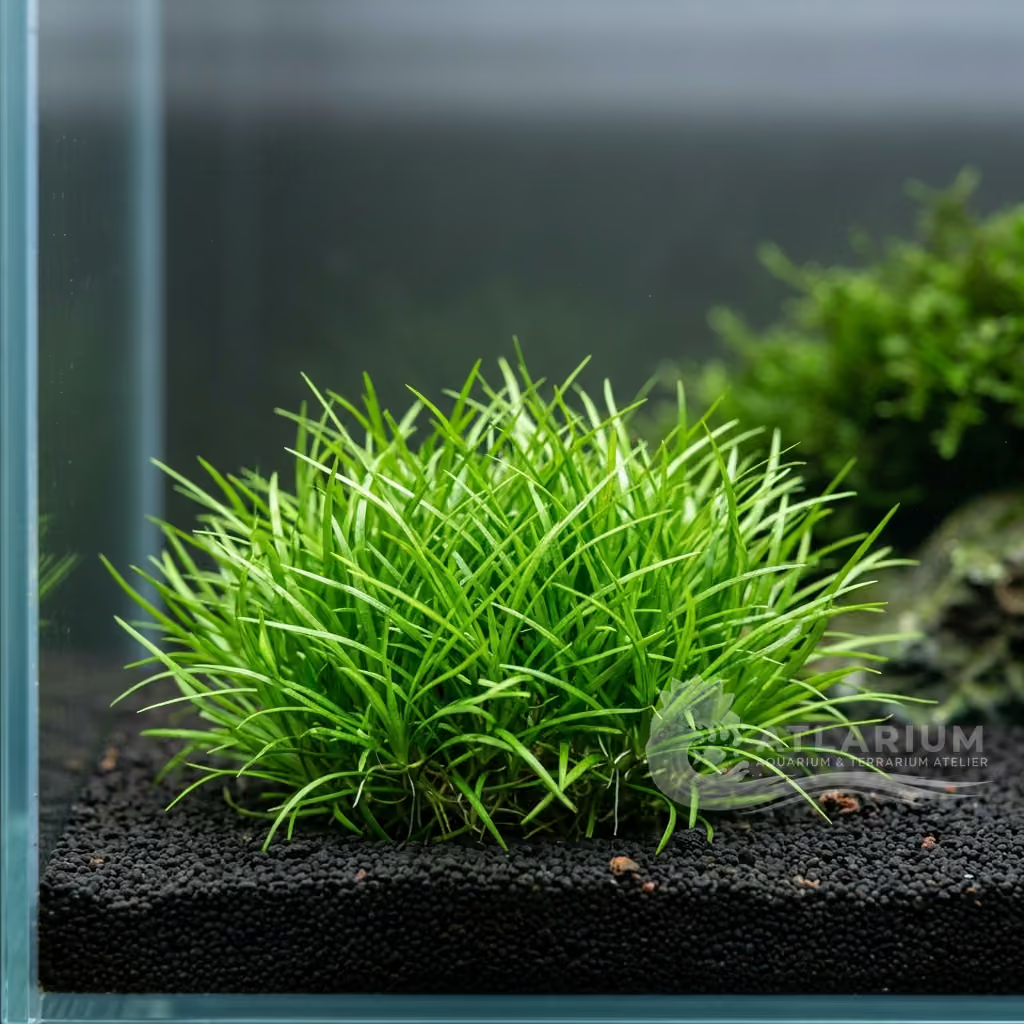
Aggressive carpeting plant forming a dense, grassy bright green lawn via runners. Thrives with intense lighting and nutrient-rich aquasoil.
Température de l’eau
20 - 28 °C
Valeur du pH
6 - 7.5
Type d'eau
Eau douce
Lumière
Moyenne
CO2
Faible
Hauteur attendue
15 cm
Largeur attendue
10 cm
GH
4 - 20 dGH
KH
0 - 14 dKH

Description de l'espèce
Geographical Origin and Habitat: Endemic to the tropical and subtropical regions of South and Central America, ranging from Mexico down to Argentina. Helanthium bolivianum (formerly classified as Echinodorus bolivianus) is a highly adaptable, true amphibious creeping rosette plant. It naturally colonizes the shallow, sandy, sun-drenched margins of rivers, temporary pools, and marshlands. It is a wildly aggressive, deeply rooted carpet-forming plant perfectly evolved to survive both deep submersion and total terrestrial exposure.
Taxonomy & Genetics: Scientifically reclassified into the Helanthium genus (separating the "chain swords" from the massive Echinodorus species), H. bolivianum is the foundational, wild-type "Pygmy Chain Sword." Taxonomically, this specific base species is highly variable, leading to the creation of many distinct cultivars (like Angustifolius or latifolius). Genetically, it is completely hard-wired for extreme, explosive horizontal propagation. Its DNA forces the plant to continuously deploy an aggressive subterranean runner system.
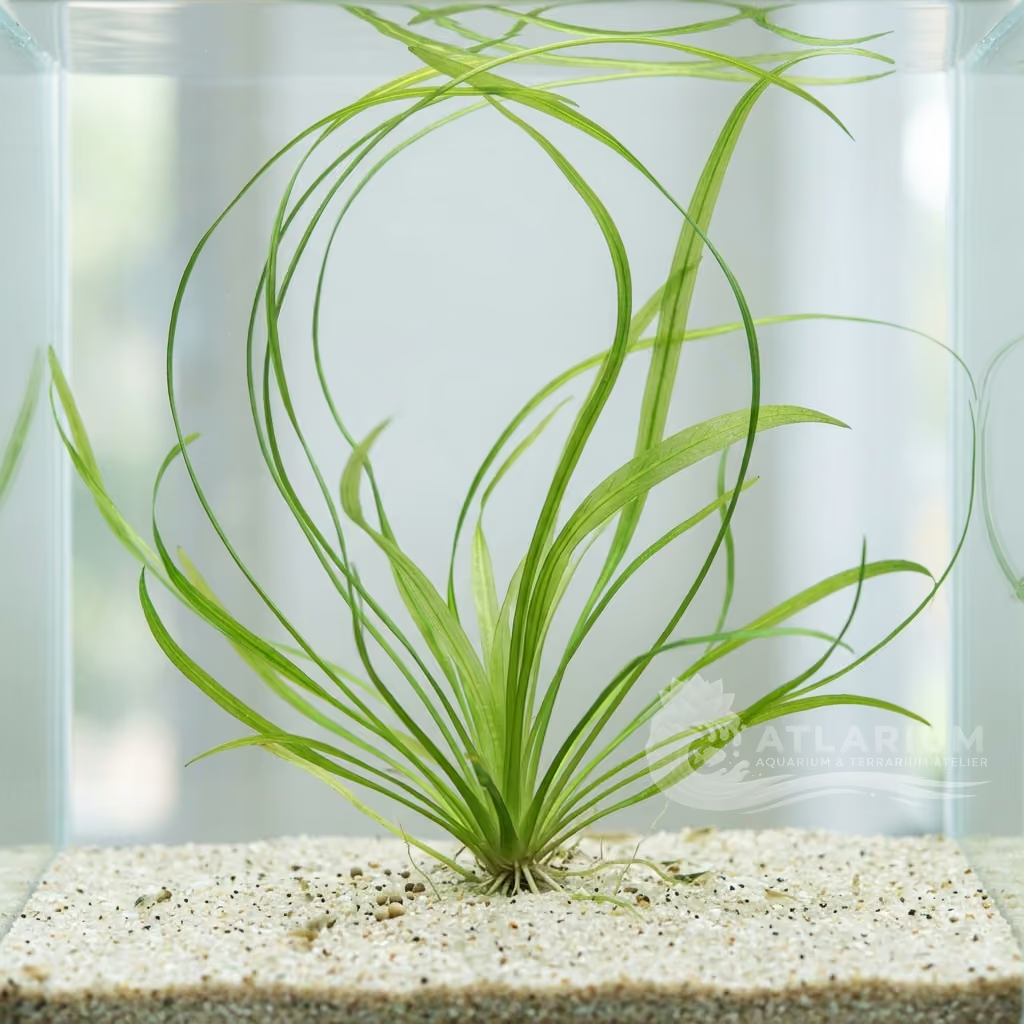
Physical Structure: The architectural structure of H. bolivianum is gracefully fine, intensely dense, and highly spreading. It is a classic foreground/midground carpet plant completely lacking vertical stems. The foundation is a highly aggressive, deeply burrowing, white runner system (stolon) that spreads horizontally. The leaves erupt directly from small rosettes along the runners. The foliage is strictly narrowly lanceolate, small (5-10 cm), and naturally arches outward, creating a perfectly dense, grassy mat.
Color & Texture: The coloration is distinctly pure, intensely solid, and visually calming. Grown submerged under intense lighting, the dense thicket of grassy leaves is a solid, glowing bright apple-green to a translucent grassy-green. Because it completely lacks any genetic mechanism for red anthocyanin pigments, it remains an intensely bright pure green under any light intensity. The texture is distinctly crisp, extremely flexible, and perfectly smooth, looking exactly like a natural, wild submersed grassy lawn.

Soins, reproduction et cohabitation
Lighting & CO2: It is a moderately resilient but demanding foreground plant. While it will technically survive in medium-light aquariums, its spectacular carpeting behavior will fail; it will refuse to send out runners, grow sparsely, and stretch tall. To force the violent horizontal spread necessary to create a dense, impenetrable green lawn, blasting, high-intensity LED lighting is absolutely mandatory. Pressurized CO2 is highly recommended and drastically accelerates the density of the carpet.
Nutrition & Substrate: As an incredibly aggressive carpeting plant, the Pygmy Chain Sword is an obligate root feeder. Its runner system strictly demands a fine-grained, heavily nutrient-dense substrate. It absolutely demands premium aquasoil heavily enriched with iron and macro-nutrients. It will fail to spread in coarse gravel, as its delicate runners cannot penetrate it. If starved of root nutrients, the fine grassy leaves will quickly turn yellow, become brittle, and dissolve into mush.
Water Chemistry: Originating from a vast range across the Americas, it is practically invincible regarding standard water parameters. It thrives effortlessly in heated tropical aquariums (22-28°C) but is equally comfortable in unheated cold-water tanks. It is exceptionally adaptable, comfortably tolerating soft, acidic water as well as harder, moderately alkaline tap water (pH 6.0 - 7.5). The single most critical environmental requirement is absolute substrate stability and continuous nutrient flow.
Space Management & Placement: Due to its short, grassy foliage and extreme horizontal spreading nature, Helanthium bolivianum is strictly a dominant foreground or midground carpeting plant for aquariums of all sizes. It MUST be planted initially in tiny, distinct tufts evenly spaced across the bare aquasoil. Because it grows via aggressive subterranean runners, it will rapidly bridge the gaps, forming a breathtaking, impenetrable green lawn that perfectly contours to the hardscape, providing unparalleled scale to the aquascape.
Pruning: Pruning is a simple, massive, and highly necessary procedure to maintain the carpet. Never attempt to uproot the plant once established. To prune, you must use curved aquascaping scissors to literally "mow the lawn." You aggressively cut the arching leaves down to 2-3 cm above the substrate. This brutal haircut forces the plant to abandon vertical growth and immediately invest massive energy into horizontal runners, thickening the carpet. Sever stray runners that attempt to invade other plant zones.
Risks & Diseases: The absolute greatest threat to a Pygmy Chain Sword carpet is Hair Algae, Cyanobacteria, and coarse substrate. Because the dense grassy leaves trap detritus, they act as massive landing pads for devastating Hair Algae if water flow is poor or nutrients spike. Once algae aggressively intertwines with the fine grass, it is nearly impossible to separate mechanically. The second risk is planting in coarse gravel; the delicate runners will be crushed, the plant will exhaust its energy, and die.

Origine et répartition géographiques
Endemic to the tropical and subtropical regions of South and Central America, ranging from Mexico down to Argentina. Helanthium bolivianum (formerly classified as Echinodorus bolivianus) is a highly adaptable, true amphibious creeping rosette plant. It naturally colonizes the shallow, sandy, sun-drenched margins of rivers, temporary pools, and marshlands. It is a wildly aggressive, deeply rooted carpet-forming plant perfectly evolved to survive both deep submersion and total terrestrial exposure.
Origine
Amérique du NordAmazonie, Orénoque et GuyanesAmérique du Sud hors AmazonieAmérique centrale et Caraïbes

Profil de plante
- Emplacement
- Premier plan
- Ideal for the foreground in large aquariums or the midground in smaller setups. It spreads horizontally via runners, eventually creating a thick, grass-like field if left unchecked.
- Forme botanique
- Rosette
- A rosette plant that produces light green, lanceolate (sword-shaped) leaves. Submersed leaves are typically narrower and softer than the emersed forms. It stays relatively short compared to larger Echinodorus species.
- Croissance
- Rapide
- Grows rapidly once established, especially with a nutrient-rich substrate and CO2 injection. Under optimal conditions, it can send out multiple runners a week, requiring regular thinning.
- Substrat
- Élevé
- Helanthium bolivianum is a heavy root feeder that requires a nutrient-rich, deep substrate to support its aggressive runner production. An aquasoil or a dirted substrate capped with sand or gravel, maintained at a depth of 5 to 7 centimeters, provides the ideal environment for its extensive root network. Without a fertile base, the plant will struggle to propagate and its leaves may quickly exhibit signs of severe nutrient deficiency, such as yellowing and stunted growth.
- Fertilisation de la colonne d'eau
- Recommandée
- Benefits from liquid fertilizers, particularly for micronutrients, though it relies less on the water column than stem plants. Potassium dosing helps prevent pinholes in the older leaves.
- Fertilisation racinaire
- Aucune
- Heavily root-feeding. A nutrient-rich aquasoil or the frequent use of root tabs is absolutely essential for its long-term health and propagation. The root system is extensive and deep.
- Taille
- Occasionnelle
- Thin the herd by cutting the runners connecting the plantlets and uprooting excess growth. Older, decaying leaves on the main rosette should be snipped off near the base to encourage new growth.
- Propagation
- Stolons
- Propagates prolifically on its own by sending out long runners with multiple plantlets along the chain. Simply cut the runner once the baby plant has formed its own roots and leave it or replant it.
- Sensibilité
- Modérée
- Very hardy, but susceptible to iron deficiency and yellowing if the substrate is depleted. It tolerates varying light levels well but will grow much taller and sparser in low light conditions.
- Rôle dans le décor
- Plan intermédiaire, Premier plan, Nano
- Excellent for creating dense, grassy foregrounds or midground transitional zones. It provides a wild, natural look and is a classic choice for Amazonian biotope aquariums.

Galerie d'images
Images sous licence liées à l'espèce ou, lorsqu'elles sont indiquées, au taxon représentatif le plus proche.

Espèces associées
Recommandations regroupées par proches parents, compagnons et soins similaires.