Willow-leaf hygrophila
Hygrophila ringens
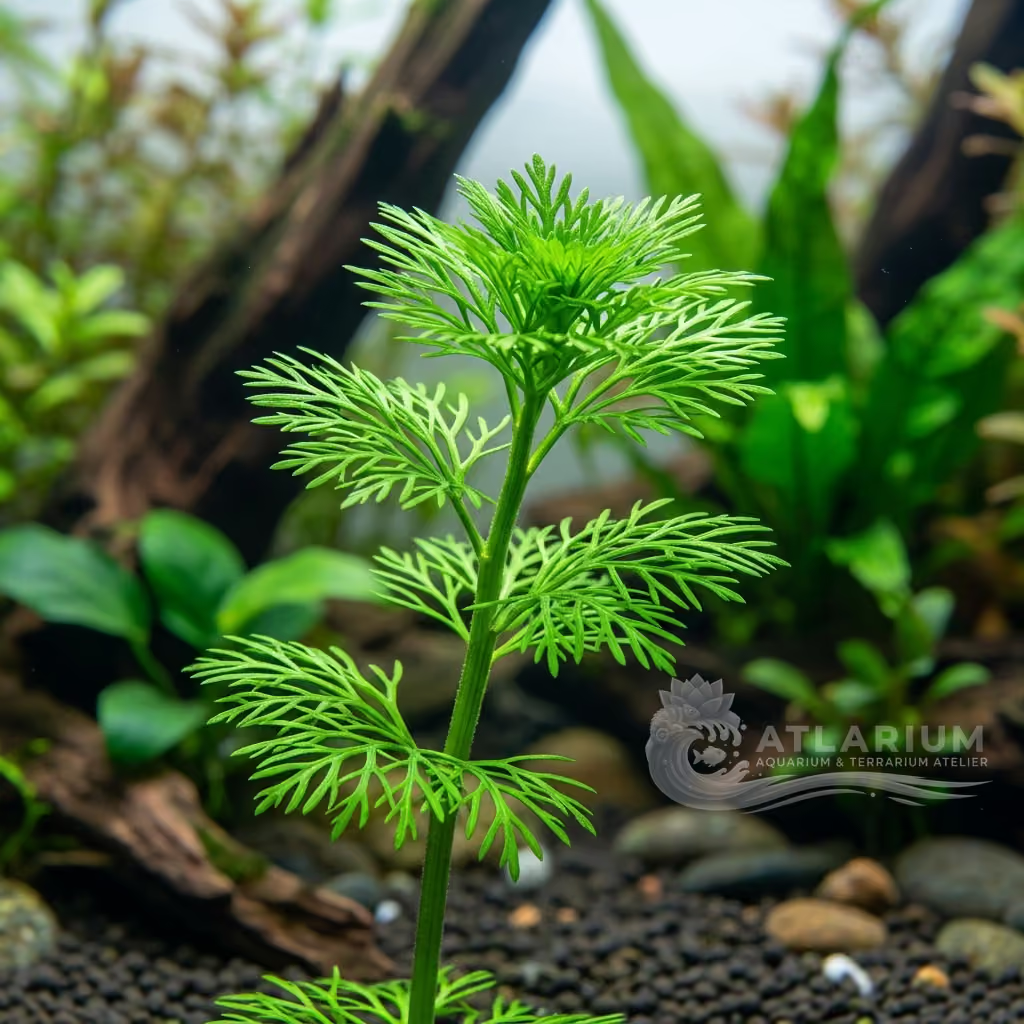
A robust Asian marsh plant with elongated, willow-like leaves that form dense green backdrops. Highly adaptable, it grows rapidly and can take on bronze tints under more intense lighting.
Température de l’eau
20 - 28 °C
Valeur du pH
6 - 7.5
Type d'eau
Eau douce
Lumière
Moyenne
CO2
Faible
Hauteur attendue
40 cm
Largeur attendue
20 cm
GH
4 - 20 dGH
KH
2 - 15 dKH

Description de l'espèce
Geographical Origin and Habitat: Hygrophila salicifolia is native to East and Southeast Asia, widely distributed in countries such as China, India, Vietnam, and Indonesia. It grows along riverbanks, streams, and marshy areas, adapting well to both emersed and submersed life.
Taxonomy & Genetics: It belongs to the family Acanthaceae. It is closely related to other Hygrophila species and is known for its high morphological plasticity, which allows it to adapt to varying environmental conditions by changing its leaf structure.
Physical Structure: Features strong, upright stems with opposite, lanceolate, and elongated leaves that resemble those of a willow tree. In submersed conditions, it can grow up to 40-50 cm tall, creating a dense bush.
Color & Texture: Submersed leaves are bright green or olive-green. Under intense lighting, the stems and leaf margins can take on reddish or bronze tints. The leaf texture is smooth, with distinct, lighter green venation patterns.

Soins, reproduction et cohabitation
Lighting & CO2: Requires moderate lighting to thrive, while higher light levels promote more compact leaf growth and reddish coloration. CO2 injection is not mandatory but highly recommended to stimulate fast growth and thick stems.
Nutrition & Substrate: Benefits greatly from a nutrient-rich substrate or regular liquid fertilization. It is a heavy feeder that absorbs nutrients through both its leaves and roots, requiring consistent dosing of potassium and microelements.
Water Chemistry: Highly adaptable to a wide range of water parameters. Prefers soft to medium-hard water, a pH of 6.0 to 7.5, and temperatures between 22°C and 28°C. Sudden shifts in chemistry should be avoided.
Space Management & Placement: Due to its rapid growth and height, it is best placed in the background of the aquarium. Planting it in groups creates a lush, dense green backdrop. It is also excellent for paludariums in its emersed form.
Pruning: Easily propagated by trimming the top stems with sharp scissors. Trimming encourages the development of lateral shoots, leading to a bushier appearance. The cut tops can be replanted into the substrate to establish new plants.
Risks & Diseases: Highly susceptible to potassium deficiency, which manifests as tiny pinholes in older leaves. In dimly lit tanks, the lower leaves may turn yellow and drop off due to insufficient light reaching the base.

Origine et répartition géographiques
Hygrophila salicifolia is native to East and Southeast Asia, widely distributed in countries such as China, India, Vietnam, and Indonesia. It grows along riverbanks, streams, and marshy areas, adapting well to both emersed and submersed life.
Origine
Cosmopolite ou introduitAmérique du NordAsie du Sud et du Sud-EstAsie de l'Est

Profil de plante
- Emplacement
- Arrière-plan
- Due to its size and upright growth habit, it is almost exclusively used as a background plant in larger aquariums. It can create an impressive, dense forest look when planted in groups. In smaller tanks, it quickly outgrows the space and requires constant management.
- Forme botanique
- Tige
- Features thick, rigid stems and long, lanceolate leaves that closely resemble those of a willow tree. The leaves are typically a bright, fresh green, creating a striking vertical element. It forms a strong root system to anchor its large size.
- Croissance
- Rapide
- Demonstrates a moderately fast to very fast growth rate, especially under optimal conditions. It can quickly reach the water surface and will readily grow emersed if allowed. Regular trimming is essential to prevent it from overshadowing the rest of the tank.
- Substrat
- Moyen
- Willow-leaf Hygrophila prefers a medium-demand substrate, thriving beautifully when planted in nutrient-rich aqua soil. Its strong, extensive root system requires a substrate depth of at least 5 to 7 cm to ensure proper anchorage and nutrient uptake. While it primarily feeds through its robust roots in the early stages, a fertile bottom layer promotes upright growth and fuller foliage development.
- Fertilisation de la colonne d'eau
- Facultative
- Absorbs nutrients efficiently from the water column, making a comprehensive liquid fertilizer regimen highly effective. It requires adequate potassium and nitrogen to maintain healthy, robust leaves. Deficiencies will often show as pinholes or yellowing in the older leaves.
- Fertilisation racinaire
- Facultative
- Highly benefits from a deep, nutrient-rich substrate to support its extensive root system and large size. The addition of root tabs is recommended if the substrate is depleted or inert. A strong root foundation ensures the thick stems remain securely anchored.
- Taille
- Occasionnelle
- Requires regular, firm trimming to maintain a suitable height for the aquarium. Cutting the strong stems will prompt the growth of multiple side shoots, making the plant bushier. The robust tops make excellent cuttings for easy replanting.
- Propagation
- Boutures
- Propagation is simple via stem cuttings; replant the sturdy tops straight into the substrate. The original stem will quickly branch out and continue growing. It is an extremely easy plant to multiply and maintain.
- Sensibilité
- Sensible
- A very tough and resilient plant that can adapt to a wide range of water parameters. It is generally undemanding, though it prefers moderate to high lighting. It rarely suffers from melting unless subjected to extreme and sudden changes.
- Rôle dans le décor
- Arrière-plan
- Provides a strong, bold vertical presence in the background of large aquascapes. Its distinct willow-like leaves offer a great textural contrast to broader or finer-leaved plants. It is excellent for concealing heaters, filter intakes, and other equipment.

Espèces associées
Recommandations regroupées par proches parents, compagnons et soins similaires.