Magdalena Sand Whiptail
Crossoloricaria cephalaspis
Highly specialized Loricariinae originating from the Magdalena river basin in Colombia, where the waters tend to be slightly harder and more basic than in the Amazon.
Température de l’eau
22 - 28 °C
Valeur du pH
6 - 7.5
Type d'eau
Eau douce
Niveau dans le bac
Fond
Taille adulte
15 cm
Volume minimal du bac
>= 200 L
Groupe minimal
>= 1
GH
2 - 15 dGH
KH
4 - 12 dKH
TDS
70 - 345 ppm
Conductivité
109 - 539 uS/cm

Description de l'espèce
Geographical Origin and Habitat: Species native to the Magdalena River basin and northwestern rivers of South America (Colombia). Exclusively inhabits medium to fast-flowing rivers over vast stretches of clean sand, free of sludge or large debris.
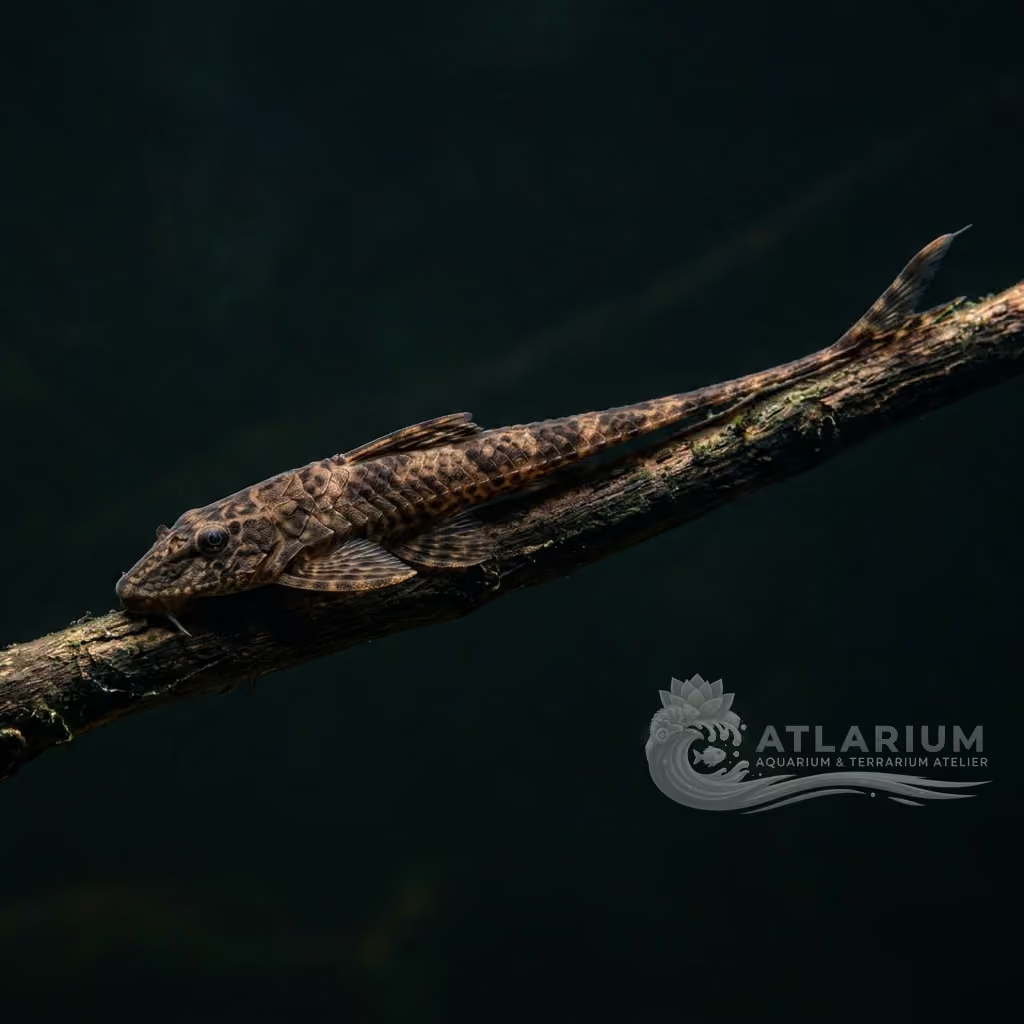
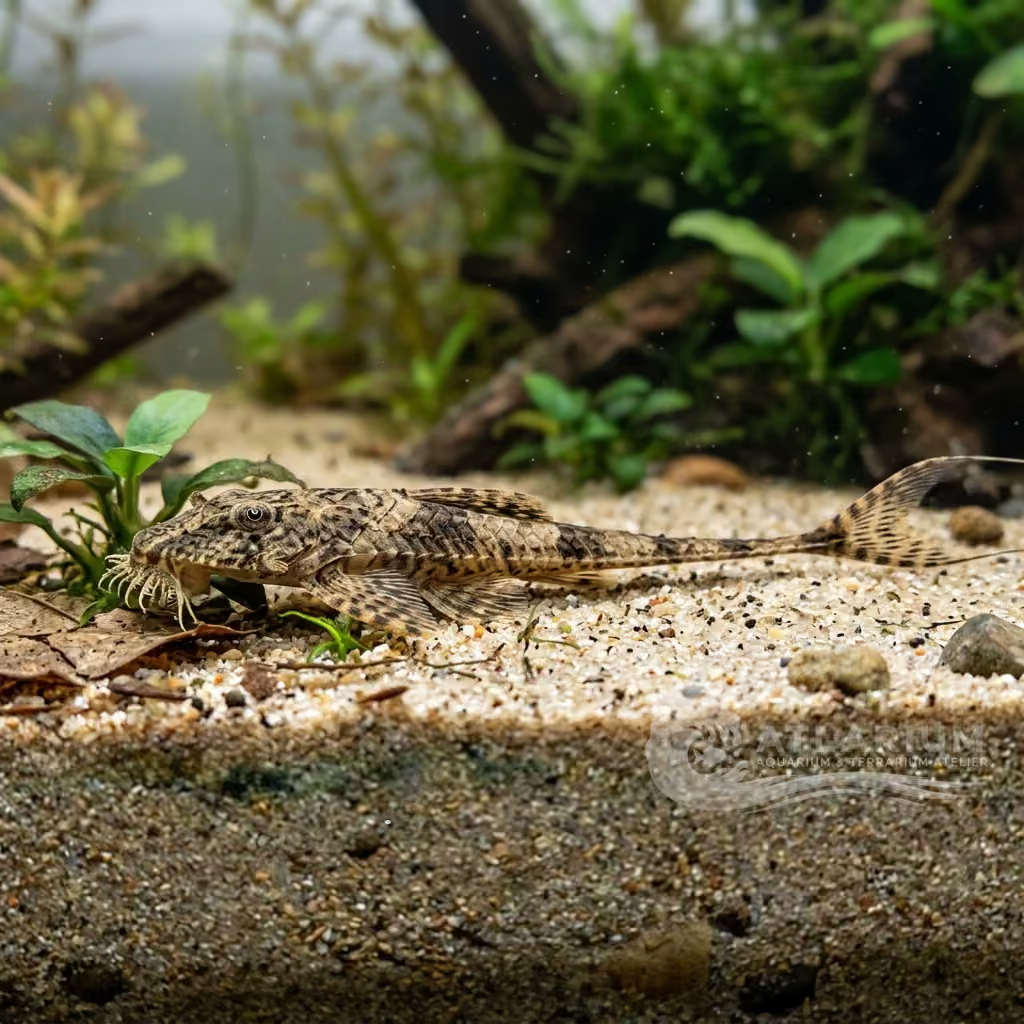
Taxonomy and Morphology: Crossoloricaria cephalaspis (Spoon-faced Whiptail Catfish). Atypical Loricariid, with an extremely flat and filiform morphology, specialized in psammophilic (sand-loving) life. It has an extensible "fringed" mouth (enlarged and fringed sucker lips).
Social Behavior: Absolutely harmless and nocturnal. During the day it buries itself almost completely in the sand, leaving only the eyes located on top of the head protruding. At night it emerges to sift the sand. Keep in small peaceful groups.
Coloration and Sexual Dimorphism: Cryptic to the highest degree: mottled pale sand-brown coloration to blend perfectly with the substrate. Adult males develop odontodes (spiny "hairs") on the cheeks and pectoral fins during the breeding season.

Soins, reproduction et cohabitation
Aquarium Setup: Large and spacious tank, with 80% of the bottom left free as a "beach" of impalpable sand (minimum 4-5 cm depth). Plants and rocks must be confined to the margins. Avoid gravel or fertilized substrates.
Diet and Feeding: Detritivore and psammophilic micro-predator. Feeds by "vacuuming" the sand and retaining micro-organisms and organic matter. Provide soft sinking tablets, live bloodworms, and pellets that easily break down on the bottom.
Water Quality: Highly sensitive to water quality on the bottom and to the reduction of dissolved oxygen. Requires moderate current and excellent biological filtration. A dirty bottom will quickly cause severe bacterial necrosis.
Compatibility and Cohabitation: Excellent in peaceful community tanks with fish swimming in the middle and upper water column (Characins, Gasteropelecids). Do not pair with large rooting Cichlids or fish aggressively competing for the bottom (e.g. Botia).
Aquarium Breeding: Reproduces similarly to Pseudohemiodon (lip-brooding Loricariids). The male carries the egg cluster under the lower lip/belly protected by the pelvic fins, until complete hatching.
Risks and Diseases: Unsuitable bottoms (rough quartz, coarse gravel) prevent natural burying, leading to severe chronic stress and abrasive damage to the delicate belly and lips, condemning the animal to starvation.

Origine et répartition géographiques
Species native to the Magdalena River basin and northwestern rivers of South America (Colombia). Exclusively inhabits medium to fast-flowing rivers over vast stretches of clean sand, free of sludge or large debris.
Origine
Amazonie, Orénoque et Guyanes

Profil de poisson
- Tempérament
- Semi-aggressive
- They are extraordinarily peaceful, shy, and somewhat reclusive. They rely heavily on their camouflage for defense and will often remain perfectly still even when approached. They do not bother any other tank inhabitants. Their timid nature makes them highly susceptible to stress if kept with inappropriate, boisterous tankmates.
- Régime alimentaire
- Carnivore
- They are omnivorous but have a specialized diet in nature, often feeding on biofilm, small crustaceans, and detritus found in sandy substrates. In the aquarium, they should be offered high-quality sinking wafers, spirulina, and meaty frozen foods like bloodworms and daphnia. It is critical to ensure food reaches the bottom and remains long enough for them to find it. They are not effective algae cleaners and need a dedicated, varied diet.
- Espérance de vie
- 5-8 years
- Taille adulte
- 15 cm
- Ratio des sexes
- Group
- They are generally peaceful towards their own kind and can be kept in small groups if the aquarium is large enough to provide adequate floor space. Keeping them in groups might even help them feel more secure and encourage natural behaviors. Sexing is difficult, but mature males may develop more pronounced odontodes on the head and pectoral fins. The specific sex ratio is not critical for their well-being.
- Fréquence d'alimentation
- Twice daily
- They should be fed once or twice daily, ideally after the lights go out, as they are largely nocturnal and more comfortable foraging in the dark. Because they are slow, deliberate eaters, target feeding via a tube directly to their resting spot can be highly beneficial. Providing small, frequent meals ensures they maintain a healthy weight without polluting the tank with uneaten food. Fasting is not recommended due to their delicate nature.
- Charge biologique
- Low to Medium
- This rare and unique loricariid has a relatively low to moderate bioload. While they are not messy eaters, maintaining excellent water quality is vital for their survival. They require exceptionally clean, highly oxygenated water with zero ammonia or nitrites. Frequent partial water changes are essential to keep nitrates as low as possible and replicate their pristine natural habitats.
- Courant
- Stagnant
- They originate from clear, fast-flowing rivers and streams with sandy bottoms. Consequently, they require strong water flow and exceptionally high dissolved oxygen levels in the aquarium. Powerheads or specialized river-manifold systems are ideal for recreating this environment. The current should sweep across the sandy substrate where they spend their time.
- Risque de saut
- No
- Reproduction
- Oviparous
- Breeding Crossoloricaria cephalaspis in captivity is extremely rare and considered a significant achievement. They are believed to be lip-brooders, where the male carries the egg cluster attached to his enlarged lower lip. To encourage spawning, pristine water conditions, a high-protein diet, and a simulation of the wet season (cooler water changes) are likely necessary. The fry are reportedly very delicate and require microscopic live foods.
- Compatibilité et compagnons
- Semi-aggressive
- They are incredibly peaceful, almost to a fault, and can easily be outcompeted for food. They must be kept with other very peaceful, slow-moving species that occupy different areas of the tank. Ideal tankmates include small tetras, rasboras, and other gentle, non-aggressive bottom dwellers. Avoid boisterous fish, aggressive cichlids, or fast-feeding bottom feeders like loaches that might intimidate them or steal their food.
- Niveau dans le bac
- Bottom
- They are exclusive bottom-dwellers. They require a soft, fine sandy substrate as they like to partially bury themselves to camouflage from predators. Rough gravel can easily damage their delicate undersides and barbels, leading to infection. They will spend their entire lives resting on or sifting through the sand.

Modèles et paramètres scientifiques
FishBase
Fenêtre sur les données scientifiques officielles de l’espèce
FishBase v25.04Données synchronisées le : 15/06/2026
- Niveau trophique
- 2,6 ± 0,2 se
- Résilience
- Élevée (moins de 15 mois)
- Singularité phylogénétique (PD50)
- 0.625
- Relation bayésienne longueur-poids
- a = 0.00398, b = 3.11
- VulnérabilitéVulnérabilité faible (10 / 100)

Espèces associées
Recommandations regroupées par proches parents, compagnons et soins similaires.