Twig Catfish
Farlowella vittata
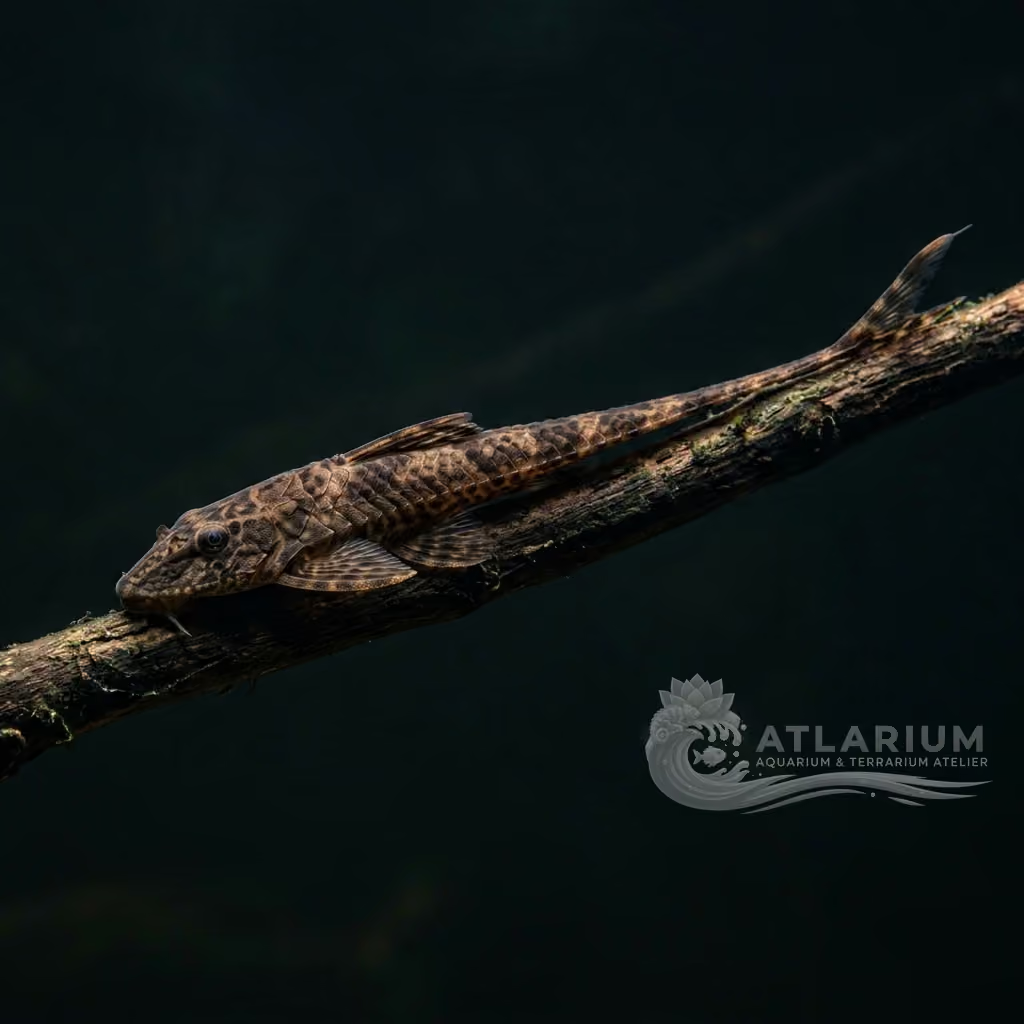
Extraordinary miracle of camouflage. It remains motionless for hours, adhering to the wood with which it perfectly blends. Totally harmless and vulnerable in overly lively communities.
Température de l’eau
22 - 26 °C
Valeur du pH
6 - 7.5
Type d'eau
Eau douce
Niveau dans le bac
Fond et milieu
Taille adulte
22 cm
Volume minimal du bac
>= 300 L
Groupe minimal
>= 1
GH
2 - 15 dGH
KH
1 - 7 dKH
TDS
40 - 295 ppm
Conductivité
63 - 461 uS/cm

Description de l'espèce
Geographical Origin and Habitat: Orinoco River basin, in South America (Colombia and Venezuela). Its sedentary habits relegate it to flooded margins, where submerged twigs and coastal plants abound.
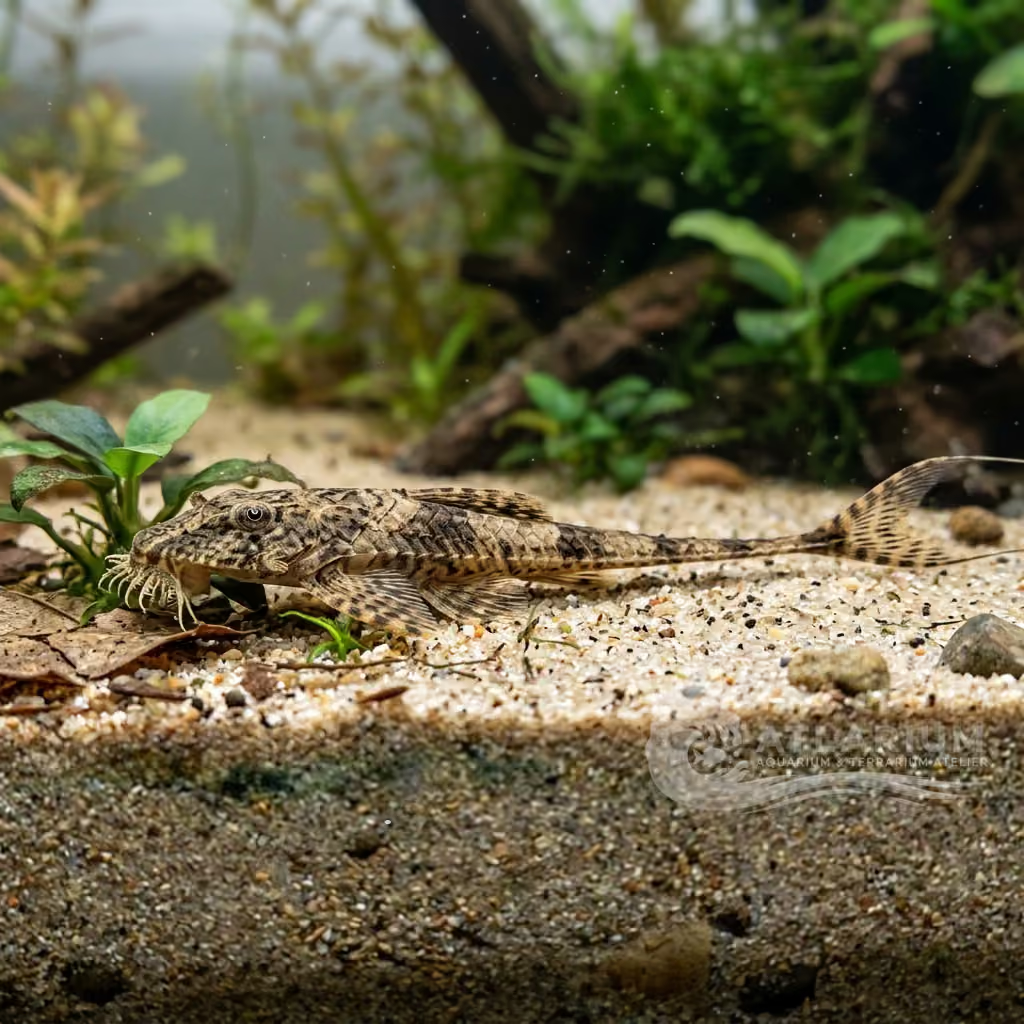
Taxonomy and Morphology: Twig Catfish (Farlowella vittata). The absolute pinnacle of evolution in Loricariid camouflage. Extremely thread-like, perfectly cylindrical in shape and an elongated cartilaginous "nose", it emulates 100% a twig fallen into the water.
Social Behavior: A ninja fish. Maintains a motionless position, parallel to the long branches of the aquarium. It moves by sliding to graze imperceptibly, or by making nocturnal hops. Disarmingly peaceful.
Coloration and Sexual Dimorphism: The color is identical to dry wood bark (light olive-brown) with two dark lateral stripes that joining on the snout emphasize the three-dimensionality. Adult males develop bristling sensory spines ("odontodes") along the sides of the snout (the nose).

Soins, reproduction et cohabitation
Aquarium Setup: Without branches of various diameters the animal perishes. The long intertwined branches, best if positioned diagonally or vertically and covered with algae, constitute 100% of the essential decor for it.
Diet and Feeding: Strictly herbivorous/algivorous and somewhat xylophagous (wood grazer). Requires constant presence of soft algae or biofilm. Administer sliced zucchini, spinach, and bottom algae wafers. DO NOT pollute the diet with meaty foods or bloodworms (intestinal bloat).
Water Quality: Oxygenation must be perfect. Due to their weak and armored physiology, high nitrates (above 20ppm) block their respiration until death (they silently suffocate on the glass).
Compatibility and Cohabitation: It cannot swim vigorously or escape. If kept with Ancistrus, large Plecos, or active Central American Cichlids, it will end up subjugated, stressed and will starve to death. Excellent with Corydoras and peaceful nano tetras (Cardinals, Neons).
Aquarium Breeding: Moderately difficult. Lays eggs (about 50-60) on bare glass in the dark or on broad Anubias leaves. The male tirelessly guards the brood for about ten days without feeding.
Risks and Diseases: The problems in the aquarium are two: it literally dies of hardship (starvation) if placed in "mirror polished" tanks devoid of algae, or it gets stuck in breeding nets breaking the iconic "nose".

Origine et répartition géographiques
Orinoco River basin, in South America (Colombia and Venezuela). Its sedentary habits relegate it to flooded margins, where submerged twigs and coastal plants abound.
Origine
Océans tropicaux et récifsAmazonie, Orénoque et Guyanes

Profil de poisson
- Tempérament
- Semi-aggressive
- They are exceptionally docile, timid, and rely completely on staying perfectly still to avoid predators. They are charmingly cryptic and completely ignore all other tank inhabitants. They require a serene environment to feel secure enough to graze openly.
- Régime alimentaire
- Omnivore
- They are obligate herbivores that continuously rasp at biofilm and soft diatoms on wood and glass. Their diet must be supplemented with blanched vegetables like zucchini, cucumber, and high-quality algae wafers. Never feed them meaty or high-protein foods as they cannot digest them properly.
- Espérance de vie
- 5-10 years
- Taille adulte
- 22 cm
- Ratio des sexes
- Group
- They are completely non-aggressive towards their own kind and can be kept in any desired sex ratio. A small group of three or four is highly entertaining if the tank provides enough grazing area. Males may occasionally display towards each other, but no injuries occur.
- Fréquence d'alimentation
- Twice daily
- Food should ideally be available at all times due to their slow, continuous grazing habits. Offering fresh vegetable slices at dusk allows them to feed without interference from daytime tank mates. Ensure any decaying vegetables are removed the following day.
- Charge biologique
- Medium to High
- The Twig catfish adds a very modest bioload to the aquarium ecosystem. Because they graze constantly, their waste is continuous but extremely minimal. Pristine, highly oxygenated water conditions are strictly necessary, requiring excellent biological filtration and regular maintenance.
- Courant
- Stagnant
- They prefer a steady, moderate flow that ensures high dissolved oxygen levels without overpowering them. A calm, riverine environment with gentle circulation is highly recommended. Using an air stone can help boost oxygenation without creating stressful, turbulent currents.
- Risque de saut
- Yes
- They are completely sedentary fish that do not jump or swim erratically unless severely provoked. A standard aquarium lid is mainly recommended for temperature stability and preventing other fish from jumping. Their primary defense is their remarkable, stick-like camouflage.
- Reproduction
- Oviparous
- They are one of the more commonly bred Farlowella species in home aquaria. The male vigorously cleans a vertical surface, usually the glass, where the female lays her eggs. The male diligently fans and guards the clutch until the fry emerge.
- Compatibilité et compagnons
- Peaceful
- They are the epitome of peacefulness and must be kept with similarly docile, small community fish. Keeping them with aggressive, fin-nipping, or fast-swimming bottom feeders will quickly lead to starvation and stress. They are entirely safe to house with dwarf ornamental shrimp.
- Niveau dans le bac
- Middle/Bottom
- They are structural dwellers that spend their days vertically attached to plants, heater tubes, or driftwood. They do not generally swim in the open water column, preferring to move by short hops along surfaces. Tall, broad-leaved plants and vertical branches are highly appreciated.

Modèles et paramètres scientifiques
FishBase
Fenêtre sur les données scientifiques officielles de l’espèce
FishBase v25.04Données synchronisées le : 15/06/2026
- Niveau trophique
- 2,4 ± 0,2 se
- Résilience
- Moyenne (1,4 - 4,4 ans)
- Singularité phylogénétique (PD50)
- 0.5
- Relation bayésienne longueur-poids
- a = 0.00398, b = 3.11
- VulnérabilitéVulnérabilité faible (17 / 100)

Espèces associées
Recommandations regroupées par proches parents, compagnons et soins similaires.