Lyretail Pleco
Acanthicus hystrix
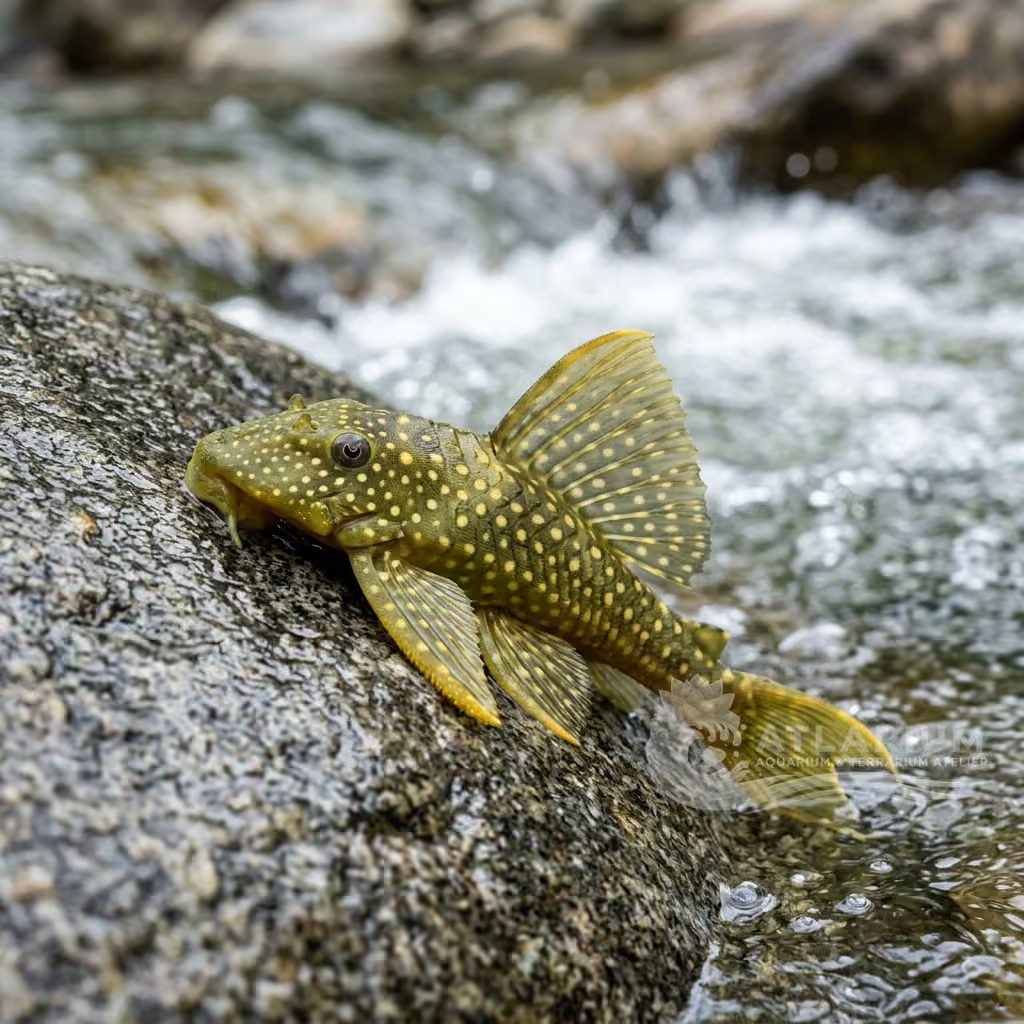
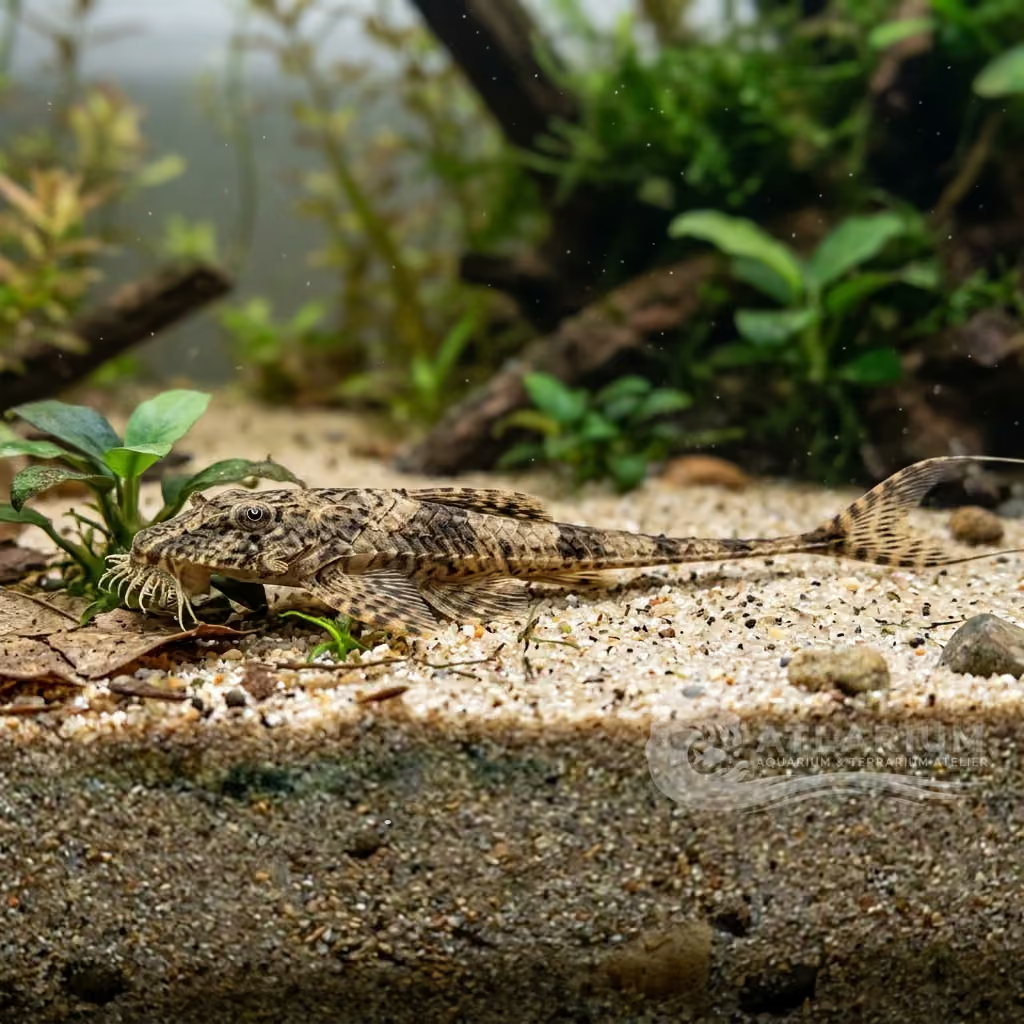
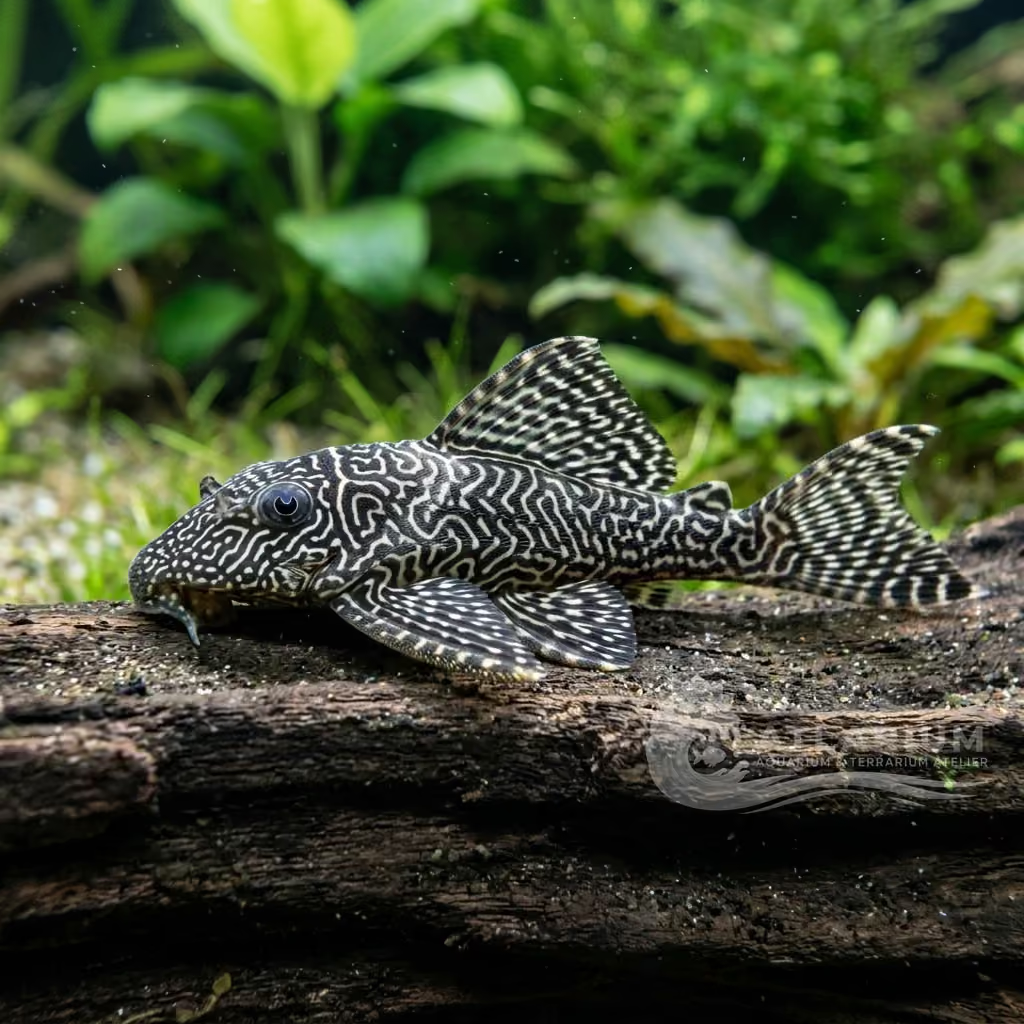
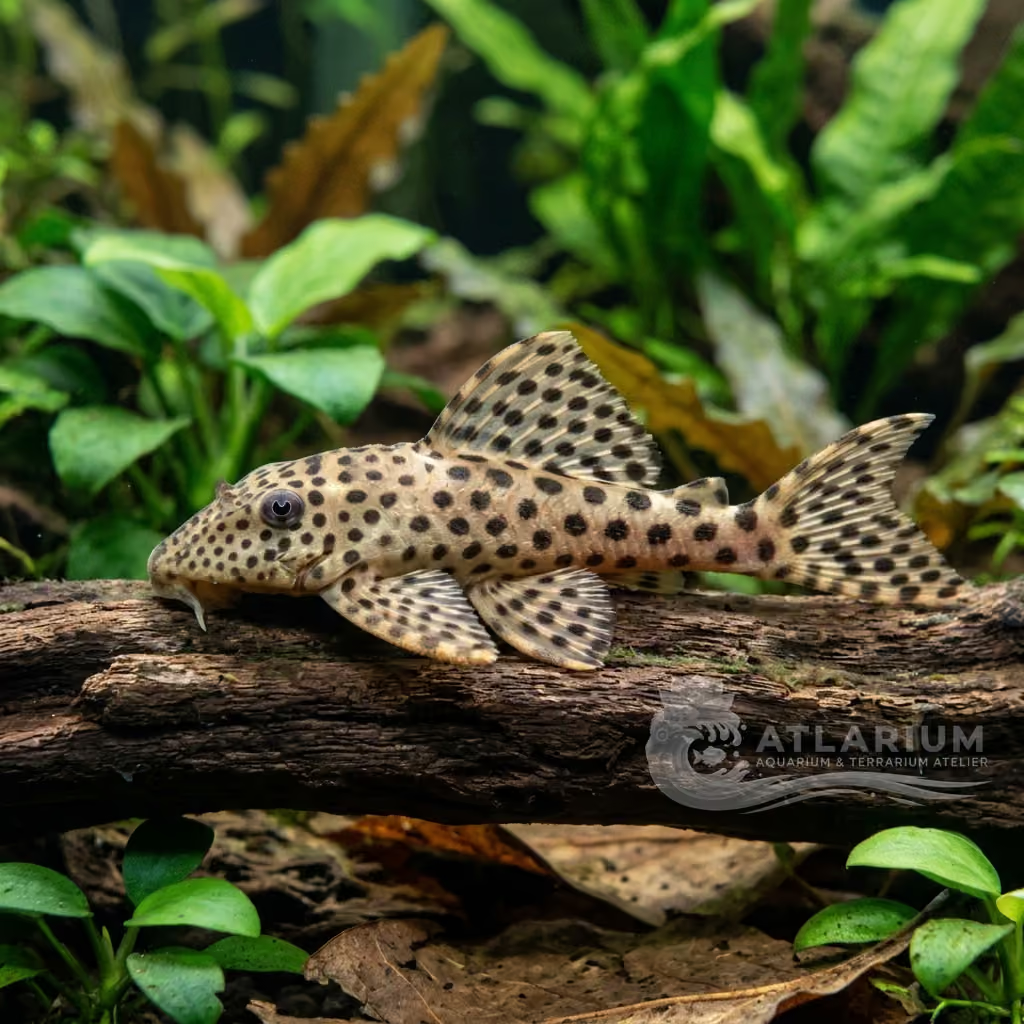
One of the largest existing loricariids. Nicknamed the 'Lyretail Pleco' due to the very long filiform extensions of its caudal fin. Completely pitch black and bristling with armored spines.
Température de l’eau
25 - 29 °C
Valeur du pH
6 - 7.5
Type d'eau
Eau douce
Niveau dans le bac
Fond
Taille adulte
70 cm
Volume minimal du bac
>= 1 000 L
Groupe minimal
>= 1
GH
2 - 15 dGH
KH
2 - 12 dKH
TDS
50 - 345 ppm
Conductivité
78 - 539 uS/cm

Description de l'espèce
Geographical Origin and Habitat: Endemic to the Amazon River basin (Brazil, Peru, Ecuador). Robust species that thrives in turbid and fast rivers, taking refuge in submerged logs or under rocky cliffs during the day.
Taxonomy and Morphology: Lyretail Pleco (L155 / Acanthicus hystrix). An aquatic "monster" in every sense. Slender shape with caudal lobes that extend into infinite filaments (Lyretail). The body is completely armored and entirely covered with quills ("hystrix" = porcupine).
Social Behavior: Territorial and asocial, especially towards other bottom fish. As it grows, it will develop a marked aggressiveness, attacking and fatally injuring intruders with vigorous strokes of its tail armed with odontodes.
Coloration and Sexual Dimorphism: Juvenile specimens can present a blackish background with elegant white spots, but mutate into a solid coal black as adults. Massive males, with extremely developed and dangerous opercular (cheeks) and pectoral odontodes.

Soins, reproduction et cohabitation
Aquarium Setup: Cyclopean dimensions (over 250 cm / 100 inches tank) for adults. Setup with enormous glued smooth boulders and giant logs (nothing that can be overturned). Do not use internal glass heaters: it will shatter them.
Diet and Feeding: Tireless omnivore. Mixed and massive diet: zucchini, sweet potatoes, fruit (melon), peas, balanced with a strong protein intake from white fish fillets, mussels, shelled shrimp and XL pellets.
Water Quality: Produces impressive droppings, proportionate to its size. Industrial filtration systems (huge sumps) and weekly 50% water changes are mandatory. Requires vigorous current and saturation oxygen.
Compatibility and Cohabitation: Can only be paired with very large South American fish that occupy the upper water column: Arowana (Osteoglossum), large Cichla (Peacock Bass), or Pacu (Colossoma). Will kill other large plecos in non-gigantic tanks.
Aquarium Breeding: Never documented due to inaccessible dimensions and aggressiveness in private tanks. Reproduction occurs in nature in deep rocky crevices flooded during the rainy season.
Risks and Diseases: The greatest danger is for the aquarist: handling it barehanded leads to deep lacerations. Under stress or due to poor water quality it can develop severe bacterial infections that affect the filamentous fins.

Origine et répartition géographiques
Endemic to the Amazon River basin (Brazil, Peru, Ecuador). Robust species that thrives in turbid and fast rivers, taking refuge in submerged logs or under rocky cliffs during the day.
Origine
Amazonie, Orénoque et Guyanes

Profil de poisson
- Tempérament
- Aggressive
- Acanthicus hystrix is known to be an extremely territorial and aggressive catfish, particularly towards conspecifics and other bottom-dwelling species. As it grows and approaches sexual maturity, this bellicose behavior tends to intensify significantly, making it a difficult resident for community aquariums. Adults will fiercely defend their chosen shelter, using the sharp spines on their body and pectoral fins to deter or injure intruders. Consequently, keeping this species as a solitary specimen is highly recommended to avoid territorial disputes that can often prove fatal.
- Régime alimentaire
- Omnivore
- This catfish is an opportunistic omnivore with a strong preference for protein-rich foods as an adult. While juvenile specimens regularly consume algae and biofilm from surfaces, they require a more substantial diet as they grow, including shrimp, mussels, clams, and fish fillets. It is crucial to supplement their nutrition with high-quality sinking vegetable tablets to ensure a balanced fiber intake. Furthermore, the presence of natural driftwood in the tank is highly important, as these fish rasp on it to aid their digestive process.
- Espérance de vie
- 10-15 years
- Taille adulte
- 70 cm
- Ratio des sexes
- Solitary
- Due to their highly territorial and aggressive nature, particularly among mature males, Acanthicus hystrix is generally best kept as a single specimen in a home aquarium. Attempting to keep multiple individuals in the same tank is highly risky and requires an exceptionally large aquarium with clearly defined territories and physical barriers. When breeding is attempted, a single male is typically introduced to a single female in a massive, specialized environment to prevent lethal territorial disputes. For the average hobbyist, keeping a single individual is the safest and most manageable stocking strategy.
- Fréquence d'alimentation
- Once daily
- It is recommended to feed Acanthicus hystrix once daily, preferably in the evening shortly after the aquarium lights have been turned off. Being a predominantly nocturnal species, they forage with greater efficiency and comfort during the hours of darkness. Young specimens in active growth stages can benefit from smaller meals provided twice a day, as long as portions are carefully managed. It is crucial to promptly remove any uneaten food residues the following morning to prevent decomposition and subsequent water quality deterioration.
- Charge biologique
- Extreme
- Acanthicus hystrix is a massive loricariid catfish that produces an exceptionally high biological load in the aquarium. Due to its large size and omnivorous diet, it generates a significant amount of waste, which can rapidly deteriorate water quality if not managed properly. Therefore, an aquarium housing this species requires heavy-duty filtration, such as large canister filters or sumps, along with strong water flow and high oxygenation. Regular, large-scale water changes are also mandatory to dilute accumulated nitrates and maintain a clean environment.
- Courant
- Strong
- Acanthicus hystrix inhabits the main channels of major South American rivers, where currents are strong and the water is highly oxygen-rich. In an aquarium, this species requires moderate to strong water circulation to closely simulate its natural habitat. It is advisable to install powerheads or direct filter outputs to create areas of intense current along the bottom. This vigorous movement not only stimulates the natural behavior of the fish but also helps maintain high dissolved oxygen levels and prevents detritus from accumulating on the substrate.
- Risque de saut
- Yes
- While Acanthicus hystrix is not traditionally considered an active jumper, its sheer size, power, and tendency to startle easily pose a potential risk of jumping. If spooked by sudden movements, lights, or aggressive tank mates, a large specimen can launch itself with enough force to breach the water surface and potentially push open loose covers. To prevent such accidents, the aquarium must be fitted with a heavy, tightly secured lid or sliding glass tops. Additionally, keeping the water level slightly below the rim and providing ample hiding spaces can reduce stress and minimize the risk of startle-induced jumping.
- Reproduction
- Oviparous
- Breeding Acanthicus hystrix in private home aquariums is an exceptionally rare event and is not regularly documented due to the massive size of these fish. In the wild, these loricariids spawn inside deep rocky crevices or submerged caves during the rainy season. The male coaxes the female into the nest and, after egg deposition, assumes sole responsibility for parental care, fanning and aggressively defending the spawn from predators. To attempt breeding in captivity, one would require public aquarium-sized setups with massive caves and a simulation of seasonal rainfall through large water changes.
- Compatibilité et compagnons
- With caution
- The compatibility of this species with other fish is highly problematic due to its pronounced territorial behavior. Adults exhibit extreme aggression toward other loricariids, catfish in general, and any species that occupies the bottom zone of the tank. They can only be successfully cohoused with large, robust pelagic fish that swim in the upper water column, such as Arowanas, Pacus, or large Central and South American cichlids. The aquarium must be of colossal dimensions to ensure that each fish has enough space to establish its territory without continuous conflict.
- Niveau dans le bac
- Bottom
- Acanthicus hystrix is a classic bottom-dwelling species that spends the vast majority of its time on the aquarium substrate, rocks, and driftwood. They utilize their suckermouth to latch onto surfaces and will claim caves or crevices at the bottom of the tank as their primary territory. Although they are bottom-oriented, their large size and active foraging behavior mean they will occasionally move along the tank glass or decor to feed. The tank layout must prioritize ample floor space and stable, heavy structure at the lower level to accommodate their weight and natural movements.

Modèles et paramètres scientifiques
FishBase
Fenêtre sur les données scientifiques officielles de l’espèce
FishBase v25.04Données synchronisées le : 15/06/2026
- Résilience
- Très faible (plus de 14 ans)
- Singularité phylogénétique (PD50)
- 0.75
- Relation bayésienne longueur-poids
- a = 0.01549, b = 2.96
- VulnérabilitéVulnérabilité modérée à élevée (46 / 100)

Espèces associées
Recommandations regroupées par proches parents, compagnons et soins similaires.