Philonotis hastata
Philonotis hastata
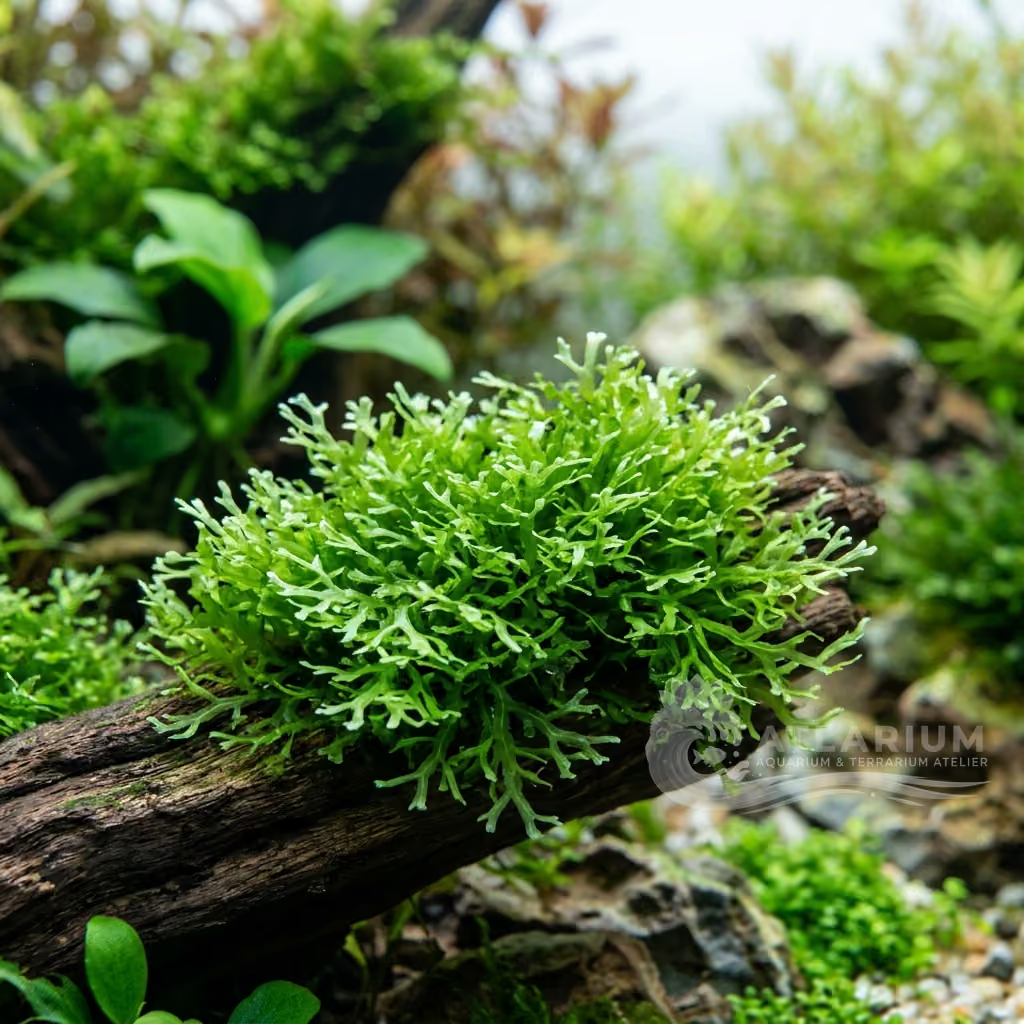
Philonotis hastata is a versatile midground moss, perfect for creating dense, vibrant green carpets or cushions in the aquarium. Its medium growth rate and wide parameter tolerance make it an excellent choice for various aquascaping styles.
Water Temperature
18 - 30 °C
pH Value
5 - 8
Water type
Freshwater
Light
Low to High
CO2
High
KH
0 - 14 dKH

Species description
Geographical Origin and Habitat: Philonotis hastata is a moss with a rather extensive geographical distribution, found in various regions across the globe, particularly in temperate and tropical areas. Its natural habitat favors moist and semi-aquatic environments, such as riverbanks, stream edges, boggy areas, or constantly wet rocks. This species can thrive both fully submerged and emergent, demonstrating remarkable ecological plasticity, which makes it particularly adaptable to the submerged aquarium environment.
Taxonomy & Genetics: Belonging to the Bartramiaceae family, Philonotis hastata shares with other members of the Philonotis genus the characteristic of being a "lantern moss," referring to the shape of its sporophyte capsule. The classification of this species highlights its deep evolutionary roots among bryophytes, a group of primitive terrestrial plants lacking a true vascular system. Its genetic structure allows it to tolerate a wide range of environmental conditions, from water hardness to temperature, a peculiarity that contributes to its hardiness in the aquarium.
Physical Structure: Philonotis hastata presents with erect or creeping stems that form dense, compact cushions when growing abundantly. Its leaves are small, lanceolate or ovate, often with an acute or "hastate" tip, from which its specific name derives, arranged spirally along the stem. This moss does not develop true roots but anchors itself to the substrate via filamentous rhizoids, which primarily serve for attachment and minimally for nutrient absorption, as nutrients are mainly taken from the water column.
Color & Texture: The predominant color of Philonotis hastata is a bright and intense green, which can vary slightly in hue depending on light intensity and nutrient availability, tending towards a lighter green under high light. Its texture is fine and delicate to the touch, yet compact and resilient, forming a velvety or spongy appearance. This density and vibrant color make it a prominent element in the layout, capable of adding depth and visual contrast, especially when placed against dark elements or other plants.

Care, breeding and tankmates
Lighting & CO2: Philonotis hastata is an incredibly versatile moss regarding lighting, tolerating conditions ranging from low to high light, although it prefers medium intensity for optimal growth. Under low light, its growth rate will be slower but consistent, while under high light, it tends to become more compact and display more vibrant colors. CO2 injection is not strictly necessary for its survival, but it will promote more vigorous, denser growth and a brighter color by accelerating the moss's photosynthetic processes.
Nutrition & Substrate: As a moss, Philonotis hastata absorbs nutrients directly from the
Water Chemistry: Philonotis hastata exhibits remarkable tolerance for a wide range of water parameters, making it a robust choice for aquarists of all experience levels. It prefers temperatures between 18.0 and 30.0 C, pH between 5.0 and 8.0, and carbonate hardness (KH) between 0.0 and 14.0. While adaptable, maintaining stable parameters within these optimal ranges will contribute to more vigorous growth and prevent stress, ensuring the moss's health and beauty in the aquarium.
Space Management & Placement: This moss is ideal for the aquarium midground, where it can be used to create lush carpets, cover rocks or driftwood, or fill empty spaces between other plants. It can be easily attached to hard surfaces using aquarium-safe super glue, cotton thread, or a fine mesh, allowing it to anchor and grow naturally. Its dense growth habit makes it perfect for creating a natural effect and helping define layout zones, also providing excellent refuge for fry and small invertebrates.
Pruning: Pruning Philonotis hastata is important to maintain its desired shape and promote denser, more compact growth. Using sharp scissors, excess or overgrown parts can be trimmed, thereby encouraging the development of new shoots from the base. Regular pruning prevents the accumulation of debris within the moss and reduces the risk of lower sections suffocating due to lack of light, keeping the overall appearance of the moss healthy and vigorous.
Risks & Diseases: Philonotis hastata is generally a hardy moss, but it can be susceptible to some common aquarium problems. Excessive accumulation of debris or high levels of organic pollutants can encourage the growth of filamentous algae that may smother the moss. Nutritional deficiencies, particularly iron, can manifest as yellowing of the fronds. Furthermore, excessively low light conditions or insufficient water flow can lead to stunted growth or necrosis of the inner parts of the cushion, so careful monitoring of the environment is crucial.

Geographic origin and distribution
Philonotis hastata is a moss with a rather extensive geographical distribution, found in various regions across the globe, particularly in temperate and tropical areas. Its natural habitat favors moist and semi-aquatic environments, such as riverbanks, stream edges, boggy areas, or constantly wet rocks. This species can thrive both fully submerged and emergent, demonstrating remarkable ecological plasticity, which makes it particularly adaptable to the submerged aquarium environment.
Origin
Cosmopolitan or introduced

Plant profile
- Placement
- Midground
- This plant is highly versatile and is best placed in the foreground or midground areas. Attaching it to wood or stone creates a very natural, mature aesthetic in the aquascape. Careful placement in areas with gentle to moderate flow prevents debris accumulation. It can also be used to soften harsh transitions between hardscape elements.
- Botanical form
- Moss
- Botanically, Philonotis hastata is characterized by upright, star-like shoots. It develops a complex network of branching shoots that form a visually appealing cushion. Its fine texture provides an excellent contrast to broader-leaved species. This dense structure also offers ideal hiding spaces for shrimp and fry.
- Growth
- Medium
- The growth rate is generally slow to moderate, depending heavily on light intensity and CO2 availability. With supplemental CO2 and strong lighting, it will form dense, thick clumps much faster. In lower tech setups, it grows steadily but requires far less maintenance. Periodic thinning is beneficial to ensure light reaches the underlying layers.
- Substrate
- None
- As an epiphyte, Philonotis hastata does not depend on a nutrient-rich substrate for survival. It prefers to be attached directly to hardscape materials such as porous rocks or driftwood. If placed on the substrate, ensure it is resting on the surface rather than buried, as burying will cause severe rot. A coarse surface allows its rhizoids to anchor securely.
- Column fertilization
- Recommended
- Column fertilization is the primary method of delivering essential nutrients to Philonotis hastata. Since it lacks a true root system, it absorbs all required elements through its leaf surfaces. A comprehensive liquid fertilizer containing potassium, trace elements, and moderate nitrates is ideal. Consistent dosing yields the most stable and attractive growth.
- Root fertilization
- None
- Root tabs and nutrient-rich substrates provide absolutely no benefit to this specific plant. It is entirely incapable of extracting nutrients buried within the soil. Do not attempt to bury it with fertilizer tabs. All nutritional focus should remain strictly on the water column.
- Trimming
- Occasional
- Trimming Philonotis hastata requires a careful approach to encourage bushy and attractive regrowth. Use sharp aquascaping scissors to make clean cuts just above a healthy set of leaves or nodes. Regular pruning prevents the lower portions from becoming shaded and bare. The cuttings can often be replanted to propagate the species further.
- Propagation
- Division
- Propagation is incredibly straightforward and relies on simple mechanical division. By carefully tearing or cutting a clump into smaller sections, you create multiple new plants. These new pieces can be tied or glued to new hardscape locations. Under favorable conditions, the separated clumps will rapidly attach and resume their outward growth.
- Sensitivity
- Moderate
- Philonotis hastata can be somewhat sensitive to sudden fluctuations in water parameters, particularly large pH or temperature swings. Algaecides and certain chemical treatments should be used with extreme caution. It requires a stable environment with consistent CO2 levels to prevent melting. Maintaining excellent water quality through regular changes is essential for its well-being.
- Layout role
- Midground, group, Epiphyte, moss
- In terms of aquascaping, Philonotis hastata plays a vital role as a structural or accent element. Its moss nature and bright green appearance make it perfect for creating focal points or softening hardscape lines. By grouping several stems or patches together, you can achieve a dense and visually striking effect. It seamlessly bridges the gap between different zones in the aquarium.

Related species
Recommendations grouped by close relatives, companion choices, and similar care.