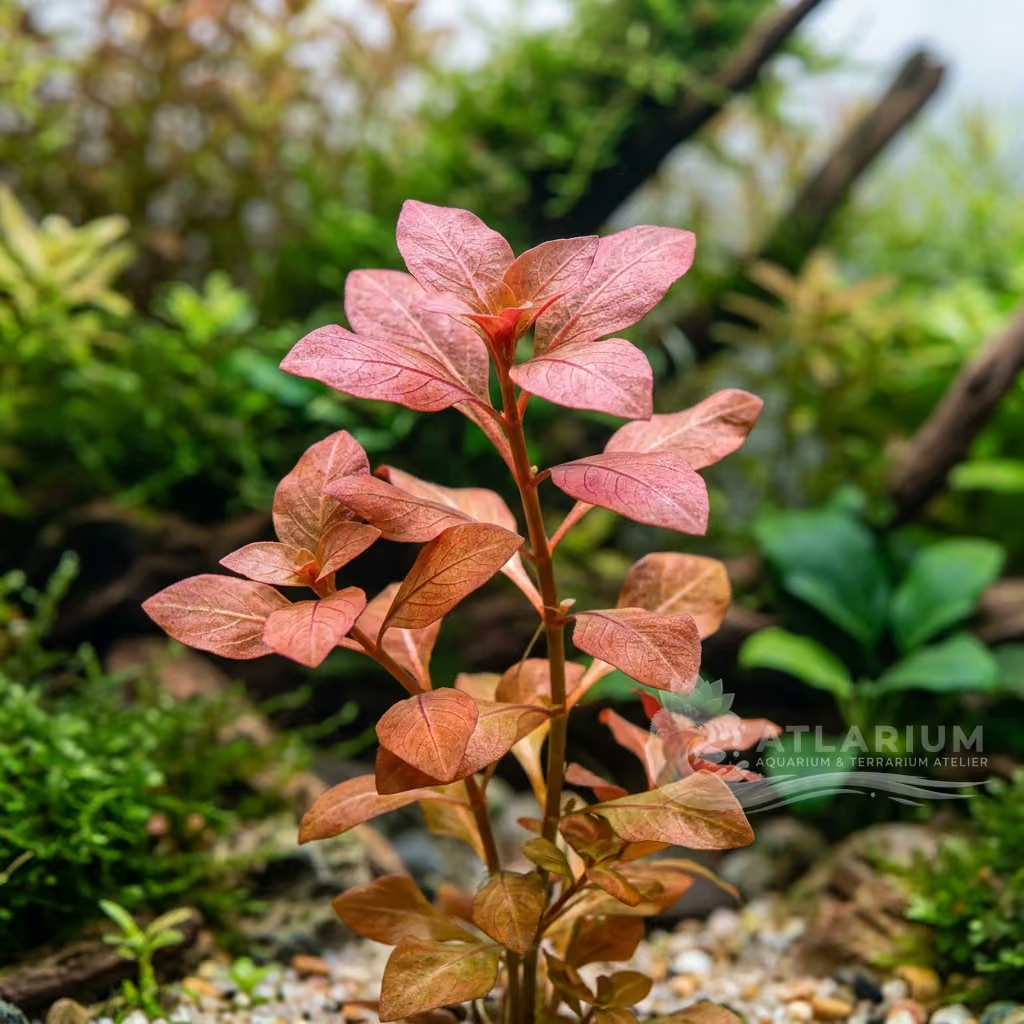
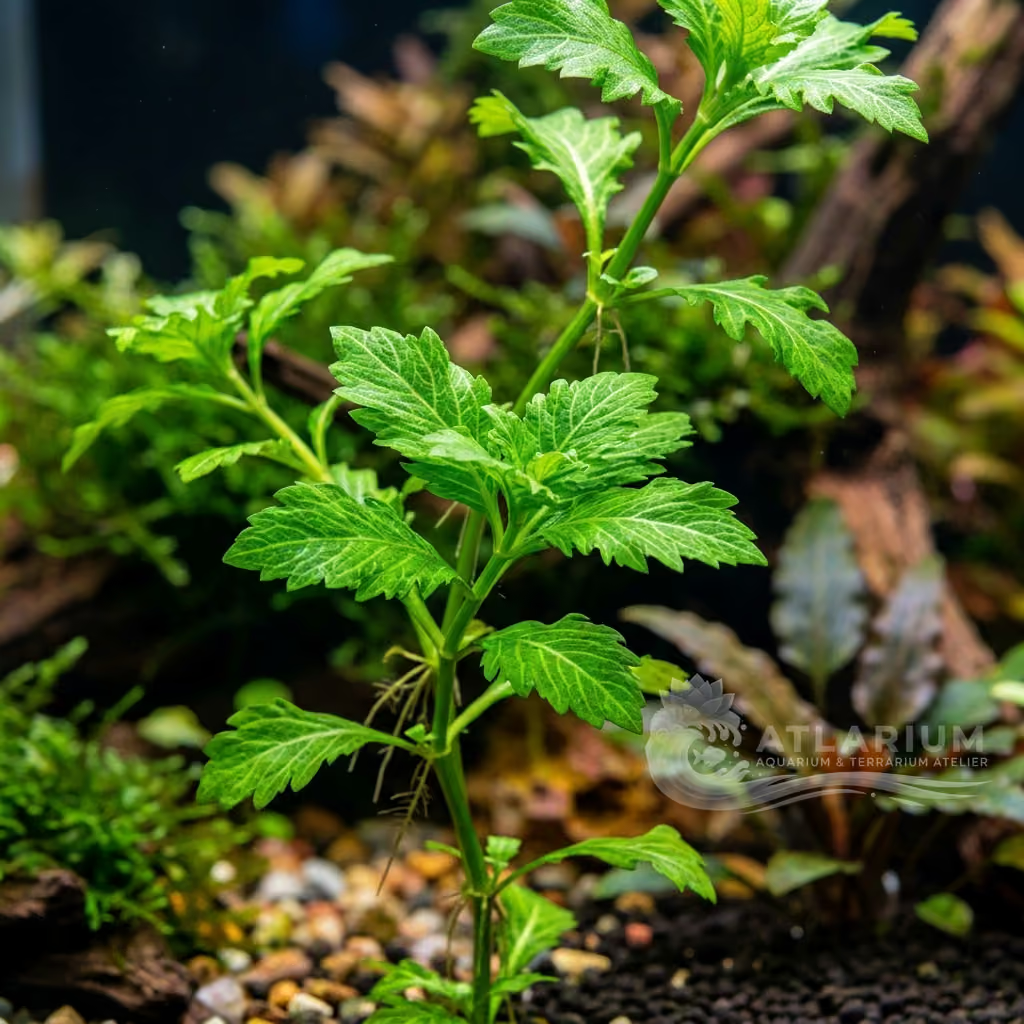
Hyophila involuta
Hyophila involuta
Commonly known as Star Moss, this robust bryophyte naturally grows on damp concrete or wet rocks. In the aquarium, it requires bright light, CO2, and hardscape attachment to successfully adapt.
Water Temperature
18 - 30 °C
pH Value
5 - 7.5
Water type
Freshwater
Light
Medium - High
CO2
Low - High
GH
2 - 15 dGH
KH
0 - 14 dKH

Species description
Geographical Origin and Habitat: Hyophila involuta, commonly known as Star Moss or Cement Moss, has a global distribution in tropical and subtropical regions. It grows in damp and exposed places such as wet rocks, concrete walls, forest streams, and waterfalls. It adapts to withstand long periods of drought by entering a dormant state, recovering quickly when wet.
Taxonomy & Genetics: It belongs to the family Pottiaceae. It is a bryophyte (moss) and features robust cell tissues with thick walls that protect the plant from osmotic stress during the alternation between dry and submerged states. Its genetics allow it to survive in submerged aquarium environments despite not being a strictly native aquatic plant.
Physical Structure: It forms dense, compact, and erect cushions. The individual tiny stems are very short and bear small leaves arranged in a spiral rosette. The open leaves have a characteristic star shape when viewed from above. Lacking true roots, it anchors to surfaces via short fibrous rhizoids.
Color & Texture: It displays a bright emerald green or dark forest green coloration. The leaf texture is velvety and rigid. When the plant dries out, the leaves curl and roll inward, whereas in water they expand, revealing the shiny and decorative star-like structure.

Care, breeding and tankmates
Lighting & CO2: Requires medium to intense lighting to grow compactly in the aquarium. CO2 injection is highly recommended to facilitate the transition to submerged life and stimulate photosynthesis, preventing the tiny stems from melting.
Nutrition & Substrate: As a moss epiphyte, it must not be buried in the substrate, as the bases would quickly rot. It should be tied or glued to rocks, driftwood, or hardscape decors. It absorbs dissolved nutrients directly from the
Water Chemistry: Tolerates temperatures between 18°C and 30°C, pH from 5.0 to 7.5, and carbon hardness (KH) from 0 to 14 dKH. It is important to ensure clean water free of suspended particles that could settle between its dense leaves.
Space Management & Placement: Its ideal placement is in the midground of the aquarium, attached to rocks or wood in well-lit areas with good water circulation. Due to its small size, it is perfect for nano aquariums.
Pruning: Growth is extremely slow, so pruning is rarely necessary. If the cushions become too thick or lose their original compact shape, they can be gently trimmed with sharp aquascaping scissors.
Risks & Diseases: The main risk is the development of filamentous algae or black brush algae among its leaves, favored by its very slow growth. Additionally, organic debris accumulation can suffocate the moss, leading to the death of internal stems.

Geographic origin and distribution
Hyophila involuta, commonly known as Star Moss or Cement Moss, has a global distribution in tropical and subtropical regions. It grows in damp and exposed places such as wet rocks, concrete walls, forest streams, and waterfalls. It adapts to withstand long periods of drought by entering a dormant state, recovering quickly when wet.
Origin
Cosmopolitan or introduced

Plant profile
- Placement
- Midground
- It is typically used in the foreground or midground attached to hardscape. It looks best when tied or glued to rocks and driftwood to simulate natural mossy growths. It should be placed where it receives moderate light and gentle water flow. Avoid completely shading it, though it can survive low light.
- Botanical form
- epiphyte or epilith
- It features tiny, densely packed leaflets that form a thick, sponge-like carpet on hard surfaces. The structure is somewhat stiffer than many common aquatic mosses. When submerged, it retains a deep, rich green coloration. The compact form provides an excellent natural feel to the hardscape.
- Growth
- Very slow
- This moss has a notably slow growth rate, even under optimal conditions. It creeps slowly along surfaces, forming dense, compact cushions over time. Adding CO2 will marginally increase its growth speed. Its slow nature makes it a very low-maintenance choice.
- Substrate
- None
- Hyophila involuta is a versatile aquatic moss that lacks true roots, relying instead on tiny, hair-like rhizoids to anchor itself to hardscape elements. It performs best when tied or glued to coarse rocks, porous driftwood, or mesh pads, where it creates dense, star-like green tufts. This species derives all of its necessary moisture and dissolved nutrients directly from the water column, entirely eliminating the need for a soil or gravel substrate.
- Column fertilization
- Recommended
- Since it lacks a true root system, column fertilization is its only method of nutrient uptake. A lean dosing regime of liquid fertilizer is perfectly adequate. Over-fertilization can actually be detrimental by encouraging algae growth on the moss. Simple, clean water often yields the best results.
- Root fertilization
- None
- This plant is an epiphyte and true moss, meaning it does not have roots that can utilize substrate nutrients. Instead, it uses tiny rhizoids merely to anchor itself to surfaces. Therefore, root tabs and nutrient-rich soils provide absolutely no direct benefit to it. It must be nourished via the water column.
- Trimming
- Occasional
- Trimming is rarely needed due to its slow growth rate. When it does become too thick, it can be carefully thinned out using sharp spring scissors. Trimming helps ensure the lower layers don't suffocate and die off. Removed pieces can be tied to new rocks to start new patches.
- Propagation
- Cuttings
- Propagation is incredibly simple and done by division. Just tear or cut a clump from the main mass and reattach it to a new piece of hardscape. It can be secured using cotton thread, fishing line, or aquatic safe cyanoacrylate glue. It will slowly anchor itself over several weeks.
- Sensitivity
- Moderate
- It is quite sensitive to algae, especially hair algae, which can easily entangle in its delicate structure. Excellent water quality and adequate flow are necessary to keep it clean. It can also suffer if water temperatures become too high for prolonged periods. Chemical algae treatments should be used with extreme caution.
- Layout role
- Nano, Epiphyte
- It is an essential detailing plant used to age the aquascape. By covering bare wood and stark rocks, it creates a sense of maturity and natural harmony. It softens harsh transitions between the hardscape and the substrate. It is also an excellent grazing ground for dwarf shrimp.

Related species
Recommendations grouped by close relatives, companion choices, and similar care.