Orange-spotted spinefoot
Siganus guttatus
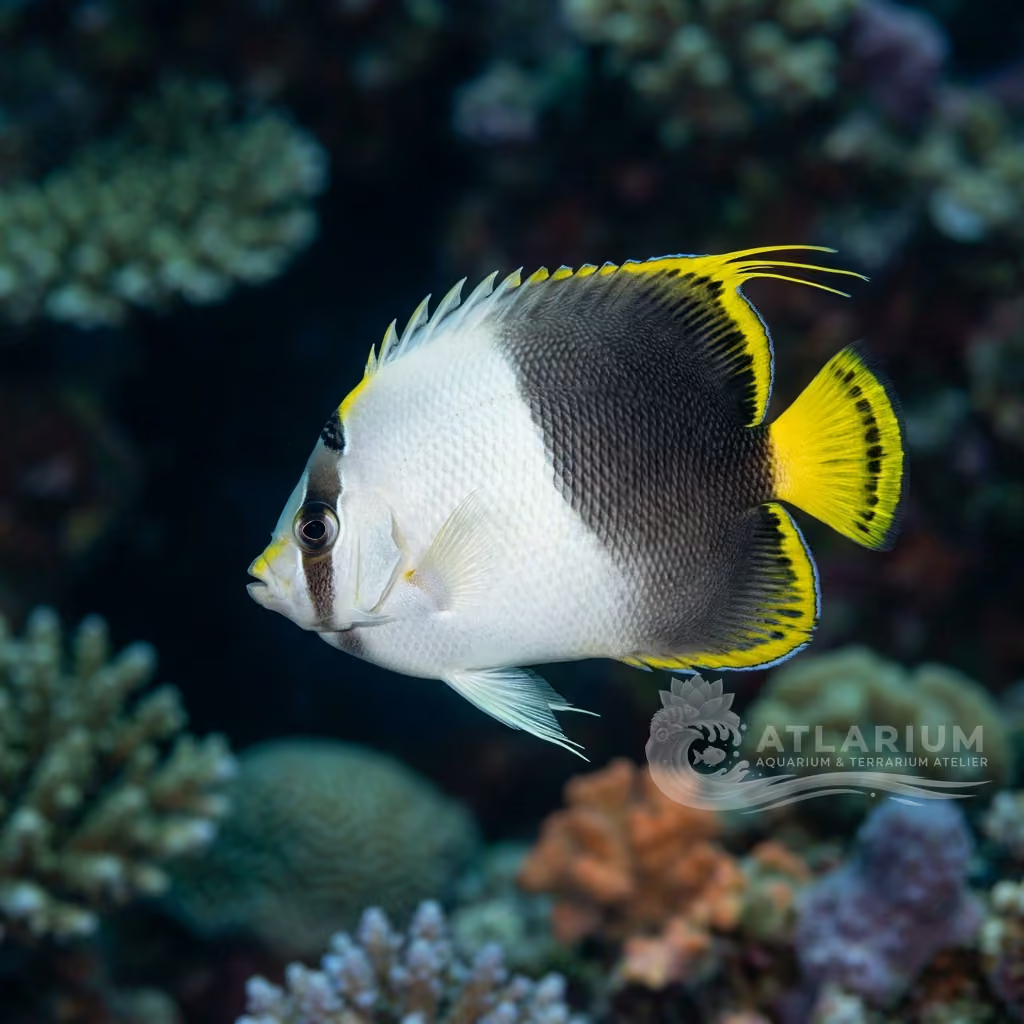
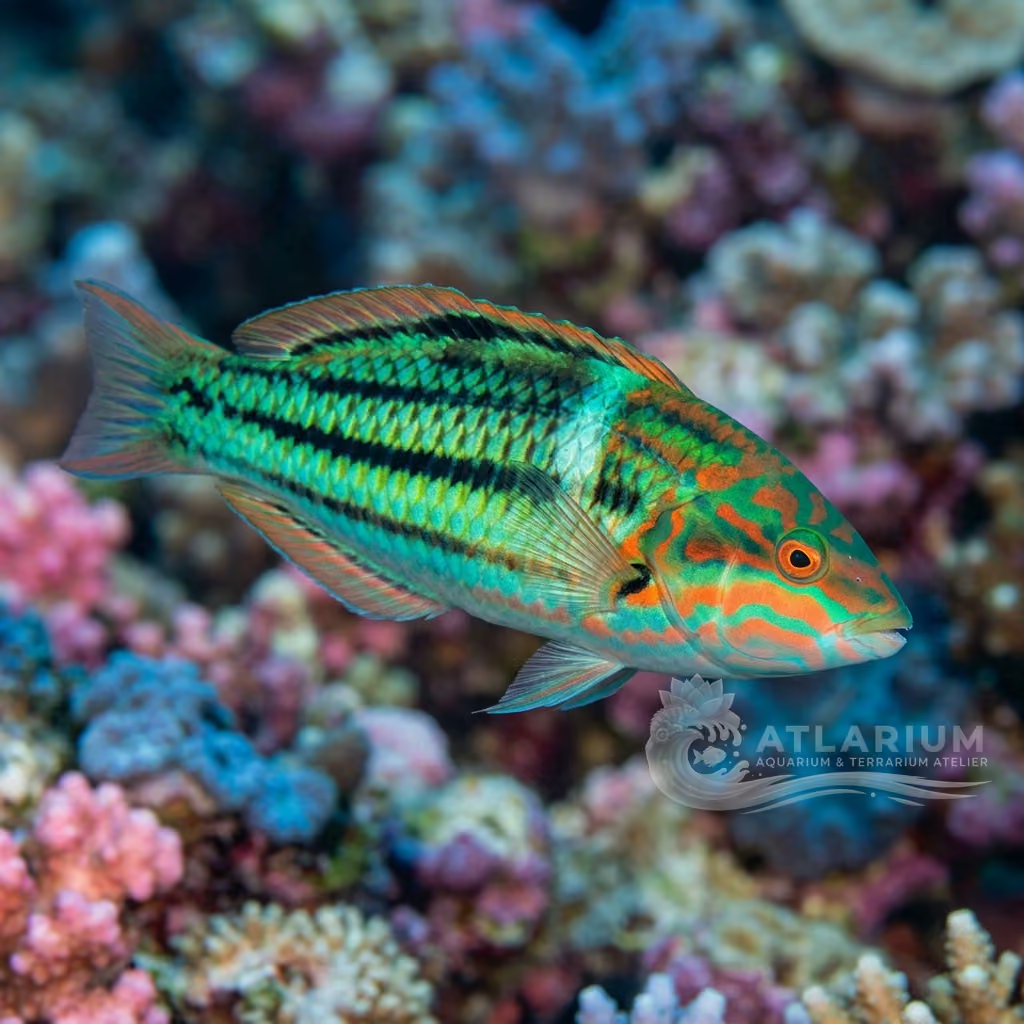
A medium-sized marine rabbitfish characterized by a silver-blue body covered with dense orange spots and a prominent golden-yellow blotch near the soft dorsal fin.
Water Temperature
22 - 30 °C
pH Value
8 - 8.5
Water type
Marine
Tank level
Bottom and middle
Adult size
42 cm
Minimum tank volume
>= 800 L
Minimum group
>= 1
KH
8 - 12 dKH

Species description
Geographical Origin and Habitat: Siganus guttatus is widely distributed across the tropical waters of the Indo-West Pacific region, ranging from the coasts of Indonesia, Malaysia, and the Philippines to the Ryukyu Islands of Japan and the northern Great Barrier Reef in Australia. This species is commonly found in shallow coastal reefs, sandy lagoons rich in algae growth, brackish estuaries, and silty mangrove areas. It possesses a high tolerance for varying salinity levels, allowing it to navigate between marine habitats and estuarine environments for shelter.
Taxonomy and Morphology: Belonging to the family Siganidae, this species is commonly referred to as a rabbitfish due to the snout's shape resembling a rabbit's nose. Its body is oval-shaped and highly compressed laterally, with a small terminal mouth adapted for grazing. A key morphological feature is the presence of sharp, venomous spines in its dorsal, anal, and pelvic fins, which serve as a highly effective defense mechanism against marine predators.
Social Behavior: Juveniles of Siganus guttatus are highly gregarious, forming large, dense schools in shallow estuaries and seagrass beds to protect themselves from predators. As they mature into adulthood, they tend to form stable pairs or small groups that patrol deeper reef slopes. They are generally peaceful toward non-related fish species, but can exhibit territorial behavior and intraspecific aggression if kept in cramped conditions.
Coloration and Sexual Dimorphism: The body coloration is a striking silver-blue or dusky grey, covered with numerous small, round orange-brown spots that extend onto the head and fins. A signature characteristic is a large, bright yellow spot located on the back, adjacent to the posterior end of the dorsal fin. There is no visible sexual dimorphism; males and females look identical and can only be distinguished during spawning behaviors.

Care, breeding and tankmates
Aquarium Setup: Due to its large adult size of up to 35 cm and active swimming nature, Siganus guttatus requires a spacious aquarium of at least 500 liters. The tank layout should feature robust, stable rockwork with numerous caves and overhangs where the fish can seek shelter, while leaving a large open area in the center for free swimming. Secure the rock structure well, as their sudden bursts of speed could cause unstable rocks to collapse.
Diet and Feeding: This species is predominantly herbivorous, feeding on filamentous algae, macroalgae, and seagrasses in the wild. In a home aquarium, their diet must consist primarily of vegetable matter. Offer high-quality spirulina flakes, herbivore pellets, nori sheets, and blanched vegetables like spinach or zucchini. Occasional protein-rich foods, such as mysis shrimp or krill, should be provided to ensure a balanced nutritional intake.
Water Quality: Maintaining stable marine water parameters is essential. Keep the water temperature between 24 and 28 °C, pH levels between 8.1 and 8.4, and specific gravity around 1.020 to 1.025. Given their herbivorous diet and large bioload, a strong filtration system and an efficient protein skimmer are required to prevent the accumulation of nitrates and organic waste.
Compatibility and Cohabitation: Siganus guttatus is generally peaceful and is compatible with most community marine fish of similar or smaller sizes. It is reef-safe with caution; while it does not harm small-polyp stony (SPS) corals, it may occasionally nip at large-polyp stony (LPS) corals or soft corals if it is not receiving sufficient vegetable matter. Avoid housing them with highly aggressive tankmates.
Aquarium Breeding: Breeding this species in a home aquarium is extremely difficult and rarely documented. In the wild, they are broadcast spawners that release adhesive eggs onto substrate. The larvae undergo a complex pelagic stage, requiring specific microscopic live foods like rotifers and cultured phytoplankton, which is highly challenging to replicate in a closed home aquarium environment.
Risks and Diseases: The primary risk when handling Siganus guttatus is their venomous fin spines. A puncture wound can cause intense pain and swelling in humans, requiring immediate hot water treatment. Like many marine fish, they are susceptible to common skin parasites like marine ich (Cryptocaryon irritans) and velvet (Amyloodinium), particularly when stressed by poor water quality.

Geographic origin and distribution
Siganus guttatus is widely distributed across the tropical waters of the Indo-West Pacific region, ranging from the coasts of Indonesia, Malaysia, and the Philippines to the Ryukyu Islands of Japan and the northern Great Barrier Reef in Australia. This species is commonly found in shallow coastal reefs, sandy lagoons rich in algae growth, brackish estuaries, and silty mangrove areas. It possesses a high tolerance for varying salinity levels, allowing it to navigate between marine habitats and estuarine environments for shelter.
Origin
Tropical oceans and reefsSouth and Southeast AsiaEast AsiaAustralia, New Guinea, and Oceania

Fish profile
- Temperament
- Semi-aggressive
- They are generally peaceful but can hold their own against more aggressive fish due to their venomous dorsal spines. They become easily startled and will rapidly change color to a mottled camouflage pattern when stressed or sleeping. Care must be taken when handling them during tank maintenance to avoid painful stings.
- Diet
- Omnivore
- They are primarily herbivores that spend their days grazing on various types of algae. Their diet should consist mainly of marine algae, spirulina, and nori seaweed sheets. They will also accept meaty foods like mysis shrimp to supplement their diet.
- Life expectancy
- 10-12 years
- Adult size
- 42 cm
- Sex ratio
- Flexible
- They are best kept individually or in a mated pair in home aquariums. If attempting to keep multiple individuals, a massive tank of hundreds of gallons is required to prevent extreme aggression. They are highly intolerant of other rabbitfish of the same sex.
- Feeding frequency
- 2-3 times daily
- They require multiple feedings throughout the day to satisfy their grazing nature. Offering a nori clip that they can nibble on continuously is highly recommended. Supplement with pellet or frozen foods once or twice daily.
- Bioload
- High
- The Orange-spotted Rabbitfish produces a moderately heavy bioload. As active grazers, they constantly eat and process large amounts of plant matter. A strong protein skimmer and solid biological filtration are needed to keep the aquarium clean.
- Flow
- Strong
- They enjoy moderate to strong water flow, which reflects their natural reef environment. Strong circulation also promotes the health of the live rock they graze upon. High oxygen levels are beneficial to maintain their active lifestyle.
- Jump risk
- Yes
- Like most active marine fish, they carry a moderate risk of jumping out of the aquarium. They may dart upwards if startled by aggressive tank mates or sudden movements outside the tank. A secure mesh lid is essential for their protection.
- Reproduction
- Oviparous
- Breeding the Orange-spotted Rabbitfish in a home aquarium is extraordinarily rare. In the wild, they form large spawning aggregations and release pelagic eggs into the water column. Raising the microscopic fry requires specialized planktonic foods and massive rearing tanks.
- Compatibility & tankmates
- Reef safe
- They are generally peaceful and make great additions to large reef or FOWLR (Fish Only With Live Rock) aquariums. They can be housed with tangs, angels, and wrasses without much issue. Caution is advised with corals, as they may nip at large-polyped stony corals (LPS) or soft corals if underfed.
- Tank level
- Middle/Bottom
- They utilize all levels of the aquarium but spend the majority of their time navigating the rockwork. They will swim out into the open water to snatch food or patrol their territory. Providing plenty of swimming space and rocky caves is ideal.

Scientific Parameters & Models
FishBase
Window to the official scientific data of the species
FishBase v25.04Data synced on: 06/15/2026
- Trophic level
- 2.7 ± 0.3 se
- Resilience
- High (less than 15 months)
- Generation time
- 0.8 years
- Phylogenetic uniqueness (PD50)
- 0.5
- Bayesian Length-Weight
- a = 0.01585, b = 3.04
- VulnerabilityLow vulnerability (19 / 100)

Related species
Recommendations grouped by close relatives, companion choices, and similar care.