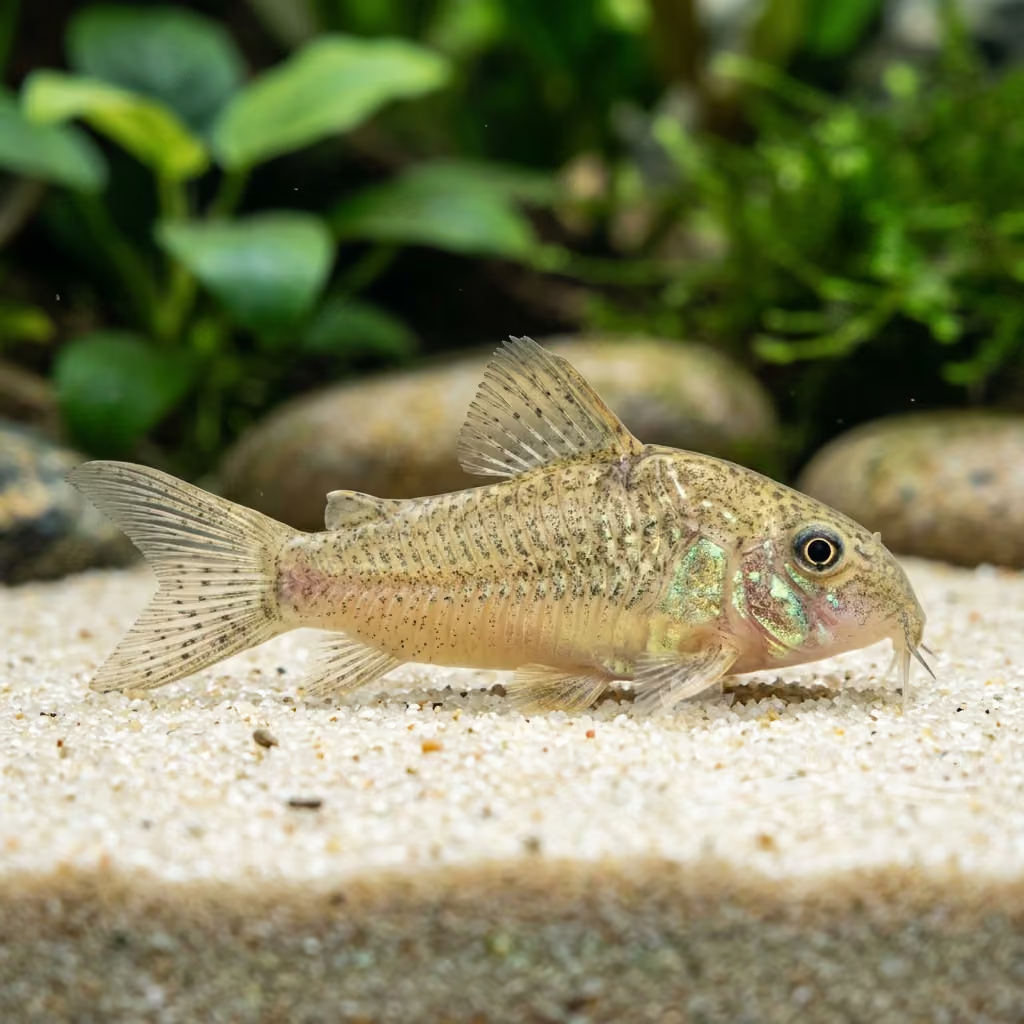
Sychr's Cory
Brochis sychri
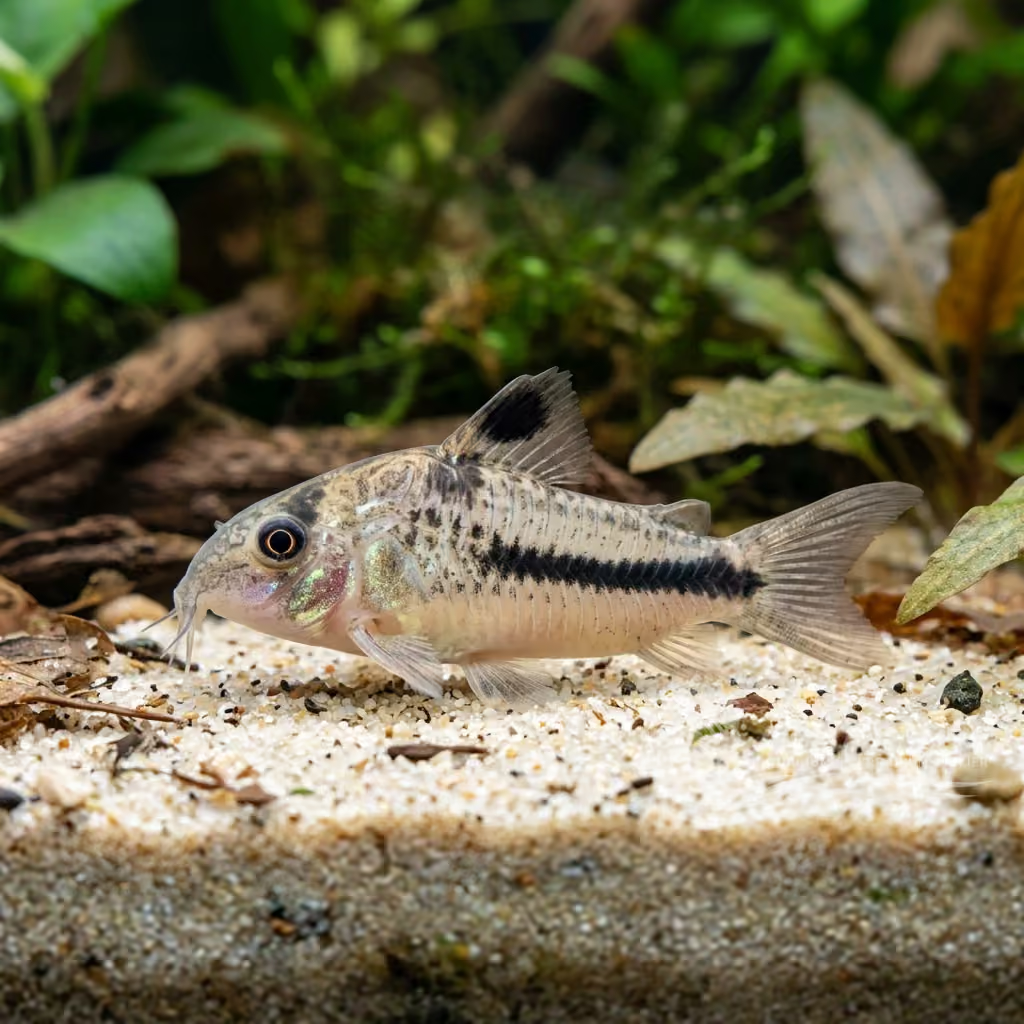
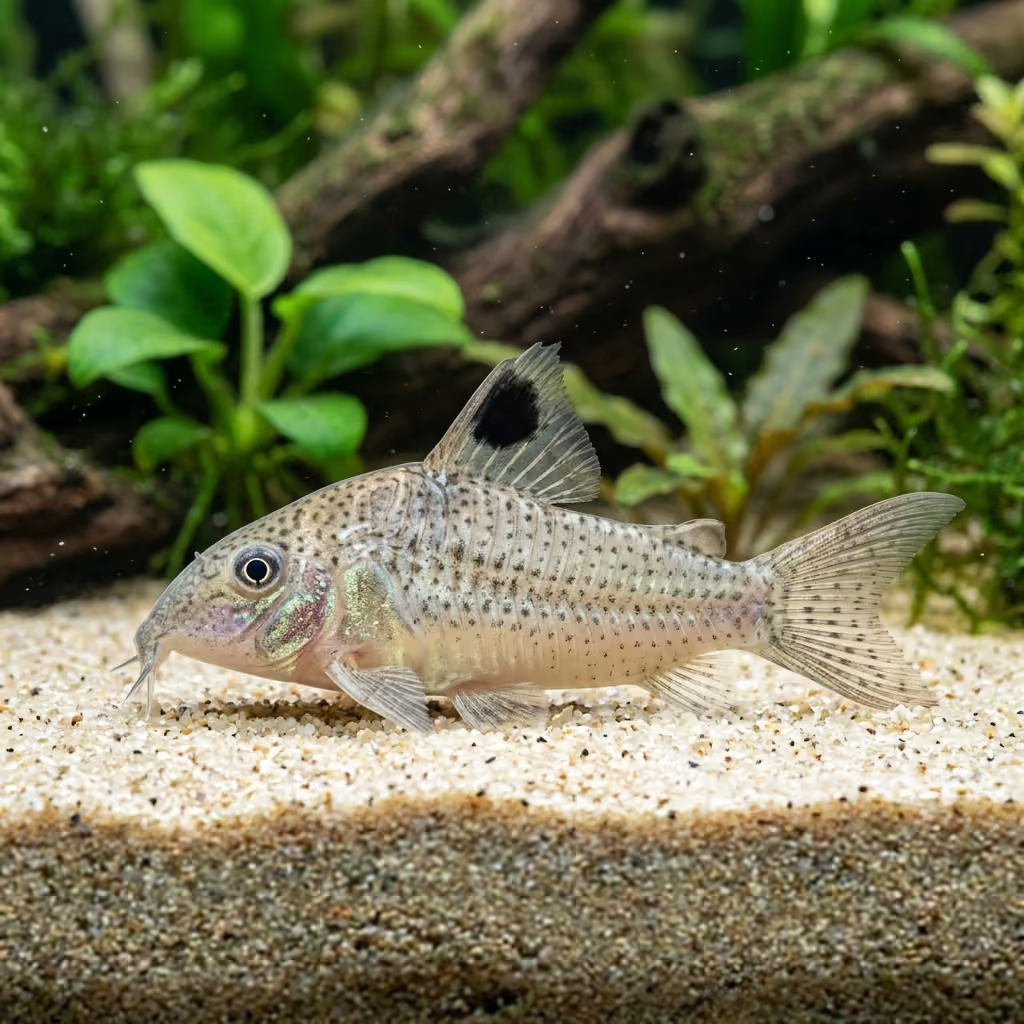
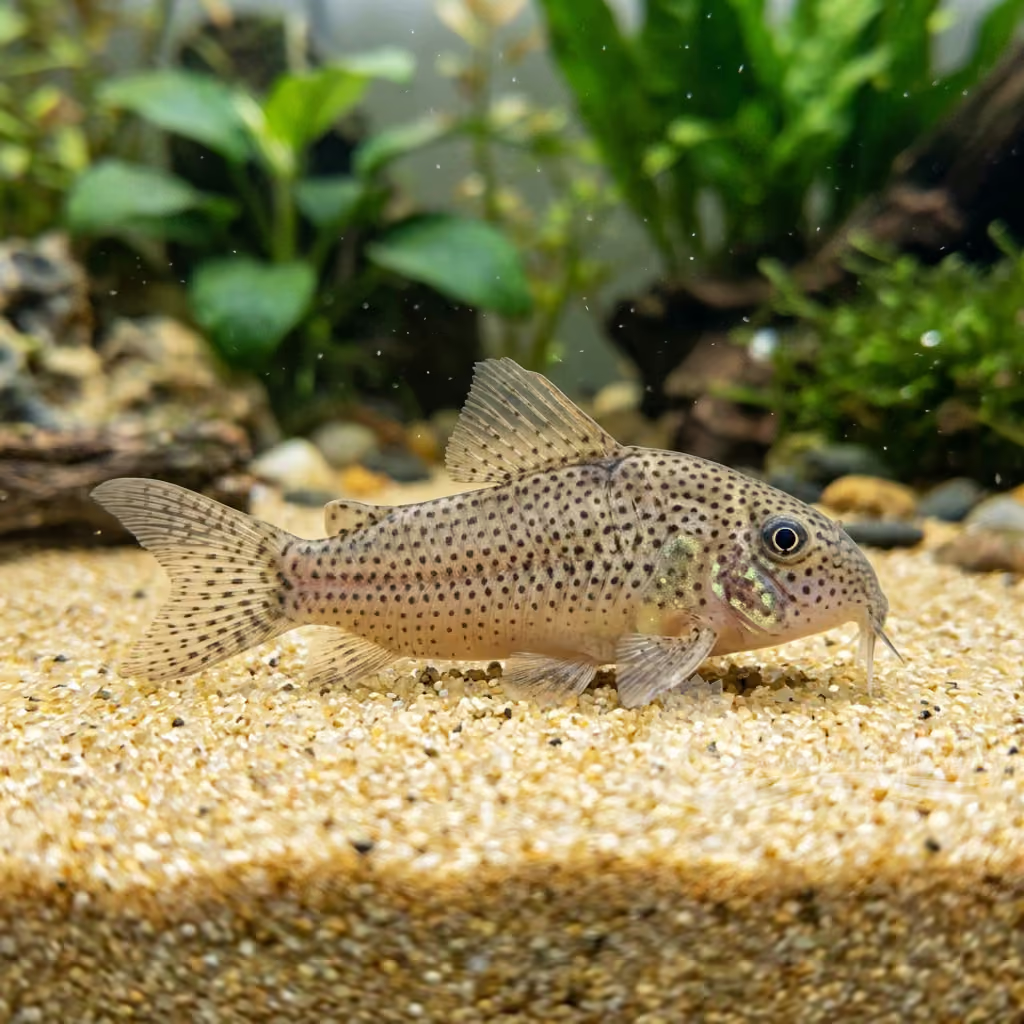
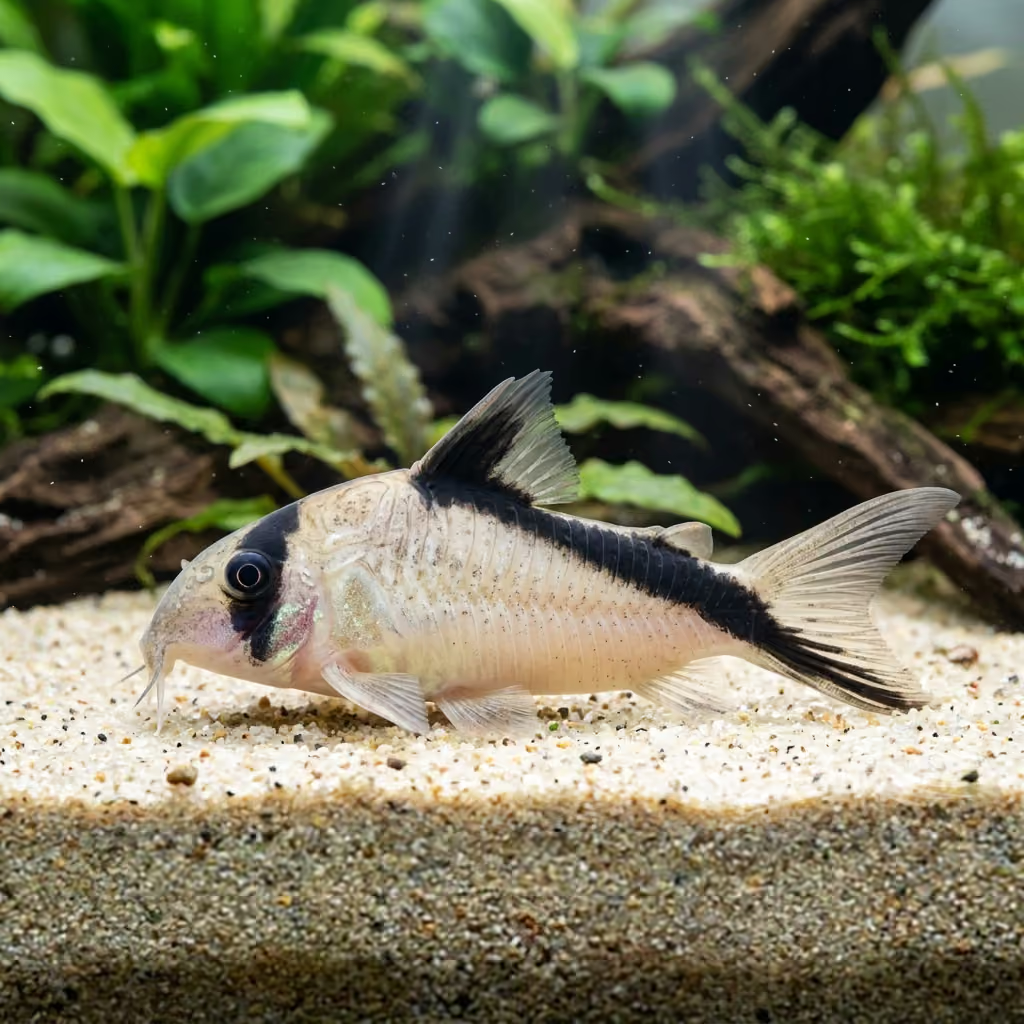
Immaculate long-snouted Corydoras from Peru; smooth and incredibly pearlescent white body with no spots, with a subtle blurred black 'mask' over the eye.
Water Temperature
22 - 26 °C
pH Value
6 - 7.2
Water type
Freshwater
Tank level
Bottom
Adult size
5.5 cm
Minimum tank volume
>= 100 L
Minimum group
>= 6
GH
2 - 12 dGH
KH
2 - 10 dKH
TDS
50 - 280 ppm
Conductivity
78 - 438 uS/cm

Species description
Geographical Origin and Habitat: Exclusive to the upper Amazon basin (Rio Nanay) in Peru. Prefers amber forest waters ("blackwater"), with weak water currents, shaded by thick lianas and riparian vegetation, which guarantee deeply sandy bottoms and fallen leaf litter.
Taxonomy and Morphology: Corydoras of the Callichthyidae family belonging to the elegant long-snouted strain. Settling at 5.5 cm (2.2 inches), it boasts a morphology structured for the tireless penetration of the head into the sandy layers in search of micro-annelids.
Social Behavior: Of an exceptionally serene nature. It is a victim of stress if bred in pairs: it is reborn only in a cohesive school of at least 6-8 members. Group dynamics give them the courage to rummage with impunity throughout the tank.
Coloration and Sexual Dimorphism: Refined and sober design: silvery/white livery finely embroidered with black micro-dots that thin out towards the belly. The facial mask is absent. Females stand out for their marked abdominal swelling when viewed from above, compared to the more linear males.

Care, breeding and tankmates
Aquarium Setup: Strict obligation: only fine-grained silica sand to preserve the integrity of the mouthparts. Greatly appreciates the insertion of oak or catappa leaves and the use of large intricate woods to shield strong lights.
Diet and Feeding: Bottom micro-predator specialized in digging. Requires a menu based on crumbled protein tablets that are fast to sink. The generous and tri-weekly administration of live or frozen food is mandatory: brine shrimp, daphnia, and large tubifex.
Water Quality: Near zero tolerance for ammonia and nitrites. Optimal values: constant 22-26°C (72-79°F). The pH should preferably be between 6.0 and 7.2 (acidic/neutral), accompanied by low hardness (GH 2-12). Meticulous biological filtration and light RO changes.
Compatibility and Cohabitation: Wonderful together with characin tetras such as Paracheirodon innesi, and peaceful dwarf cichlids. Absolutely contraindicated cohabitation with large Cichlids (very large Symphysodon, Astronotus) or restless Loaches that will completely inhibit its foraging.
Aquarium Breeding: Inducible by simulating abundant fresh Amazonian-style downpours (drastic thermal and RO drops). The act (T-position) ends by depositing a few but robust eggs on the glass or smooth surfaces. The adult does not hesitate to feed on them: isolate quickly.
Risks and Diseases: Fungal necrosis of the barbels on sharp gravels is fatal and irreversible. Manifests toxicological hyper-sensitivity to intensive treatments with copper sulfate or formalin to treat Ichthyophthirius. Use half prophylactic doses.

Geographic origin and distribution
Exclusive to the upper Amazon basin (Rio Nanay) in Peru. Prefers amber forest waters ("blackwater"), with weak water currents, shaded by thick lianas and riparian vegetation, which guarantee deeply sandy bottoms and fallen leaf litter.
Origin
Amazon, Orinoco, and Guianas

Fish profile
- Temperament
- Semi-aggressive
- The temperament of Brochis sychri is exceptionally peaceful and highly social in nature. They must be kept in groups of at least six individuals to thrive. In proper schools, they are confident and constantly active across the bottom.
- Diet
- Omnivore
- The diet of Brochis sychri primarily features benthic organisms and small detritus. In captivity, they eagerly eat sinking pellets and high-quality bottom-feeder wafers. Live foods like bloodworms and daphnia should be offered for optimal health.
- Life expectancy
- 5-10 years
- Adult size
- 5.5 cm
- Sex ratio
- Specific M:F ratio
- A specific sex ratio is unnecessary for the general community keeping of Brochis sychri. For dedicated breeding, a ratio of two males per female is optimal. Females are visibly rounder and broader, while males are slender.
- Feeding frequency
- Twice daily
- It is recommended to feed Brochis sychri one or two times daily in moderate portions. Ensure the food reaches the substrate before mid-water fish consume it all. Feeding just before lights out helps them forage peacefully without stress.
- Bioload
- Low
- The bioload of Brochis sychri is relatively low compared to larger tank mates. Since they are schooling fish, their combined waste can accumulate over time. Consistent filtration and weekly water changes are necessary for maintaining clean water.
- Flow
- Stagnant
- Brochis sychri prefers a moderate water flow that replicates gentle Amazonian streams. This circulation thoroughly oxygenates the water and prevents detritus accumulation. Calm resting zones should also be provided for relaxation.
- Jump risk
- Yes
- The jump risk for Brochis sychri is very low compared to surface-dwelling fish. However, their unique respiratory system causes occasional rapid surface darting. A secure aquarium lid is highly recommended to prevent accidental escapes.
- Reproduction
- Oviparous
- Breeding Brochis sychri in an aquarium is highly achievable with proper conditioning. Spawning is typically triggered by a large, slightly cooler water change. The female then deposits adhesive eggs on aquarium glass or broad plant leaves.
- Compatibility & tankmates
- Semi-aggressive
- In terms of compatibility, Brochis sychri is extremely peaceful and ideal for community setups. They coexist perfectly with small tetras, rasboras, and dwarf cichlids. Large, aggressive bottom-dwellers must be avoided to prevent undue competition.
- Tank level
- Bottom
- As obligate bottom-dwellers, Brochis sychri spends the vast majority of its time on the substrate. They constantly search for food by sifting fine sand with their sensitive barbels. They occasionally dart to the surface to gulp atmospheric air.

Scientific Parameters & Models
FishBase
Window to the official scientific data of the species
FishBase v25.04Data synced on: 06/15/2026
- Trophic level
- 2.9 ± 0.3 se
- Resilience
- High (less than 15 months)
- Phylogenetic uniqueness (PD50)
- 0.5
- Bayesian Length-Weight
- a = 0.00741, b = 3.14
- VulnerabilityLow vulnerability (10 / 100)

Related species
Recommendations grouped by close relatives, companion choices, and similar care.