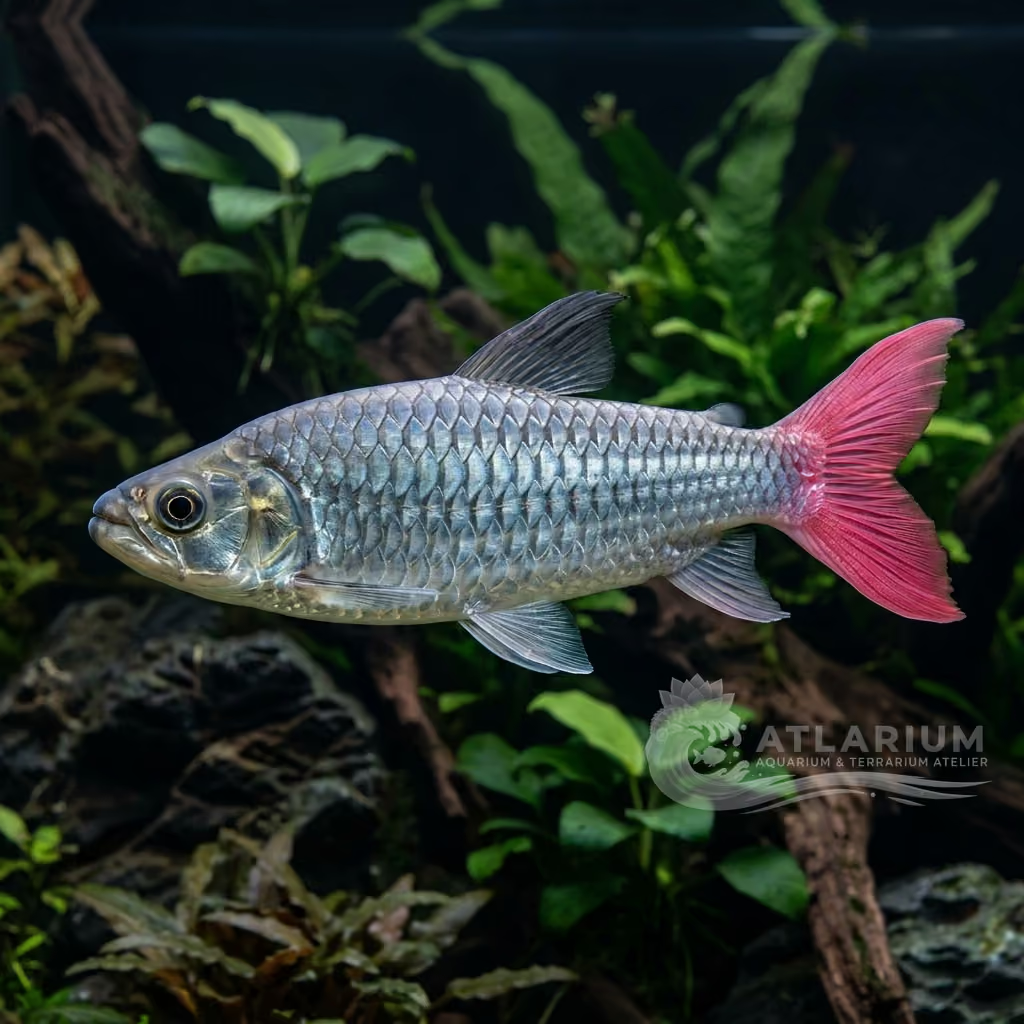
Golden Wonder Killifish
Aplocheilus lineatus
The Aplocheilus lineatus, universally sold in its 'Golden Wonder' breeding variant, is an atypical killifish. Forget the tiny and delicate creatures of Africa: this is a burly and impetuous surface predator that reaches 10-11 cm (4.5 inches). The 'Gold' male sports a dazzling golden-yellow livery, while the wild form is striped. Unlike most killifish that require specialized care, the Golden Wonder is indestructible and adapts to any aquarium, as long as it does not house fish that can fit into its surprisingly large mouth.
22 - 28 °C
6 - 7.5
Freshwater
Surface
10 cm
>= 100 L
>= 4
5 - 15 dGH
2 - 7 dKH
95 - 295 ppm
148 - 461 uS/cm

Species description

Care, breeding and tankmates

Geographic origin and distribution
Origin

Fish profile
- Temperament
- Territorial
- This species is a peaceful ambush predator toward tank mates of similar or larger sizes, but can be highly territorial toward its own kind. Males in particular may display significant intraspecific aggression if the aquarium is too small or lacks adequate cover. It is crucial to remember that any small fish or invertebrate that can fit into its wide mouth will be perceived and consumed as prey.
- Diet
- Omnivore
- The diet of Aplocheilus lineatus should be primarily carnivorous and focused on foods that float on the surface. While they readily accept high-quality floating flakes or pellets, their health is best supported by regular supplementation with live or frozen foods. Offerings such as brine shrimp, bloodworms, daphnia, and small insects are ideal for stimulating their natural hunting instincts.
- Life expectancy
- 3-5 years
- Adult size
- 10 cm
- Sex ratio
- Harem
- It is highly recommended to keep this species in a harem structure, consisting of one male and two or three females. This ratio helps distribute the male's breeding interest and potential aggression, thereby reducing stress on individual females. In larger setups, multiple males can be kept together, provided there is sufficient space and visual barriers to establish territories.
- Feeding frequency
- Twice daily
- It is recommended to feed them once or twice daily, providing only the amount of food they can completely consume within a couple of minutes. Because they are greedy surface feeders, overfeeding should be strictly avoided to prevent digestive issues and water quality degradation. Implementing a weekly fasting day can be highly beneficial for maintaining their digestive health.
- Bioload
- Medium
- The biological load of Aplocheilus lineatus is classified as medium due to its predatory nature and high-protein diet. As a relatively large killifish reaching up to 4 inches (10 cm), it produces a moderate amount of organic waste that demands effective filtration. A gentle to moderate water flow should be maintained to accommodate their preference for calm surface waters, combined with weekly water changes of 15-20% to prevent toxin buildup.
- Flow
- Strong
- This species prefers weak to moderate water currents, which mimic its natural habitats of slow-moving streams, swamps, and rice paddies. A water flow that is too strong will disrupt their surface-hunting behavior and force them to exert unnecessary energy to remain stable. Using a filter with an adjustable flow rate or adding floating plants to break the surface current is highly recommended to create calm pockets of water.
- Jump risk
- Yes
- The jump risk for Aplocheilus lineatus is extremely high, as they are powerful and precise jumpers capable of leaping out of the water to catch insect prey. A tight-fitting aquarium lid with absolutely no gaps is mandatory to prevent accidental escapes. Introducing floating vegetation is highly beneficial, as it covers portions of the surface and provides a sense of security, which naturally minimizes their jumping behavior.
- Reproduction
- Oviparous
- Breeding this species in the aquarium is relatively easy and straightforward, even for less experienced aquarists. They are egg-scatterers that deposit adhesive eggs on vegetation or spawning mops suspended near the surface, usually triggered by warmer water and live foods. The eggs hatch in about 10 to 14 days, and the fry should be fed infusoria or freshly hatched brine shrimp nauplii as their initial food.
- Compatibility & tankmates
- With caution
- Compatibility is generally good with medium to large, robust tank mates that are not overly aggressive, such as larger barbs, medium-sized tetras, and peaceful bottom-dwelling catfish. Keeping them with tiny fish like neon tetras, guppies, or small shrimp must be strictly avoided, as these will quickly become prey. Other surface-dwelling or highly competitive species may also cause stress, so pairing them with fish that occupy the middle and bottom zones is ideal.
- Tank level
- Top
- Aplocheilus lineatus is a specialized surface-dwelling fish that primarily occupies the top level of the water column. Its physical structure, featuring a flat dorsal profile and an upward-pointing mouth, is perfectly adapted for life and hunting at the water's surface. While it spends the vast majority of its time near the top, it may occasionally descend to the middle levels of the aquarium to feed or escape perceived threats.

Scientific Parameters & Models
Window to the official scientific data of the species
- Trophic level
- 3.8 ± 0.5 se
- Phylogenetic uniqueness (PD50)
- 0.5079
- Bayesian Length-Weight
- a = 0.00389, b = 3.12
- VulnerabilityLow vulnerability (10 / 100)

Related species
Recommendations grouped by close relatives, companion choices, and similar care.