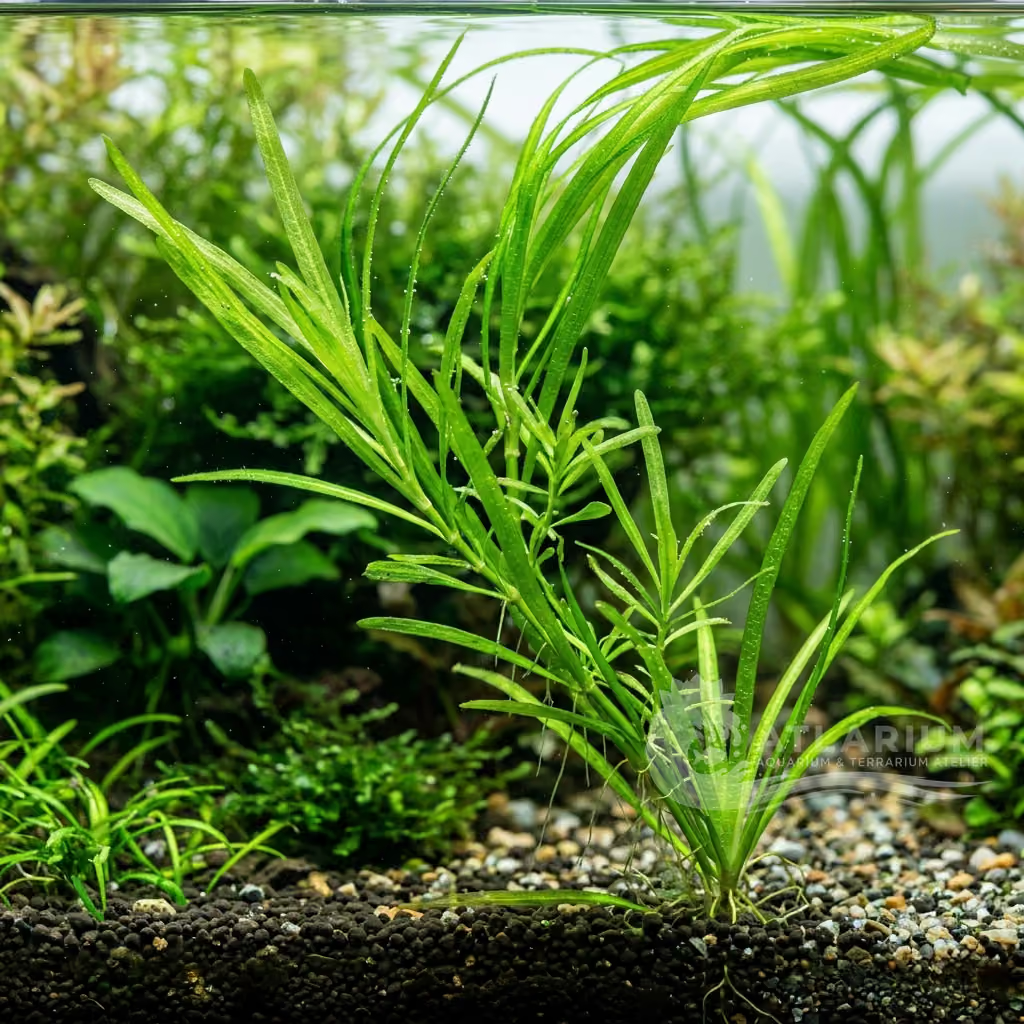
Utricularia gibba
Utricularia gibba
Utricularia gibba is a free-floating, carnivorous aquatic plant, often employed in the midground or foreground of aquariums due to its rapid growth and ability to form intricate mats. Its adaptable nature allows it to thrive across a wide range of aquatic conditions, making it an intriguing choice for aquascapers of all experience levels. This bladderwort offers a unique fine texture and can quickly establish a lush appearance.
Water Temperature
4 - 32 °C
pH Value
5 - 8
Water type
Freshwater
Light
Low to High
CO2
Low - High
KH
0 - 21 dKH

Species description
Geographical Origin and Habitat: Utricularia gibba boasts a cosmopolitan distribution, being found on almost every continent except Antarctica, a testament to its incredible adaptability to diverse ecosystems worldwide. It thrives in stagnant or slow-moving waters such as swamps, ponds, ditches, and lakes, where it is frequently observed free-floating or loosely anchored to submerged vegetation or muddy substrates. Its ubiquity makes it one of the most widespread and resilient Utricularia species, often proliferating in nutrient-rich, shallow waters.
Taxonomy & Genetics: Belonging to the Lentibulariaceae family, Utricularia gibba is a prominent member of the Utricularia genus, renowned for its highly specialized carnivorous strategies. This diverse genus encompasses around 220 species, all distinguished by the presence of small, highly efficient bladders that function as active suction traps to capture tiny aquatic organisms. The classification of the `gibba` species reflects its unique structural characteristics and specialized biology, setting it apart from other aquatic and terrestrial species within the same plant family through subtle morphological and genetic distinctions.
Physical Structure: Utricularia gibba is characterized by a filiform, highly branched structure, completely lacking true roots, which enables it to float freely in the water column or loosely anchor itself to available surfaces. Its slender stems are adorned with minute, needle-like leaves, often almost indistinguishable to the naked eye, collectively forming a delicate and intricate mass resembling a submerged cloud. The most distinctive features are the tiny capture bladders (utricles), scattered along the stems and leaf branches, which are specialized organs for efficiently preying on aquatic microinvertebrates. When flowering, it produces small, bright yellow blossoms that emerge above the water surface, adding an unexpected touch of
Color & Texture: The color of Utricularia gibba typically ranges from a bright, vibrant light green to a medium green, with hues that can intensify and appear more saturated under stronger illumination. Its texture is exceptionally fine and delicate, almost ethereal, forming a dense, intricate mass that can appear like a wispy cloud or a soft layer of submerged moss. The small bladders, though functionally fascinating, are nearly invisible without close observation, and the plant's surface is smooth and not covered by noticeable hairs, contributing to its graceful, weightless appearance in the water.

Care, breeding and tankmates
Lighting & CO2: Utricularia gibba is exceptionally adaptable to lighting conditions, thriving robustly in both low and high light environments, although more intense light will encourage denser, more compact growth and potentially more vibrant coloration. It does not require CO2 injection for healthy and vigorous growth, as its free-floating nature allows it to absorb dissolved carbon dioxide efficiently directly from the
Water Chemistry: However, in high-CO2, nutrient-rich aquariums, its growth can become remarkably exponential, necessitating very frequent
Pruning: to prevent it from becoming overwhelmingly dominant.
Nutrition & Substrate: As a free-floating, carnivorous plant, Utricularia gibba does not derive nutrients from the substrate and therefore has no specific need for a fertile bottom layer or specialized aquatic soil. Its nutrition is primarily based on the efficient absorption of dissolved nutrients from the water column, such as nitrates, phosphates, and potassium, supplemented by the capture of small aquatic organisms like protozoa, rotifers, and microcrustaceans via its specialized bladders. Consequently, a comprehensive liquid fertilization program for the general aquarium is usually more than sufficient to meet its nutritional requirements.
Water Chemistry: This species exhibits remarkable tolerance to a wide spectrum of water chemistry parameters, adapting comfortably to temperatures ranging from 4.0 to 32.0 C, a pH between 5.0 and 8.0, and carbonate hardness (KH) from 0.0 to 21.0. This extreme flexibility makes it highly compatible with almost all freshwater aquariums, even those with fluctuating or less-than-ideal conditions. While it might prefer slightly acidic and soft waters in its natural habitats, its inherent robustness allows it to adapt successfully to more alkaline and harder conditions without significant issues, making it one of the most forgiving aquatic plants available.
Space Management & Placement: Although generally classified for the midground, Utricularia gibba is an incredibly versatile plant that can be effectively utilized in various positions within the aquarium, depending on the desired aesthetic and functional outcome. It can be allowed to float freely on the surface, providing natural cover for fry and diffusing overhead light, or it can be gently anchored to driftwood or rocks in the midground or even foreground to form lush, unique, and intricate mats. Its exceptionally rapid growth necessitates careful space management to prevent it from outcompeting slower-growing plants and becoming an invasive nuisance.
Pruning: Given its extremely fast and often aggressively invasive growth, regular pruning is an absolutely essential aspect of Utricularia gibba care to keep it under control and prevent it from dominating the entire aquarium ecosystem. There are no specific or complex pruning techniques required; it simply involves manually removing the excess plant mass, whether floating or submerged, by hand or with tweezers, and discarding the unwanted sections. This process should be performed frequently, sometimes even weekly in highly fertile tanks, to maintain the balance and aesthetic harmony of the aquarium.
Risks & Diseases: Utricularia gibba is a robust plant and is generally not susceptible to specific diseases or pest infestations in the aquarium, partly due to its carnivorous nature which can deter some microscopic invaders. The primary risk associated with this plant is its considerable tendency to become invasive if left unchecked, potentially suffocating slower-growing plants, obstructing water flow, or completely covering the water surface, blocking light. Excessive proliferation can also serve as an indicator of an abundance of nutrients in the water column, which further encourages its uncontrolled and rapid growth.

Geographic origin and distribution
Utricularia gibba boasts a cosmopolitan distribution, being found on almost every continent except Antarctica, a testament to its incredible adaptability to diverse ecosystems worldwide. It thrives in stagnant or slow-moving waters such as swamps, ponds, ditches, and lakes, where it is frequently observed free-floating or loosely anchored to submerged vegetation or muddy substrates. Its ubiquity makes it one of the most widespread and resilient Utricularia species, often proliferating in nutrient-rich, shallow waters.
Origin
Cosmopolitan or introduced

Plant profile
- Placement
- Midground
- It is rarely planted intentionally due to its invasive, weed-like nature in the aquarium. If kept purposely, it is left floating near the surface or tangled among hardscape. Aquarists usually spend more time trying to remove it from where it has entangled itself in delicate mosses or carpeting plants.
- Botanical form
- Stem
- This carnivorous plant appears as a mass of very fine, pale green, thread-like stems. It completely lacks roots and true leaves; the stems bear tiny, translucent bladder traps that look like small specks to the naked eye. In shallow, sunny setups, it produces small, bright yellow flowers.
- Growth
- Fast
- Its growth rate is extremely fast and aggressive. It rapidly extends its thin, thread-like stems, branching out to catch on any surface it touches. Under bright light, it can double in size in just a few days, quickly forming thick, impenetrable mats.
- Substrate
- None
- Utricularia gibba is a highly adaptable, rootless carnivorous plant that forms tangled floating mats. Since it has no root system, it is completely independent of substrate conditions or soil depth. It gathers nutrients almost exclusively from the water column and by trapping microscopic prey in its numerous bladders. While it may occasionally entangle itself around other plants or hardscape, it should never be intentionally planted in soil, as this restricts water flow and causes stem decay.
- Column fertilization
- Recommended
- It readily absorbs dissolved nutrients directly from the water column, meaning standard liquid fertilization will turbocharge its growth. It thrives even without dedicated dosing, surviving off the ambient bioload and captured microfauna. Reducing column fertilizers can help slow its spread if it becomes a nuisance.
- Root fertilization
- None
- Because it is completely rootless and free-floating (or epiphytic/entangled), substrate fertilization is completely ignored by this species. It has no mechanism to access nutrients buried in the soil. Rich substrates only help it indirectly if nutrients leach into the water column.
- Trimming
- Occasional
- Managing this plant is notoriously difficult. Trimming involves meticulously plucking it out with tweezers from wherever it has anchored itself. Even a tiny, millimeter-long fragment left behind can regenerate into a massive clump, making complete eradication a major challenge.
- Propagation
- Cuttings
- Propagation is exclusively through fragmentation in the aquarium. Every microscopic piece of stem broken during maintenance will form a new growth point. It frequently hitchhikes into aquariums hidden within portions of moss or other fine-leaved plants.
- Sensitivity
- Moderate
- It is incredibly resilient and difficult to kill. It tolerates massive swings in pH, temperature, and nutrient levels. It is only sensitive to complete desiccation or severe chemical treatments (like heavy doses of algaecides), though such treatments usually harm other tank inhabitants first.
- Layout role
- Midground, Foreground, Floating
- It rarely has a planned role in aquascaping and is almost universally considered a pest weed. However, in dedicated biotope or carnivorous plant setups, it provides a fascinating subject for observing natural predatory behavior at a microscopic level.

Related species
Recommendations grouped by close relatives, companion choices, and similar care.