Diadem Cichlid
Aequidens diadema
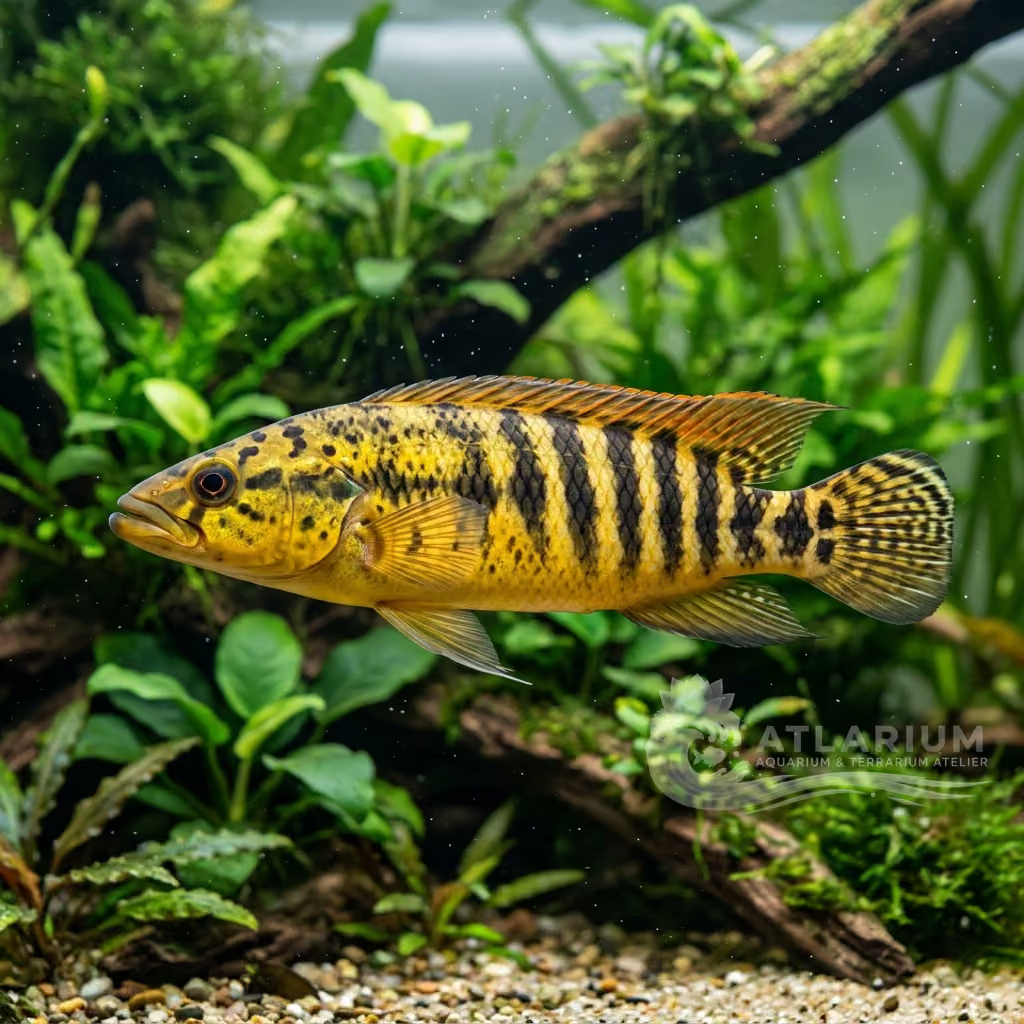
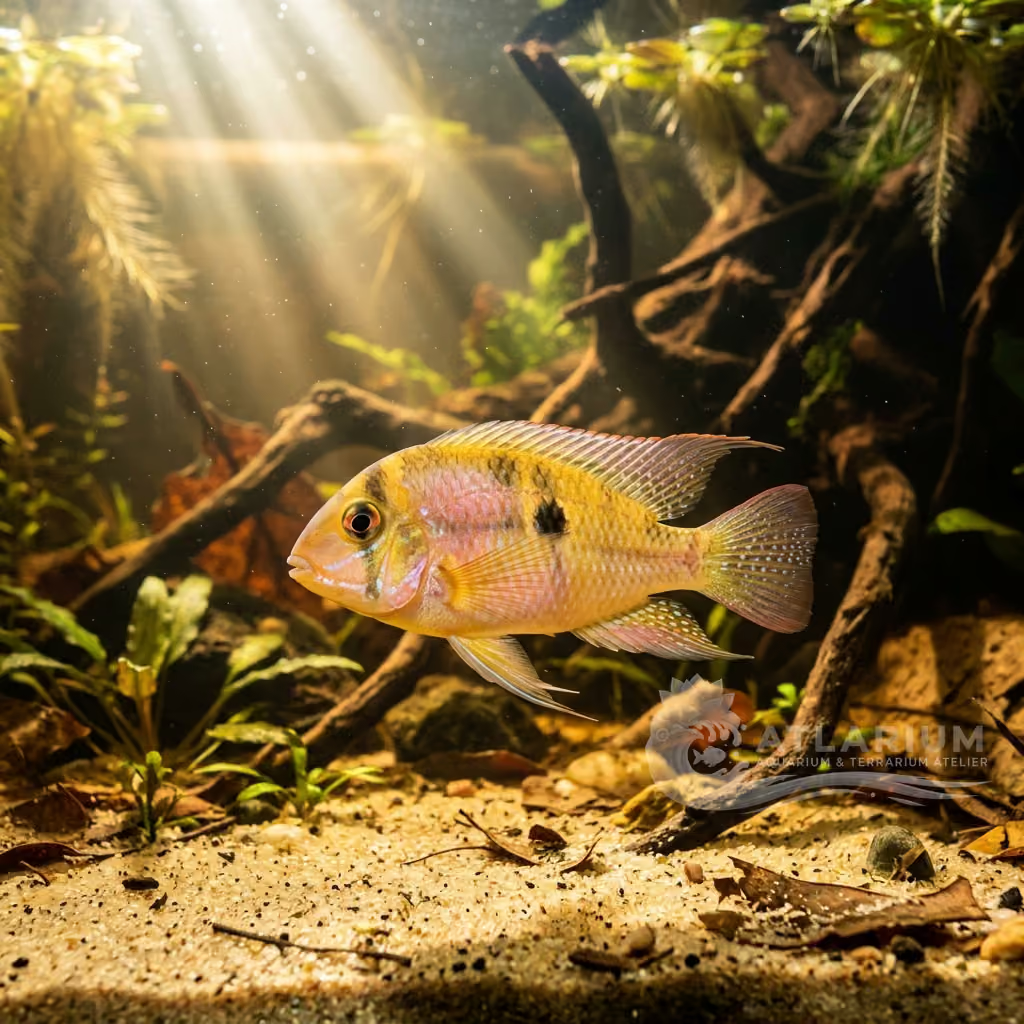
The robust but good-natured 'Diadem Cichlid' (15-20 cm). Often eclipsed in popularity by the small "Blue Acaras" (Andinoacara), the Diadem is actually one of the most manageable medium cichlids of South America. Endowed with an elegant pattern and a proud ovoid bulk, it boasts the inestimable merit of ignoring aquarium plants (it is not a serial digger) and peacefully coexisting with fish that do not fit in its mouth.
Wassertemperatur
24 - 28 °C
pH-Wert
6 - 7.5
Wassertyp
Süßwasser
Tankfüllstand
Unten und in der Mitte
Erwachsenengröße
18 cm
Mindesttankvolumen
>= 180 L
Mindestgruppe
>= 1
GH
2 - 12 dGH
KH
1 - 6 dKH
TDS
40 - 240 ppm
Leitfähigkeit
63 - 375 uS/cm

Artbeschreibung
Geographical Origin and Habitat: Found predominantly in the upper Rio Negro and Orinoco basin in South America. Lives along calm sheltered river banks or temporary "lagoons" rich in forest tannins (blackwater).
Taxonomy and Morphology: Diadem Cichlid (Aequidens diadema). A robust Cichlid with a moderately high back (classic "Acara"). Like most Aequidens, it has a short snout and a mouth with strong lips for hunting and manipulating substrates.
Social Behavior: Relatively peaceful but expresses character and strong territoriality during maturity or reproduction. Imposes itself in the tank not by impetuosity, but by "size" and pride. Enjoys wide open spaces among the woods.
Coloration and Sexual Dimorphism: Beige-gold or silvery background crossed by a large dark bar or spot mid-body. Develops sparkling turquoise and reddish reflections on the flanks and unpaired fins. Adult males display filamentous extensions on the dorsal and caudal, with more vibrant colors.

Pflege, Zucht und Mitbewohner
Aquarium Setup: Tank for medium Cichlids (120 cm / 48 inches). Fine sand, many large oak or catappa leaves that yield amber in the water, massive intertwined roots (Spiderwood/Bogwood) to provide visual divisions. Very robust plants (Echinodorus, Anubias) tolerate its presence.
Diet and Feeding: Omnivore (Micro-Predator). Gorges on insects in nature. Greedily eats large high-quality flakes, floating or sinking protein pellets, frozen krill and mosquito larvae. Vary the diet to keep the coloration bright.
Water Quality: Prefers warm (24-28°C / 75-82°F) and soft waters. An efficient filtration system is indispensable given the notable organic impact typical of moderately large South American cichlids.
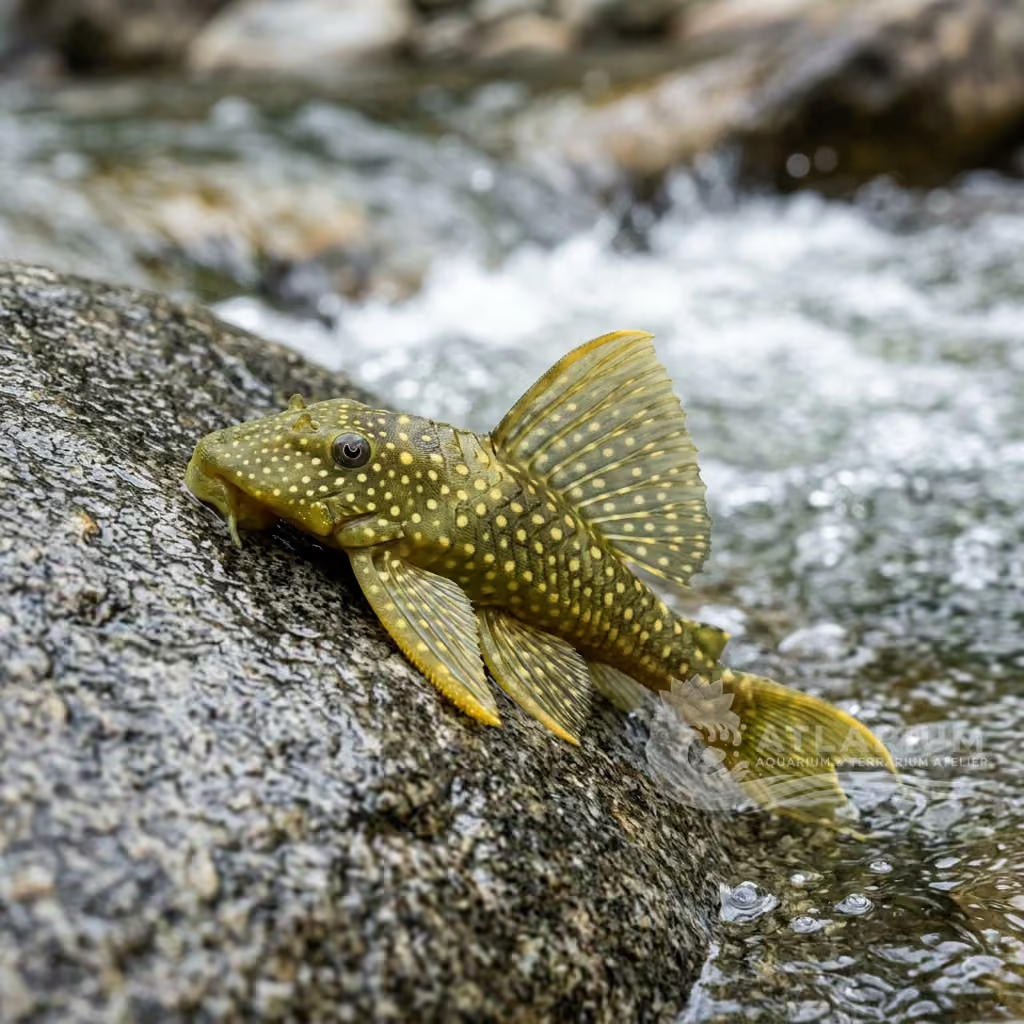
Compatibility and Cohabitation: Excellent fish for robust "Community tanks": coexists excellently with large Tetras (e.g. Columbian, Black Widow), medium-sized Plecostomus, and other not overly aggressive South American cichlids (Geophagus or Mesonauta). Will eat too small characins.
Aquarium Breeding: Open substrate spawners. They form granite pair bonds. The female lays up to 300 eggs on smooth rocks or large cleaned leaves. Both parents guard the offspring, aggressively dispersing any tankmate.
Risks and Diseases: Subject to severe malnutrition or stress (with immediate loss of iridescent reflections) if harassed by dominant "Tank buster" Cichlids like Flowerhorns or Red Devils.

Geografische Herkunft und Verbreitung
Found predominantly in the upper Rio Negro and Orinoco basin in South America. Lives along calm sheltered river banks or temporary "lagoons" rich in forest tannins (blackwater).
Ursprung
Tropische Ozeane und RiffeAmazonas, Orinoco und Guayana

Fischprofil
- Temperament
- Territorial
- Aequidens diadema exhibits a semi-aggressive and highly territorial temperament, particularly during spawning cycles. They are generally peaceful toward larger, robust fish but will show aggression toward similar-sized cichlids or conspecifics. Because they establish territories, they will actively defend their selected cave or rock from intruders. It is important to structure the aquarium layout carefully to break lines of sight and minimize territorial disputes.
- Diät
- Omnivore
- In the wild, Aequidens diadema is an omnivore with strong carnivorous tendencies, feeding on insects, small crustaceans, and detritus. In the aquarium, they should be offered a varied diet consisting of high-quality cichlid pellets or flakes as a staple. This diet should be supplemented with live or frozen foods such as bloodworms, brine shrimp, krill, and mysis shrimp to enhance their coloration and health. Providing some vegetable matter, like spirulina flakes, is also beneficial to ensure balanced nutrition.
- Lebenserwartung
- 8-12 years
- Erwachsenengröße
- 18 cm
- Geschlechterverhältnis
- 1:1 ratio
- Aequidens diadema is best kept as a single male-female pair, as they form strong monogamous bonds. In smaller tanks, keeping multiple individuals of the same sex, especially males, can lead to severe territorial aggression and bullying. If you wish to keep them in groups, a very large aquarium with numerous visual barriers is required to let pairs establish their own territories. For most standard aquarium setups, stocking a single compatible pair is the most successful approach.
- Fütterungsfrequenz
- Twice daily
- Adult specimens should be fed once or twice daily, providing only as much food as they can consume within a few minutes. Overfeeding must be avoided, as it can lead to poor water quality and digestive health issues. Juvenile fish are growing rapidly and will benefit from smaller, more frequent meals, ideally three times a day. Varying the food type between morning and evening feedings will keep the fish interested and ensure a broader range of nutrients.
- Bioload
- Medium to High
- As a relatively large cichlid that can reach up to 6 to 8 inches, Aequidens diadema produces a significant amount of biological waste. Therefore, a robust filtration system, such as a high-capacity canister filter, is essential to keep ammonia and nitrite levels at zero. Regular weekly water changes of 20 to 30 percent are also required to prevent nitrate build-up. A medium-high biological load rating should be anticipated when planning the tank's stocking levels.
- Fluss
- Moderate
- Aequidens diadema naturally inhabits slow-moving streams, pools, and calm tributaries of the Amazon and Orinoco basins. Therefore, they prefer weak to moderate water flow in the aquarium, and excessive currents should be avoided as they can cause stress. While they require strong biological filtration due to their waste output, the outflow should be baffled or directed toward the glass to create calm areas. Providing plenty of quiet zones with driftwood or decorations allows the fish to rest comfortably.
- Sprungrisiko
- Yes
- Although not chronic jumpers by nature, Aequidens diadema are powerful and active cichlids that can easily leap out of the water if startled, stressed, or during territorial chases. It is highly recommended to equip the aquarium with a tight-fitting lid or cover slides to prevent any accidental escapes. Additionally, floating plants or dim lighting can help reduce their startle response and make them feel more secure. Providing adequate hiding spaces also minimizes the chances of them jumping due to panic.
- Reproduktion
- Substrate spawner
- Breeding Aequidens diadema is relatively straightforward once a compatible pair is established. They are substrate spawners, cleaning a flat rock or slate where the female lays hundreds of eggs which the male then fertilizes. Interestingly, this species exhibits biparental care, often involving delayed mouthbrooding where the parents carry the hatched larvae in their mouths for protection. During the breeding phase, the pair becomes intensely protective and territorial, so a dedicated breeding tank is recommended to keep other fish safe.
- Kompatibilität & Tankkameraden
- Community
- When selecting tankmates for Aequidens diadema, choose robust and active species of similar size to avoid compatibility issues. Ideal companions include larger characins (such as bleeding heart or congo tetras), medium-sized peaceful cichlids, and larger armored catfish like plecos. Small fish and invertebrates should be avoided, as they will likely be seen as food by these opportunistic predators. They should also not be kept with overly aggressive cichlids that could outcompete or bully them.
- Tankfüllstand
- Middle/Bottom
- This species primarily occupies the middle and bottom levels of the aquarium. They spend much of their time swimming among driftwood, rocks, and cages, occasionally searching the substrate for food. Because they like to dig and sift through the sand, the lower portion of the tank should be designed with safe, non-abrasive substrate. Upper levels of the water column are rarely frequented unless they are feeding or swimming actively.

Wissenschaftliche Modelle & Parameter
FishBase
Zugang zu den offiziellen wissenschaftlichen Daten der Art
FishBase v25.04Daten synchronisiert am: 15.06.2026
- Trophäenniveau
- 3,2 ± 0,5 se
- Belastbarkeit
- Mittel (1,4 - 4,4 Jahre)
- Phylogenetische Einzigartigkeit (PD50)
- 0.5
- Bayessche Längen-Gewichts-Beziehung
- a = 0.01445, b = 3.08
- AnfälligkeitGeringe Anfälligkeit (10 / 100)

Verwandte Arten
Empfehlungen gruppiert nach nahen Verwandten, Auswahl von Begleitern und ähnlicher Betreuung.