Goldstripe headstander
Anostomus ternetzi
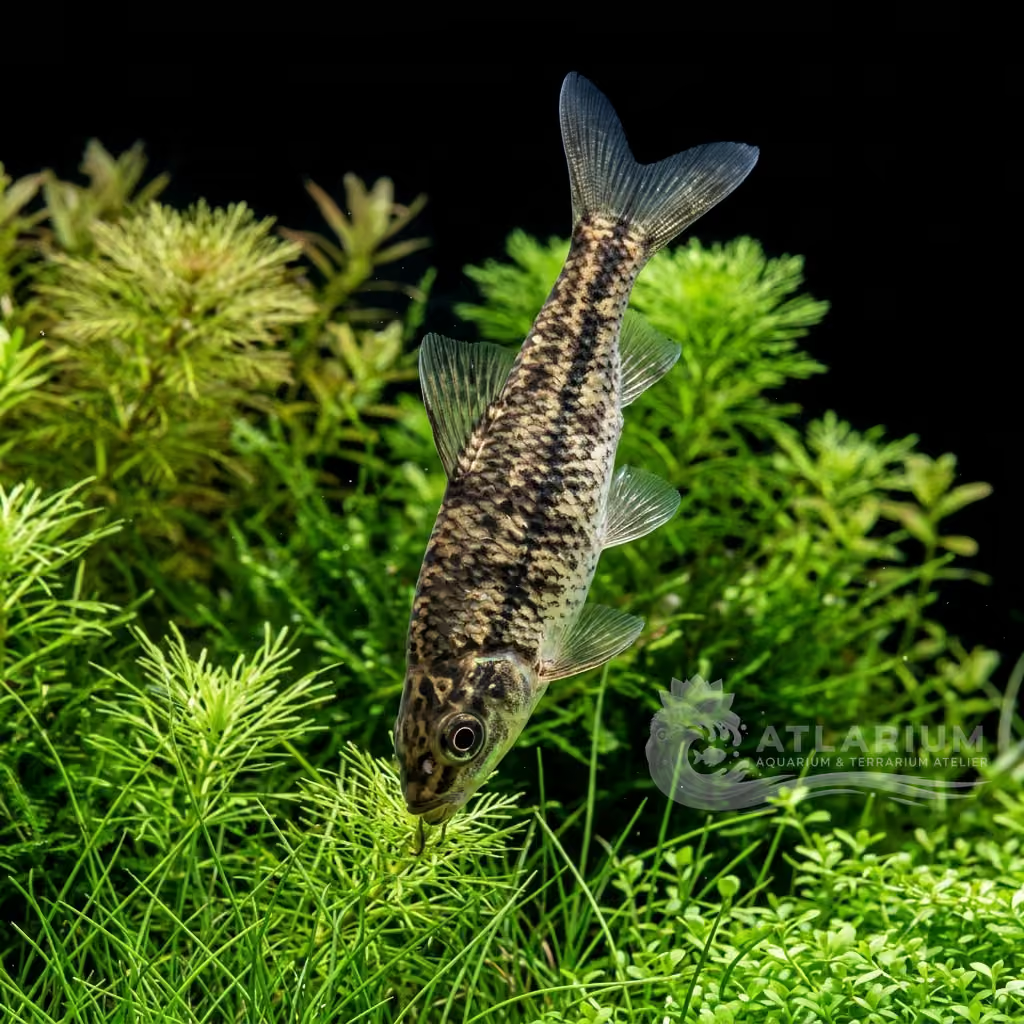
An elegant, streamlined fish adorned with three golden longitudinal bands on a dark background. Like all anostomids, it swims in a vertical head-down position, tirelessly exploring rocks and driftwood for food. A constant grazer, it alternates between browsing algae and periphyton and brief forays into the water column. Native to the Orinoco basin and Guyana, it requires long tanks with current and a tightly fitting lid — it is a formidable jumper.
22 - 28 °C
5.5 - 7.5
Süßwasser
Oberfläche und Mitte
14 cm
>= 200 L
>= 5
1 - 12 dGH
1 - 6 dKH
25 - 240 ppm
39 - 375 uS/cm

Artbeschreibung

Pflege, Zucht und Mitbewohner

Geografische Herkunft und Verbreitung
Ursprung

Fischprofil
- Temperament
- Territorial
- Anostomus ternetzi is generally peaceful but can exhibit territorial behavior, particularly towards conspecifics. To minimize squabbling and aggression, they should be kept in a group where a natural hierarchy can establish. They are active and sometimes boisterous, which may intimidate very shy or slow-moving tankmates.
- Diät
- Omnivore
- As omnivores with a strong herbivorous preference, their diet must include plenty of vegetable matter. They should be fed high-quality algae wafers, spirulina flakes, blanched vegetables like spinach or zucchini, and occasional live or frozen foods. Be aware that they are likely to graze on and damage soft-leaved live aquarium plants.
- Lebenserwartung
- 5-8 years
- Erwachsenengröße
- 14 cm
- Geschlechterverhältnis
- Group
- A strict sex ratio is difficult to define because males and females are not easily distinguished visually. However, they should be kept in a group of at least 5 to 8 individuals to distribute and reduce territorial aggression. Keeping them singly or in pairs often leads to heightened stress and aggression toward tankmates.
- Fütterungsfrequenz
- Continuous
- It is recommended to feed Anostomus ternetzi small portions two to three times a day. Providing multiple small feedings aligns with their natural behavior of grazing continuously throughout the day. Ensure that all food is consumed within a few minutes to prevent water contamination.
- Bioload
- Medium
- Anostomus ternetzi produces a moderate biological load due to its active lifestyle, size (up to 12 cm), and continuous grazing behavior. A robust filtration system, capable of turnover rates 4-5 times the tank volume per hour, is essential to keep water quality pristine. Regular partial water changes are required to control nitrate levels and maintain a clean environment.
- Fluss
- Strong
- Originating from fast-flowing river habitats, Anostomus ternetzi prefers moderate to strong water flow. Good water movement and high oxygenation levels are crucial for replicating their natural environment and keeping them active. The use of powerheads or spray bars can help achieve the desired current in the aquarium.
- Sprungrisiko
- Yes
- This species poses a high risk of jumping, especially when startled, stressed, or during acclimation. They are powerful, torpedo-shaped swimmers capable of leaping through very small openings. A tight-fitting lid or cover slides are mandatory to prevent accidental escapes.
- Reproduktion
- Oviparous
- Breeding Anostomus ternetzi in the home aquarium is extremely difficult and remains largely unrecorded. They are egg-scatterers, but the specific environmental triggers required to stimulate spawning in captivity are not well understood. Successful reproduction has rarely, if ever, been documented in domestic aquaria.
- Kompatibilität & Tankkameraden
- Peaceful
- They are suitable for community tanks with robust, peaceful tankmates of similar size, such as medium-sized tetras, loricaiids, and peaceful cichlids. They should not be housed with very small or slow, long-finned fish, as they may nip fins when stressed. Keeping them in a proper conspecific group is key to preventing them from bothering other species.
- Tankfüllstand
- Top/Middle
- Anostomus ternetzi is highly active and swims throughout the aquarium, though it primarily occupies the middle and upper levels. It is famous for its unique head-down swimming angle, which it uses while hovering or searching for food. They will frequently explore the bottom or graze on decorations, utilizing the entire water column.

Wissenschaftliche Modelle & Parameter
Zugang zu den offiziellen wissenschaftlichen Daten der Art
- Trophäenniveau
- 2,6 ± 0,26 se
- Belastbarkeit
- Hoch (weniger als 15 Monate)
- Phylogenetische Einzigartigkeit (PD50)
- 0.5312
- Bayessche Längen-Gewichts-Beziehung
- a = 0.00891, b = 3.05
- AnfälligkeitGeringe Anfälligkeit (10 / 100)

Bildergalerie
Lizenzierte Bilder, die mit der Art oder, wenn markiert, mit dem nächstgelegenen repräsentativen Taxon verknüpft sind.

Verwandte Arten
Empfehlungen gruppiert nach nahen Verwandten, Auswahl von Begleitern und ähnlicher Betreuung.