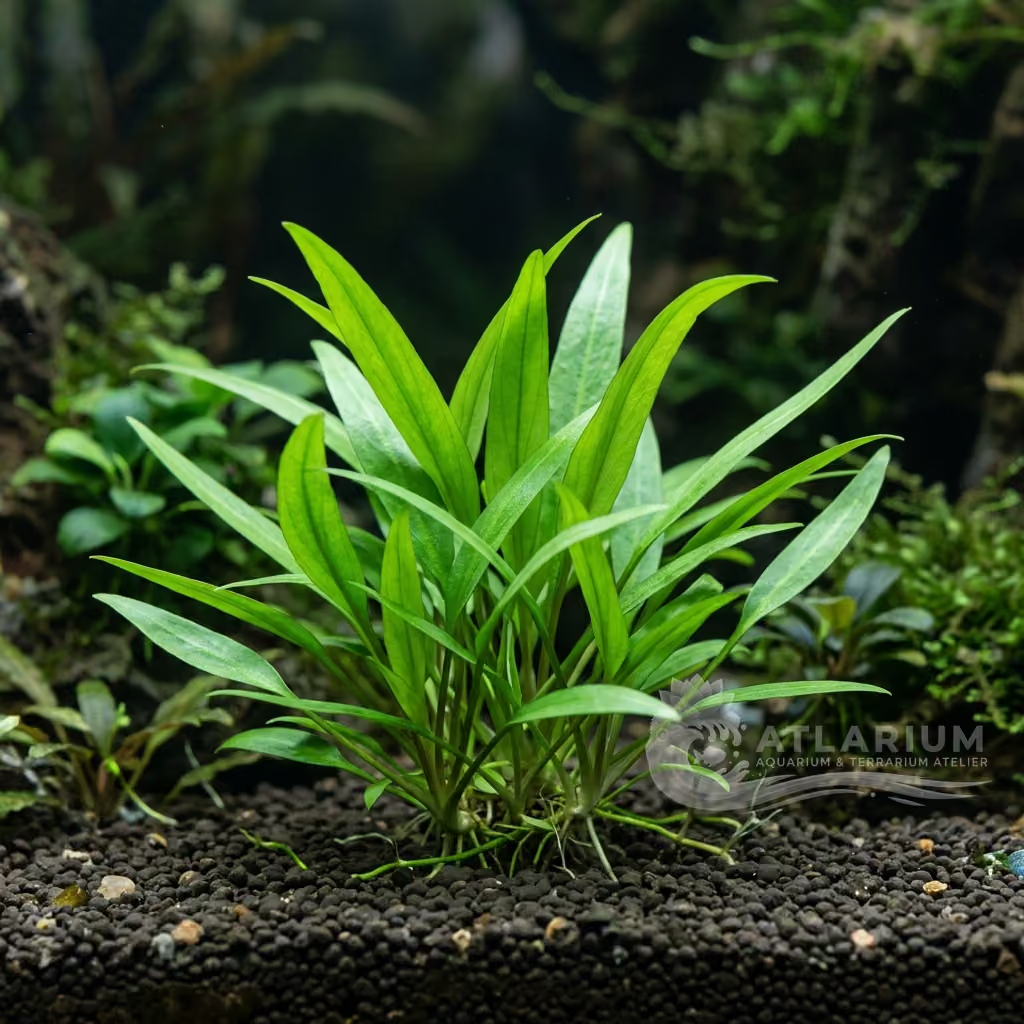
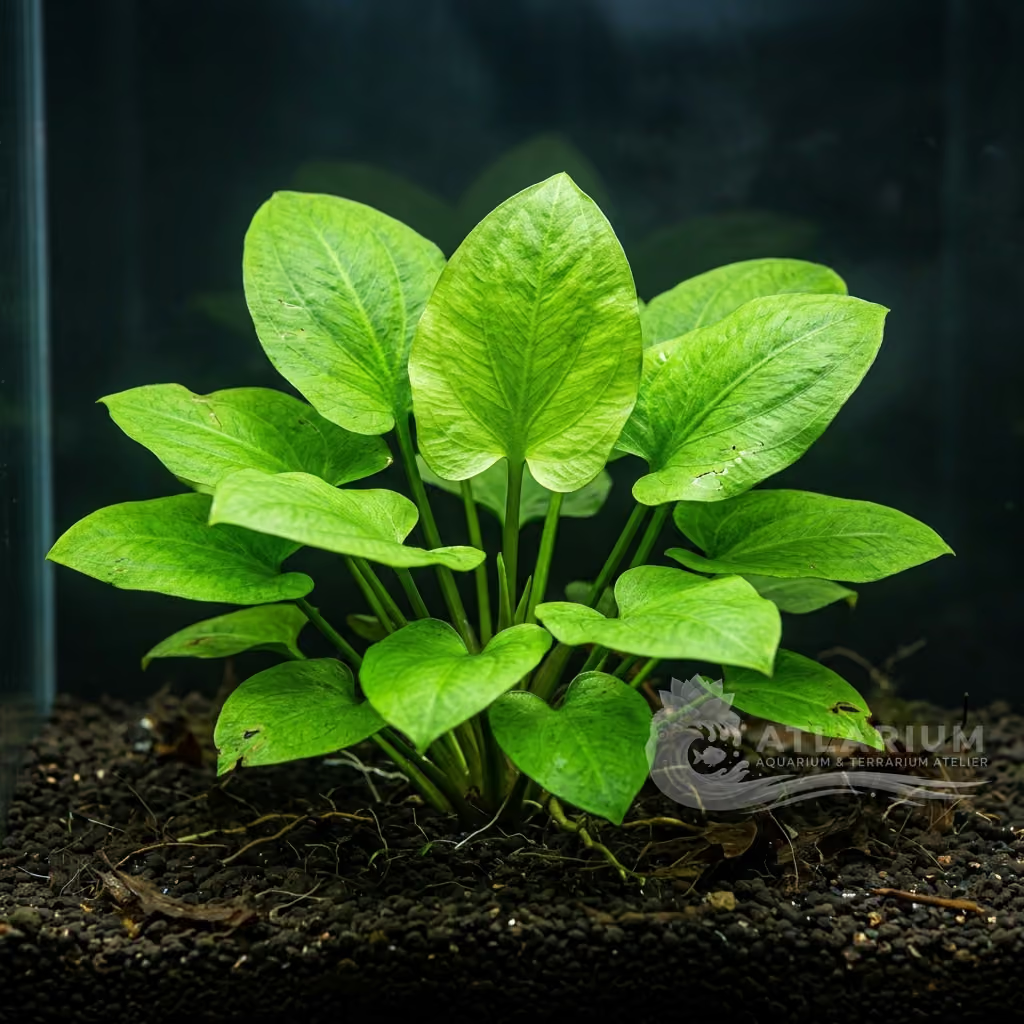
Bucephalandra sordidula
Bucephalandra sordidula
An ultra-rare, specialized rheophyte from the torrential streams of Borneo. Known for thick woody roots that aggressively cement onto volcanic rocks.
Wassertemperatur
20 - 26 °C
pH-Wert
6 - 7.5
Wassertyp
Süßwasser
Licht
Niedrig
CO2
Niedrig
Erwartete Höhe
5 cm
Erwartete Breite
5 cm
GH
4 - 20 dGH
KH
0 - 10 dKH

Artbeschreibung
Geographical Origin and Habitat: Endemic exclusively to the remote, torrential rainforest streams of Borneo (Indonesia). Bucephalandra sordidula is a highly specialized, ultra-rare rheophyte (a plant evolved to live in high-velocity water). It survives by aggressively cementing its thick, woody roots onto smooth river stones and submerged logs directly in the path of pounding waterfalls and rapids. It has evolved to thrive in pristine, highly oxygenated, fast-moving blackwater environments that frequently flood, completely submerging the plant during the brutal monsoon season.
Taxonomy & Genetics: First officially described to science in 2014 by botanists Wong & Boyce, B. sordidula is a distinctly unique species within the Araceae family, completely separate from the common B. pygmaea variants. Its Latin specific epithet "sordidula" loosely translates to "slightly dirty" or "dingy," referring to the dark, incredibly muddy-red and brown-purple hues of its wild foliage. In the commercial aquarium trade, true, genetically verified B. sordidula is an ultra-rare, high-end collector's item, rarely seen outside of professional setups.
Physical Structure: The structural architecture of this plant is exceptionally miniature and fiercely creeping. It features a thick, incredibly rigid woody rhizome that crawls horizontally across the hardscape, locking on with iron-grip white roots. It completely refuses to grow upward. The leaves are tiny (often under 2 cm), heavily elongated, strictly lanceolate (spear-shaped), and intensely ruffled along the margins. The plant grows in tight, chaotic, multi-layered clumps, forming an impenetrable, dark miniature bush resembling alien, prehistoric ivy.
Color & Texture: The coloration is breathtaking and extremely dark. Depending on the lighting, the thick, leathery leaves shift violently between deep, muddy red, rusty brown, and a profound, glowing dark purple. It completely lacks the bright green hues of common Bucephalandra. The thick, tough leaves are completely encrusted with an unusually high density of microscopic, iridescent silver dots (stomata), giving the dark purple leaves a spectacular, glittering, diamond-dust appearance when illuminated by intense aquarium LEDs.

Pflege, Zucht und Mitbewohner
Lighting & CO2: It is a highly demanding, slow-growing epiphyte. While it can survive in shaded, low-tech tanks, it will completely lose its metallic purple coloration and revert to a dull, muddy brown. To unlock its true, spectacular dark-red and purple iridescence, it requires medium to high-intensity LED lighting. Because intense lighting invites devastating algae onto slow-growing leaves, injecting pressurized CO2 is absolutely mandatory to accelerate the plant's metabolism and allow it to outcompete algae for nutrients.
Nutrition & Substrate: B. sordidula is a strict, obligate epiphyte. It MUST NEVER be buried in aquasoil, sand, or gravel; burying the woody rhizome will suffocate the plant, causing it to rot and disintegrate instantly. It feeds exclusively from the water column. It must be physically attached to hardscape (wood or porous rock) using cyanoacrylate superglue or cotton thread. To fuel its dense, glittering, purple leaves, dose the water column with a premium, iron-rich liquid micro-fertilizer.
Water Chemistry: Originating from the torrential rapids of Borneo, it demands immaculate water quality and extremely high dissolved oxygen. It prefers soft, slightly acidic water (pH 6.0 - 6.8) and cooler tropical temperatures (22-25°C). The single most critical requirement for B. sordidula is violent, relentless water flow. It must be placed directly in the path of a powerhead or strong filter return. Without intense water flow, detritus will settle on its tiny, heavily ruffled leaves, suffocating the plant and inviting Black Beard Algae.
Space Management & Placement: Due to its miniature size, extreme rarity, and sprawling, creeping growth habit, it is the ultimate high-end focal point for nano-aquariums or meticulous aquascapes. It should be wedged into the highest, fastest-flowing crevices of central driftwood or glued to the peaks of Seiryu stone, creating a dark, sparkling, purple cascade over the hardscape. Never use it as a background plant, as its tiny, intricate details will be completely lost to the viewer.
Pruning: Pruning is an extremely rare, surgical procedure due to its agonizingly slow growth. If propagation is absolutely necessary, use ultra-sharp spring scissors to cleanly sever the creeping woody rhizome. Ensure the cut segment contains at least 4 healthy, purple leaves and several robust white gripping roots. Use cyanoacrylate gel to instantly glue the precious clone to a new piece of hardscape. Never tear the leaves or pull the rhizome by hand.
Risks & Diseases: The ultimate threat to this incredibly rare plant is "Buce Melt." Any sudden, massive fluctuation in water chemistry—especially an ammonia spike, a CO2 crash, or an uncycled filter—will cause the plant to panic and violently dissolve its priceless purple leaves into a slimy mush overnight. The second greatest threat is its agonizingly slow growth; if water flow is inadequate, the leathery leaves will quickly become permanently encrusted with suffocating Green Spot Algae (GSA).

Geografische Herkunft und Verbreitung
Endemic exclusively to the remote, torrential rainforest streams of Borneo (Indonesia). Bucephalandra sordidula is a highly specialized, ultra-rare rheophyte (a plant evolved to live in high-velocity water). It survives by aggressively cementing its thick, woody roots onto smooth river stones and submerged logs directly in the path of pounding waterfalls and rapids. It has evolved to thrive in pristine, highly oxygenated, fast-moving blackwater environments that frequently flood, completely submerging the plant during the brutal monsoon season.
Ursprung
Süd- und Südostasien

Pflanzenprofil
- Platzierung
- Aufsitzerpflanze
- This epiphyte is perfectly suited for the foreground or midground of the aquascape. Bucephalandra sordidula should be attached directly to hardscape materials such as wood or porous rocks. Burying its rhizome in the substrate will cause it to rot and die off. Its small, robust leaves provide an excellent textural contrast when placed in crevices.
- Botanische Form
- Rhizom
- Bucephalandra sordidula is characterized by its small, robust leaves that adapt well to submerged life. The foliage often displays tiny silver speckles on the surface, adding to its visual appeal under strong lighting. It grows from a creeping rhizome that firmly attaches to surfaces using strong, specialized roots. The plant occasionally produces beautiful small white underwater flowers.
- Wachstum
- Langsam
- Like most Bucephalandra species, Bucephalandra sordidula exhibits a notoriously slow growth rate even under optimal conditions. The addition of CO2 injection can slightly increase the speed of development and improve leaf density. You can expect only a few new leaves per month from a healthy rhizome. Patience is key when cultivating this plant.
- Substrat
- Keiner
- Bucephalandra sordidula is an epiphytic aroid that strictly rejects being planted deeply in soil or gravel beds. Its health depends on the rhizome being fully exposed to the water current, allowing its roots to wrap around and secure the plant to textured hardscape. Placing the stem in the substrate will choke the plant, leading to rhizome rot and sudden leaf melt. Nutrient acquisition is purely aquatic, with the plant absorbing its required trace elements from liquid fertilizers dispersed in the tank.
- Säulendüngung
- Empfohlen
- Liquid fertilization is the preferred method for feeding Bucephalandra sordidula. A comprehensive fertilizer containing iron and micronutrients will enhance its small, robust appearance. Dosing should be kept lean to prevent algae from outcompeting its slow growth. Regular water column dosing ensures the leaves remain healthy and vibrant.
- Wurzeldüngung
- Keine
- Root fertilization is entirely unnecessary for Bucephalandra sordidula as it does not rely on substrate nutrients. Its roots serve primarily as anchors to grip onto hardscape elements rather than for nutrient uptake. Any root tabs placed in the soil will not directly benefit the plant. Instead, focus entirely on water column enrichment.
- Trimmen
- Gelegentlich
- Trimming Bucephalandra sordidula is rarely needed due to its exceptionally slow growth habit. When necessary, use sharp aquascaping scissors to cut the rhizome cleanly, ensuring each separated piece has several healthy leaves. Remove any decaying or older leaves at the base to encourage fresh growth. Regular pruning of damaged foliage helps keep the plant looking pristine.
- Ausbreitung
- Rhizome division
- Propagation of Bucephalandra sordidula is easily achieved by simply dividing the main rhizome. Ensure that each cut segment contains a growing tip and at least three or four established leaves for best results. Use superglue or cotton thread to attach the newly separated rhizomes to fresh hardscape. Over time, these cuttings will establish their own root systems and continue to creep along the surface.
- Empfindlichkeit
- Mäßig
- Bucephalandra sordidula is somewhat sensitive to sudden fluctuations in water parameters, which can trigger leaf melt. It is also highly susceptible to black beard algae and green spot algae on its slow-growing leaves. Maintaining stable CO2 levels, consistent maintenance, and clean water is crucial to prevent these issues. It generally prefers slightly acidic to neutral water conditions with good flow.
- Layoutrolle
- Aufsitzerpflanze, Mittelgrund, Nano
- Bucephalandra sordidula serves as an exquisite detailing plant in natural, forest, or jungle style aquascapes. The small, robust leaves offer a beautiful contrast against bright green mosses and light-colored rocks. It works wonderfully for highlighting small focal points or filling gaps in the hardscape structure. Its relatively compact size makes it ideal for both large setups and nano aquariums.

Bildergalerie
Lizenzierte Bilder, die mit der Art oder, wenn markiert, mit dem nächstgelegenen repräsentativen Taxon verknüpft sind.

Verwandte Arten
Empfehlungen gruppiert nach nahen Verwandten, Auswahl von Begleitern und ähnlicher Betreuung.