Bucephalandra sp. "Melawi"
Bucephalandra sp. "Melawi"
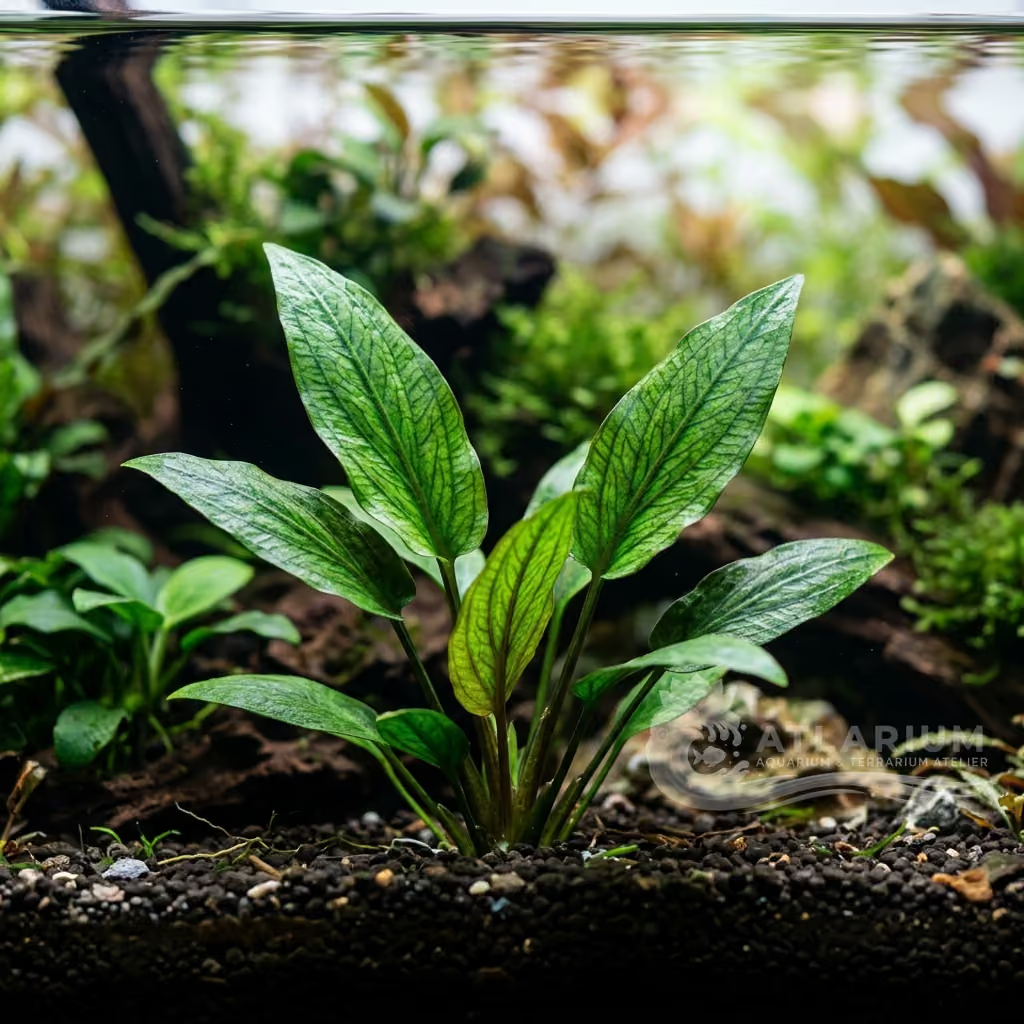
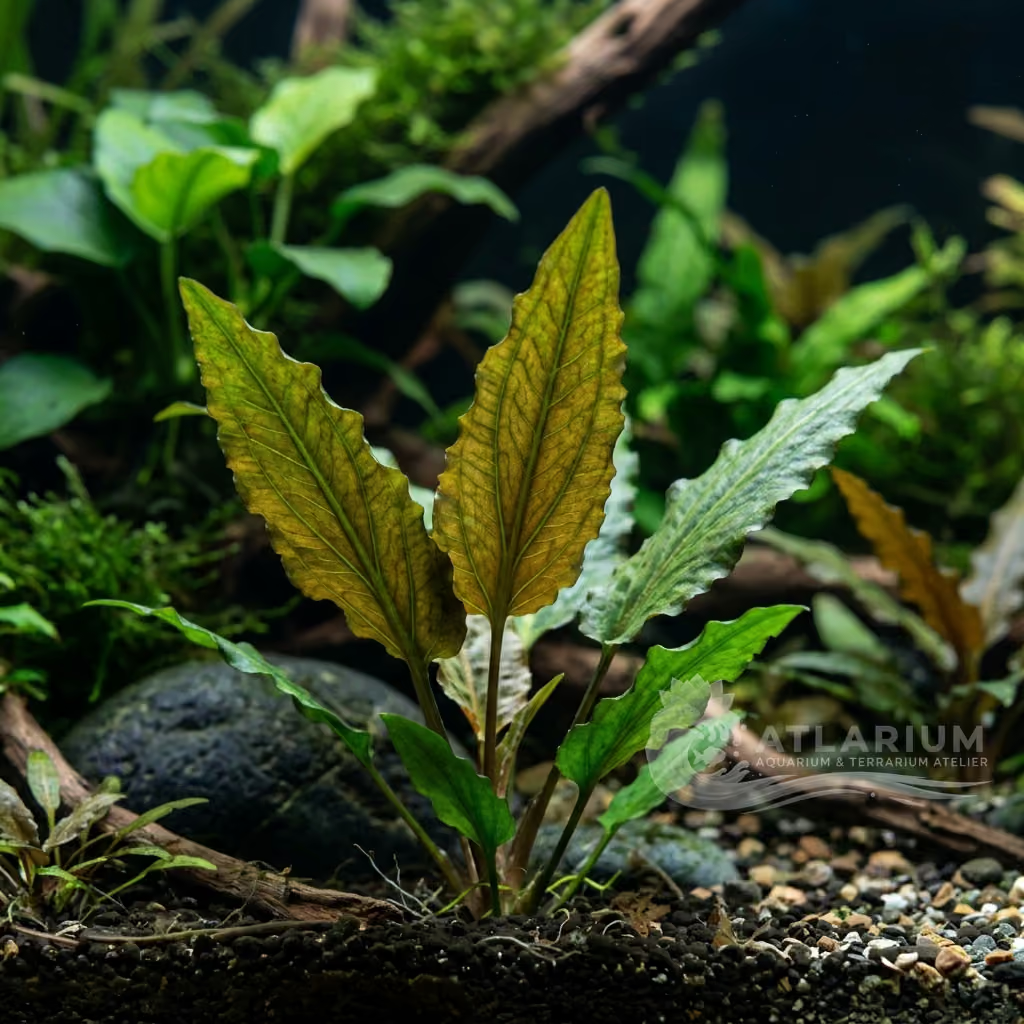
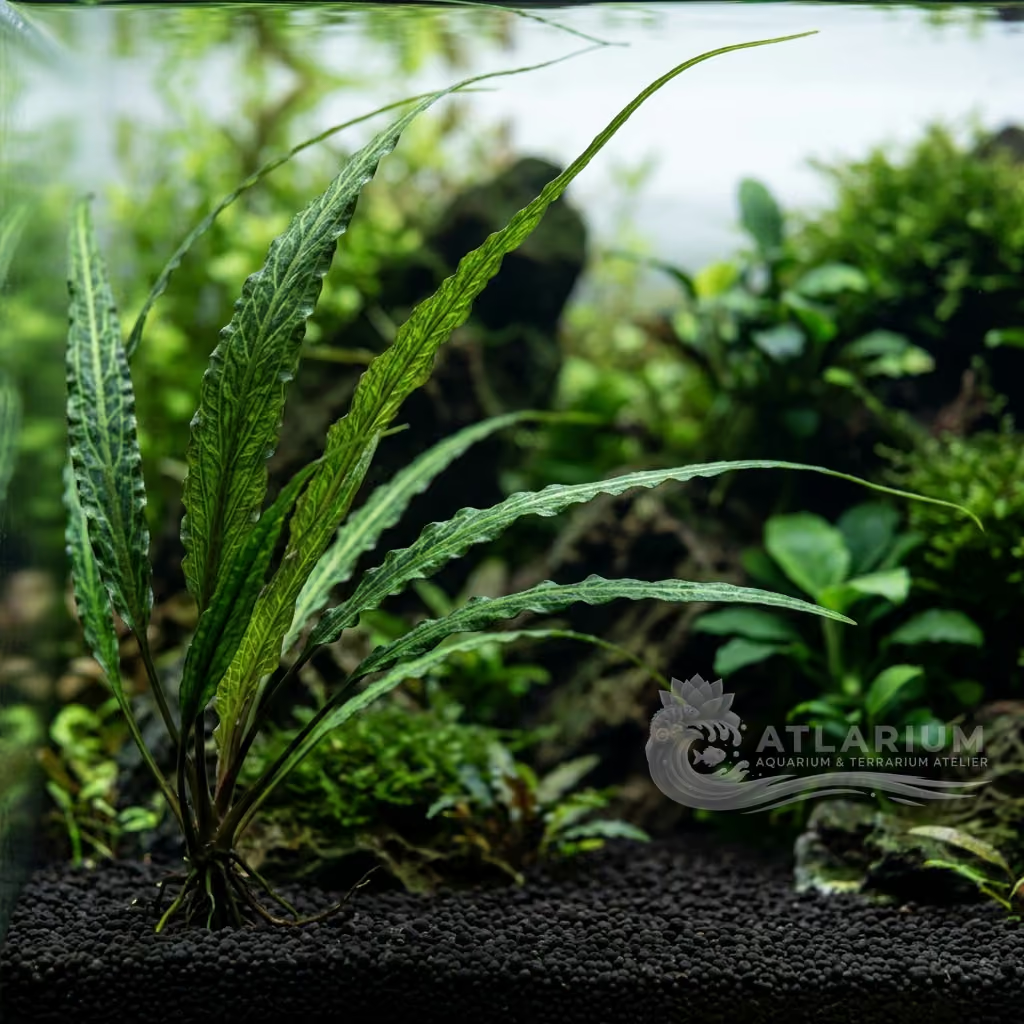
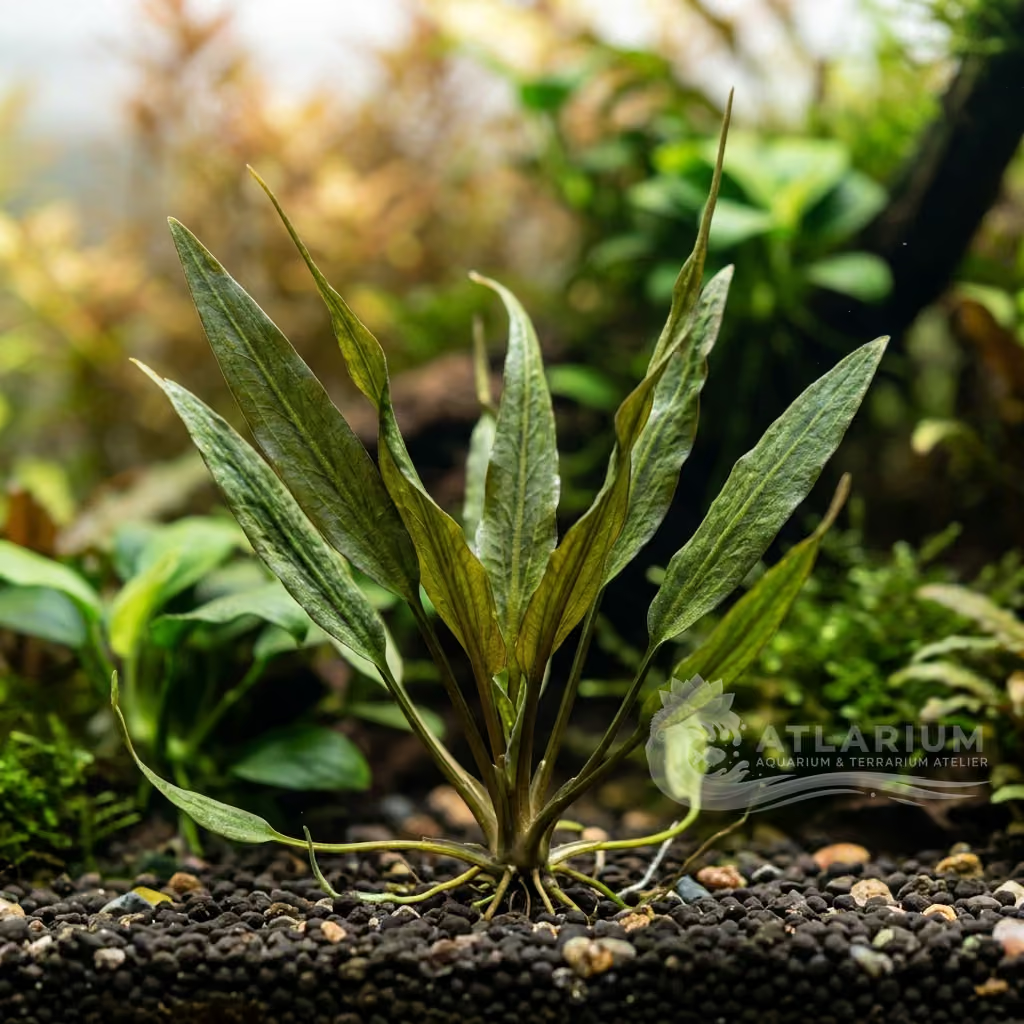
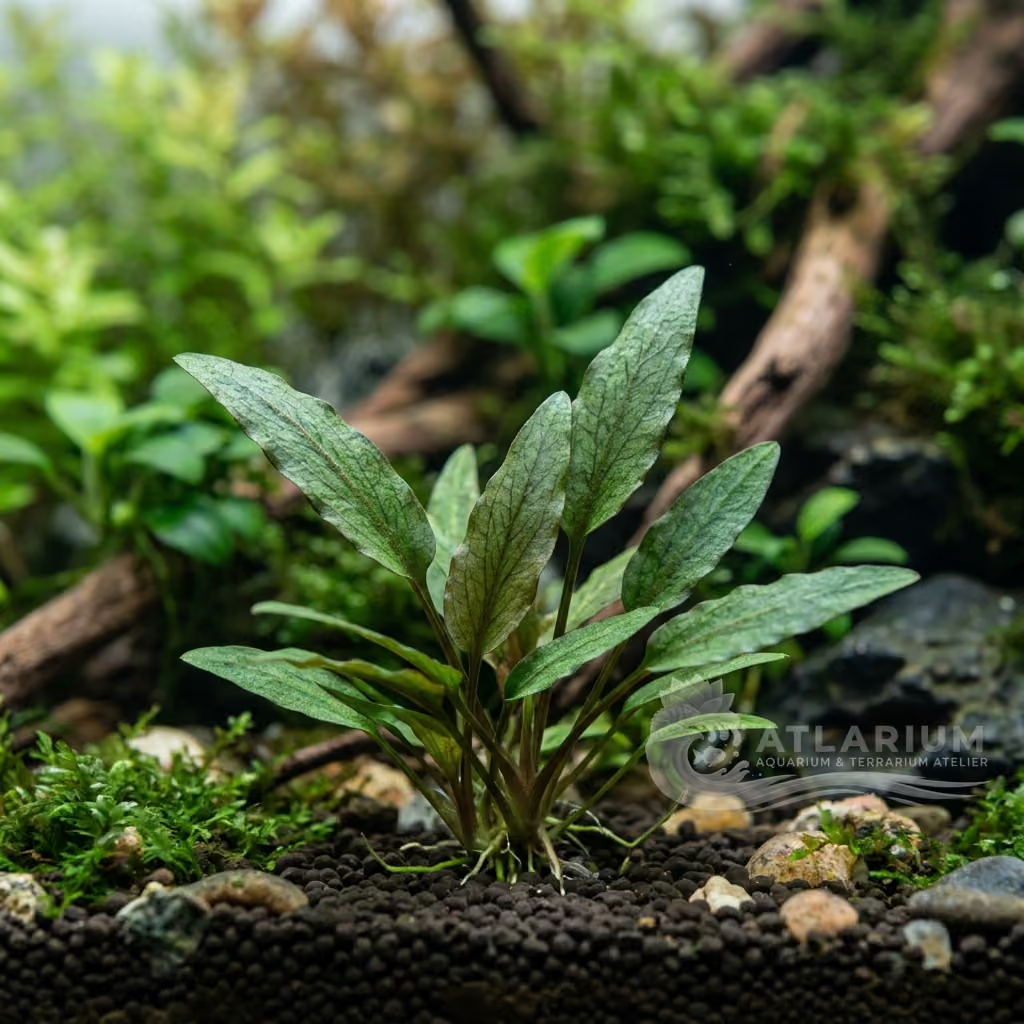
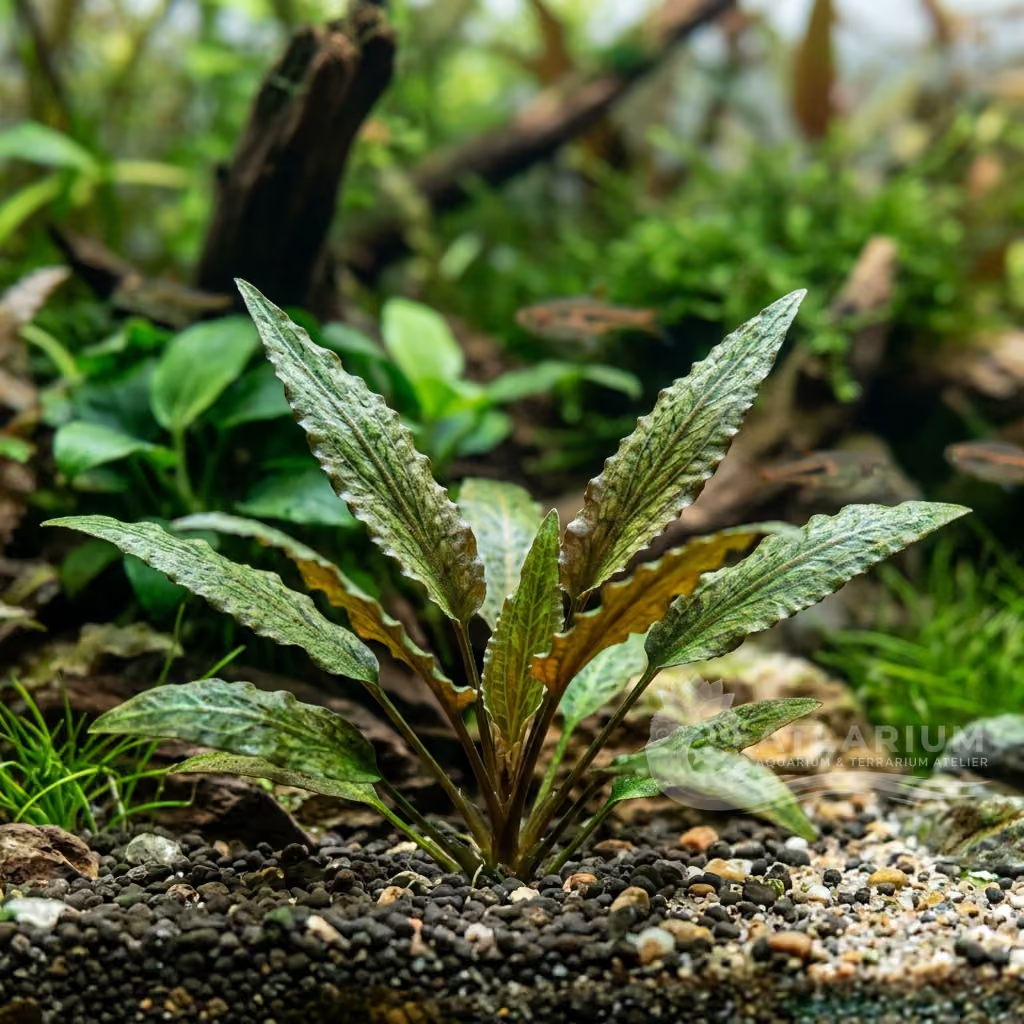
Native to the Melawi River, this small Bucephalandra variant displays wavy dark green leaves with mesmerizing blue-purple iridescence. Prefers low lighting.
Wassertemperatur
22 - 28 °C
pH-Wert
6 - 7.5
Wassertyp
Süßwasser
Licht
Mittel - Hoch
CO2
Mittel - Hoch
Erwartete Höhe
5 cm
Erwartete Breite
5 cm
KH
2 - 10 dKH

Artbeschreibung
Geographical Origin and Habitat: This Bucephalandra is native to the Melawi River region in West Kalimantan, Borneo, Indonesia. In nature, it grows as a rheophyte on rocks and submerged roots along mountain streams. It is adapted to extreme water flow variations and handles strong currents during the rainy season.
Taxonomy & Genetics: Belonging to the Araceae family, it is designated as an undescribed species (*sp.*) originating from Melawi. Genetically, it shares the typical hardiness and adaptability of Borneo's rheophytic species, showing high morphological stability and a compact growth habit.
Physical Structure: It develops a compact woody rhizome from which small leaves with short petioles arise. It produces strong, sticky roots that allow it to anchor tightly to hard surfaces like lava rocks or driftwood. Its growth is primarily horizontal and creeping.
Color & Texture: The leaves are oblong with wavy margins. They show a dark green color with metallic blue or violet undertones, covered in tiny light-reflecting dots under water. The texture is thick, tough, and waxy, making it highly resistant to herbivorous fish and snails.

Pflege, Zucht und Mitbewohner
Lighting & CO2: It prefers low to moderate lighting. Under high light, it is prone to slow growth and algae colonization, while moderate light promotes the development of its iridescent metallic colors. CO2 injection is not critical, but it noticeably supports faster shoot production and growth.
Nutrition & Substrate: The rhizome must never be buried in the soil, as this will lead to suffocation and rot. Instead, attach it to rocks or driftwood. It absorbs nutrients from the
Water Chemistry: It thrives in soft to medium-hard water with a pH of 6.0 to 7.5. Keep the temperature stable between 20°C and 28°C. Good filtration and regular water changes are important to prevent organic debris from settling on the foliage.
Space Management & Placement: Best placed as an epiphyte in the midground or foreground. It is excellent for adding details to wood and rocks, or filling small gaps in the hardscape of nano tanks. Plant them where there is moderate water movement.
Pruning: Pruning is rarely needed due to its slow growth. Propagate by dividing the main rhizome into pieces with at least 3-4 healthy leaves. This division encourages the mother plant to sprout new branches from the remaining rhizome.
Risks & Diseases: Rhizome rot is the main threat, usually caused by burying the plant or poor water flow. Due to its slow growth, the leaves are vulnerable to black beard algae (BBA). Placing the plant in areas of good flow helps keep the leaves clean.

Geografische Herkunft und Verbreitung
This Bucephalandra is native to the Melawi River region in West Kalimantan, Borneo, Indonesia. In nature, it grows as a rheophyte on rocks and submerged roots along mountain streams. It is adapted to extreme water flow variations and handles strong currents during the rainy season.
Ursprung
Süd- und Südostasien

Pflanzenprofil
- Platzierung
- Mittelgrund
- Due to its relatively compact size, Bucephalandra sp. "Melawi" is ideally suited for the foreground or midground areas of the aquascape. It serves as an excellent transitional plant when attached to the base of hardscape materials, seamlessly blending wood and stone with the surrounding flora. In smaller nano tanks, it can easily function as a captivating focal point due to its unique leaf textures and subtle iridescence. Positioning it in a partially shaded area can also help protect its slow-growing foliage from intense light and subsequent algae growth.
- Botanische Form
- Aufsitzerpflanze, Rhizom
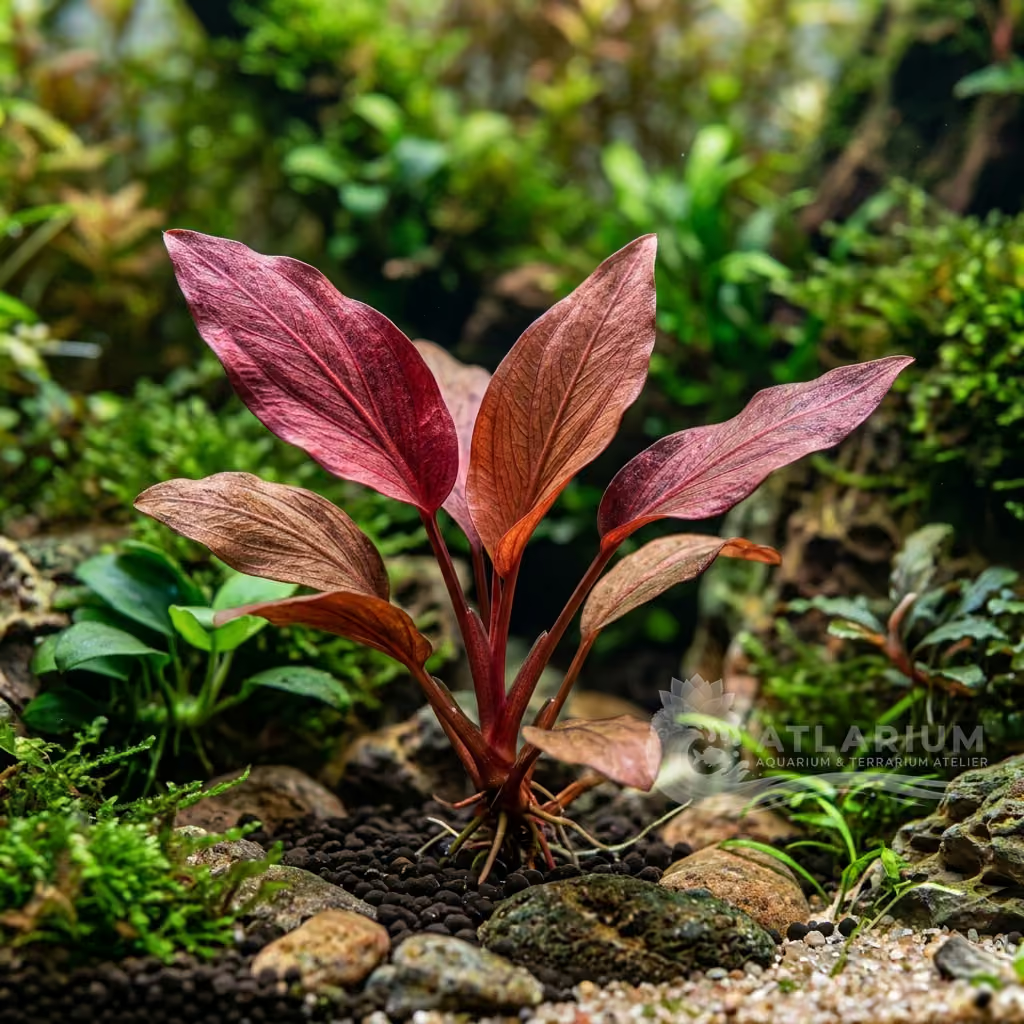
- Bucephalandra sp. "Melawi" exhibits a creeping rhizomatous growth habit, from which tough, somewhat leathery leaves emerge in a dense, rosette-like fashion. Depending on the specific lighting conditions and water chemistry, its foliage can display a beautiful range of colors, from dark emerald green to striking metallic blue or reddish-purple hues. Underwater, the plant frequently produces small, elegant white or pinkish spathes, a characteristic feature that highlights its membership in the Araceae family. The dense, clumping nature of its growth creates a highly textured and natural appearance in the aquarium.
- Wachstum
- Mittel
- The growth rate of Bucephalandra sp. "Melawi" is famously slow, making it an excellent choice for low-maintenance aquariums that require infrequent trimming. Under typical conditions, aquarists may only observe the emergence of one or two new leaves per month. Providing high lighting, CO2 injection, and a rich nutrient profile can moderately increase this pace, but it remains a slow grower by nature. This gradual development ensures that once it is placed in an aquascape, it maintains its intended shape and proportion for a very long time.
- Substrat
- Keiner
- As a classic epiphyte, Bucephalandra sp. "Melawi" does not require a deep or nutrient-rich soil substrate for its root development. Its specialized rhizome must never be completely buried in the substrate, as this will inevitably lead to rot and plant death. Instead, it thrives when its roots can grip onto porous surfaces like lava rock, dragon stone, or natural driftwood. If placed near the substrate, only the fine anchoring roots should touch the soil, leaving the main rhizome safely exposed to the flowing water.
- Säulendüngung
- Empfohlen
- Because its roots are primarily adapted for anchoring rather than deep nutrient extraction, Bucephalandra sp. "Melawi" relies heavily on water column fertilization. Dosing a well-balanced liquid fertilizer ensures that the plant has constant access to the macronutrients and micronutrients necessary for healthy leaf formation. Iron is particularly important to dose regularly, as it helps bring out the vibrant, iridescent colors hidden within the foliage. However, aquarists must dose carefully, as over-fertilizing a tank with slow-growing plants can quickly lead to aggressive algae outbreaks.
- Wurzeldüngung
- Keine
- Root fertilization using tabs or a nutrient-rich aquasoil is generally unnecessary for the successful cultivation of Bucephalandra sp. "Melawi". Its epiphyte nature means it is usually grown attached to hardscape, far above any substrate nutrient layers. Even if grown close to the substrate where fine roots might penetrate the soil, the plant's primary uptake mechanism remains its leaves and exposed root surface. Therefore, hobbyists should focus their efforts on maintaining a nutrient-rich water column rather than investing in substrate enhancements for this specific species.
- Trimmen
- Gelegentlich
- Trimming is rarely needed due to the slow growth rate. When necessary, simply cut the rhizome with clean, sharp scissors to remove old or damaged sections. Avoid cutting individual leaves unless they are decaying, as this will not encourage new growth from the cut stem.
- Ausbreitung
- Rhizome division
- Propagating Bucephalandra sp. "Melawi" is a simple and straightforward process that involves dividing its creeping rhizome. Using a sharp, sterilized cutting tool, an aquarist can sever a healthy portion of the rhizome, ensuring that the cut piece retains several healthy leaves and a viable root structure. This new cutting can then be securely attached to a new piece of hardscape using cyanoacrylate superglue or tied down with cotton thread or fishing line. Given time, the cut section will heal, establish a new holdfast, and begin slowly producing new vegetative growth.
- Empfindlichkeit
- Mäßig
- This plant is sensitive to sudden changes in water parameters, which can trigger leaf melt. It is also susceptible to algae growth on its leaves if placed under very intense light without adequate CO2. Stable conditions and good water flow are essential for its long-term health.
- Layoutrolle
- Aufsitzerpflanze, Mittelgrund, Nano, accent
- It serves as an excellent detail plant for midground or foreground areas, adding texture and unique colors. Its small size and epiphytic nature make it perfect for naturalizing hardscape transitions. It is highly valued in aquascaping for creating focal points in nano tanks or intricate details in larger layouts.

Verwandte Arten
Empfehlungen gruppiert nach nahen Verwandten, Auswahl von Begleitern und ähnlicher Betreuung.