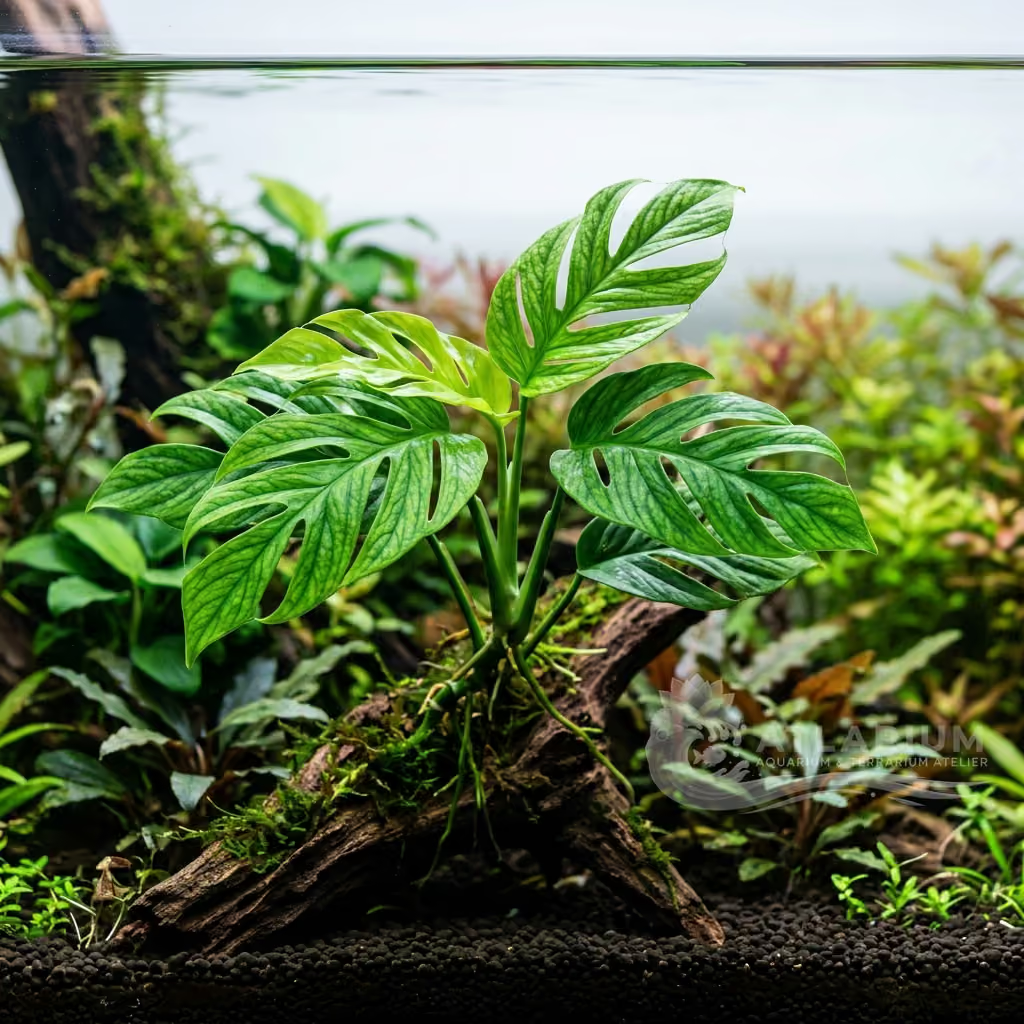
Dieffenbachia spp.
Dieffenbachia spp.
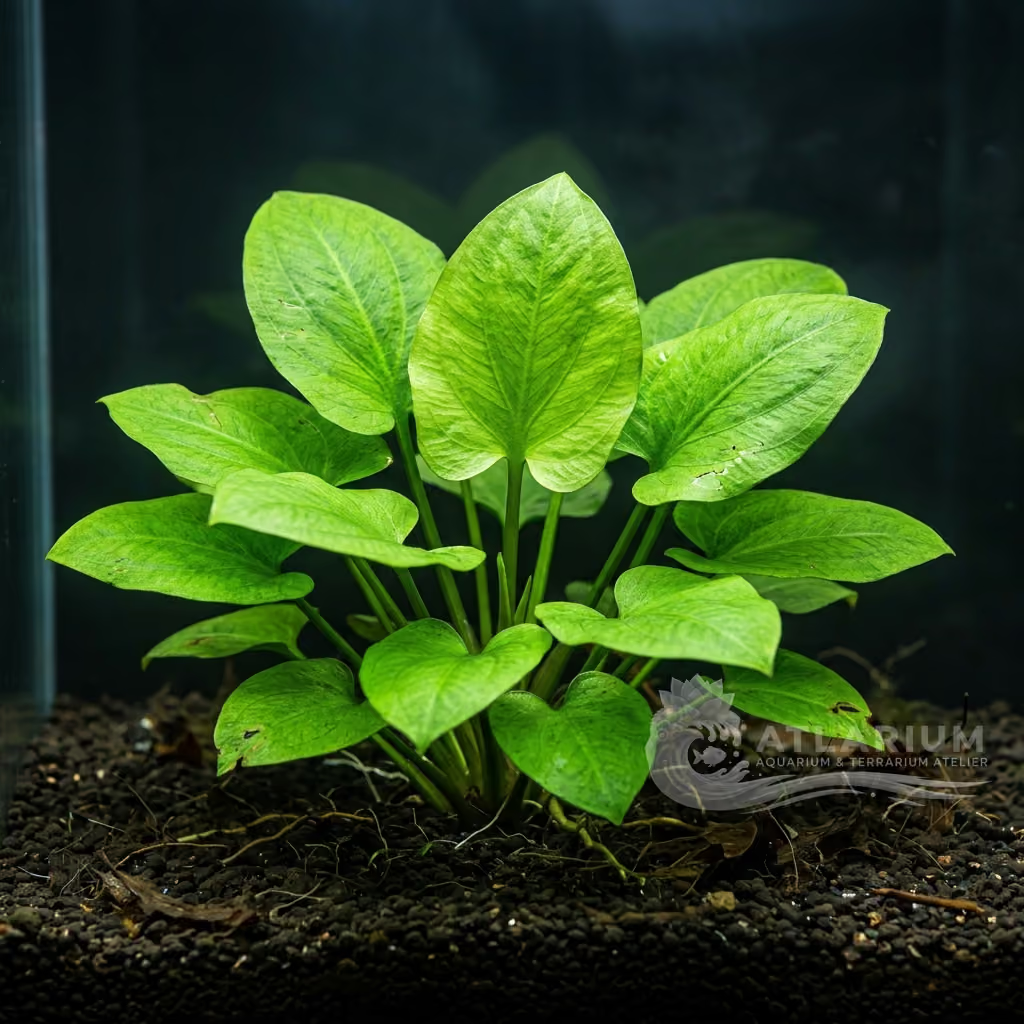
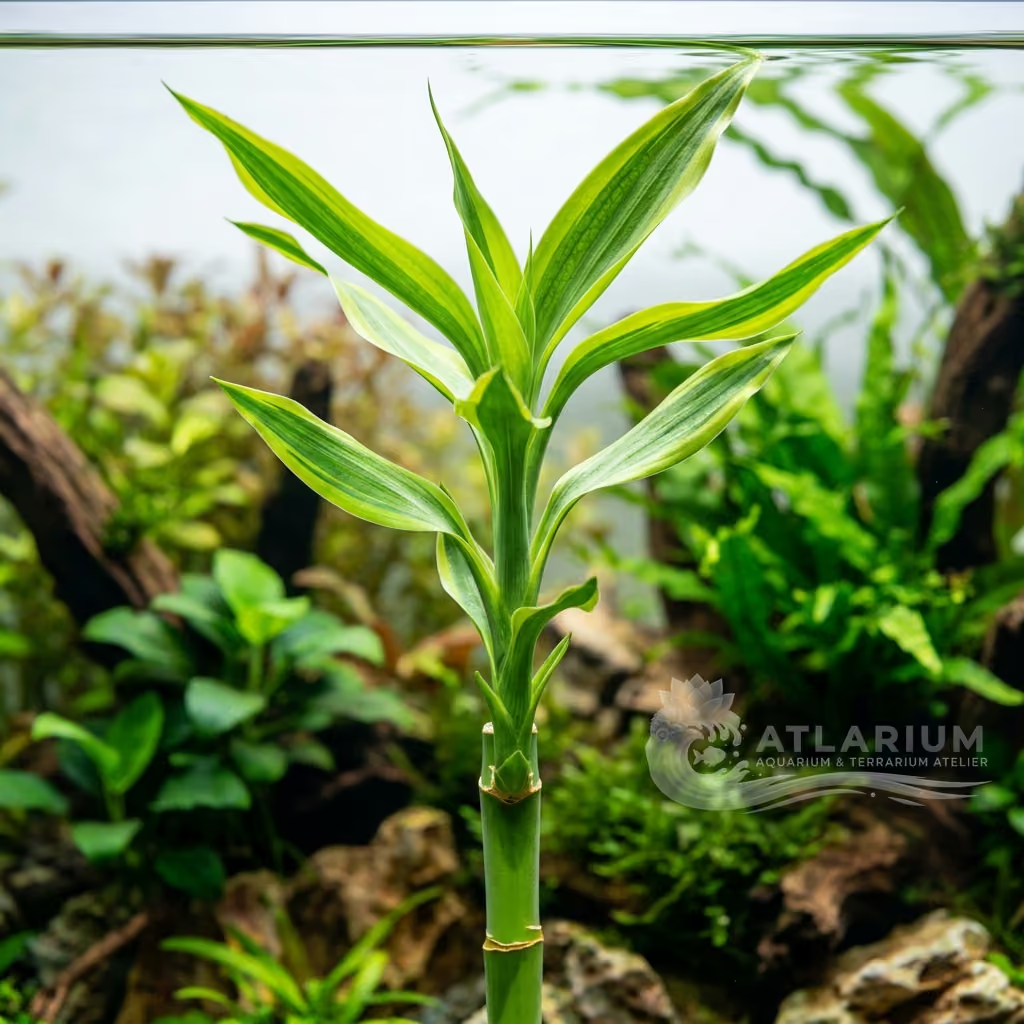
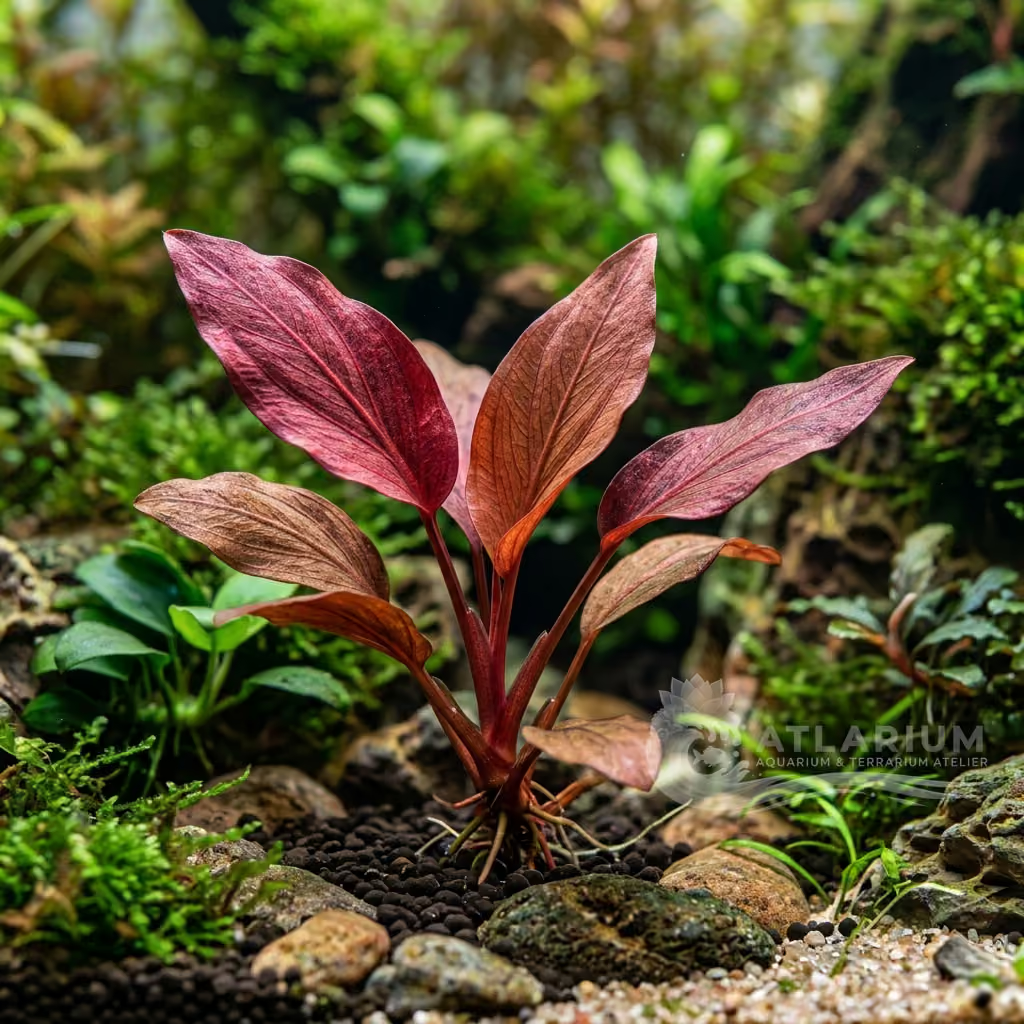
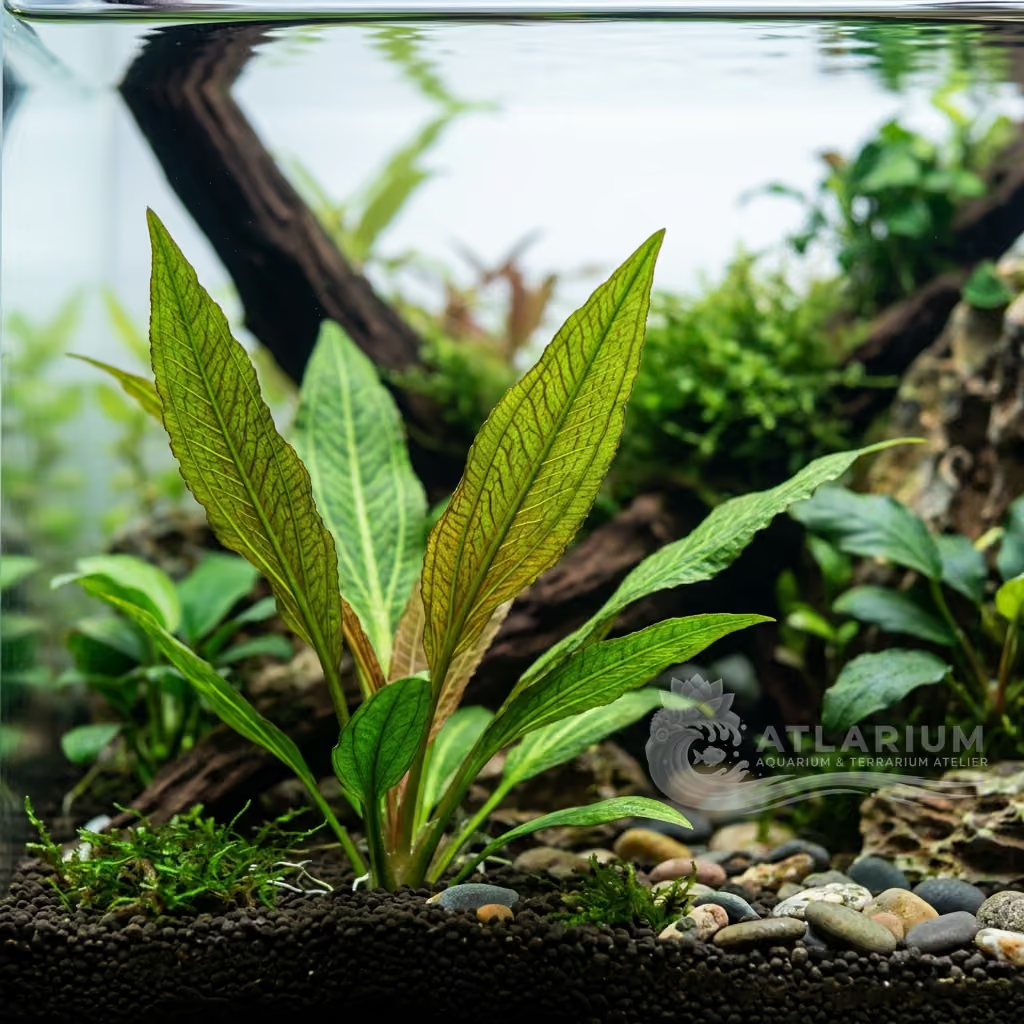
Dieffenbachia spp. are visually stunning terrestrial plants famous for their broad, vividly patterned leaves. Perfect for paludariums and ripariums, they thrive in shaded, highly humid environments.
Wassertemperatur
22 - 28 °C
pH-Wert
6 - 7.5
Wassertyp
Süßwasser
Licht
Niedrig
CO2
Mittel - Hoch
Erwartete Höhe
40 cm
Erwartete Breite
30 cm
KH
2 - 10 dKH

Artbeschreibung
Geographical Origin and Habitat: Species of the genus Dieffenbachia are native to the tropical rainforests of Central and South America, ranging from Mexico down to northern Argentina and the Caribbean islands. In nature, they grow in the shady understory, in areas characterized by high environmental humidity and constantly wet soils rich in humus. While they tolerate water-saturated soils and temporary seasonal flooding, they are not aquatic plants and cannot tolerate the submersion of their leaves.
Taxonomy & Genetics: It belongs to the Araceae family, Aroideae subfamily, genus Dieffenbachia. It is a genus comprising numerous species and horticultural hybrids widely used as indoor ornamental plants. Genetically and biochemically, the plant is characterized by a high synthesis of needle-like calcium oxalate crystals (raphides) associated with toxic proteolitic enzymes. This feature constitutes a chemical defense against herbivores and makes the plant highly toxic to humans and animals if ingested.
Physical Structure: It features thick, fleshy stems that are woody at the base, growing erect or semi-creeping. The leaves are large, ovate-lanceolate, arranged alternately along the stem and supported by long, sheathing petioles. The root system, when the plant is grown with roots submerged in hydroculture or paludariums, adapts by developing thick, fleshy roots that are poorly branched but highly efficient in extracting nutrients from the water.
Color & Texture: The leaves show spectacular color patterns with variegated shades of bright green, dark green, creamy white, and yellow. The variegation occurs in the form of spots, streaks, or borders following the secondary veins of the leaf blade. The leaf surface is smooth, slightly glossy, and waxy, offering a sturdy and elegant texture.

Pflege, Zucht und Mitbewohner
Lighting & CO2: Prefers low to moderate, diffused lighting, simulating the shade of the tropical understory. Absolutely avoid direct sunlight, which would burn the emersed leaves. CO2 in the aquarium is useless, as the plant must be kept emersed and absorbs carbon dioxide directly from the surrounding air.
Nutrition & Substrate: Does not require a specific fertile substrate if grown in ripariums or paludariums with roots submerged; it can be anchored among rocks or gravel. It absorbs nutrients (particularly nitrates and phosphates) directly from the
Water Chemistry: Shows good chemical tolerance, adapting to pH between 6.0 and 8.0 and medium hardness. The water temperature must be kept constant between 18°C and 28°C; it fears intense cold and cold air currents on the emersed leaves.
Space Management & Placement: It must be grown exclusively in paludariums, ripariums, or open aquariums, placing the roots in the water and keeping the stem and leaves emersed. If completely submerged in the aquarium, the plant will rot quickly and die within a few weeks, polluting the tank. Handle with gloves due to the toxicity of the sap.
Pruning: Growth is moderate. Pruning consists of cutting older or yellowing leaves close to the main stem with sharp, sanitized knives. If the stem becomes too long, it can be cut, and the apical portion can be placed in water to root, while the base will produce new lateral shoots.
Risks & Diseases: The main biological risk is root or stem rot if water circulation around the roots is absent. The sap is highly toxic and irritating to mucous membranes; if stems or leaves break in the tank, there is a risk of releasing toxins harmful to aquatic fauna, although diluted. Keep out of reach of children and pets.

Geografische Herkunft und Verbreitung
Species of the genus Dieffenbachia are native to the tropical rainforests of Central and South America, ranging from Mexico down to northern Argentina and the Caribbean islands. In nature, they grow in the shady understory, in areas characterized by high environmental humidity and constantly wet soils rich in humus. While they tolerate water-saturated soils and temporary seasonal flooding, they are not aquatic plants and cannot tolerate the submersion of their leaves.
Ursprung
Mittelamerika und KaribikAmazonas, Orinoco und GuayanaExtra-Amazonas-Südamerika

Pflanzenprofil
- Platzierung
- Mittelgrund
- Absolutely not suitable for submerged placement in an aquarium, as it will rot and foul the water. It is excellent for paludariums, ripariums, or open-top tanks where its roots can be in the water but the foliage remains completely above the surface. It prefers bright, indirect light when grown emersed.
- Botanische Form
- Stängel
- Features large, broad, and incredibly decorative leaves with striking variegation patterns in white, yellow, and green. It grows upright on a sturdy, thick stem. It is highly valued as an ornamental houseplant for its lush, tropical appearance.
- Wachstum
- Mittel
- Exhibits a moderate to fast growth rate when grown terrestrially or with its roots in nutrient-rich water. Its growth depends on the availability of light, humidity, and nutrients. It can quickly become quite large, requiring ample vertical space.
- Substrat
- Keiner
- As a terrestrial plant strictly suited for terrariums or paludariums, Dieffenbachia spp. should be planted in a well-draining, airy potting mix. It is completely unsuitable for submerged aquarium conditions and its roots will rot if kept in waterlogged substrate. A mixture of peat, perlite, and bark planted at a depth of 6-10 centimeters provides the ideal environment. This porous substrate allows its thick roots to breathe while efficiently absorbing moisture and nutrients.
- Säulendüngung
- Empfohlen
- Not applicable for submerged growth. In a riparium setup, the roots will draw nitrates and phosphates directly from the aquarium water, helping to purify it. Supplemental fertilization is generally not needed if the tank is well-stocked with fish.
- Wurzeldüngung
- Keine
- If grown in a planter within a paludarium, a rich terrestrial soil or hydroponic media is best. The roots are vigorous and will seek out nutrients. Avoid submerging the crown of the plant to prevent rot.
- Trimmen
- Gelegentlich
- Lower leaves will naturally yellow and die off as the plant grows taller; these should be removed to maintain a tidy appearance. If the plant becomes too tall or leggy, the main stem can be cut back to encourage new, lower growth. Use caution when trimming, as its sap is toxic and irritating.
- Ausbreitung
- Stecklinge
- Can be propagated by stem cuttings or by air layering. A cut stem can be placed in water or moist soil where it will readily develop new roots. Ensure that any cuttings are kept in a warm, humid environment during the rooting process.
- Empfindlichkeit
- Mäßig
- Highly toxic if ingested, containing calcium oxalate crystals; keep away from pets and handle with care. It is sensitive to cold drafts and requires high humidity to look its best. Submerging the foliage will lead to rapid decay and poor water quality.
- Layoutrolle
- paludarium, riparium
- Serves as a dramatic, tropical background plant in ripariums or paludariums. Its large, variegated leaves provide excellent structure and aesthetic appeal above the waterline. It is completely unsuitable for traditional underwater aquascaping.

Verwandte Arten
Empfehlungen gruppiert nach nahen Verwandten, Auswahl von Begleitern und ähnlicher Betreuung.