Striped Headstander
Anostomus anostomus
The Amazonian 'Striped Cigar'. A stunning, torpedo-shaped fish reaching 16 cm with high-contrast black and yellow stripes. A fascinating algae-scraper with a severely upturned mouth, but notoriously aggressive toward its own kind in captivity.
Wassertemperatur
24 - 28 °C
pH-Wert
5.5 - 7.5
Wassertyp
Süßwasser
Tankfüllstand
Unten und in der Mitte
Erwachsenengröße
16 cm
Mindesttankvolumen
>= 180 L
Mindestgruppe
>= 1
GH
1 - 12 dGH
KH
1 - 6 dKH
TDS
25 - 240 ppm
Leitfähigkeit
39 - 375 uS/cm

Artbeschreibung
Geographical Origin and Habitat: Widespread in the central Amazon and Orinoco (Brazil, Peru, Venezuela). Gathers among the dense vegetated banks of fast-flowing rivers, often in small schools among logs and rocky crevices in highly oxygenated waters.
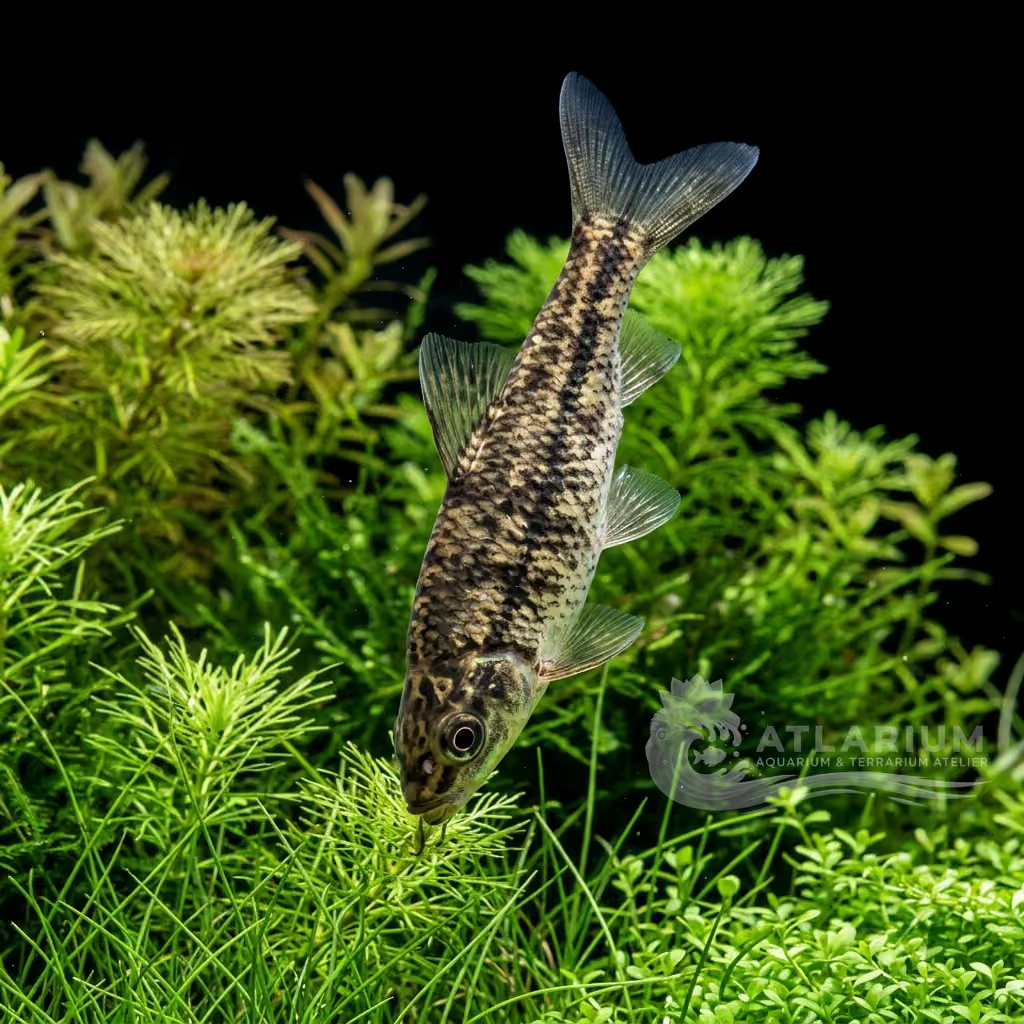
Taxonomy and Morphology: Striped Headstander (Anostomus anostomus). The family name (Anostomidae) indicates the curiously upturned mouth. Tapered "torpedo" profile. Its most famous characteristic is its swimming and resting posture: inclined at 45 degrees with its head pointing towards the bottom.
Social Behavior: Extremely gregarious but establishes rigid hierarchies with continuous displays and "shoves". Becomes a serial fin nipper if kept alone or in insufficient numbers. Schools (minimum 6-8 specimens) disperse intra-specific aggressiveness.
Coloration and Sexual Dimorphism: Alternating pale/golden yellow and deep brown-black longitudinal stripes cover the entire body like a horizontal "barcode". Base of the fins mottled with intense rust red. Dimorphism almost non-existent (mature females slightly stockier).

Pflege, Zucht und Mitbewohner
Aquarium Setup: An aquarium (120 cm / 48 inches minimum for a school) hermetically closed: they are peerless jumpers. Strong currents. The use of rocks with cultivated green algae ("Aufwuchs") provided vertically will satisfy their instinct to graze upside down.
Diet and Feeding: Omnivore with a very strong plant requirement. In nature they eat thread-like and epiphytic algae tearing them violently, ingesting microfauna. Feed with spirulina wafers, zucchini, bloodworms and Brine shrimp. Will relentlessly devour soft-leaved aquarium plants.
Water Quality: Requires clear and highly oxygenated waters. Temperature fluctuations or too high nitrates make them subject to intestinal blockages and parasitosis. Weakly acidic or neutral PH.
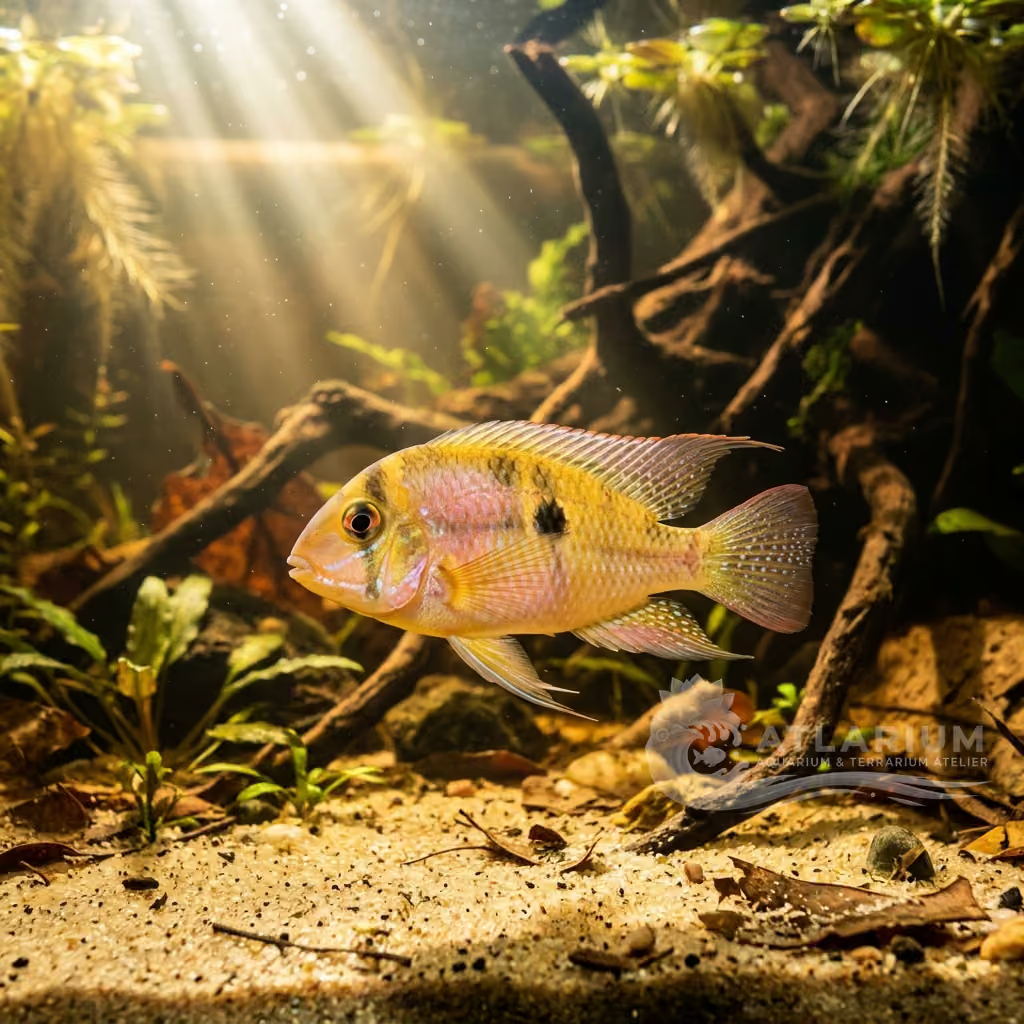
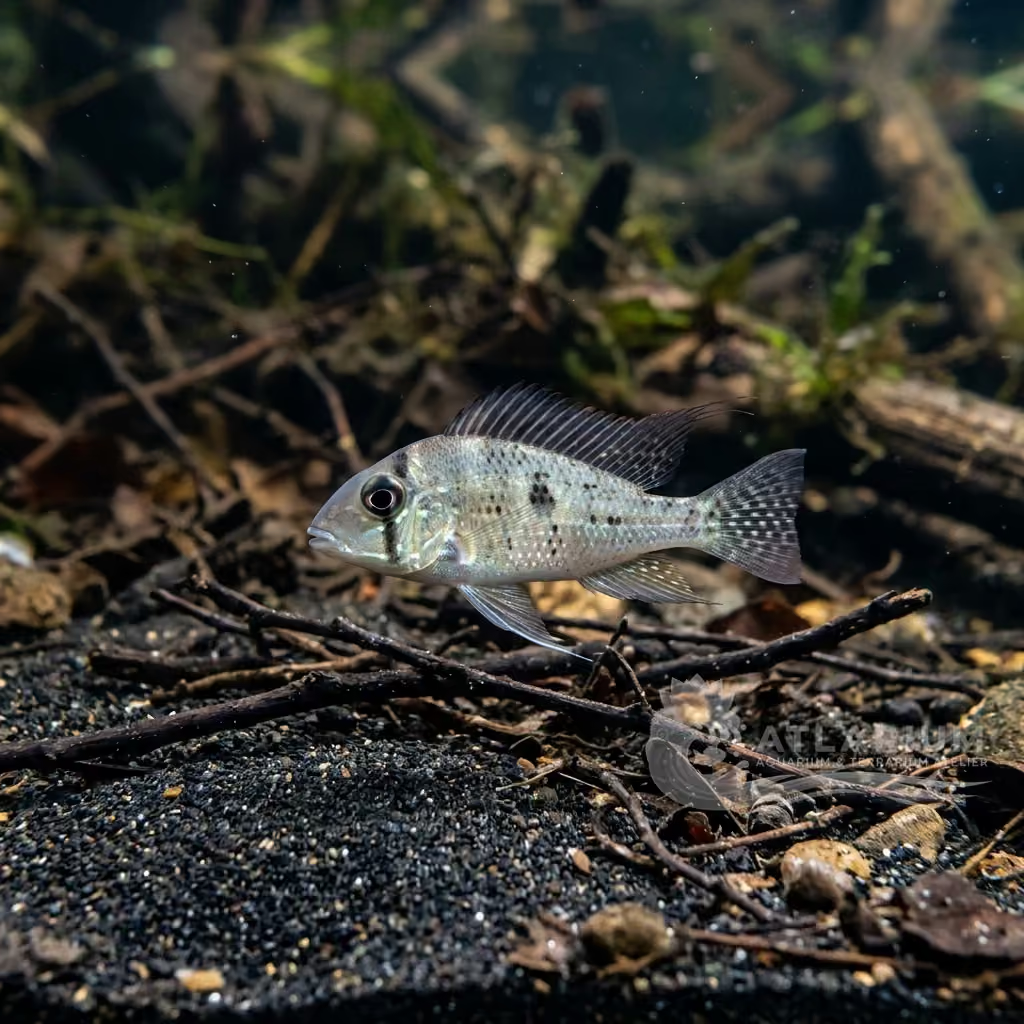
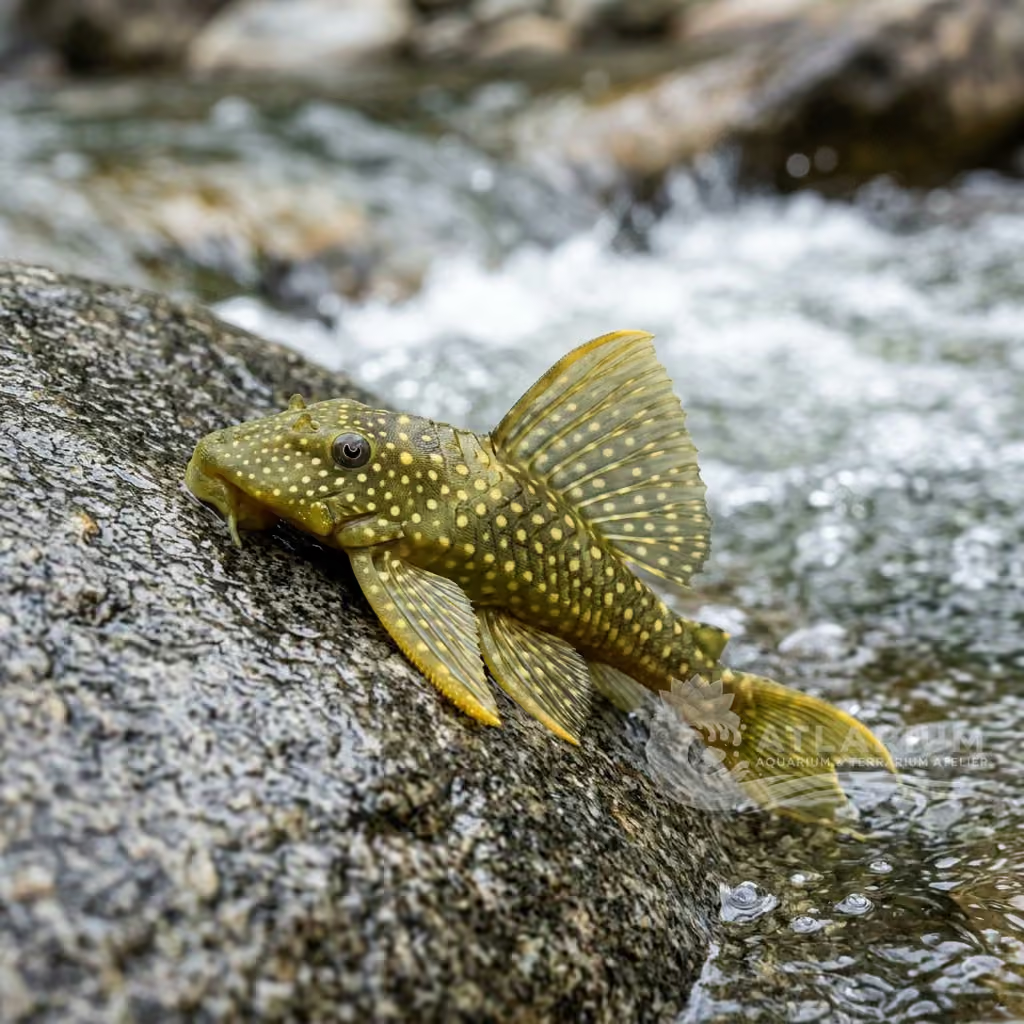
Compatibility and Cohabitation: Perfect partners for rheophilic Loricariids (Plecos), large peaceful or semi-aggressive Cichlids (Severums, Geophagus) and large Characins. The golden rule: never pair them with slow fish or those with long flowing fins (Angelfish, Bettas) which would be amputated.
Aquarium Breeding: Very rare in captivity. Egg scatterers. In rare cases of fortuitous reproduction, they scatter the tiny eggs among the dense vegetation (mosses) completely abandoning any parental care. The eggs are greedy for oxygen.
Risks and Diseases: Zero tolerance for "tank dwarfism": if the tank is too short they will not develop the schooling aptitude and will go crazy with panic, darting against the glass. Very high risk of jumping from the lid.

Geografische Herkunft und Verbreitung
Widespread in the central Amazon and Orinoco (Brazil, Peru, Venezuela). Gathers among the dense vegetated banks of fast-flowing rivers, often in small schools among logs and rocky crevices in highly oxygenated waters.
Ursprung
Kosmopolitisch oder eingeführtAmazonas, Orinoco und GuayanaOstasien

Fischprofil
- Temperament
- Semi-aggressive
- This species has a territorial and somewhat quarrelsome temperament, particularly when housed with members of its own kind in smaller aquariums. In small groups, frequent chasing and dominant behaviors can lead to significant stress for weaker individuals. They are generally peaceful toward other species of a different shape and size, but they can be fin-nippers. Consequently, they should not be kept with slow-moving or long-finned tank mates that might attract their nipping behavior.
- Diät
- Omnivore
- As omnivorous grazers with a strong herbivorous preference, these fish require a diet centered on plant-based foods. In the wild, they constantly graze on algae, biofilms, and small invertebrates found on river stones. In the aquarium, they should be offered high-quality algae wafers, spirulina flakes, and fresh vegetables such as blanched spinach, zucchini, and cucumber. This diet should be supplemented with occasional feedings of small live or frozen foods like brine shrimp and daphnia.
- Lebenserwartung
- 8-15 years
- Erwachsenengröße
- 16 cm
- Geschlechterverhältnis
- Group
- Determining the gender of this species is quite difficult, especially in juvenile specimens, although mature females tend to be slightly larger and rounder-bellied than males. In terms of aquarium stocking, they exhibit strong conspecific aggression and territoriality if kept in small numbers. It is recommended to keep either a single specimen or a larger group of six or more individuals to successfully disperse intraspecific aggression. If kept in a group, a very spacious aquarium is necessary to allow each fish to establish its own territory.
- Fütterungsfrequenz
- Twice daily
- It is recommended to feed these fish small portions two to three times a day to match their natural grazing habits. Providing frequent, small meals helps mimic their continuous foraging behavior in the wild and reduces food competition stress. Leaving algae-covered rocks or driftwood in the tank is an excellent way to allow them to graze naturally throughout the day. Care must be taken to avoid overfeeding, and any uneaten fresh vegetables should be removed after 24 hours to prevent water fouling.
- Bioload
- Medium
- The Striped Headstander is a moderately large and active fish that produces a medium amount of biological waste, primarily due to its constant grazing on algae and organic matter. To manage this bioload effectively and maintain crystal-clear water, a powerful filtration system is highly recommended. External canister filters capable of turning over the tank volume 4 to 5 times per hour are ideal for this species. Regular partial water changes are also essential to control nitrate levels and maintain stable water chemistry.
- Fluss
- Stagnant
- Originating from fast-flowing rivers and streams in the Amazon and Orinoco basins, this species prefers moderate to strong water flow. The aquarium should be equipped with a high-capacity filter or additional powerheads to simulate a steady, oxygen-rich current. This flow not only mimics their natural riverine environment but also helps maintain the high oxygen levels they require. The current encourages natural swimming against the stream, keeping the fish active and physically fit.
- Sprungrisiko
- Yes
- The Striped Headstander is an exceptionally agile and powerful swimmer that presents a high risk of jumping out of the aquarium. They can easily become startled by sudden movements, shadow changes, or minor squabbles with tank mates, prompting them to leap. Therefore, a secure, tight-fitting lid or heavy cover glass slides are absolutely essential for their enclosure. Any small gaps around filter pipes or heater cables must be securely covered to prevent accidental escapes.
- Reproduktion
- Oviparous
- Breeding the Striped Headstander in a home aquarium is extremely challenging and rarely documented by hobbyists. They are oviparous egg scatterers that are believed to spawn in weedy, densely vegetated areas in the wild. Most specimens available in the aquarium trade are either wild-caught or bred in commercial export facilities using hormonal induction methods. Recreating successful breeding conditions in captivity requires pristine soft, acidic water, a rich conditioning diet, and dense vegetation.
- Kompatibilität & Tankkameraden
- Peaceful
- Due to their active and slightly pugnacious nature, they are best kept with robust, peaceful tank mates of a medium to large size. Highly compatible species include larger tetras, loricariid catfish, armored doradids, and peaceful cichlids that tolerate water current. They should never be housed with slow, timid, or long-finned species that could become easy targets for fin nipping. Placing them in a well-structured community tank with active swimmers ensuring a harmonious environment.
- Tankfüllstand
- Middle/Bottom
- This species primarily occupies the bottom and middle zones of the aquarium, where it spends most of its time foraging along solid surfaces. Its unique head-down swimming posture, tilted at an angle of approximately 45 degrees, is an evolutionary adaptation for grazing algae off rocks and wood. The aquarium decor should feature smooth rocks and driftwood branches in the lower half of the tank to facilitate this natural behavior. While they may occasionally swim to the upper levels, they remain closely oriented to the bottom structures.

Wissenschaftliche Modelle & Parameter
FishBase
Zugang zu den offiziellen wissenschaftlichen Daten der Art
FishBase v25.04Daten synchronisiert am: 15.06.2026
- Trophäenniveau
- 3 ± 0,34 se
- Belastbarkeit
- Hoch (weniger als 15 Monate)
- Phylogenetische Einzigartigkeit (PD50)
- 0.5312
- Bayessche Längen-Gewichts-Beziehung
- a = 0.00891, b = 3.05
- AnfälligkeitGeringe Anfälligkeit (10 / 100)

Verwandte Arten
Empfehlungen gruppiert nach nahen Verwandten, Auswahl von Begleitern und ähnlicher Betreuung.