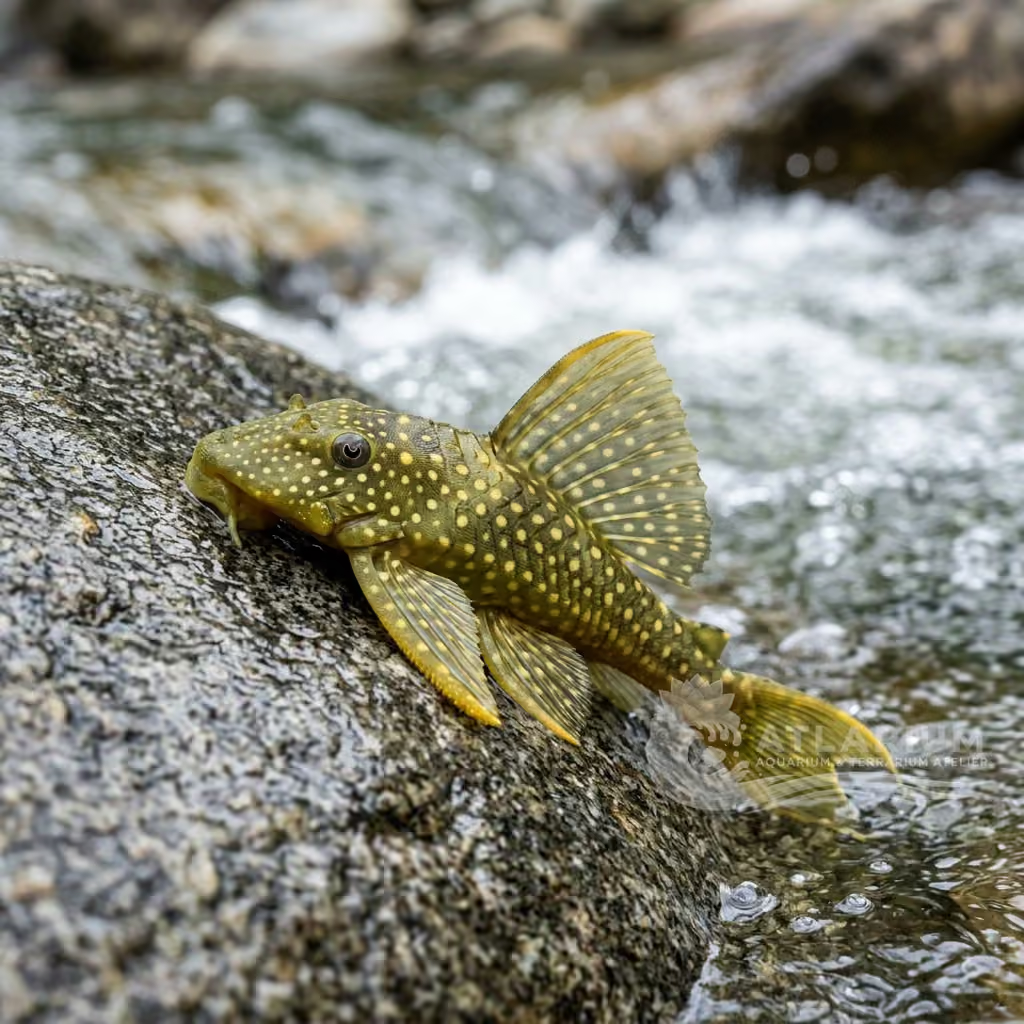
Black Ghost Knifefish
Apteronotus albifrons
The Blind, Electric Navigator (40-50 cm / 16-20 inches). A mesmerizing, deeply intelligent nocturnal oddball. Featuring a pitch-black, velvety, completely scaleless body, it completely lacks a tail fin. Instead, it moves via an incredibly long, continuous bottom fin undulating like a ribbon, allowing it to swim seamlessly forward, backward, or upside-down. Completely blind in the dark, it navigates and hunts strictly by emitting a constant, weak bio-electric field (electrolocation) like a radar. Despite its odd appearance, it becomes incredibly 'tame', easily learning to eat from its owner's hand. However, it requires massive tanks, smooth PVC hiding tubes, and strict solitary confinement away from other electric fish to prevent fatal electrical interference.
23 - 28 °C
6 - 7.5
Süßwasser
Unten und in der Mitte
50 cm
>= 500 L
>= 1
2 - 15 dGH
1 - 7 dKH
40 - 295 ppm
63 - 461 uS/cm

Artbeschreibung

Pflege, Zucht und Mitbewohner

Geografische Herkunft und Verbreitung
Ursprung

Fischprofil
- Temperament
- Semi-aggressive
- The Black Ghost Knifefish is generally peaceful and shy toward medium to large-sized tankmates. However, it exhibits strong territoriality and intraspecific aggression, making it highly unsuitable to keep with other knifefish in the same aquarium. While not an aggressive predator by nature, it is an opportunistic hunter that will actively target and consume small fish or invertebrates during its nocturnal search for food.
- Diät
- Omnivore
- Apteronotus albifrons is a carnivorous micro-predator that feeds primarily on small aquatic organisms in the wild. In captivity, they greatly prefer live or frozen foods such as bloodworms, tubifex, brine shrimp, daphnia, and small pieces of shrimp or fish. They can take a significant amount of time to accept dry prepared foods like pellets or flakes, so a diet dominated by high-quality fresh or frozen food is recommended for their health.
- Lebenserwartung
- 10-15 years
- Erwachsenengröße
- 50 cm
- Geschlechterverhältnis
- Pair
- It is highly recommended to keep the Black Ghost Knifefish individually in an aquarium, as they exhibit strong intraspecific aggression and extreme territoriality towards conspecifics. Keeping multiple specimens together is only feasible in exceptionally large tanks with numerous physical barriers and hiding spots to prevent violent clashes. For breeding purposes, a single pair (1:1 ratio) is ideal, although sexing these fish visually is extremely difficult outside of active spawning periods.
- Fütterungsfrequenz
- Twice daily
- It is recommended to feed the Black Ghost Knifefish once or twice daily, preferably after the aquarium lights are turned off or during the evening hours. Being a shy and nocturnal species, it may not compete effectively for food during the day against more active tankmates. Spot-feeding near its preferred hiding spot helps ensure it receives adequate nutrition without unnecessary stress.
- Bioload
- High
- The Black Ghost Knifefish (Apteronotus albifrons) produces a significant bioload due to its large potential adult size of up to 50 cm (20 inches) and its high-protein, carnivorous diet. To manage their waste, a highly efficient and oversized filtration system is absolutely essential. Regular, substantial water changes (about 30% to 50% weekly) are also required to keep nitrates low and prevent the accumulation of dissolved organic compounds, to which this scaleless fish is highly sensitive.
- Fluss
- Stagnant
- This species originates from South American rivers and streams characterized by fast-flowing, highly oxygenated waters. Consequently, they prefer a moderate to strong water flow in the aquarium, which mimics their natural habitat and supports proper oxygenation. Good water movement also helps keep the sandy substrate clean, reducing the risk of skin infections in this scaleless fish.
- Sprungrisiko
- Yes
- This species presents a moderate to high risk of jumping, especially during the nighttime hours when it is most active and explores the upper water levels. They can also jump out of the aquarium if startled by sudden movements or abrupt changes in lighting. It is essential to secure the aquarium with a tight-fitting, heavy lid and ensure there are no open gaps through which the fish could slip out.
- Reproduktion
- Oviparous
- Breeding the Black Ghost Knifefish in home aquariums is extremely difficult and rarely documented. They are nocturnal egg-scatterers that release adhesive eggs among dense vegetation or substrate crevices, requiring water currents to prevent fungal growth. Most specimens available in the hobby originate from commercial outdoor farms in Southeast Asia or South America, where spawning is typically induced using seasonal triggers or hormone treatments.
- Kompatibilität & Tankkameraden
- Peaceful
- Apteronotus albifrons is compatible with peaceful, medium to large-sized fish that do not compete for cave spaces at the bottom. Good tankmates include peaceful cichlids like Severums or Angelfish, larger characins, gouramis, and armored catfish or plecos. It is critical to avoid keeping them with very small fish (such as neon tetras) or small shrimp, which will be preyed upon at night, as well as other members of their own species.
- Tankfüllstand
- Middle/Bottom
- The Black Ghost Knifefish is a primarily bottom-dwelling species that spends most of its time in the lower to middle zones of the aquarium. As a shy and nocturnal fish, it remains hidden inside caves, PVC pipes, or dense vegetation during daylight hours. At night, however, it becomes active and explores all levels of the tank searching for food, swimming gracefully in any direction using the undulations of its long anal fin.

Wissenschaftliche Modelle & Parameter
Zugang zu den offiziellen wissenschaftlichen Daten der Art
- Trophäenniveau
- 3 ± 0,17 se
- Phylogenetische Einzigartigkeit (PD50)
- 0.5
- Bayessche Längen-Gewichts-Beziehung
- a = 0.00331, b = 3.05
- AnfälligkeitMäßige Anfälligkeit (40 / 100)

Verwandte Arten
Empfehlungen gruppiert nach nahen Verwandten, Auswahl von Begleitern und ähnlicher Betreuung.