Meta Cichlid / Yellow Acara
Aequidens metae
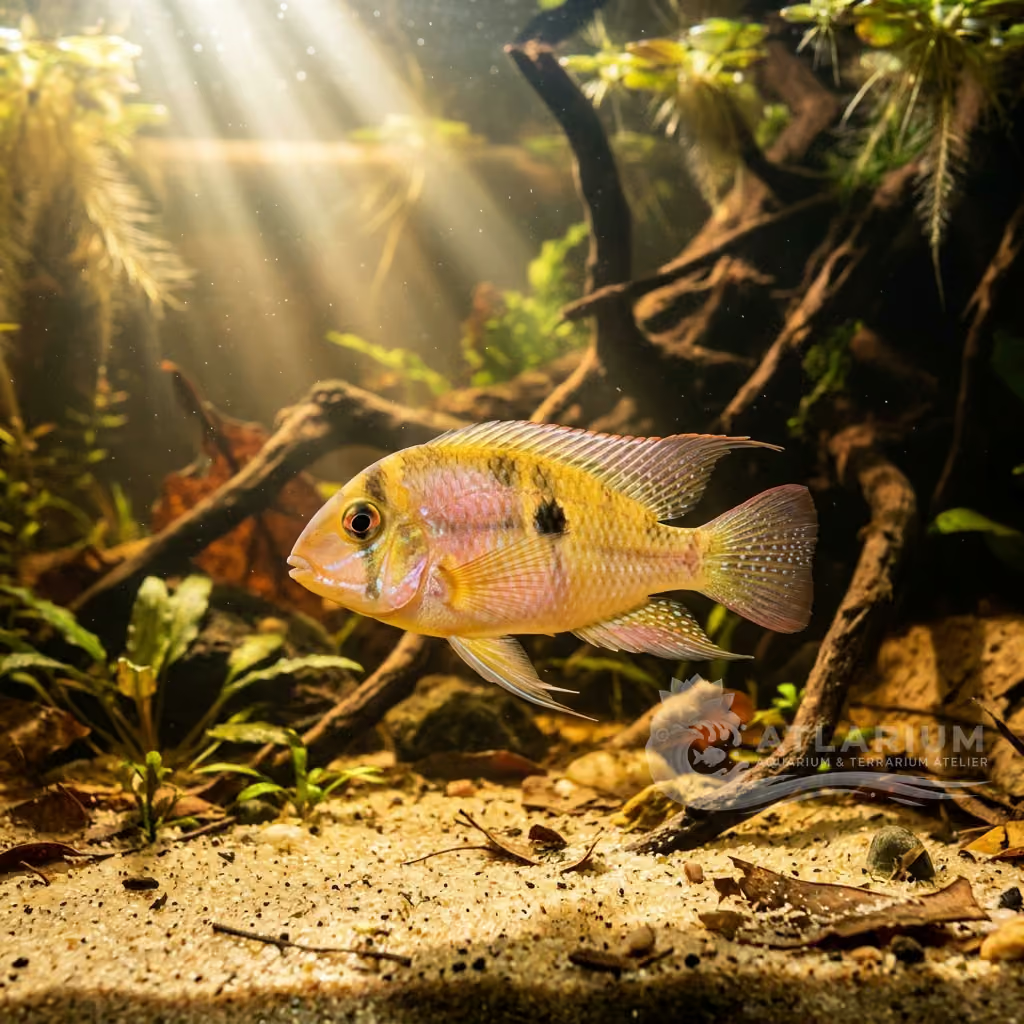
The luminous 'Yellow Acara of the Meta' (15-20 cm). A rarity for enthusiasts, the Aequidens metae stands out clearly from the classic blue or green Acaras for its brightly colored golden-mustard livery. It is a "gentle giant" from Colombia: powerful but peaceful, it does not devastate the furnishings and peacefully tolerates tankmates that do not fit in its wide mouth.
Wassertemperatur
24 - 30 °C
pH-Wert
5 - 7
Wassertyp
Süßwasser
Tankfüllstand
Unten und in der Mitte
Erwachsenengröße
20 cm
Mindesttankvolumen
>= 180 L
Mindestgruppe
>= 1
GH
1 - 10 dGH
KH
1 - 5 dKH
TDS
25 - 200 ppm
Leitfähigkeit
39 - 313 uS/cm

Artbeschreibung
Geographical Origin and Habitat: Endemic to the Orinoco river basin, with main diffusion in the Meta river (Colombia and Venezuela). Populates calm waters (blackwater or clearwater) with soft leafy substrates, avoiding the strong currents of the main channel.
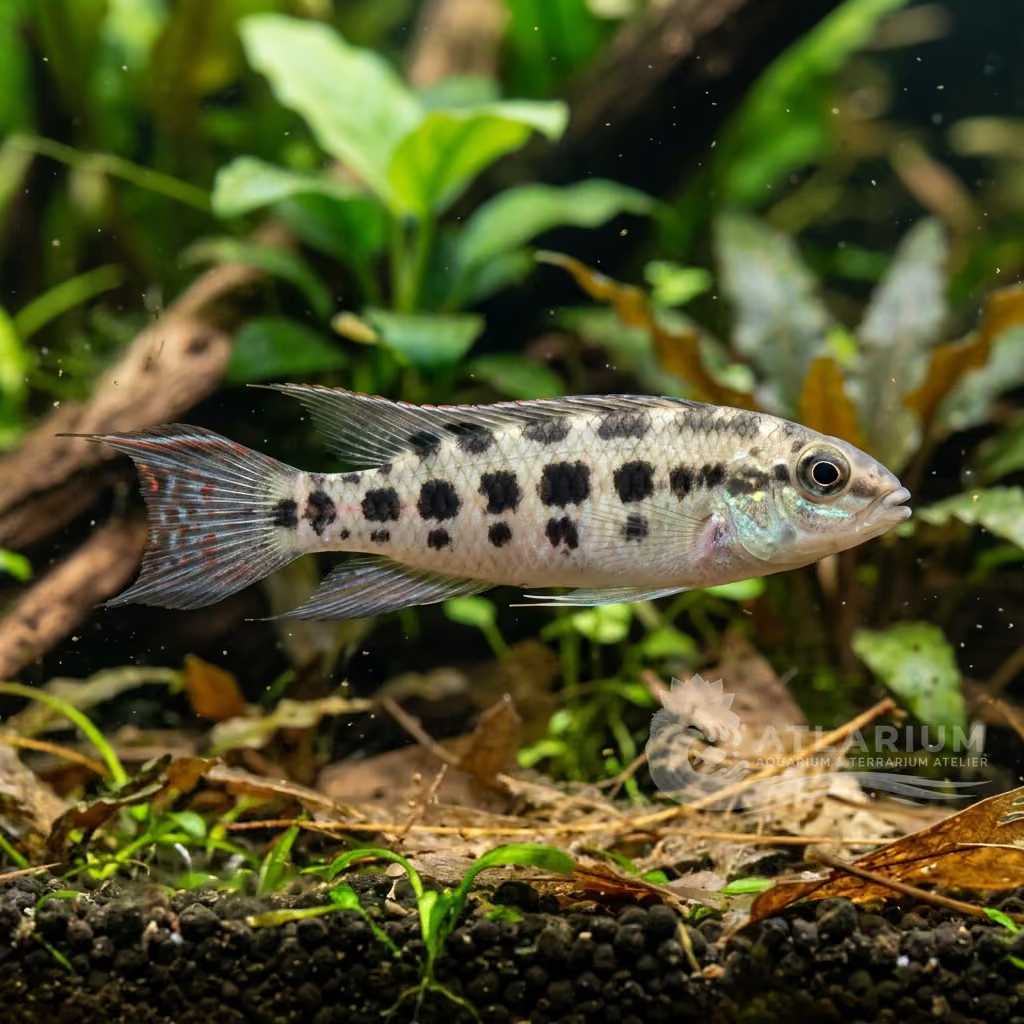
Taxonomy and Morphology: Yellow Acara (Aequidens metae). A medium-sized cichlid with a compressed but muscular body. Owes its common name ("Yellow Acara") to the marked yellow-golden tones that bloom on the lower part of the face and on the belly.
Social Behavior: Classified as a "relatively peaceful" cichlid (by South American standards), except during courtship when it becomes a relentless tyrant. Loves to sift the bottom in search of food, raising clouds of detritus.
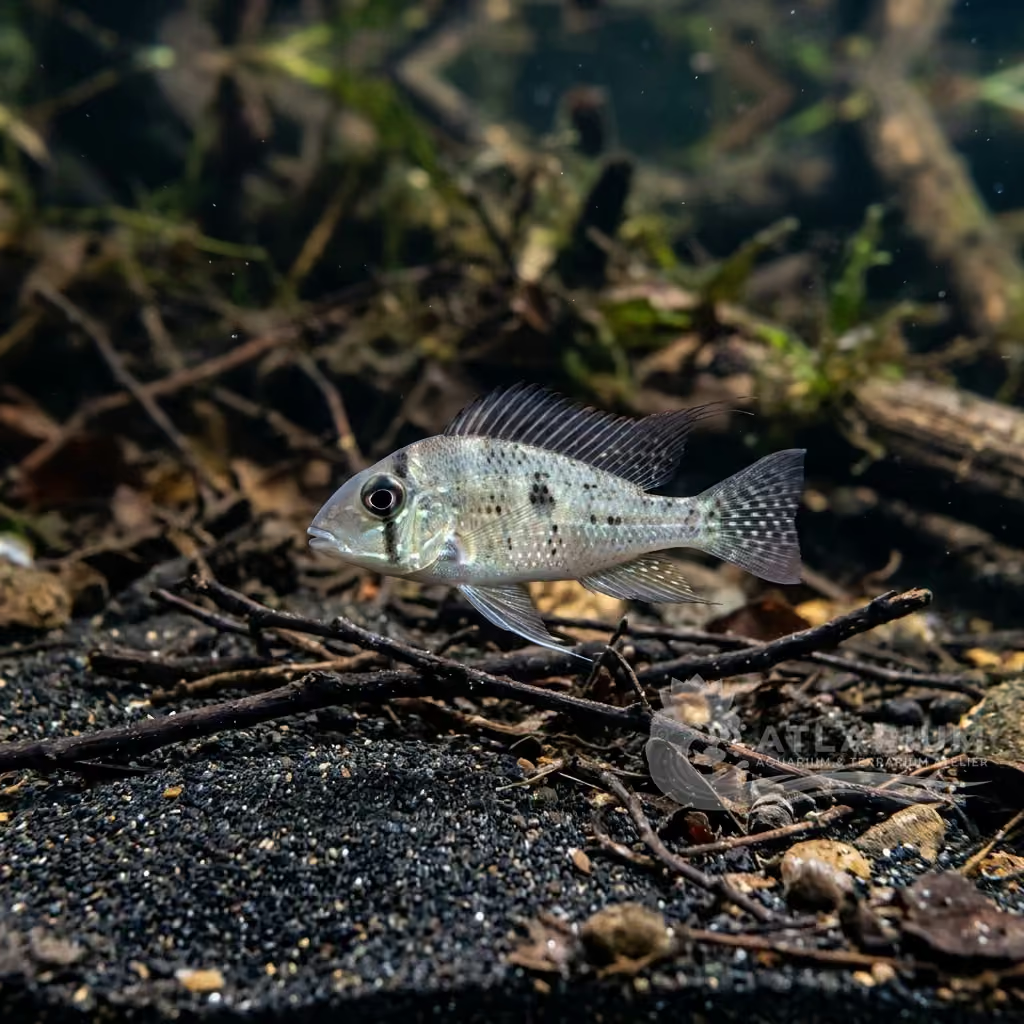
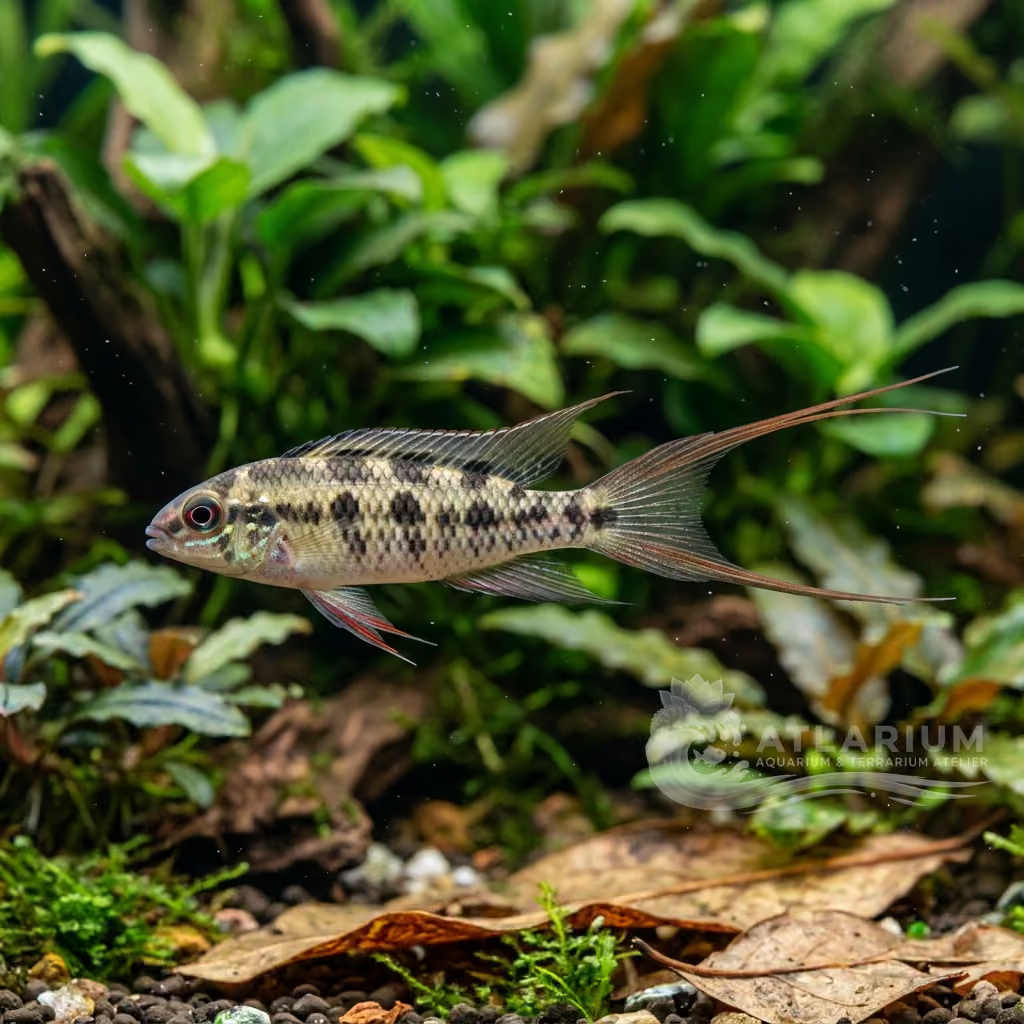
Coloration and Sexual Dimorphism: Olive/beige background interrupted by a marked horizontal line and a strong medial dark spot. Belly and throat shine with a gaudy mustard yellow. Males develop very prolonged dorsal and anal filaments and, in old age, a slight nuchal hump.

Pflege, Zucht und Mitbewohner
Aquarium Setup: Requires a spacious tank (120 cm / 48 inches). River sand absolutely free of sharp edges is vital for its digging habits. Likes submerged roots (Manzanita) and epiphytic plants. Dim light enhances its iridescence.
Diet and Feeding: Micro-predator and omnivore. Provide a base of specific pellets for South American cichlids enriched with carotene, regularly accompanied by bloodworms, krill, chopped shrimp and a vegetable intake (spirulina).
Water Quality: Tolerates heat very well (up to 30°C / 86°F) but strictly demands soft and acidic water (pH 5.0-7.0) enriched with tannins. Sensitive to increased nitrates: requires massive weekly changes.
Compatibility and Cohabitation: To be kept in an isolated pair if aiming for reproduction, or in robust community aquariums with reassuring fish (Dither fish) such as large South American Tetras, large Corydoras and peaceful Plecos. Will eat small fish.
Aquarium Breeding: Proudly monogamous. They lay up to 300 eggs on a flat substrate (smooth rock or root). Both parents fiercely care for the brood and will later guide the swarm of fry sifting the sand to feed them.
Risks and Diseases: Vulnerable to wasting (Hole in the Head) if kept in waters that are too hard or polluted. Avoid exuberant tankmates (like Oscars) that would suppress it through stress.

Geografische Herkunft und Verbreitung
Endemic to the Orinoco river basin, with main diffusion in the Meta river (Colombia and Venezuela). Populates calm waters (blackwater or clearwater) with soft leafy substrates, avoiding the strong currents of the main channel.
Ursprung
Tropische Ozeane und RiffeAmazonas, Orinoco und GuayanaEuropa, Mittelmeerraum und Westasien

Fischprofil
- Temperament
- Semi-aggressive
- Compared to other cichlids of similar size, Aequidens metae is relatively peaceful and mild-mannered, though they still display typical cichlid territorial behavior. They become significantly more assertive and defensive when preparing to spawn, vigorously protecting their chosen nesting site. Outside of breeding periods, they are calm and tolerant of other non-aggressive tank mates that are too large to be eaten. They are curious and engaging fish that will interact with their environment and notice their owners.
- Diät
- Omnivore
- Aequidens metae is an opportunistic omnivore that accepts a wide range of commercially prepared aquarium foods. A high-quality cichlid pellet or granule should serve as the staple diet, supplemented with live or frozen foods like brine shrimp, bloodworms, and krill. Including vegetable-based foods such as spirulina flakes or blanched spinach is also highly beneficial to replicate their natural diet. A varied diet ensures they maintain vibrant coloration, high energy levels, and strong immune systems.
- Lebenserwartung
- 8-12 years
- Erwachsenengröße
- 20 cm
- Geschlechterverhältnis
- 1:1 ratio
- Aequidens metae is a monogamous species that thrives best when kept as a bonded pair (a 1:1 ratio). Since it is difficult to determine their sex visually at a young age, starting with a group of 5 to 6 juveniles is the best way to let a pair form naturally. Once a pair has successfully bonded, the remaining individuals should be removed to prevent territorial conflicts. In very large aquariums, multiple pairs can coexist provided there is enough space and physical barriers to define distinct territories.
- Fütterungsfrequenz
- Twice daily
- Adult fish should be fed once or twice daily with only as much food as they can consume within two to three minutes. For rapidly growing juveniles, it is better to offer three smaller meals throughout the day to support their development. Avoiding overfeeding is crucial, as excess food will rot in the substrate and quickly degrade water quality. Providing a fasting day once a week can also help regulate their digestive tract and keep them active.
- Bioload
- Medium
- As a medium-sized cichlid reaching about 12 to 15 cm in length, Aequidens metae produces a moderate biological waste load. Their natural behavior of digging in the substrate can stir up debris, potentially overloading standard filtration systems. A robust filtration setup, such as a high-quality canister filter, combined with regular 20% to 30% weekly water changes is highly recommended. Keeping water clean and free of organic compounds is essential to prevent disease and stress.
- Fluss
- Moderate
- Hailing from sluggish river tributaries and slow-moving pools in the Orinoco basin, Aequidens metae prefers a weak to moderate water flow. High-velocity currents can cause physical exhaustion and stress, forcing the fish to seek shelter constantly. A spray bar or adjustable filter outlet is recommended to distribute flow evenly and eliminate strong direct currents. Incorporating physical obstacles like driftwood and large rocks helps create calm zones where the fish can rest comfortably.
- Sprungrisiko
- Yes
- Although they are not known as prolific jumpers, Aequidens metae still poses a moderate jump risk, particularly when startled. Sudden movements near the tank, abrupt lighting changes, or chases during territorial disputes can cause them to leap out of the water. A secure, tight-fitting lid or cover slides are essential to prevent accidental escapes. Providing ample cover like floating plants, rocks, and driftwood will reduce their anxiety and minimize flight behaviors.
- Reproduktion
- Substrate spawner
- Breeding Aequidens metae is a moderately challenging but highly rewarding process for aquarists. They are substrate spawners, meaning the pair will meticulously clean a flat surface like a flat stone or slate before depositing their eggs. Both parents participate in guarding the nest, fanning the eggs to provide oxygenation, and defending the territory from all intruders. Once the eggs hatch, the parents will move the fry into shallow pits dug in the sandy substrate until they become free-swimming.
- Kompatibilität & Tankkameraden
- Community
- This species is compatible with robust, medium-sized community fish such as larger tetras, active barbs, and armored catfish like plecos. They can also share a tank with other peaceful cichlids like Severums or Keyhole Cichlids, provided the aquarium is large enough to prevent territorial clashes. Very small fish like neon tetras should be avoided as they will likely be eaten, and overly aggressive species should be kept out to prevent bullying. During spawning, they require their own territory and may chase away any fish that get too close.
- Tankfüllstand
- Middle/Bottom
- This cichlid primarily inhabits the bottom and middle zones of the aquarium, rarely venturing to the water surface. They spend a significant amount of time near the substrate searching for food or patrolling around caves, driftwood, and rocks. Providing a layout with plenty of low-level hiding spots and open swimming spaces in the lower half of the tank matches their natural habits. Adding dither fish that swim in the upper layers can help make them feel secure and encourage active swimming.

Wissenschaftliche Modelle & Parameter
FishBase
Zugang zu den offiziellen wissenschaftlichen Daten der Art
FishBase v25.04Daten synchronisiert am: 15.06.2026
- Trophäenniveau
- 3,2 ± 0,5 se
- Belastbarkeit
- Mittel (1,4 - 4,4 Jahre)
- Phylogenetische Einzigartigkeit (PD50)
- 0.5
- Bayessche Längen-Gewichts-Beziehung
- a = 0.01445, b = 3.08
- AnfälligkeitGeringe Anfälligkeit (10 / 100)

Verwandte Arten
Empfehlungen gruppiert nach nahen Verwandten, Auswahl von Begleitern und ähnlicher Betreuung.