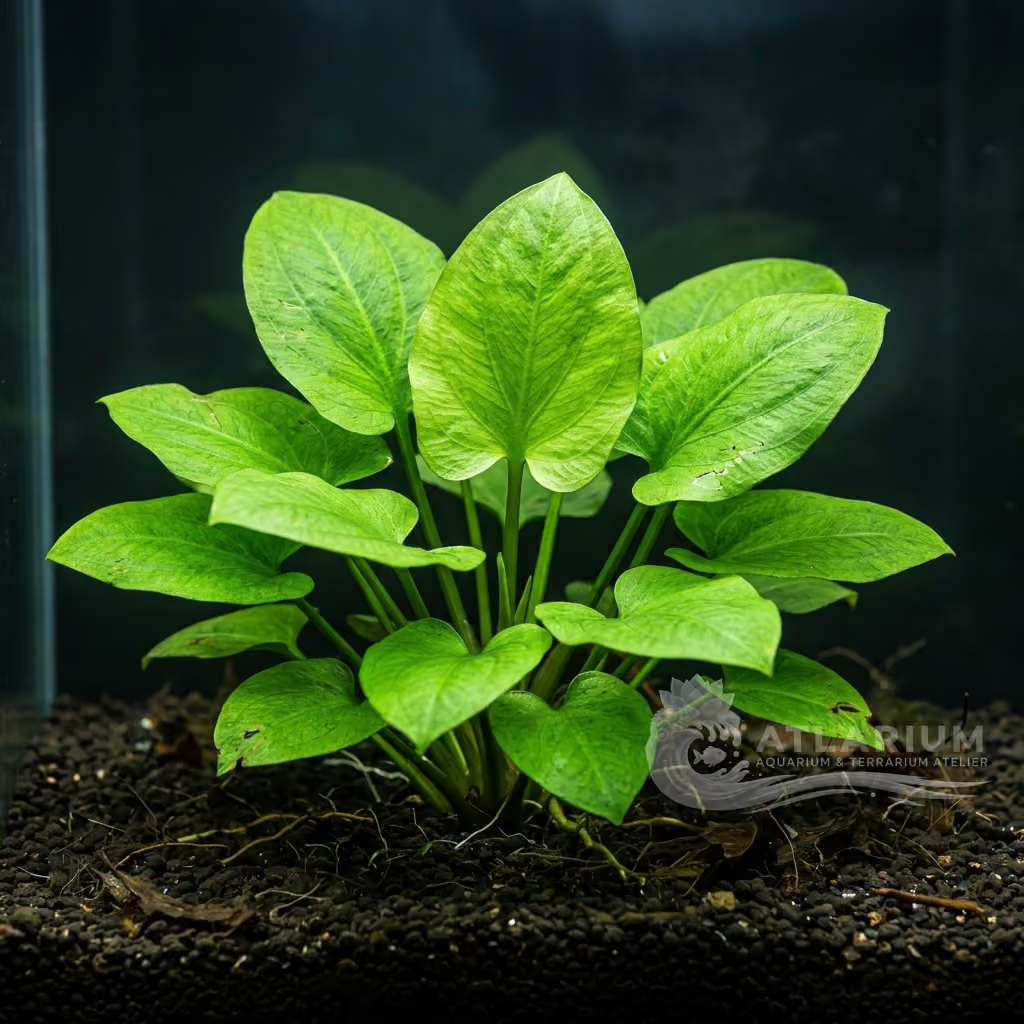
Anubias barteri var. coffeifolia
Anubias barteri var. coffeifolia
Unique West African epiphyte with deeply ribbed leaves. An extreme low-light plant that requires zero CO2 and grows at a very slow, glacial pace.
Wassertemperatur
12 - 30 °C
pH-Wert
5 - 8
Wassertyp
Süßwasser
Licht
Da bassa ad alta
CO2
Niedrig
Erwartete Höhe
25 cm
Erwartete Breite
30 cm
GH
4 - 20 dGH
KH
0 - 15 dKH

Artbeschreibung
Geographical Origin and Habitat: Endemic to heavily shaded, fast-flowing jungle rivers and muddy, flood-prone streams in West Africa. It is a highly specialized rheophyte, evolving its intensely ribbed leaves to withstand being battered by torrential seasonal floods while anchored to submerged logs. The dense canopy overhead ensures it receives almost no direct sunlight, relying exclusively on highly diffused, dappled rays that manage to penetrate the dark jungle foliage above.
Taxonomy & Genetics: This is a spectacular, naturally occurring, and highly prized botanical variant of the Anubias barteri complex. The name "coffeifolia" refers directly to the extreme physical texture of its leaves, which perfectly mimics the deeply veined, corrugated leaves of a terrestrial Coffee plant. Due to its unique texture and coloration, it is widely considered the most beautiful and sought-after Anubias variant by elite aquascapers and rare plant collectors.
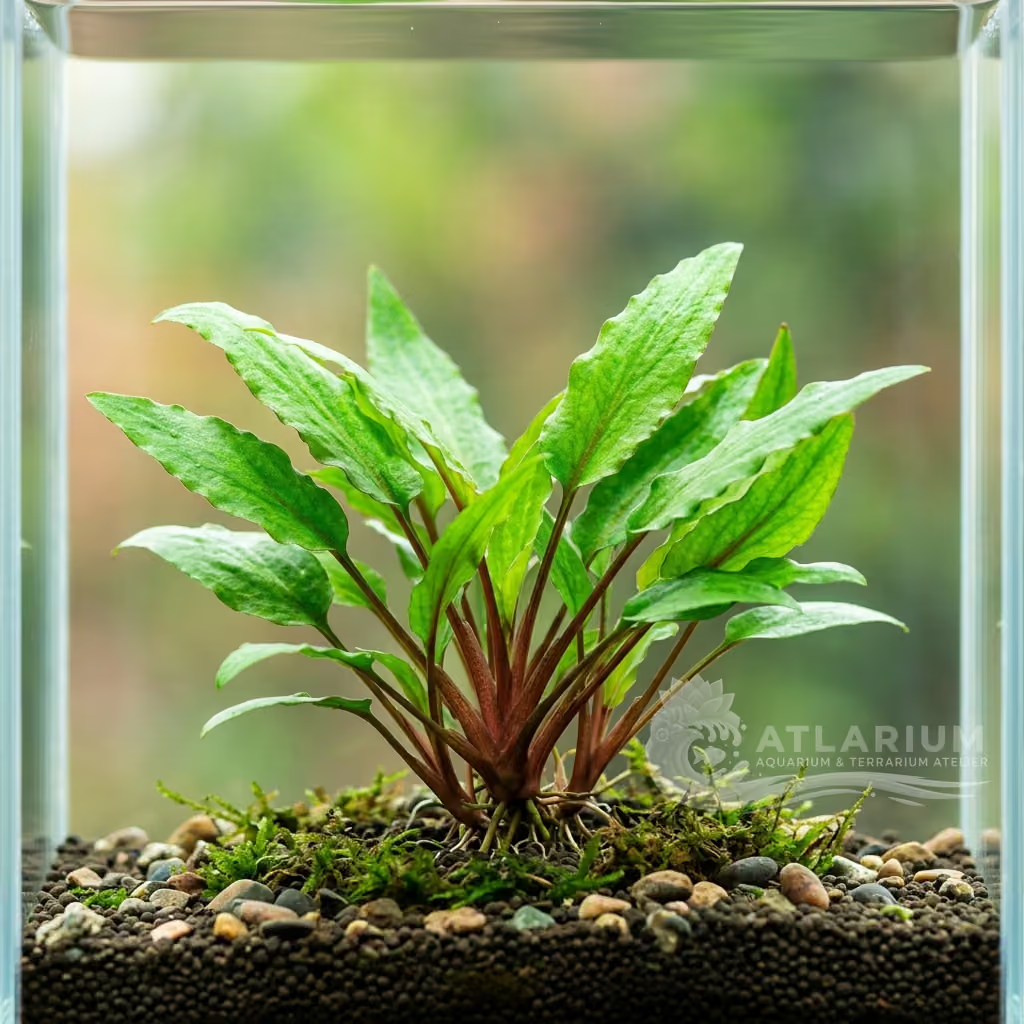
Physical Structure: It possesses a thick, incredibly slow-growing, creeping horizontal rhizome that anchors the plant. The true physical spectacle lies in the extreme corrugation of the leaves: the cellular tissue between the prominent leaf veins is deeply arched, creating an intense, three-dimensional ribbed structure that aggressively catches the light from all angles and provides incredible depth to an aquascape.
Color & Texture: The deeply ribbed mature leaves are a highly opaque, dark emerald green. However, the most unique and defining characteristic of this specific variant is its new growth: newly emerging leaves and stems are often colored a striking, deeply pigmented reddish-brown or rusty orange. Over the course of several weeks, these new leaves slowly fade from copper to solid green. The texture is notoriously rigid, thick, and highly leather-like.

Pflege, Zucht und Mitbewohner
Lighting & CO2: It is an obligate, extreme low-light plant. CO2 is completely unnecessary for its survival. Because it is one of the absolute slowest growing plants in the entire aquarium hobby (often producing only one leaf per month), exposing it to intense LED lighting guarantees it will be rapidly smothered and killed by aggressive algae. The intense light provides energy the plant cannot use, allowing algae to colonize the leaves.
Nutrition & Substrate: It is entirely a water-column feeder. The thick, creeping rhizome MUST NOT be buried under the substrate (sand, gravel, or soil) under any circumstances, or the entire plant will instantly melt and die. It requires standard, comprehensive liquid fertilization dosed directly into the water column to supply its slow-growing leaves with essential trace minerals.
Water Chemistry: It is virtually indestructible regarding water parameters. It thrives effortlessly in standard tropical temperatures (22-28°C) and completely ignores wild, chaotic fluctuations in pH or extreme water hardness. It is the perfect premium plant for unstable or beginner aquariums, surviving effortlessly in both acidic blackwater and hard, alkaline tap water.
Space Management & Placement: It is strictly an epiphyte. It must be attached directly to driftwood, spider wood, or highly porous rocks using superglue, zip ties, or heavy thread. Due to its incredibly textured, beautiful leaves and striking new red growth, it should be placed in the immediate foreground or midground as a stark, highly visible focal point where its ribbed texture can be appreciated.
Pruning: Pruning is an extremely rare event. Simply use sharp, heavy aquascaping scissors to cut the incredibly tough rhizome completely in half to artificially propagate the plant. Snip off any ancient, yellowing, or heavily algae-covered leaves at the base of the stem to maintain visual purity.
Risks & Diseases: Its glacial, almost imperceptible growth rate makes it the absolute primary target for aggressive Black Beard Algae (BBA) and Green Spot Algae (GSA). Because a single leaf can live for years, it will inevitably collect microscopic algae spores. You MUST keep the water meticulously clean, keep organics low, and ensure the plant is completely shaded by floating plants or overhanging wood.

Geografische Herkunft und Verbreitung
Endemic to heavily shaded, fast-flowing jungle rivers and muddy, flood-prone streams in West Africa. It is a highly specialized rheophyte, evolving its intensely ribbed leaves to withstand being battered by torrential seasonal floods while anchored to submerged logs. The dense canopy overhead ensures it receives almost no direct sunlight, relying exclusively on highly diffused, dappled rays that manage to penetrate the dark jungle foliage above.
Ursprung
Afrika und Madagaskar

Pflanzenprofil
- Platzierung
- Mittelgrund
- This species works exceptionally well in the midground of the aquarium, depending on the overall tank size. It should ideally be attached to hardscape materials such as driftwood or rocks using thread or aquarium-safe glue. If planted in the substrate, it is absolutely critical to keep the rhizome exposed above the soil to prevent it from rotting.
- Botanische Form
- Aufsitzerpflanze, Stängel
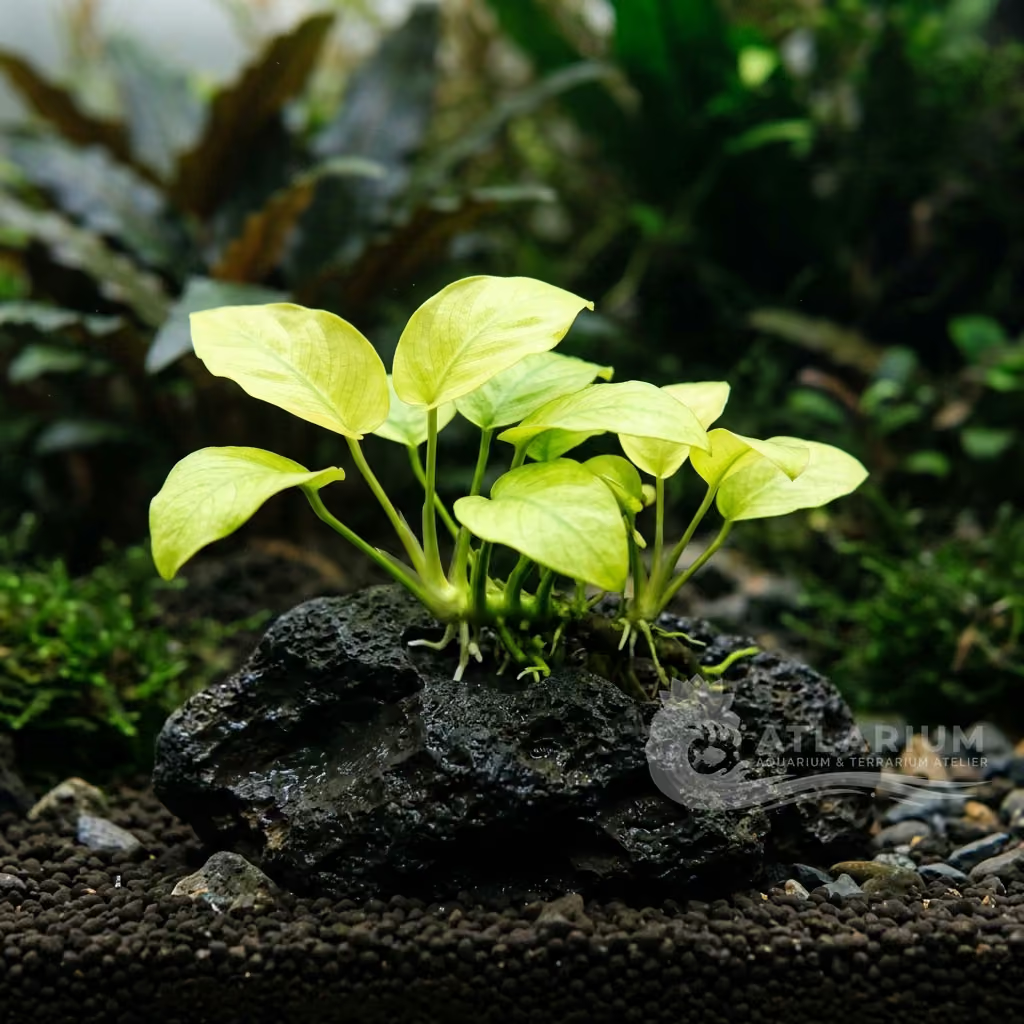
- Anubias barteri var. coffeifolia features deeply ribbed leaves resembling coffee plant foliage that stand out in any planted aquarium. The leaves grow from a thick, creeping rhizome that anchors the plant to various surfaces. Its sturdy, leathery foliage is highly resilient, making it a great option for aquariums with herbivorous fish.
- Wachstum
- Very slow
- Like most Anubias species, Anubias barteri var. coffeifolia exhibits a very slow growth rate. You can expect it to produce only one or two new leaves per month under standard aquarium conditions. Providing slightly higher carbon dioxide levels and optimal fertilization can marginally speed up this process, but it remains a slow grower. This slow pace makes it an excellent choice for low-maintenance setups.
- Substrat
- Keiner
- Recognized by its deeply ridged leaves, Anubias barteri var. coffeifolia is a quintessential epiphyte that avoids traditional planting methods. The rhizome strictly demands free water circulation and must sit fully exposed on top of rocks or driftwood to prevent asphyxiation and decay. While it doesn't utilize aquatic soils, its powerful, anchoring roots are highly efficient at attaching to textured hardscape and absorbing dissolved water-column nutrients. If used on the aquarium floor, it must be attached to a small stone or piece of wood that rests above the substrate surface to ensure the rhizome remains clear.
- Säulendüngung
- Empfohlen
- Liquid fertilization in the water column is the primary and most effective method for feeding Anubias barteri var. coffeifolia. A comprehensive liquid fertilizer applied weekly or bi-weekly will provide all the necessary trace elements and macronutrients. Since it is a slow grower, lean dosing is highly recommended to avoid excess nutrients accumulating in the water.
- Wurzeldüngung
- Keine
- Root tabs or nutrient-rich substrates are generally unnecessary for Anubias barteri var. coffeifolia. Because it is an epiphyte that prefers to be attached to hardscape, its roots primarily serve an anchoring function rather than a nutrient-absorbing one. Even if planted in the substrate, the plant relies more heavily on water column fertilization than root feeding.
- Trimmen
- Gelegentlich
- Trimming is rarely required due to its very slow growth rate. When pruning is necessary, simply cut the leaves as close to the rhizome as possible using sharp aquascaping scissors. Always remove any yellowing, damaged, or algae-covered leaves to maintain the plant's aesthetic appeal and overall health.
- Ausbreitung
- Rhizome division
- Propagating Anubias barteri var. coffeifolia is a simple and straightforward process. You simply cut the main rhizome into two or more pieces, ensuring each new section has at least three to four healthy leaves attached. These new sections can then be tied or glued to new pieces of hardscape, where they will eventually develop into full plants.
- Empfindlichkeit
- Mäßig
- This plant is incredibly hardy and tolerates a wide range of water parameters and temperatures. However, its slow-growing, broad leaves are particularly susceptible to spot algae and black beard algae if light intensity is too high. It is recommended to place it in shaded areas of the aquarium to mitigate this risk.
- Layoutrolle
- Aufsitzerpflanze, Mittelgrund
- Its unique leaf shape makes it an excellent textural focal point. It is often used to bridge the gap between different aquascaping elements or provide shelter for small fish and shrimp. The rich green foliage provides a strong visual anchor and adds a sense of maturity to the aquascape.

Bildergalerie
Lizenzierte Bilder, die mit der Art oder, wenn markiert, mit dem nächstgelegenen repräsentativen Taxon verknüpft sind.

Verwandte Arten
Empfehlungen gruppiert nach nahen Verwandten, Auswahl von Begleitern und ähnlicher Betreuung.